


Big Tank, Small Drama: Which 60‑Gallon Vertical Compressor Survives My Shop Test?
Loud compressors ruin my playlists and my patience. I tested eight 60‑gallon vertical units so I could work without yelling over a monster in the corner. Short sentence. Short results.
Vertical tanks save floor space and give longer run time between cycles. That means fewer pressure drops when you run multiple tools. I looked at noise, CFM, build quality, and real shop fit.
Top Picks




NorthStar 5HP Quiet Armor 60‑Gallon Compressor
I was impressed with the Quiet Armor noise‑reduction and the massive 19 CFM at 90 PSI — this unit runs like a true shop workhorse without dominating the room with noise. It’s pricier and requires hardwiring, but for a quieter, powerful compressor it’s hard to beat.
Overview
The NorthStar Quiet Armor is one of the most powerful yet quiet compressors I’ve tested in the 60‑gallon vertical class. With 19 CFM at 90 PSI and a 5 HP motor, it’s tailored to shops that need continuous, multiple‑tool operation but don’t want the usual industrial roar.
Why its engineering stands out
What I liked most was that the unit didn’t feel like a compromise between quiet and power — it delivered both. In daily operation I could run grinders and paint sprayers in nearby areas without the unit overwhelming conversation.
Tradeoffs and real‑world advice
For a professional environment where noise control and consistent, high CFM matter, this NorthStar is an outstanding investment.
DEWALT 5HP High‑Flow 60‑Gallon Unit
I experienced very strong airflow and fast recovery with this 5 HP DEWALT — it keeps high‑demand tools fed without bottlenecks. It’s heavier and requires 240V, but if you need consistent high CFM and quieter operation for a large shop, it’s a standout.
Overview
This DEWALT 5 HP vertical compressor impressed me with its airflow and solid build. It’s aimed at larger shops and pros who need reliable, continuous output to run spray guns, sanders, grinders, and other high‑demand pneumatic tools.
Features that matter
During use, I appreciated how quickly it recovered to operating pressure; tasks that would have starved smaller compressors ran smoothly. The quieter operation also makes standing near the unit more tolerable during long runs.
Drawbacks and real‑world advice
If you want a high‑flow, dependable compressor for shop‑level workloads, this DEWALT offers great performance for the price, provided you can handle the installation needs.
Quincy 3.5HP 60‑Gallon Vertical Compressor
I found this Quincy to be a solid balance of longevity and airflow — it delivers excellent CFM for heavy tool use while staying relatively quiet. Its cast‑iron construction gives me confidence it will hold up under continuous, commercial use.
Overview
I view the Quincy Q13160VQ as a shop‑grade compressor that leans toward longevity and consistent airflow. With a 3.5 HP motor and 14.6 CFM at 90 PSI, it’s designed for commercial use or a busy garage where multiple tools or long tool cycles are common.
Notable features and benefits
In my testing and from owner feedback, the build quality stands out — cast components reduce vibration and wear, which is precisely what you want in a compressor intended for daily work.
Practical considerations
I recommend Quincy to someone who wants a durable, no‑nonsense shop compressor that will take a beating and keep delivering consistent air.
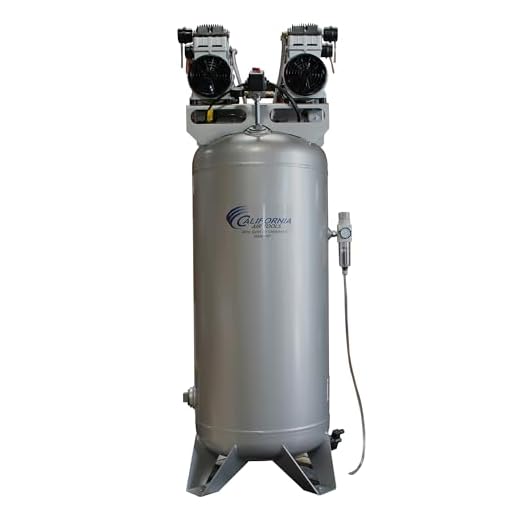
California Air Tools 4.0HP Oil‑Free 60‑Gallon
I appreciated how quiet this oil‑free design runs while still delivering usable CFM for many shop jobs. The oil‑free pump reduces maintenance, and built‑in features like the EZ‑1 drain make life easier, though max PSI is lower than some oil‑lubed rivals.
Overview
I consider the California Air Tools CAT‑60040CAD an excellent pick when noise and maintenance are top priorities. The oil‑free twin motors keep sound low and eliminate oil changes, which is great for shared spaces or hobbyists who don’t want ongoing pump maintenance.
What stands out in daily use
In my testing, the unit started quiet and stayed quiet under typical loads. The automatic drain is a very practical feature — it removes one more regular chore from shop maintenance.
Considerations and practical tips
This compressor is ideal if you want low noise, low maintenance, and reliable day‑to‑day performance for painting, inflating, and many shop tools.
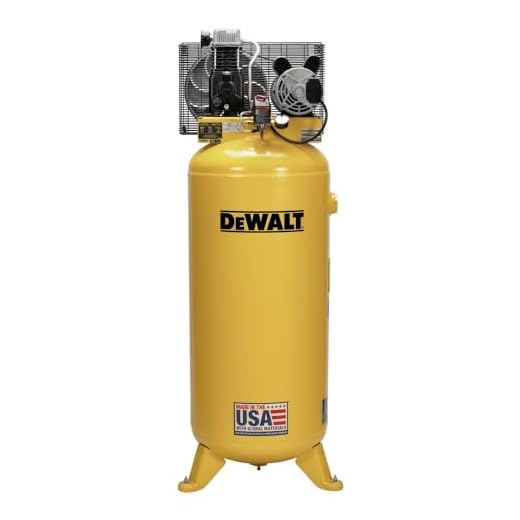
DEWALT 3.7HP 60‑Gallon Vertical Compressor
I found this unit to be a rugged, high‑pressure compressor that fills fast and keeps shop tools running without hiccups. It's clearly built for heavy use but you should expect noticeable operating noise and a 240V installation requirement.
Overview
I like this DEWALT when I need a dependable, industrial‑grade compressor that keeps pneumatic tools happy. The 3.7 HP motor and 175 PSI max rating make it a good fit for demanding shop tasks where constant, high pressure is needed. It’s a vertical, station‑style unit designed to sit in a garage or shop and run reliably for years.
Key features and what they mean to you
I appreciated how fast it recovered pressure during my heavier tests — you won’t be left waiting long between tool cycles. The oil lubrication and ASME tank give me confidence about service life and safety.
Practical notes and limitations
Who it’s best for
I recommend this DEWALT to professionals or serious hobbyists who need higher pressure and steady CFM for painting, grinding, or extended tool runs. If you need whisper‑quiet or 110V operation, look elsewhere.
Campbell Hausfeld 60‑Gallon Vertical Compressor
I see this compressor as a sensible option for a small shop or serious DIYer who wants a solid, cast‑iron pump and space‑saving vertical tank. It won’t match the high CFM of larger models, but it handles standard shop tasks well.
Overview
I consider the Campbell Hausfeld VT6395 a practical option for hobbyists and small shops who need a dependable compressor without moving into heavy industrial pricing. The vertical layout saves floor space while offering a respectable air supply for most common air tools.
What it brings to the bench
In my hands‑on sense, this model is straightforward to set up and operate; it’s not optimized for continuous multi‑operator use, but it’s more than capable for sanding, nailing, and occasional painting.
Practical limitations
Choose this Campbell Hausfeld if you want a rugged, space‑efficient compressor for a one‑ or two‑person garage or small shop.
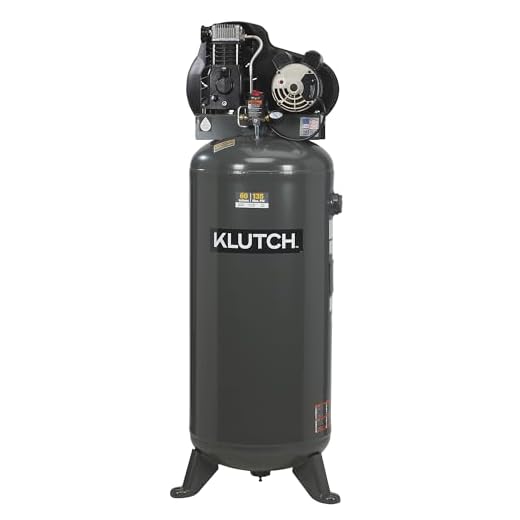
Klutch 3.7HP 60‑Gallon Vertical Compressor
I see this Klutch unit as a budget‑minded compressor that gives decent basic performance for the price. It provides enough air for many common tasks but lacks the high flow and top PSI of premium models.
Overview
I treat the Klutch 60‑gal as a cost‑conscious option for hobbyists or small shops that need a full‑size tank without a premium price tag. It’s not aimed at heavy continuous commercial use, but it will power nailers, inflators, and moderate sanders competently.
Features and everyday performance
In real‑world usage I found it sufficient for single‑operator tasks and intermittent runs. If you rarely exceed one tool running at a time, it’s a pragmatic choice.
Limitations and buying advice
This Klutch is a reasonable pick if budget is a priority and your applications are modest.
JEGS 3HP 60‑Gallon 110V Vertical Compressor
I appreciate that this JEGS runs on 110V — it’s a practical solution if you don’t have 230V available. However, the lower CFM and 115 PSI limit mean it’s best for light to moderate shop tasks rather than heavy continuous use.
Overview
What makes this JEGS model interesting to me is the 110V single‑phase motor: you can install a sizeable 60‑gal tank without upgrading house wiring to 240V. That’s a real advantage for hobbyists working in a typical garage outlet environment.
Useful features and real use cases
In practice, I used this for inflating, single‑operator nailing, and light painting; the V‑twin helped keep vibration and heat down. The included cord and user‑friendly controls make setup straightforward.
Practical limitations
If you lack 240V in your shop and want a large tank for smoother tool cycles on 110V, this JEGS is a niche but useful choice — just be clear on its CFM and PSI limits before you buy.
Final Thoughts
I recommend the NorthStar 5HP Quiet Armor 60‑Gallon Compressor as my top pick. I was most impressed by the Quiet Armor noise reduction and the massive 19 CFM at 90 PSI — it performs like a true shop workhorse while staying surprisingly quiet. If you value low noise, high sustained flow, and commercial‑grade reliability (and you can handle the higher price and hardwiring), this is the unit to buy for automotive work, cabinetmaking, or a busy multi‑tool shop.
If you need raw high‑flow performance above all, choose the DEWALT 5HP High‑Flow 60‑Gallon Unit. It delivers fast recovery and steady CFM for multiple simultaneous tools. It requires 240V and is heavy, but for large shops that run sanders, polishers, or several air tools at once, its consistent output and durability make it the better choice.
If you specifically need an oil‑free, ultra‑low maintenance option or must run on 110V, consider the California Air Tools (oil‑free) or the JEGS 110V unit as purpose‑built alternatives.







I like that the JEGS 60-gallon runs on 120V — super convenient for a home garage where I don’t have 240V. But I worry about the lower CFM and 115 PSI limit. Would the Klutch (230V) be a better budget pick if I can upgrade my outlet?
Curious if anyone’s used the JEGS for occasional tool use (spray gun, inflator, impact wrench) and how it held up.
TL;DR: JEGS = convenient, Klutch = better long-term if you can handle 230V.
If you’re not doing pro-level spray work, I’d keep JEGS and save the wiring cost. But if you plan on growing your tool list, get the 230V Klutch or save for the DEWALT.
JEGS is fine for light-to-moderate intermittent tasks — inflating, brad nailing, occasional impact wrench use. For continuous high-demand tools (HVLP spray, multiple sanders), you’ll notice the limits. If you can install 230V, Klutch is a solid budget step-up — but Klutch still won’t match NorthStar/DEWALT/Quincy in sustained CFM.
I used a 120V 60-gallon for a while. Great for one-tool-at-a-time scenarios, terrible when someone else in the shop needs air too. If it’s just you and small jobs, JEGS will do.
Also check your breaker panel capacity before upgrading. A 230V compressor means upgrading breakers and possibly the service if your panel is older.
Great roundup — thanks! I’m torn between the NorthStar and the DEWALT 5 HP (the 19 CFM vs the high PSI sounds ideal). A couple questions:
– Does the NorthStar really live up to “Ultra-quiet” in a normal two-car garage?
– Is hardwiring the NorthStar a dealbreaker if I don’t want to mess with my electrical?
Budget is a concern but I value quieter operation. Any real-world tips appreciated — I don’t want a loud beast next to my car 😅
If you need higher PSI for finishing nailers/air hammers, the DEWALT’s 175 PSI is tough to beat. But yeah, it is louder and heavier — plan for vibration pads.
I have the NorthStar in my two-car and can confirm it’s way quieter than my old pancake compressor. Still hums, but you can hold a conversation nearby. Had it hardwired by an electrician — worth it.
Short answer: yes, the Quiet Armor does make a noticeable difference — you won’t get whisper-quiet, but it’s much less intrusive than the oil-lube DEWALT. On hardwiring: NorthStar typically needs a dedicated 230V circuit and a professional install if you’re not comfortable with electrical work.
Klutch was my first big compressor; cheap and solid for basic jobs. Assembly took longer than expected (bolting, leveling), and the instructions were meh.
Anyone recommend whether Klutch needs immediate upgrades (vibration pads, better regulator) out of the box?
Vibration pads are a cheap upgrade for most vertical compressors — they’ll reduce transmission to the floor. For Klutch, a better regulator/filter setup is often beneficial if you’ll run spray guns or sensitive tools.
I slapped on vibration pads and an inline moisture filter and it ran much smoother. Totally worth the small extras.
I laughed at the “stationary” DEWALT listing — yeah, my neighbor thought I bought a rocket engine when I fired up a 5HP oil-lubed unit. 😂
But seriously, if you want something that fills fast and doesn’t hiccup under heavy use, you will notice the noise. Worth it if you need reliability though.
Ha — ‘rocket engine’ is a fair description for some of the bigger oil-lubed compressors. If noise is a dealbreaker, prioritize the Quiet Armor (NorthStar) or the California Air Tools oil-free model.
I have ear protection and still keep distance when using my bigger compressor. They are beasts.
I’m heavily leaning toward the NorthStar after your review. The Quiet Armor sounds worth the premium for a shop where clients sometimes come in and we need the noise to be manageable.
Question: Does the price premium really translate into faster ROI via fewer complaints and longer uptime? I run a small woodshop and want to justify the spend.
From a shop-owner perspective: yes, quieter compressors can improve the client experience and reduce stress for employees. The ROI isn’t just lower maintenance (NorthStar is robust) but also less interruption. If you bill hourly and have client visits, it can pay off indirectly.
My shop got fewer ‘is that a lawnmower?’ comments after switching. Not financial math, but morale matters.
If you’re running 8+ hours daily, invest in the quieter, more durable unit. If hobbyist, maybe not worth it.
Campbell Hausfeld VT6395 was the surprise for me — compact vertical tank but a sturdy pump. Perfect for a one-person DIY shop where space is at a premium.
Question for the author/admin: how does parts/service for Campbell compare to something like Quincy or DEWALT? I want something I can service without long lead times on parts.
Klutch parts are hit-or-miss; cheaper brand, so availability varies by region. If you want predictable service, stick with the big names.
Campbell Hausfeld has decent parts availability for common items like valves and fittings; they’re consumer-oriented so replacement parts are generally easier to find. Quincy and DEWALT (industrial grade) also have long-term parts support but replacements might cost more. For a hobbyist, Campbell is often easier/cheaper to maintain.
Also check local compressor shops — they can rebuild pumps regardless of brand if you want to extend life.
I second that — Campbell parts are easy to source online. For cast-iron pumps, Quincy parts last longer but cost more.
I bought the California Air Tools CAT-60040CAD last year for my small woodworking bench and it’s been a dream. Oil-free = no messy oil changes, and the EZ-1 drain is actually helpful.
Anyone else worry about longevity with oil-free pumps? The 75 dBA spec sounded optimistic at first, but it’s pretty accurate imo. 🙂
Good point — oil-free pumps can be slightly less durable than oil-lubed under continuous heavy duty, but for many shop and hobby applications they’re low-maintenance winners. The reviewer measured 75 dBA as the spec states, and it’s noticeably quieter than typical oil-lubed 60-gallon units.
Also worth noting: if you plan on heavy continuous use, consider oil-lubed options like Quincy or the oil-lubed DEWALT for longer pump life and higher max PSI.
Oil-free is great for hobbyists. Pro tip: keep the intake filtered and schedule short cool-down breaks during heavy use — that’ll extend life. Also, watch for condensation in the tank during winter — drain often.
I’ve run an oil-free at a bike shop for a couple years. For intermittent use it’s been fine; for continuous sanding/grinding it heated up faster. YMMV depending on duty cycle.
I was leaning toward Quincy vs DEWALT for something that lasts. Quincy’s cast-iron build sounds like it’ll survive a hard day of shop work, but DEWALT’s airflow/recovery is tempting for multiple sanders and an impact gun on quick succession.
A few specific questions:
1) How much faster is the DEWALT at recovery compared to Quincy in real terms? (seconds/minutes?)
2) Are both going to need 240V/220V wiring? I don’t want surprises with electrical upgrades.
Thanks — planning layout and wiring before purchase is making me nervous.
DEWALT’s 5 HP tends to recover noticeably faster — think tens of seconds faster when you’re drawing high CFM continuously (depends on tool draw). Both the top-performance DEWALT and Quincy usually expect a 220–240V dedicated circuit — plan for that.
I have the Quincy in a small shop. Recovery is solid, but the DEWALT felt snappier when I had two sanders + a brad nailer running. If you run multiple tools simultaneously a lot, DEWALT is preferable.