


Bend It Like a Boss — Which 36″ Brake Fits Your Garage (and Ego)?
One good brake saves hours and ruined parts. I tested a range of 36-inch brakes so you don’t have to.
If you want clean seams, REPEATABLE bends, and a little bragging rights, I’ve got picks from heavy-duty box-and-pan workhorses to bargain bench-top options. No sparks included.
Top Picks
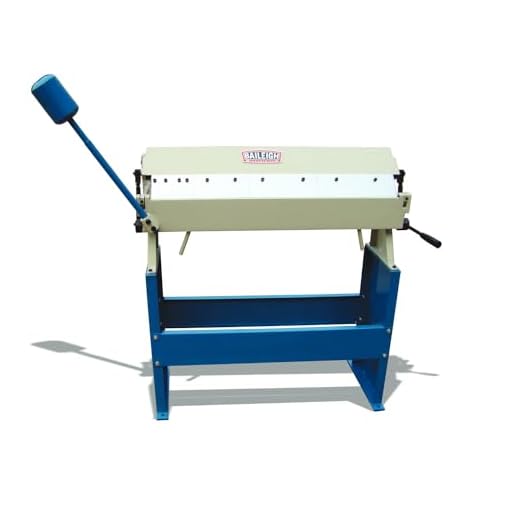


Baileigh 36" Box & Pan Finger Brake
I found this brake to be exceptionally solid and dependable for small-shop and serious DIY box-and-pan work. It balances commercial-grade construction with an approachable size and good value.
Overview
I recommend this Baileigh finger brake when you want shop-level performance without buying a huge machine. It's a compact 36-inch box & pan brake designed to handle 16-gauge mild steel and lighter stainless, and it feels like a small commercial unit rather than a hobby tool.
Key features
I appreciate that the build quality gives crisp bend angles even at the center of the beam — that’s where cheaper brakes usually falter. The counterweight and finger adjustments make frequent changes less fatiguing and more precise.
Benefits and limitations
I like how this brake bridges the gap between a shop machine and a serious DIY tool: it’s heavy and stable but manageable to mount or place on a sturdy bench. The one-year parts warranty is useful, but if you plan full-time production you'll want a more extensive service plan or spare parts on hand. It’s not lightweight, so plan for mounting and support when it arrives.
Practical insights
If you primarily bend small boxes, pans, and duct flanges, this is a durable choice. I recommend bolting it down or building a simple cart with bracing to take advantage of the weight and rigidity. Users often note it outperforms entry-level imports for the same class of work, especially where repeatable, tight tolerances matter.
KAKA 36" 16-Gauge Box & Pan Brake
I think this KAKA box and pan brake hits a sweet spot for small shops and serious DIYers. It’s heavier and more capable than consumer models and gives reliable results on 16-gauge mild steel.
Overview
I recommend the KAKA 36-inch 16-gauge box and pan brake for fabricators who want a built-piece tool that behaves like a small shop machine. It’s a robust unit that’s been a popular choice for ductwork, flashing, and light-panel fabrication.
Key features
The construction feels heavier and more deliberate than many budget brakes, and the included fingers expand what you can make right out of the box. I found the shipping packaging and crate protection to be solid, minimizing arrival damage.
Benefits and limitations
This brake is well suited to repeated sheet work and small shop projects, but you should plan for the weight — it isn’t something you’ll move frequently. The manufacturer’s instructions are serviceable but sometimes sparse, so I recommend reading up on setup and alignment best practices before first use.
Practical tips
Mount it on a stout table or secure it to a dedicated cart. Beginners should practice on scrap material to dial in the finger placement and clamp pressure — once you find the sweet spot the results are consistent and clean.
KAKA 36" 20-Gauge Box & Pan Brake
I appreciate this KAKA finger brake for its flexibility — it bends 20-gauge across a full 36 inches and the removable fingers open up many box-and-pan possibilities. It's a dependable midrange option for many DIY and trade tasks.
Overview
I recommend the KAKA 36-inch 20-gauge box and pan brake when you want flexibility to make pans, boxes, and trim from a variety of materials. It sits between consumer bench models and larger industrial brakes in terms of capability.
Key features
The L-shaped base gives the unit a stable footprint, and the finger set makes it surprisingly capable for fabrication beyond simple straight bends. I liked how consistent the clamp hold is once adjusted correctly.
Benefits and limitations
This brake is well-suited for contractors and hobbyists who need to form a range of parts without stepping into full shop equipment. The main trade-offs are weight and the learning curve: it can take a little time to get everything aligned and tuned.
Practical tips
Set up on a sturdy bench and practice finger placement sequences — once you have patterns for common pan depths, your speed will improve noticeably. Regularly check and tighten fasteners after the first few uses.
Industrial 36" Heavy-Duty Bending Brake
I find this brake offers strong construction and versatile capacity for a small shop. Its all-steel design and included stand make it a practical midweight solution for aluminum and mild steel work.
Overview
I recommend this industrial 36" heavy-duty brake if you want a stout, all-steel bender that feels like a professional tool without demanding a huge footprint. It’s designed to be used on a bench or a stand and covers a sensible range of gauges for light fabrication.
Key features
This brake is tuned for users who need dependable bends across the 36-inch span without moving up to full-size shop equipment. I appreciate that it includes a stand option — that’s handy if your shop lacks a dedicated heavy bench.
Benefits and limitations
For light production or hobbyist fabricators, this brake provides repeatable results and a rock-solid feel. The 120-degree angle limit and heavier weight compared with some consumer bench models are trade-offs: you get strength at the cost of portability and a slightly reduced angle ceiling.
Practical tips
I recommend using this brake for door panels, small sheet assemblies, HVAC trims, and gutter work. Mount it securely, and if precise repeatability matters, practice the same clamp pressures and bend sequence — that consistency pays off immediately.
KAKA MB-36 36" 20-Gauge Straight Brake
I find this MB-36 to be a practical choice for siding, flashing, and general sheet metal tasks. It offers a sturdy feel and useful angle control for everyday fabrication and repair work.
Overview
I recommend the KAKA MB-36 when you need a dependable straight brake for siding, trim, and light fabrication. It’s designed to handle 20-gauge mild steel across 36 inches and strikes a balance between capability and affordability.
Key features
My experience is that the MB-36 offers a pleasant combination of firmness and control. The clamp action feels solid and consistent, and once adjusted it holds repeatable alignment well.
Benefits and limitations
It’s a great option for homebuilders, siding contractors, and anyone doing periodic trim or flashing work. If you expected to bend thicker stock or do heavy daily production, though, you’ll need a machine with a higher gauge rating and a larger warranty/support plan.
Practical tips
Take time to properly bolt and square the unit during setup. I also recommend practicing on scrap to learn how the cam adjustments affect clamp pressure — minor tweaks make a big difference in finished bend quality.
KAKA 36" 20-Gauge Straight Bending Brake
I see this as a sensible budget-minded pro option: it gives decent bending capability at a lower price without being a toy. It works well for common sheet tasks but isn’t built for heavy production.
Overview
I recommend this KAKA straight brake for users who want professional-style features without a pro-level price tag. It’s a 36-inch straight brake rated for 20-gauge that behaves reliably for many trim and panel jobs.
Key features
My experience is that this brake gives good value for the money; it’s not as refined as high-end machines but it’s far superior to simple thin-gauge consumer benders.
Benefits and limitations
It’s ideal for occasional shop work, repairs, and contractor tasks. If you expect to run long production shifts or bend thicker gauge metal routinely, you’ll want something with a higher rated capacity.
Practical tips
Plan the assembly with enough helpers or a lifting aid — the unit is heavy. After mounting, do a few calibration bends on scrap to verify angle stops and clamp alignment before starting on final parts.
36" HVAC Roofing Bender Tool
I find this tool useful for roofing and HVAC trim thanks to its dual-handle leverage and reinforced construction. It’s practical for contractors who need extra leverage on thicker trims and flashing.
Overview
I recommend this 36-inch HVAC/roofing bender when you need extra leverage and a tougher press plate for thicker trim work. It’s aimed at users who handle heavier trim and want more mechanical advantage.
Key features
The dual-handle setup changes how force is applied and reduces fatigue for longer bends. That’s valuable on job sites where speed and effort reduction matter.
Benefits and limitations
I like it for contractors who bend a mix of thicker trim pieces and need something tougher than the very light bench models. If you primarily work with very thin aluminum or want fine, delicate work, a lighter bench brake may give cleaner results.
Practical tips
Use scrap pieces to dial in handle positioning and lock settings before working on a finished part. The extra leverage is great, but it also magnifies mistakes if the clamping or alignment isn’t right.
Prolinemax 36" Bench Mount Brake
I consider this a workable, entry-level bench brake for very light-duty bending and hobby projects. It’s an economical choice when you need a simple 36-inch bender and can accept limitations in weld quality and capacity.
Overview
I recommend the Prolinemax bench brake mainly for hobbyists or occasional users who need a cheap 36-inch bender for thin material. It’s compact and intended for clamping to a bench, making it easy to store and use for small projects.
Key features
This is a pragmatic option for people who bend occasionally and want a simple tool. That said, customers have reported mixed durability, so I’d consider it more of a starter tool than a long-term shop mainstay.
Benefits and limitations
If you need occasional trim, flashing, or small panel bends, it will probably do the job. For any heavier or repetitive work, I recommend upgrading to a welded brake with a stand. Inspect welds and test carefully on scrap before committing to a project.
Practical tips
Use a good-quality C-clamp and check weld points during initial setup. If you get one, plan to keep spare hardware and be gentle with thicker materials to avoid overloading the frame.
VEVOR 36" Portable Mini Brake
I see this as a useful low-cost option for occasional bending tasks and hobby projects. It won't replace a heavy-duty shop brake, but it gives decent performance for light gauges at a bargain price.
Overview
I recommend the VEVOR 36-inch mini box and pan brake when budget and portability matter most. It’s aimed at hobbyists, roofers doing occasional trim, or DIYers who need a simple bench-top solution for light-gauge metal.
Key features
For the price, performance is impressive on light material. Expect dependable 90-degree and partial-angle bends on thin sheet, and accept that heavy or thicker stock will challenge the mechanism.
Benefits and limitations
If you need a no-fuss tool for flashing, trim, and occasional boxes, this is a good pick. I’d caution against continuous production use; the sheet metal and fastener quality on low-cost brakes can show wear, and tolerances are looser than commercial machines.
Practical tips
Clamp it securely to a workbench before use and inspect fasteners periodically. For DIY roofing or trim, this brake will do most common tasks; for heavier fabrication or fine repeatability, consider stepping up to a welded-frame or industrial-grade brake.
DBM Imports 36" Bench Brake Bender
I consider this DBM Imports brake a straightforward bench-top solution that performs well on aluminum and thin steel. It’s basic, but for light trim work it’s a sensible inexpensive choice.
Overview
I recommend this DBM Imports 36-inch bench brake for folks who need a simple, dependable bender for aluminum trim and light steel. It’s a compact tool meant to be clamped to a bench and used for common trim and flashing tasks.
Key features
It’s uncomplicated and accessible to beginners, and a common choice for DIYers who don’t need heavy-duty shop equipment. You’ll get solid results on thin materials as long as you keep expectations realistic.
Benefits and limitations
This brake is a good on-ramp to metal bending — it’s inexpensive and easy to operate. The trade-off is limited capacity, fewer advanced features, and the need to clamp it down securely every time to avoid movement.
Practical tips
Clamp it firmly to a flat, sturdy surface and practice on scraps to learn how clamp pressure affects the bend. For occasional trim and flashing work this tool will serve well; for larger or thicker jobs, plan on a more robust machine.
Final Thoughts
My top pick is the Baileigh 36" Box & Pan Finger Brake (9.4/10). I recommend it when you want PRECISION and durability—perfect for tight box-and-pan work, repeatable bends, and small-shop production. It feels commercial-grade but stays friendly to serious DIYers who want professional results.
If you want the best value that still handles real shop work, go with the KAKA 36" 16-Gauge Box & Pan Brake (8.6/10). It’s heavier and more capable than consumer models and reliably bends 16-gauge mild steel across the full 36 inches—great for contractors, siding pros, or DIYers stepping up from hobby tools.







Great roundup — thanks! I’m leaning toward the Baileigh BB-3616E for box-and-pan work since it’s rated 9.4 and called “Best for precise box-and-pan work.” Has anyone used it for 16-gauge stainless or is it really more for mild steel? Also, how noisy/solid is it when mounted on a bench? Price is a bit up there but seems worth it for precision.
If precision’s the priority, Baileigh is worth the splurge. I compared it to a KAKA and the Baileigh felt way tighter in the hinge.
I used a Baileigh on 16ga stainless for small boxes — required a bit more patience and light passes, but it worked. Definitely bolt it down and use a sacrificial pad to protect the fingers.
Good question — the Baileigh is built for 16-gauge mild steel primarily. You’re likely to get by on thin stainless if you take lighter bends, but watch for springback and wear. Mounting it solidly to a heavy bench cuts down vibration a lot.
I bought a VEVOR a year ago for hobby stuff. Pros: cheap and does 20ga fine. Cons: the handle feels flimsy and the paint chipped first week 😂. Anyone upgraded the hinge or handles on these budget models? I want to keep the low cost but make it last.
I wrapped the handle with PVC pipe and added a rubber grip. Also drilled holes and added extra bolts at the mounting points — made a surprising difference.
You’re not alone — budget units often skimp on hardware. Common DIY upgrades are swapping the handle for a thicker pipe/foam grip and checking/retightening welds. Lubing the hinge helps too.
I’m setting up a small shop and torn between Baileigh (top end) and a KAKA 3616/3620 for a starter pro setup. Budget is limited but I want reliability. Also curious: do any of these ships include a warranty worth trusting? TIA — would love shop-owner opinions.
P.S. I like neat bends, so precision matters more than brute force.
If precision is your priority, Baileigh is the safer long-term pick. KAKA offers great value and can be reliable if you inspect/adjust upon receipt. Warranties vary by seller — Baileigh typically has better support, while cheaper imports often rely on seller return policies. Always check the specific Amazon listing for warranty details.
Shop owner here: if you can stretch to Baileigh, do it. Downtime and fiddling with budget machines add up.
I started with a KAKA and later bought a Baileigh when business picked up. The Baileigh was worth it for repeatability.
Also consider local dealer support — easier to get parts and service if things go wrong.
I started with a DBM IMPORTS 36″ for light trim and it’s been great for aluminum flashing. Super basic but does the job. My question: anyone mounted one permanently to a workbench? What bolt pattern or blocking did you use?
DBM models are straightforward to mount. Use at least four heavy bolts through the base into a reinforced bench top (use backing plates or 2x stock under the bench). Lock washers and threadlocker help keep it secure.
I used 3/8″ bolts with steel backing plates under the benchtop and it hasn’t shifted. Also shim any gaps so the brake sits flat.
Roofing guy here — which one would you pick for frequent flashing work? The MB-36 KAKA or the 36″ Sheet Metal Brake Bender 20 Ga Steel (the HVAC roofing tool)?
For flashing, the MB-36 (KAKA siding brake) is a solid all-around choice — angle control and sturdiness are handy. The HVAC roofing tool gives extra leverage for thicker trims, so if you do heavier gauge roofing pieces often, consider that one.
MB-36 for general flashing; HVAC tool if you need the extra leverage on thicker stuff.
Huge thanks for listing multiple KAKA options — I’m torn between the W-3616Z (16ga with 6 fingers) and the W-3620A (20ga aluminum with removable fingers).
I’ve got a small project making electrical boxes and some flashing for a shed. The removable fingers on the 3620A seem useful, but will I lose too much muscle going from 16ga to 20ga capacity? Also concerned about longevity — are KAKA brakes generally reliable long term?
Extra details: I have a small garage bench, and I might want to mount the brake on a stand later.
KAKA models are generally good midrange buys. If you plan on doing a lot of 16ga, go for the 3616Z with 16ga capacity. The removable fingers on the 3620A are great for odd boxes, but its 20ga capacity means less headroom for thicker material. Mounting to a stand later is common — just ensure the stand is rigid.
Don’t underestimate removable fingers — for odd shapes they save so much time. But for long runs of thick bends, the 16ga capacity will be less likely to strain.
I have the W-3616Z and used it for small electrical enclosures. The fingers are handy and the build surprised me for the price. Treat it gently and it lasts.
If budget allows, the 16ga KAKA (W-3616Z) seems like a better future-proof pick. Otherwise the 20ga one is great for light work and saves cash.
If I had to do both boxes and lighter flashing, I’d pick the 16ga model — more versatility. You can always tweak technique for thinner stuff.
Quick rant: the Prolinemax welds looked like my dog did them. I returned it. DBM Imports was cleaner and I kept that. Anyone else had to return budget models for poor welds?
I snagged a Prolinemax on sale and the welds were rough but functional. If appearance matters, return and get a cleaner unit.
Returns on low-cost imports for poor welds are common. Always inspect welds and moving parts on arrival — document with photos just in case. DBM tends to have fewer issues, per the roundup.
Yes, I returned a cheap one once. Went with a KAKA after — no regrets.
Me: wants indestructible equipment.
Also me: on a DIY budget.
The Industrial 36″ Heavy Duty Metal Bending Brake looks like it could take a punch and keep going. Any owners here who use it for stainless or thicker aluminum? And is the included stand actually usable or just decorative?
Stand was fine for bench use but wobbly with long sheets until I anchored it to the floor. Pro tip: add leveling feet.
I’ve used the industrial one for 14ga aluminum roofing — it was solid. I did reinforce the stand with extra cross-bracing. If you plan heavier work, upgrade the stand.
Sarcastic take: if you *literally* want indestructible, buy the industrial one and name it. 😂 But seriously, it’s beefy and worth the fuss.
The all-steel Industrial brake is stout and handles aluminum and mild steel well. For stainless, you may be close to its limits depending on thickness. Stands included with some models are usable if you weld/bolt them properly; otherwise consider a custom mount for rigidity.
I bought the Prolinemax for hobby projects and it’s… okay. Great price, small box bender for little jobs. But the welds looked sloppy and it squeaks sometimes.
Pros: cheap, light, works on thin aluminum.
Cons: not made for heavy use, fingers can be misaligned. 😬
Anyone else notice misalignment issues out of the box? I ended up tweaking it myself.
Yup — I shimmed the hinge and tightened everything. Runs fine now for small panels. You get what you pay for.
You’re describing the typical entry-level trade-off: cost vs finish. Misalignment is common on lower-cost models; check all bolts and plumb the clamping bar. Small adjustments often fix it for hobby use.
If you want out-of-the-box perfection go Baileigh; for tinkering, Prolinemax is fine.
I used a file and a little welding touch-up on the clamp faces. Not for everyone, but it saved mine.
I had squeak too — a bit of grease on the pivot cured it. 🤷♀️
Nice roundup. Quick question: which of these do people recommend for occasional stainless bending (thin gauges)? I’m thinking the “Solid all-steel bench or stand brake” or the Baileigh, but worried about tool wear and springback on stainless.
Agreed. And use sharper radius fingers or take lighter, multiple bends to reduce cracking and springback.
If you’re only doing it occasionally, a midrange KAKA might handle it, but the all-steel option is more forgiving across materials.
For thin stainless (say 20-18ga), the all-steel industrial brake will give you the most control and durability. Expect more springback than with mild steel; compensate with overbending or use a dead-stop jig. For frequent stainless work, heavier duty components help longevity.