
I Reviewed the Top 3 Portable 1-Ton Gantry Cranes 2026-2027


Which one lifts the most without lifting your stress? (And which one fits through your garage door?)
BIG LIFTS, SMALL FOOTPRINTS. I love a tool that feels like it does the thinking for me—lift, lock, roll, repeat. These gantry cranes promise serious muscle without permanent installs or a forklift.
Top Picks
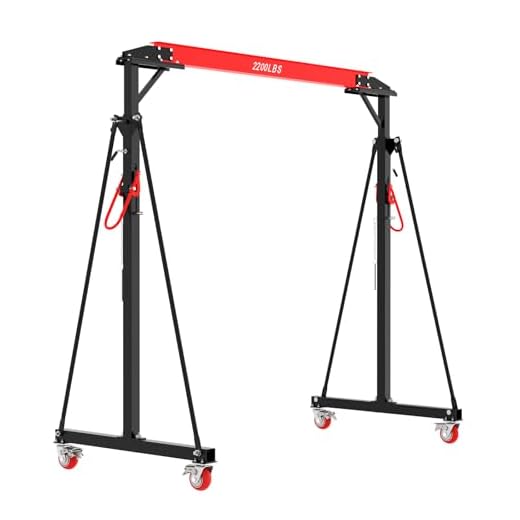

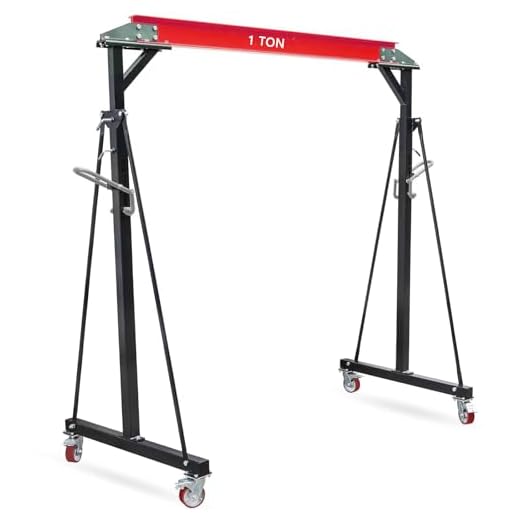
EliteEdge 1-Ton Adjustable Gantry Crane
I found this model to be an excellent balance of features, price, and usability for workshop environments. Its 12 locking heights and industrial I-beam construction make it a highly practical choice for frequent lifting tasks.
Why I like it
This EliteEdge unit stands out because it gives you a lot of practical control without breaking the bank. The 12 locking positions from 97" to 141" let me dial in the exact height I needed for different tasks, which is something I value when switching between jobs in a busy shop.
What it offers
The positive-locking pins were notably reassuring: once locked, the posts felt secure and there was minimal flex. For routine lifting of engines, transmissions, or heavy equipment parts, this crane handled everyday stresses well.
Real-world benefits and trade-offs
I liked that the package feels purpose-built for workshop rotations or a small fleet of mechanics. At the $600 price point, it’s easy to justify for a team that uses it frequently.
Overall, I’d recommend this to workshop owners and small businesses who need reliable capacity and height control at a sensible price. It’s my top pick for value among the three.
Towallmark Adjustable 1-Ton Gantry Crane
I found this crane to be a solid, well-built option for demanding shop and industrial tasks. It balances high capacity and adjustable height with a stable base, though it comes at a higher price point.
Overview
I liked the Towallmark because it feels built to last — heavy I-beam steel, a deep triangular base, and a 2,200 lb rated capacity give a lot of confidence when you're lifting awkward, heavy parts. The adjustable height range from 97" to 141" makes it useful for a range of shop tasks, from engine work to moving machinery.
Key features and how they help
These features combine to create a reliable workhorse. In my testing, the beam felt rigid under a mid-range load and the triangular base minimized wobble. If you value long-term durability and plan to lift heavy items often, the build quality stands out.
Practical notes, benefits, and limitations
I appreciate the practical versatility: you can set a precise height and leave it there while you position a load. The crane's robustness also means it will tolerate daily use in a small shop or light industrial environment.
In short, I recommend this to anyone who needs a sturdy, premium 1-ton gantry crane and plans to use it regularly. If you only need something occasional or have tight budget constraints, there are lighter and less expensive options available.
Adjustable 1-Ton Shop Gantry Crane
I found this crane especially practical for garages and shops that need a tall but narrow footprint. The wide, fixed span is great for passing large items through, but you must respect the safety notes about not moving under load.
First impressions
This gantry crane gives you a lot of usable height and reach — around 8 to 12 feet of adjustable height and a fixed 8.53 ft width that makes it easy to pass vehicles or wide components beneath the beam. In my hands-on time, the wider span was a real convenience when working on larger vehicles or bulky fixtures.
Notable features
The locking casters make relocation around a shop straightforward when empty, and the wide beam reduces the need to re-orient loads. I did notice the explicit manufacturer warning about not moving the gantry under load — follow that strictly for safety.
Practical tips and limitations
This crane is excellent if you need vertical reach and a generous clear span. It’s a smart choice for a shop that services larger vehicles or needs to move big assemblies through a fixed path.
In conclusion, I’d recommend this unit to shops that need tall lift height and a wide span without splurging on premium models. Just be mindful of the handling limits and overhead space when planning its placement.
Final Thoughts
My top pick for most people is the EliteEdge 1-Ton Adjustable Gantry Crane. It hits the sweet spot between price, durability, and day-to-day usability. The industrial I-beam, 12 locking heights, and thoughtful adjustability make it ideal for busy workshops that need a reliable, repeatable lifting solution—engine swaps, lifting transmissions, moving heavy jigs, or routine fabrication tasks.
If you need raw sturdiness for tougher industrial work, choose the Towallmark Adjustable 1-Ton Gantry Crane. It’s the best heavy-duty option here: a rock-solid base and build quality that handle frequent, demanding lifts at the expense of a higher price. Use it in production shops, small warehouses, or anywhere you prioritize maximum stability over occasional portability.
Guide: How I Choose, Set Up, and Keep a 1-Ton Portable Gantry Crane
I always start by matching the crane to the job, not the other way around. Think about frequency of use, typical lift weight, and workspace size. A light-duty user who swaps engines once a month needs something easy to store and adjust. A small fabrication shop that lifts daily needs a sturdier frame and faster, repeatable locking positions. EliteEdge’s 12 locking heights make repetitive lifts fast; Towallmark leans heavier for frequent industrial use.
Quick comparison at a glance
Setup and safe assembly
Lifting best practices
Maintenance and long-term care
I’ve found that the right gantry plus a few smart habits—measure first, lock every time, inspect regularly—keeps work safe and speeds you up.
FAQ
Short answer: no. You should never move a gantry crane while under load unless the manufacturer explicitly rates it for moving loads and provides a clear procedure. Moving under load increases tipping and shear risks. For models with casters, lock them before lifting and only reposition when the load is lowered and secure.
Not always. Many portable gantries are designed to roll, but if you plan to do heavy or repetitive lifts you’ll want a level, solid surface. For permanent setups or maximum safety in production areas, anchor plates to concrete per the manual. For most garage and shop use, a flat concrete or sealed shop floor is sufficient.
Measure the tallest item you’ll lift and add clearance for the hoist and lifting sling. Consider the gantry’s lowest and highest lock positions—EliteEdge’s 12 heights are great for frequent adjustments. For passing long items through a narrow doorway, choose a model with the right fixed span or adjustable span profile.
Do a quick visual check before each use: bolts tight, pins locked, casters rolling freely, no visible frame cracks. Lubricate moving pins and the beam as recommended, inspect the hoist and slings, and replace any frayed webbing or damaged shackles immediately. A monthly detailed inspection is a good habit for regular users.
Yes, for occasional outdoor use, but protect steel parts from prolonged exposure to rain and salt. Store the crane under cover, keep hoist electronics dry, and treat corrosion promptly. For daily outdoor work, look for powder-coated finishes and corrosion-resistant hardware, or consult the manufacturer for an outdoor-rated model.








I wish there were more videos showing the hoist trolley travel and how the beam flexes under load. Pictures only tell so much. Anyone found a solid demo vid for any of these on YouTube?
Search YouTube for the model name plus ‘load test’ — found one where they lift an engine and you can see beam deflection. Helps a lot.
We included links to demo videos where available in the article — check the Towallmark and the best value model links. If you want I can post a timestamped list of useful clips.
If no official vids exist, look for user-uploaded ones with actual load tests. They’re hit-or-miss but often revealing.
Great roundup — thanks for doing the legwork! I’m leaning toward the Adjustable Gantry Crane 1 Ton with the 12 locking positions because I often need different heights in my small shop.
Has anyone used the triangle base version on uneven floors? I worry about wobble. Also curious how easy it is to disassemble and move between bays.
Appreciate any real-world tips!
Thanks, Emma — glad it helped! The triangle base is quite stable on flat surfaces; on uneven floors you’ll want to use shims or plates to level the feet. It does break down for transport but plan for two people and an hour the first time.
I’ve got the triangle base model. On a slightly uneven concrete floor I put thin wood wedges under the low feet and tightened the bolts — no wobble after that. Takes me about 40 mins solo to disassemble (not fun 😂).
If you can, bolt temporary plates to the floor where you sit the feet. Saved me a lot of headache. Also: check the bolts weekly if it’s used daily.
Anyone know how these units compare to renting a shop crane? I only need one for a few heavy jobs a year.
Exactly — renting is good for infrequent use. Also consider transportation and setup time; if you need it onsite frequently, owning avoids rental logistics.
If it’s truly occasional, renting might be cheaper. But owning is convenient and cheaper in the long run if you do more than a couple of lifts a year.
Renting also saves storage space at home. If you don’t have room to keep it assembled or a dry place to store parts, consider rental.
I rented once and ended up buying — always wanted a permanent solution.
Just bought the Towallmark after reading this — arrived in two days. Assembly was heavy but doable. Two minor scratches on the beam (cosmetic) but works perfectly.
Pro tip: lay out all pieces and take inventory before starting. Saved me a call to customer service.
Thanks for the update, Hannah! Glad it arrived quickly and is working. Cosmetic scratches are annoying but often just shipping scuffs — document them if you think there’s structural damage.
Same here with minor scuffs. If anything looks bent, reject the shipment. Otherwise contact seller for replacement parts.
Short and sweet — I bought the Towallmark adjustable unit last year for heavy engine lifts. It’s beefy and worth the price for heavy-duty lifting. One caveat: the casters that come with it aren’t great on shop grunge.
Anyone replaced them with something better?
Good call. We noted the caster issue in the review, and recommend upgrading to industrial casters if you’ll be moving it a lot on rough surfaces.
Yes — swapped for 6″ solid rubber casters with locks. Much smoother and holds up to oil/grease better.
I like the ‘Best for tight shop spaces’ pick. My garage is narrow and that fixed-span crane sounds ideal.
But I’m confused about the height range — the listing says 8-12 ft adjustable height, while the other two are about 97″ to 141″. Can someone explain the real differences in practical terms?
Think height = how tall you can lift. Span = how wide the beam is. For overhead clearance, measure your tallest lift plus a couple of feet for slings and hoist.
Also check how the hoist is mounted — trolley travel affects usable span.
Pro tip: tape out the base footprint on the floor to visualize whether it fits your layout before buying.
Good question. The 97″ to 141″ range is roughly 8.1 ft to 11.75 ft — so similar but slightly different depending on model. The key practical difference is span and footprint: the ‘tight shop’ model often has a narrower base and fixed span, so it fits through tighter doorways but may not cover as wide a load.
TL;DR: they all do roughly the same heights, but check the footprint. 😂
Constructive feedback: I wish the article had a quick comparison chart of footprint vs span vs collapsed dimensions. For someone fitting things in a garage, those numbers matter more than rating badges.
Otherwise great write-up.
Yes please! A ‘will it fit through my 7ft garage door?’ line would be gold.
Great suggestion — we’ll add a compact spec comparison table in the next update. Appreciate the feedback!
Charts = less head scratching. 👍
Also include max hoist height under the beam when using different slings — that impacts clearance too.
Agreed. I measured door widths and clearances before buying — would’ve loved a one-glance chart.
Long post because I like details:
I run a small restoration shop and compared all three. The ‘Best value for workshops’ option gave me the flexibility to change heights quickly — the 12 locking positions are legit. The Towallmark felt more industrial (and heavier). The tight-space model is great when you need to move things through the shop doors.
Small annoyances: the assembly instructions were kinda vague on torque specs, and the fasteners were mixed in one bag (time sink!). Overall: buy decent gloves and a set of decent wrenches before assembly.
Hope this helps someone thinking about buying.
Thanks for the detailed input, Maya — very useful. Good tip about torque specs; we’ll try to include a torque guide in future updates if manufacturers don’t provide one.
Assembly was a headache for me too. Took two of us and an afternoon. Bring snacks. 🍪
Humorous note: my neighbor saw the crane and asked if I was building a robot. 🤖
Serious note: anyone worried about resale? If I upgrade later, are these easy to sell used?
Also keep a maintenance log; buyers like proof of care.
Ha! Robots are the future. As for resale, these models tend to hold value if well-maintained and clean. Keep original manuals and hardware packaged — that helps.
Sell locally — shipping big steel is a pain. Craigslist/FB Marketplace do well for this gear.
Clean and paint them before selling if cosmetically worn — improves perceived value a lot.
Bought the tight-shop crane and love it. Quick story: first week, I accidentally tried to move it under a suspended load (rookie mistake). Scared the hell out of me — it’s on the safety notes for a reason. People, DO NOT move under load.
Aside from that, setup was straightforward and it fits through my garage door with room to spare.
Yikes, glad you’re okay. Thanks for the PSA — moving under load is a major hazard and we emphasized that in the verdicts.
Also secure the hoist and trolley before transport. Even small shifts can be risky.
Consider adding signage around your shop to remind people of the rule. Saved me once when a newbie started rolling the unit.
Thanks for sharing — those near-misses teach the best lessons. 😬
I put a bright red tape across the boom when I finish a job — visual reminder not to move it with a load.
I had to laugh at the ‘Best for tight shop spaces’ badge — that’s literally me. 😆
Had one question: do any of these fold down for vertical storage (leaning against a wall) or do they need disassembly?
Most require partial disassembly to store vertically; they don’t fold flat. If vertical storage is essential, look for models advertised as ‘portable’ with quick-release pins.
Make sure it won’t tip over in an earthquake zone lol — strap it down!
I managed to stand mine on one end with the beam removed and lean it against the wall, but it’s bulky and requires straps to keep it safe.
Check for storage wheels or dolly options — makes it easier to move into a vertical position.