


Which whispering beast will let you finish the job during nap time?
You don’t have to yell over your compressor. I found several California Air Tools models that are legitimately quiet and actually useful. Short on noise, long on performance.
Top Picks
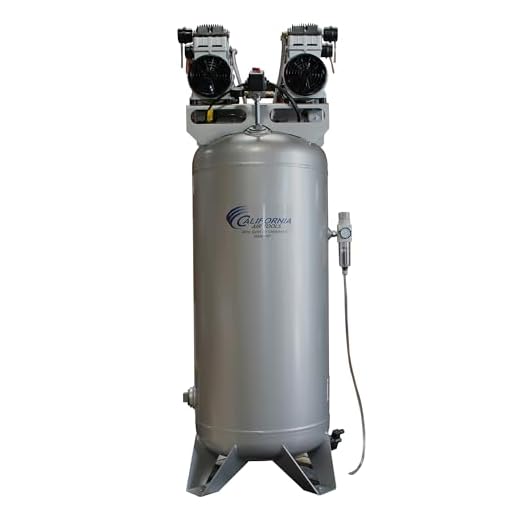


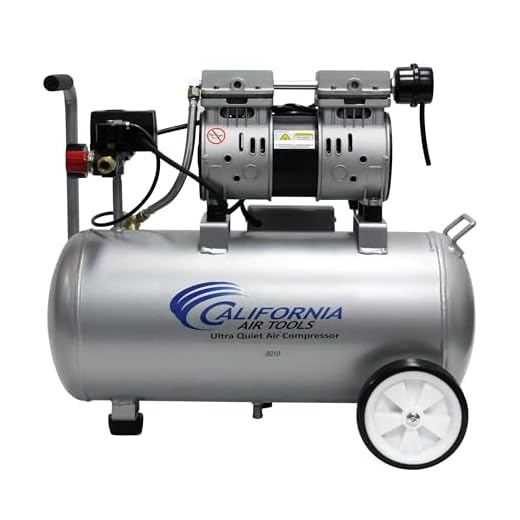


4.0 HP 60-Gallon Ultra Quiet Compressor
A rare combination of high capacity and whisper-quiet operation that holds up in a busy shop. It’s built for professionals who want big CFM and minimal noise without constant maintenance.
Who this is for
I reach for this model when I need shop-grade capacity but don’t want to live with a deafening compressor. It’s aimed at pro shops and serious hobbyists who run higher-demand tools like sanders and spray guns and want a quieter workspace.
Key features and what they mean to me
I like that the twin-motor layout gives strong, steady CFM (10.6 CFM at 90 PSI spec) while staying far quieter than typical industrial units. The auto-drain is a practical touch that saves time and prevents internal corrosion in humid climates.
Benefits and practical insights
I’ve found it ideal for multi-tool shops where frequent tool swaps and extended spraying or sanding runs are common. The large tank means fewer motor cycles and more consistent pressure during use. Expect better longevity than cheap oil-lubricated compressors because the oil-free pump eliminates messy oil changes and related failure points.
Limitations and final thoughts
Its weight and size make it a permanent install — plan placement accordingly and consider professional delivery/placement. If you need a budget or lightweight option for occasional light tasks, a smaller model will be easier to move. For heavy workshop use where noise and uptime matter, this unit is one of my top picks.
2.0 HP 20-Gallon Quiet Portable Compressor
A nicely balanced 20-gallon option that delivers the airflow needed for multiple tools while staying relatively quiet. It’s a great middle ground between small portables and full-size shop tanks.
Where this fits in my toolkit
This 20-gallon model is what I reach for when I need more reserve air than an 8–10 gallon can provide but still want a transportable unit. It’s useful in small shops and for heavier home renovation projects.
Important features and benefits
I appreciate that this unit keeps noise levels down while providing a noticeable step up in usable air for sanding, spray guns, or running two tools at once. The added tank capacity reduces motor cycling and smooths pressure delivery.
Considerations
This is a heavier machine — plan placement and transport accordingly. If you’re only doing light occasional trim work, it may be overkill; but for workshops and larger renovation jobs it’s an excellent compromise between size and capacity.
2.0 HP 10-Gallon Quiet Portable Compressor
A quiet mid-size compressor that bridges portability and usable CFM neatly. It’s versatile enough for framing nailers, cut-off tools, and occasional spray work in a home or small shop.
Who will like this compressor
I recommend this 2.0 HP 10-gallon model for DIYers and small shop owners who need more airflow than tiny portable units but still want something movable. It’s a practical step up when occasional higher-demand tools enter your workflow.
Features I pay attention to
In practice, the unit refills quickly and keeps pressure stable enough for finishing nailers and small impact tools. I often recommend it to people upgrading from pancake compressors who want better run time without committing to a large stationary tank.
Practical notes and limitations
If you expect to spray cars or do continuous sanding, you’ll want a larger tank or a 60-gallon class unit. But for workshop versatility, portability, and quieter operation, this model strikes a very useful middle ground.
1.0 HP 8-Gallon Aluminum Ultra Quiet Compressor
I favor this when I need an 8-gallon tank that’s easy to move and nearly silent. The aluminum tank keeps weight down and the oil-free pump keeps maintenance simple.
Who should consider this unit
I recommend this 8-gallon aluminum unit if you want more capacity than small portables but still need something you can comfortably load into a truck. It’s great for mobile jobs and crowded garages.
What I like most
In day-to-day use, this compressor recovers quickly enough for trims and finish work. The portability plus quiet operation means I can leave it running indoors without making things uncomfortable for family.
Real-world caveats
Handle ergonomics aren’t perfect — you might stoop a bit when wheeling it. Also, check fittings on arrival and tighten if necessary. Other than those small setup items, it’s a very practical lightweight compressor.
1.0 HP 4.6-Gallon Aluminum Twin Tank
The aluminum twin-tank design keeps weight down and prevents internal rust — great if you store the unit in a humid space. It’s whisper-quiet and handles dual trim guns or light shop tasks well.
Why I pick the aluminum twin-tank
If you store gear in a damp garage or prefer lighter equipment you can lift, this aluminum twin-tank model makes a lot of sense. The rust-free tanks and low weight are practical advantages over steel tanks.
Standout features
I like using this around the house for trim work and occasional spray jobs because it doesn’t feel like a burden to move it around. The dual outlets are convenient when I want to run a brad nailer and an air blower at the same time.
Practical downsides
Don’t expect long continuous runs for high-volume HVLP painting or heavy industrial staplers. This is a portability-first unit — if you need long continuous CFM, choose a larger tank or multi-horsepower compressor.
1.0 HP 8-Gallon Ultra Quiet Compressor
Compact, very quiet, and mobile — a dependable option for hobbyists and garage users who want low disturbance and decent CFM for trim work. It’s a good balance of price, portability, and performance.
Why I recommend this model
I suggest this 1.0 HP 8-gallon compressor when you need a quiet unit that’s easy to move around the garage. It’s a popular choice for people doing trim, upholstery, inflation, and small spray projects where noise and portability matter.
Notable features
The low RPM motor design reduces noise and wear, so I’ve seen users run this beside their workbench and still carry on conversations. The oil-free pump means you don’t worry about changing oil; that’s especially nice in a home environment.
Everyday use and caveats
This unit recovers quickly enough for intermittent nail gun work and touch-up painting with low-volume guns. If you plan on running continuous HVLP or heavy air tools, you’ll hit its limits — in that case upgrade to a larger tank or higher CFM compressor. For house projects, though, it’s a great value.
Light & Quiet 1-Gallon Portable Compressor
One of the quietest portable compressors on the market, letting you work nearby without shouting. It’s ideal for small home projects, inflating, and light nailing work where mobility and noise matter most.
When I pick this unit
I reach for the 1P1060SP when I need the quietest possible compressor that’s still capable of powering common household pneumatic tools. It’s perfect for folks who work in garages attached to living space or for mobile tasks where loud compressors are impractical.
What stands out to me
In real use, you’ll notice how unobtrusive it is — you can have a normal conversation nearby while it runs. If you’re doing quick jobs around the house or traveling between job sites in a truck, this is a highly convenient solution.
Limitations to keep in mind
The small tank means the motor will kick on fairly often during extended nailing sequences. For continuous heavy-duty tasks or professional painting, a larger tank and higher CFM compressor are the right choice. But as a quiet, portable workhorse for lighter tasks, it’s hard to beat.
1.0 HP 6-Gallon Industrial Quiet Compressor
A compact industrial-style unit optimized for quiet operation and durability. It’s a good fit for indoor jobs where noise is an issue and you still need a reliable 1.0 HP compressor.
Overview
I like this model when quiet operation matters but you still need a slightly higher duty cycle than basic hobby compressors offer. The MP100LF motor is designed for longevity and quieter running.
Key specs and benefits
I appreciate that California Air Tools pushed a more rugged motor design (MP100LF) into this package — it increases continuous run time and yields a more industrial feel. The result is a compressor that’s quiet and dependable for garage mechanics and light shop work.
Limitations to consider
This is not a full industrial workhorse for all-day continuous use on heavy tools. If your workflow involves constant heavy-duty pneumatic tools, you should move up to a larger tank and higher-horsepower model. For intermittent use and consistent quietness, this is a solid pick.
1.0 HP 2-Gallon Ultra Quiet Compressor
Tiny, quiet, and easy to carry — perfect for airbrushing, inflation, and light brad-nailer work. It’s not meant for high-volume spray tasks, but it shines for quick, quiet jobs.
Who I recommend this to
I point people to this model when they need a truly compact, quiet compressor for hobbies like airbrushing, inflating, and light finish nailing. It’s also a good travel option for small jobs.
Noteworthy specs
Because of its compact size, I’ll use this for short bursts and light finishing work — for example, airbrushing or installing trim. For any task demanding sustained airflow, though, you’ll quickly notice the limited run time and recovery.
Final take
It’s a practical, quiet little unit for homeowners and hobbyists. Just set expectations: it’s a small support compressor, not a full shop workhorse.
8-Gallon Compressor with LVLP Painting Kit
The kit brings a quiet compressor together with an LVLP spray gun for an accessible painting starter pack. It’s great for occasional touch-ups but not for professional continuous painting.
Who this kit is aimed at
I usually recommend this kit to hobbyists and DIYers who want to try LVLP spraying without buying separate components. It’s a convenient bundle for furniture touch-ups, small automotive panels, and home projects.
What’s included and why it matters
The LVLP gun is designed to work with lower volume compressors, so pairing it with the 8-gallon unit makes sense in principle. In practice, the spray gun is adequate for light projects but lacks the durability and solvent resistance of higher-end guns — don’t expect pro finish quality without practice and correct thinning.
Practical advice
If you plan to do intermittent small painting projects, the kit is a budget-friendly way to get started. For frequent or professional-level spraying, I’d upgrade the gun and consider a compressor with higher continuous CFM to avoid frequent pauses and less consistent atomization.
Final Thoughts
I recommend the 4.0 HP 60-Gallon Ultra Quiet Compressor as my top pick for serious shops. It delivers big CFM, a large tank for long runs, and surprisingly low noise for its size — perfect for continuous spray work, multiple nailers, or a busy professional shop that needs reliable, low-maintenance power.
For mobile work or hobbyists who want near-silent operation, I recommend the 1.0 HP 8-Gallon Aluminum Ultra Quiet Compressor. It’s light, rust-resistant, and quiet. The aluminum tank and oil-free pump make it easy to carry and maintain — ideal for trim work, on-site repairs, inflation, and small spray or airbrush jobs.
Runner-up: the 2.0 HP 20-Gallon Quiet Portable Compressor if you need a true middle ground — more airflow than an 8-gallon but still portable and quiet enough for a shared garage.





I’m leaning toward the 8010A for mobile garage work. The 60 dBA rating seems very attractive. Anyone had issues with the aluminum twin-tank models losing pressure quickly? I’m planning on using it for trim nailers and occasional spray.
I own an 8010A and use it for trim and finishing. It cycles often but I haven’t had major issues — just be mindful of CFM requirements.
The 8010A is designed for mobility and quiet operation; it should handle trim nailers well. The twin-tank design can help with recovery, but for heavier continuous spray you’ll notice more frequent cycling. For trim work it’s usually sufficient.
If you want more buffer for spray, consider the 20-gallon 20020. More steady output but still relatively quiet.
The article gave the 6010LFC an ‘industrial’ badge — does that mean it’s overkill for a home woodshop? I’m doing cabinet doors and some sanding-spray work. I’d like something quiet but durable.
Thanks — that helps. I’m leaning toward the 6010LFC now.
The 6010LFC is a compact industrial-style unit that balances quiet operation with durability. For cabinet work and occasional spray tasks it can be a very good fit — not necessarily overkill, especially if you value robustness.
I use mine in a small shop — it’s a bit more than the tiny portables but reliability is excellent. Good investment if you expect to ramp up usage.
Anyone used the CAT-1P1060SP? I need something ultra-quiet for indoor painting and toy repairs. The 56 dBA rating sounds amazing — like a quiet fridge — but worried it won’t keep up for more than a few minutes of spray. Thoughts?
I use that model for airbrushing and small hobby spray jobs. Super quiet and portable — but yup, it does struggle for long continuous spray. I empty and let it refill between passes. 😊
The CAT-1P1060SP is excellent for short, quiet tasks like touch-up spraying and inflating. For longer continuous spray sessions you’d want something with higher tank capacity or a higher CFM rating. It’s a great portable quiet option though.
Loved the roundup — very practical. A note for newbies: oil-free pumps are low maintenance but still need proper storage and occasional checkups. Also, check CFM at 90 PSI when comparing; some spec sheets are misleading. 😊👍
Excellent advice, Nicole — comparing CFM at the same PSI (usually 90 PSI) is key. Oil-free reduces maintenance but don’t skip the basic upkeep and proper ventilation.
Totally. I once bought based on horsepower alone and regretted it. CFM and tank size matter more for tool compatibility.
Yep — and read real user reviews about recovery times. Specs don’t always tell the full story.
I like that the CAT-4610AC has aluminum tanks — rust resistance is a big deal where I live (coastal humidity). Anyone know how aluminum vs steel affects longevity in real-world use? Thx!
Aluminum tanks resist internal rust so they typically last longer in humid environments. They’re also lighter. The trade-offs are cost and sometimes dent susceptibility; but functionally for coastal homes, aluminum is a smart choice.
Just keep an eye on the fittings and drains. Even with aluminum, moisture can cause issues in hoses and connectors if neglected.
Aluminum here too — been in my salt-air garage for 3 years with no issues. I’d buy aluminum again.
Low-key laughing at the 8010 PK being recommended for entry-level painting 😂 If you plan on doing continuous cabinets or cars, it’s not gonna cut it. For tiny projects and learning? Sure. The kit is fine if you’re testing the waters.
Exactly — not bad for a starter, but don’t expect pro results for big jobs without upgrades.
Agreed. Bought the PK kit to try and quickly upgraded after I realized I wanted to do full cabinet sets. Good learning tool though.
Totally — the 8010 PK is best for beginners and small touch-ups. Serious or continuous painting jobs will need larger tanks or more powerful compressors. Good to call that out, Rachel.
Great roundup — thanks! I’ve been eyeing the CAT-60040CAD for my home shop but worried about space and weight. Does anyone here actually run nailers and an angle grinder off the 60-gallon without lag? The noise level being 75 dBA sounds high compared to the smaller units, but if it’s that much more powerful maybe it’s worth it.
Hi Emily — the CAT-60040CAD is meant for heavy shop use and can handle multiple tools more consistently than the smaller tanks. You’ll notice more consistent PSI under load, but it’s bigger and louder than the 8–20 gallon options. If you need continuous high CFM, it’s the right choice.
If space is an issue, consider the 20-gallon 20020 — good middle ground. Less noise and still decent for a couple of tools.
I have the 60-gallon in my garage. Runs a framing nailer + air ratchet fine, no noticeable lag. Definitely heavier and louder than my old 8010, but the uptime is worth it for me.
I picked up the 10020C after reading similar lists. Solid all-around performer as the article says. A couple things I didn’t expect:
1) The wheels make it way easier to move than I thought.
2) It’s quiet enough that my neighbor actually asked if I’d switched to battery tools lol.
Would buy again.
Thanks for the feedback, Jason — glad it’s working out. The wheeled mid-size compressors are underrated for garage shops.
Ha, neighbors judging tools — classic. I have the 10020C too, and agree about the mobility. Small tip: put a mat under it to reduce vibration noise if you’re on a wooden floor.
Do you use it for spray painting often? I’m debating between the 10020C and 8010 PK for occasional furniture touch-ups.
Greg — I’ve done light spray with it (not full furniture jobs) and it was okay. If painting more often, the 8010 PK kit might be more tailored, though the compressor in the kit is less robust for longer runs.
Funny question: anyone tried using the 2010A for inflating party balloons? 😅 I’m mostly serious — need something small and quiet for occasional inflating and craft airbrushing. The 2-gallon sounds perfect but is it overkill?
Used mine for a backyard party last month — worked great and didn’t scare the kids. 😂
The 2010A is perfect for light tasks like inflating, airbrushing, and quick brad nail jobs. Overkill? Not really — it’s small, portable, and quieter than many inflators.
Quick question for those who use these indoors: how noticeable is the difference between 60 dBA and 70 dBA in practice? The article lists a few models at both levels and I’m torn. My shop is attached to the house so noise matters a lot.
I can confirm — my 70 dBA compressor sounded a lot louder inside the house, even though outside it’s ‘just’ a bit louder. Go lower if you’re sensitive to noise.
Thanks everyone — great points! I’ll probably choose an aluminum tank 60 dBA model and keep it in the garage corner with some sound dampening.
Decibel differences are logarithmic — a 10 dBA increase typically sounds roughly twice as loud to the human ear. So a 70 dBA unit will be noticeably louder than a 60 dBA one. If your shop is attached, leaning toward 60 dBA models (like the 8010/8010A) is wise.
Also consider duty cycle and where you place it. A 70 dBA unit farther from living areas might be less disruptive than a 60 dBA one right next to the wall.