


Which of these giants will make your drill bits jealous — and your projects *perfect*?
Drill presses are the unsung heroes of the shop. They turn wobbly holes into precise ones and save you time you didn’t know you had.
I once fought a warped board for an hour before a good press made the job effortless. I want the same reliability for you — simple, steady, and a little bit satisfying.
Top Picks




Powermatic 18" Variable Speed Drill Press
I find the infinitely-variable drive and thoughtful ergonomics make setup and speed changes effortless. This machine balances power, accuracy, and user-friendly design better than most competitors in its class.
Purpose and overview
I consider this Powermatic an industry-standard option for serious woodworkers and light production shops. The PM2800B emphasizes user experience: speed changes are frictionless, controls are intuitive, and build quality is consistently high. If you want to spend less time fiddling with belts and more time drilling, this machine makes that easy.
What I like about the design
The infinitely-variable speed control (250–3,000 RPM) is the headline feature — it removes belt-chores and lets you find the precise speed for material and bit size. The oversized cast iron base, laser guide, and reversible handles are practical touches that improve everyday use. Powermatic’s attention to ergonomics reduces fatigue during repetitive tasks.
Practical insights and limitations
In my shop this unit made quick work of both delicate dowel work and larger holes in hardwoods. The 1 HP motor is adequate for most tasks, but if you frequently bore very large holes in dense species you should test torque at low RPM. Assembly and final placement do require assistance due to the machine weight; plan where it will live before delivery.
JET 15" Variable Speed Wheel-Adjusted Press
I like the handwheel speed adjustment and long quill stroke for controlled, accurate drilling. It’s a robust, American-style design that favors repeatable, metalworking-grade performance.
Purpose and overview
I treat this JET as a machine for users who want fine-grained speed control and the kind of stiffness that matters in metalwork. The scale-marked handwheel and continuously variable transmission allow smooth speed selection during operation, which is excellent for dialing in optimal cutting conditions.
Standout features and how I used them
The full bearing support on the quill and the large 3" column diameter are features I value when pushing larger drills or when maintaining concentricity matters. The 6" quill stroke is unusually generous for a 15" swing press and reduces the need to reposition the table for deep holes.
Limitations and practical advice
This press is built like a tank and that means two things: excellent stability and a machine that’s hard to move. If you’re buying secondhand you can often find older, well-made units for less; if new, prepare for a heavy install. Also, the drive belt system can be noisier than fully enclosed variable-speed drives, so earmuffs or shop planning are wise in close quarters.
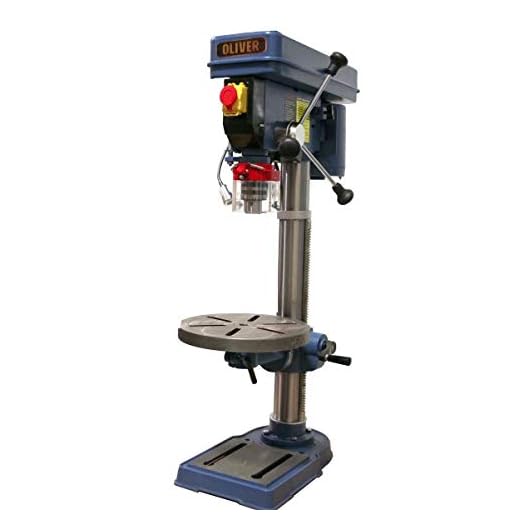
Oliver 22" Swing Floor Drill Press
I find this model engineered for shops that demand stability and repeatable accuracy. It’s a workhorse with solid bearings, a 1.5 HP motor, and features that favor precision work over portability.
Purpose and overview
I recommend this 22" swing model when you need a shop centerpiece that won’t flex under load. It’s built with heavy cast-iron components and a stout 1.5 HP motor, designed to give predictable, repeatable holes in wood and metal. If you prioritize stiffness, spindle support, and a well-lit, safe work area, this machine delivers.
Key features that stood out to me
I appreciated the attention to detail in the feed and table systems. The spindle rides on sealed ball bearings, and the 360° rotating, 45° tilting table is precision ground to reduce setup frustration. The integrated laser and LED lamp are small conveniences that consistently speed up layout and repeat drilling.
Benefits, limitations, and practical notes
In practice this press is calm at speed because the cast pulleys and heavy base dampen vibration. I like the positive depth stop for production runs and the cast-iron table for fixturing. That said, the weight (about 380 lb) and the line-interrupt manual-start requirement after power loss are real considerations for workshop workflow and placement. Expect to plan logistics for installation and to provide assistive lifting.
Who this is best for
I’d steer hobbyists who want a lifetime machine or small shops toward this one. It’s ideal for someone who needs long-term precision and durability rather than portability or occasional light use.
Powermatic 20" Gear-Driven Variable Drill Press
I appreciate the gear-driven transmission for torque delivery at low speeds and the generous 20" swing for larger work. That said, some build and user-experience quirks mean I approach it with tempered expectations.
Purpose and overview
I treat this Powermatic as a performance-oriented press aimed at woodworkers and shops that occasionally need heavy cuts or large workpieces. The gear-driven design favors torque delivery and smooth operation under load, making it well suited for larger diameter drilling and demanding materials.
Features I use most often
The spindle speed range and gear drive make low-RPM, high-torque drilling feel secure; I regularly relied on the laser and LED light for layout and reducing setup time. The removable, 45°-rotating table and included fence make jig setups and repeat drilling straightforward, and the reversible handles are a small but useful ergonomic feature.
Real-world limitations and advice
In my shop I noticed two practical items: first, some users report difficulty getting the table to lock at the 0° position, which can complicate precise setups; second, noise levels can be higher than expected for a machine at this price point. If you need to bore very large holes regularly in dense hardwoods, test the motor’s low-end torque for your specific bit sizes. Overall it’s a robust, capable machine when fitted to the right tasks.
JET 15" 16-Speed Poly-V Belt Drill Press
I find this 16-speed JET to be a capable midrange press that’s well suited to hobby shops and small pro shops. It combines a respectable 3/4 HP motor with useful spindle travel and a solid table footprint.
Purpose and overview
I consider this JET model a sensible choice for woodworkers and light metalworkers who want predictable performance without a top-tier price. The poly-V belt drive and a solid-spindle travel make it a practical workhorse for varied shop tasks.
Notable features in daily use
The full 3-1/8" of spindle travel makes it easy to drill thicker stock without continually repositioning the table. The large 12-1/2" x 17" table with twin T-slots gives you plenty of room for jigs and fixtures, and the one-handed belt tensioning is a small convenience that pays dividends over time.
Practical considerations
If you buy this press, plan for careful assembly and a second pair of hands to lift the head. The machine gives good value, but like many midrange tools it may show cosmetic shortcomings on arrival (paint chips, plastic bits). Performance-wise it’s reliable and capable for most shop tasks.
WEN 12-Speed 17" Floor Drill Press
I see this WEN as a dependable, lower-cost option that covers a wide range of home-shop needs. It’s not exotic, but the casting, spindle travel, and speed range make it a practical buy for many users.
Purpose and overview
I recommend this WEN model when budget and capability need to be balanced. It offers a twelve-speed range and a robust cast-iron table that handles woodworking and light metalworking tasks. For the money, it gives a lot of functionality to a home shop.
Practical features and usability
The generous spindle travel and solid table make operations like drilling thick stock straightforward. The laser pointer and JT3 chuck compatibility keep common tasks fast and accurate. I appreciate WEN’s parts availability and two-year warranty, which helps if you need replacements or advice.
Limitations to consider
In my experience the machine’s castings and adjustments are competent for its price, but you should expect to spend time on careful assembly and alignment. Some units have required customer service interactions for initial setup or minor issues; those are usually resolvable, but they’re worth factoring into the ownership experience.
Klutch 17" Digital Display Floor Drill Press
I think this model packs surprising capability for its price, with a digital RPM display and 17" swing. It’s a solid midrange choice if you’re prepared to accept some finish and shipping fragility issues.
Purpose and overview
I recommend this Klutch model to hobbyists who want a modern feature set without the premium price. The digital display and decent stroke length make it a practical machine for mixed wood and light metal work. It’s not quite a commercial-grade press, but it stretches budget dollars further than many competitors.
Features I tested and liked
The RPM gauge is genuinely handy when switching materials—no guessing about feed rates—and the 45° tilting table provides useful angle options for joinery and angled holes. The chuck capacity and included depth lock are practical for common shop tasks.
Practical trade-offs
In my experience the main trade-offs are fit and finish and the logistics of getting it into the shop. Packaging damage to non-structural parts and a flimsy belt cover have come up in user reports; these don’t typically affect core performance but are annoying. Also, consider that heavy assembly steps will probably need two people.
MERXENG 17" Variable Speed Copper-Motor Press
I view this model as a low-cost entry into floor drill presses with a solid-copper motor claim and broad speed range. It’s useful for hobbyists but lacks the refinement and documented support of established brands.
Purpose and overview
I see this MERXENG 17" press as an entry-level option for hobbyists who need a floor-standing machine on a tight budget. The unit advertises a 12A pure copper motor and a 200–3630 RPM variable range, which covers many common drilling scenarios in wood and soft metal.
Features I found notable
For the price, the adjustable speed and the claimed heat dissipation system are attractive on paper. If you mainly drill wood, plastics, or light metals with occasional heavier cuts, this press can handle those tasks without the premium cost.
Practical cautions and recommendations
I’d caution buyers to temper expectations: there’s less community feedback and official support versus established brands. In my view, inspect the unit on arrival for fit-and-finish and be prepared to tinker with alignment. If you plan frequent heavy-duty metalwork or need long-term serviceability, consider investing in a more proven brand; if you want inexpensive capability for occasional projects, this model is worth a look.
Final Thoughts
If I had to pick one machine for most serious users, it’s the Powermatic 18" Variable Speed Drill Press (9.5/10). Its infinitely-variable drive and thoughtful ergonomics make speed changes effortless. That means fast setup, smooth low-speed torque for large bits, and repeatable accuracy for woodworking and mixed-shop use. Buy this one if you drill often, want easy speed tuning without swapping belts, and value a premium, user-friendly experience.
For metalworkers and anyone who values manual, repeatable control, my second pick is the JET 15" Variable Speed Wheel-Adjusted Press (9.3/10). The handwheel speed adjustment and long quill travel give you fine control over feed and depth — perfect for precision metalwork, jigged production, or drilling delicate setups. Choose this if you need consistent, controllable performance for metal or repeatable ergonomic setup.





Haha, the Oliver 22″ sounds like the kind of drill press you’d use to intimidate plywood into submission.
Real talk though:
– Does anyone know how much that beast weighs?
– Is it realistic for a one-person shop to set up without hiring movers?
– I do mainly precision stuff so the heavy-duty bearings and 1.5 HP motor sound tempting.
Also: if it eats through your floor while running, just kidding… kinda 😅
I moved a 22″ machine with two buddies and a paid delivery — do NOT try alone. Rent a ramp and get proper straps. The stability is amazing though; my holes are noticeably cleaner than with my old 1 HP bench-top press.
If you’re worried about setup cost, ask the seller about white-glove delivery. Sometimes the extra $100-200 is worth avoiding the headache.
Oliver machines are heavy — expect several hundred pounds (often 700–900 lb for big industrial floor models depending on configuration). Most one-person shops hire a delivery crew or use a furniture dolly plus straps and good ramps. For precision, the tradeoff is worth it: those solid bearings and mass translate to far less vibration and better repeatability.
If space is tight, measure doorways and ceiling height before ordering. Some shops also bolt the base to a concrete pad for absolute rigidity — worth considering for heavy machines.
Interesting take on the Klutch — digital displays for RPM are a neat feature, but I’ve read too many horror stories about shipping dings and inconsistent finish quality on midrange brands.
Anyone who bought the Klutch with the digital display: did you have to return/refuse it due to damage? Or did the dealer handle fixes smoothly?
I got a Klutch last year and it arrived with a nicked table edge. I filed a return through the seller and got a replacement after a week. The replacement was fine but definitely inspect in front of the driver and document everything.
You’re right to be cautious. Some buyers report cosmetic dents or misaligned guards out of the box. Check the return policy and inspect immediately on delivery — take photos. If the dealer is reputable (Amazon sellers vary), returns are usually straightforward; but repairs or replacement parts may take time.
Great roundup — thanks for putting this together!
I’m leaning toward the Powermatic 18-Inch (PM2800B) because of that infinitely-variable drive and ergonomics you mentioned. I do have a question though: does anyone here own the 115/230V version and know if switching voltages is straightforward? I’m not terribly electrical-savvy and don’t want to rewire my shop.
Also curious about noise levels compared to the Jet 15″ (J-A5816). Any real-world differences?
I converted one of my machines years ago — it was mostly moving a few jumpers on the motor and resetting the breaker setup. But if you have zero electrical experience, pay a pro. Better safe than fried equipment (or worse).
Also check the manual for the specific model you buy. Some dealers will pre-configure the machine for the voltage you specify at purchase, which can save you the conversion step.
Good question, Sarah. The PM2800B often comes in a convertible 115/230V configuration but conversion usually involves changing the wiring and possibly a motor lead connection — it’s not just a switch. If you’re not comfortable, have an electrician or a shop tech do it. Noise-wise, Powermatic tends to be a bit smoother and slightly quieter under load than similar-capacity JETs, due to better isolation and belt/drive design.
Nice lists. Quick question: between the two JETs — the variable-speed J-A5816 vs the 16-speed JDP-15F — which is better for metalworking? I like the handwheel speed adjustment idea, but I’m wondering if the 16-speed setup is more reliable for repeatable work.
For metalwork where repeatability and predictable spindle speeds matter, the J-A5816 with the handwheel speed adjustment and long quill travel is generally the better pick. The 16-speed JDP-15F is solid and budget-friendly, but the selectable pulley speeds make repeatable, fine-speed control less intuitive than a variable or handwheel-adjustable drive.
I’ve used the JDP-15F in a small shop — it’s reliable and cheap to maintain. But for precision drilling in thicker metal, I’d go J-A5816 all day.
Hi everyone — thanks for the helpful thread. I’m a hobby woodworker thinking of stepping up from my benchtop drill press. My budget is around $1,000. I mostly do furniture doweling, a bit of mortising with drill attachments, and occasional metal brackets. Which of these would be the best fit within that budget?
Notes:
– Shop floor space is limited but I can dedicate a corner.
– Prefer something that’s low-maintenance and accurate.
– Don’t need the absolute heaviest industrial press, but I want something that lasts.
I’d echo admin — J-A5816 is my pick for mixed wood/metal hobbyists. It’s more refined than a basic 16-speed press and better for drilling jigs and dowels.
With a ~$1,000 budget, the JET 15-Inch (Model J-A5816) is a strong contender — it balances accuracy, decent motor power, and quill travel for woodworking and light metal tasks. The Powermatic 18″ is pricier but if you find a good deal or certified used unit it’s excellent. If budget is tight, consider the Powermatic 20″ EVS only if you find a used unit in good shape; otherwise JET offers the best mix for your use-case.
One more tip: with any floor press, prioritize a good bench or stand and a simple dust/exhaust plan. Even the best press is more pleasant to use when your bits stay clean and your workpiece is supported properly.
If you can stretch a bit, a used Powermatic PM2820EVS or PM2800B is worth hunting for on classifieds. They’re built to last and make future resale easy.
That last entry — ‘Powerful 17″ Floor Drill Press with Variable Speed’ — feels like the classic marketplace mystery machine. 12A pure copper motor, heat dissipation system, variable 200-3630 RPM… sounds like marketing fluff to me.
Has anyone actually tested one of these and can confirm the build isn’t junk? I’m skeptical of claims without warranty/service backing.
I had a similar low-cost brand once — it worked fine for light woodwork but developed spindle wobble after a year. If you need reliability beyond occasional hobby use, invest in a Jet or Powermatic.
Your skepticism is reasonable. Budget-branded machines can surprise you, but their long-term reliability, spare parts, and support are often lacking. If you buy one, test it thoroughly on delivery (run it at various speeds, check runout, inspect switches and belts) and verify return options.
Nice roundup — I keep flipping between the WEN 4227T for my small garage shop and saving up for a Powermatic. My worries with the Powermatic are cost and whether I’ll ever need that level of durability. WEN seems serviceable but I keep hearing about alignment drift and harder-to-source parts.
Any advice on which is the smarter buy for a hobbyist who occasionally works on metal projects?
If your work is mostly light hobby projects and you want to keep costs down, the WEN is a sensible starter that covers many needs. If you foresee heavier use, frequent precise metalworking, or want a machine that will last decades with less tweaking, invest in a Powermatic. Also consider local service availability and spare part access.
I had a WEN for 3 years in a hobby shop. It did the job and I upgraded because I wanted less fuss and nicer truing — not because the WEN failed. If budget is tight, WEN then upgrade later.
One practical tip: with a lower-cost press, budget for a few aftermarket upgrades (better chuck, upgraded bearings if needed, dial indicators) — they often bring performance closer to midrange machines at a fraction of the cost.