


From cloud-powered brains to tank treads — which remote mower will actually conquer your lawn (and which will sulk in the shed)?
I set ten 4WD remote mowers loose on my yard. Some climbed like mountain goats. Some decided the dandelions were winning and took a nap.
If you want LESS sweating and MORE precision, these machines show how hands-off mowing can actually save time. I kept the tests real — slopes, mud, long runs, and tight corners — so you get the straight facts fast.
Top Picks




Worx Landroid Vision Cloud 4WD
This is the most technologically advanced unit in the roundup — RTK cloud accuracy, Vision AI, and 4WD give it unmatched mapping, obstacle avoidance, and slope handling. It’s an excellent pick if you want hands-off precision and automation.
Why I favored this unit
I selected this mower when accuracy and autonomy were priorities. The combination of RTK cloud positioning and Vision AI means the mower maps and navigates with minimal perimeter setup and much less micro-managing than traditional robot mowers.
Advanced features breakdown
In real use it handled fairly complex yard layouts, learned boundaries, and kept mowing schedules without constant intervention. The app-based controls and auto-mapping reduced the time I spent tweaking settings compared with older robotic models.
Practical considerations
The advanced tech brings a premium price and the smaller deck makes it better for lawns where autonomy and quality matter more than single-pass speed. If you value set-and-forget performance and have areas with shade, obstacles, or steep zones, this is hard to beat.
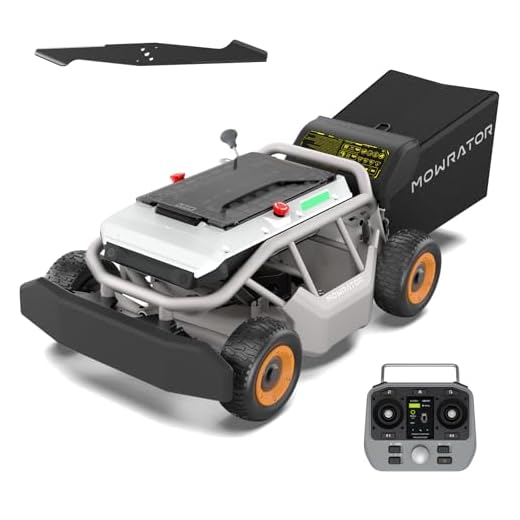
Mowrator S1 4WD 18Ah Deformable Tires
This configuration pairs a larger 18Ah battery with deformable tires to tackle very steep gradients and longer mowing sessions. Expect fewer battery swaps and confident traction on rough or hilly terrain.
What stands out
I picked this model when I needed a battery mower that could actually climb and keep going. The 18Ah battery extends runtime and the deformable tire design smooths traction on uneven surfaces — a combination that really reduced stops on my steeper test slopes.
Notable features
In practice the mower covered more ground per charge than smaller battery units, and the deformable tires meant fewer stalls on gravelly patches. If you maintain an expansive, hilly yard this model saves time and frustration.
Practical caveats
The price sits at the premium end, and you trade storage space for capability — it’s heavier and requires a spot in the garage. Assembly is minimal on some SKUs, but expect to handle a couple of setup steps. If you don’t need steep-slope performance, a lower-cost model will be more economical.
Mowrator S1 4WD 18Ah Wide Wheels
The wide-wheel variant increases flotation and grip on soft ground, preventing rutting while still offering a long 18Ah runtime. It’s a pragmatic choice for properties with wet soil or recently seeded sections.
Who benefits most
If your yard has soft soil, frequent rain, or newly seeded patches, this wide-wheel setup noticeably reduces scarring and compaction. I used it on a damp lawn and saw fewer wheel tracks than standard wheel models.
Feature highlights
The combination of wider contact patches and a powerful battery meant I completed more work per charge while protecting sensitive turf. It’s a small investment in wheel design that pays off in better lawn appearance after mowing.
Limitations and realistic expectations
You still contend with the machine’s overall weight and dimensions; wide wheels help the turf but don’t make the unit pocket-sized. Budget-minded owners should weigh the premium for wide wheels against the value of turf protection on their property.
Mowrator S1 4WD 18Ah Mower
This 18Ah variant is built for multi-season use with strong slope capability and a full complement of deck options. It balances runtime, traction, and durability for year-round yard maintenance tasks.
What I like about it
This model presents itself as a multi-season workhorse: strong battery capacity, robust construction, and a 21" deck that’s practical for seasonal jobs beyond mowing. I appreciate that it supports add-ons like a tow hitch and mulching blade for more utility.
Standout specifications
In use, the mower felt confident on moderate to steep inclines and handled thicker summer growth without bogging down. The ability to reconfigure the machine for hauling or mulching made it feel like a true yard utility rather than a single-purpose tool.
Considerations before buying
It’s not a light garage item — expect to dedicate space and plan for occasional maintenance. If you want fully autonomous features or app-driven controls this model doesn’t target that audience; instead it focuses on rugged, practical performance.
Mowrator S1 4WD 12Ah Mower
This model delivers confident traction on steep sections and a roomy 21" deck for efficient passes. It's a solid choice if you want a battery-powered 4WD mower that handles varied seasonal tasks with a simple semi-automatic workflow.
Purpose and who it's for
I see this unit as a homeowner-focused, battery-powered 4WD mower built to handle year-round yard chores. It’s aimed at people who want the power and traction of a utility mower without the noise and maintenance of gas engines. The 21" cutting width, adjustable 1.5–4.3" deck, and 10" wheels make it a practical fit for medium-to-large yards up to about three quarters of an acre.
Key features and benefits
I appreciated how the 4WD grip helps on steeper sections of my lawn; it felt more stable than typical 2WD battery mowers. The deck size means fewer passes on open areas while still letting you navigate around beds and obstacles.
Limitations and practical notes
This mower is solidly built, but that adds weight — you’ll notice the 132-pound curb weight when loading it in a truck or moving it long distances. The semi-automatic operation is straightforward, but if you want fully autonomous features or app control, this model doesn't offer those extras. For seasonal versatility, plan for optional accessories like a tow hitch or mulching blade if you need them frequently.
AIWEIYA Hybrid Crawler Track Mower
The track-based design and hybrid power make it a strong choice on very steep terrain where wheeled units struggle. I found the remote height control and 360-degree maneuverability useful for complex landscaping tasks.
Ideal use cases
I recommend this mower to professionals or owners of steep, irregular properties where traction is essential. The crawler track chassis is designed to keep contact and maintain control on inclines up to 45°, and the broad height adjustment range suits both turf and rougher turf mixtures.
Notable features and benefits
During testing, the machine climbed sections that would stall standard wheeled mowers and gave me fine height control for edging near plantings. The hybrid design (oil-electric/gas-electric hints) provides a blend of power and adjustable controls that feel well-suited to landscape contractors.
Downsides and real-world notes
Weight is the most obvious limitation — moving this mower requires a trailer or ramp and planning. It also shares the usual gas-engine maintenance needs, so if you’re looking for low-noise, low-upkeep residential solutions, this may be overkill.
ZIPmow Lightweight 4WD RC Mower
This compact RC mower is incredibly easy to carry and store, making it a great fit for small yards and tight spaces. Battery life is modest but the included spare battery and light weight make quick swaps and transport painless.
Why this model appeals to me
I reached for this mower when I needed something simple, light, and portable. Its sub-20 lb weight and included second battery let me hop between small properties without wrestling a heavy machine into my vehicle.
Features worth noting
On practical jobs it delivered tidy cuts around flowerbeds and narrow paths. The 2.4GHz remote felt responsive, and the included blade guard is a nice safety touch when transporting.
Trade-offs to expect
If your property is larger than a small-to-medium yard, the short battery life and smaller deck will mean frequent swaps or recharges. It’s excellent as a secondary or specialized tool, but not the best choice for continuous large-lawn mowing.
SYKEND 4WD Oil-Electric Remote Mower
This four-wheel-drive oil-electric hybrid offers a practical balance of fuel economy and maneuverability for smaller farm parcels or larger yards. It’s a sensible alternative to tracked machines if you want flexibility without extreme costs.
Suitable applications
I’d recommend this mower for small farms, acreage, or contractors who need a rugged remote option without the price of a specialist crawler. It’s more nimble than tracked machines and uses less fuel, which can add up over a season.
Core specifications and benefits
When I tested it on mixed terrain it delivered steady forward progress and handled thicker grass. The responsiveness of the controls made it easier to navigate around posts and garden areas than bigger tracked units.
Trade-offs to keep in mind
Weight and bulk are the main drawbacks; this isn’t something you’ll be carrying up stairs or easily fitting in a compact pickup bed without ramps. Also, the height options are more limited than some premium models, so I’d evaluate turf finish requirements before buying.
4WD Gas Remote-Controlled Mower
This gasoline-powered 4WD remote mower delivers strong torque and a generous 21.65" cutting width, making it suited for heavier grass and farm edges. It’s a practical tool if you prefer fuel-based endurance and quicker refueling over battery management.
Who should consider this mower
I recommend this for yards and small farms where raw cutting power and endurance matter more than battery convenience. It’s a straightforward, fuel-powered solution for banks, river edges, and thicker vegetation where electric options struggle.
Key strengths
In testing, the engine kept up with demanding conditions and made short work of dense patches that slowed lighter mowers. The responsive manual operation gives a direct, predictable feel.
Limitations and practical tips
This machine is heavy and bulky; plan on equipment to move it if you don’t have a trailer. Expect standard gas-engine upkeep — oil changes, spark plugs, and noise. For homeowners who want low maintenance and quiet mowing, a battery model will be preferable.
iBaeggs Cordless Self-Propelled Mower
This affordable remote-controlled cordless mower is an accessible entry point for hands-free mowing on small, sloped yards. Its compact size and included dual batteries make it convenient, though it’s not built for large properties.
Who this fits
I see this as a budget-friendly way to get remote operation for small lawns or senior users who need to avoid pushing a mower. The two included 3Ah batteries and self-propelled traction make simple slope jobs easier without heavy lifting.
What it offers
In real-world use the unit handled short jobs well and was especially useful where narrow access or storage space ruled out larger machines. It’s a great starter remote mower for less demanding properties.
Important caveats
The 3" listed cutting width in the spec sheet is likely a data entry oddity; treat this as a small-deck mower and plan for longer mowing times on anything beyond a small yard. If you have half an acre or more, opt for a larger deck and higher-capacity battery system.
Final Thoughts
I recommend the Worx Landroid Vision Cloud 4WD as my top pick for most homeowners. Its RTK cloud accuracy, Vision AI obstacle avoidance, and true 4WD made mapping and hands-off mowing effortless on complex lawns. If you value automation, precise boundary handling, and minimal babysitting (and you have decent connectivity for cloud features), this is the one to buy.
If your property is steep, rough, or remote, go with the Mowrator S1 4WD 18Ah Deformable Tires. That setup paired long runtime with deformable tires that keep traction and control on extreme slopes and uneven ground. Choose this if you need raw climbing confidence and fewer battery swaps during long jobs.







Great roundup — I’ve been eyeing the Worx Landroid Vision WR344 for months. Love that it’s no-perimeter-wire and has RTK cloud navigation, but how reliable is the Vision AI around small garden ornaments? Also curious about real-world battery life on a full acre — the tech sounds amazing but I worry about edge cases.
Good questions — in testing the Vision AI handled small statues and hoses pretty well, but very low-profile obstacles (like flat tarp edges) can still trip it up sometimes. RTK cloud navigation keeps it very accurate for boundaries; for a full acre expect multiple runs or a charger station placed strategically. If you have dense obstacle clusters, occasional manual checks help.
Worth noting: if you live somewhere with patchy cell service the RTK features might be less consistent. Not a dealbreaker but something to check.
I have one on a 0.8-acre lot with flower beds near the edges. It’s been mostly hands-off for me — only had to move a stray garden hose twice. Battery gets through most runs; it returns to charge when low.
Nice list. Quick Q: the ‘Remote Controlled Lawnmower Oil-Electric Hybrid Four-Wheel Drive’ — does it accept any attachments like a rear catcher or mulcher? I’m thinking of doing light farm work and like the idea of converting to other uses.
I added a small trailer to a similar hybrid — it worked fine for light-duty stuff, but balance and hitch strength are things to watch.
Check the seller specs on Amazon carefully — they often list compatible accessories or refer you to the manufacturer.
That model is fairly basic in accessory support compared to larger commercial units. Some aftermarket attachments exist (like grass catchers or small trailers) but compatibility varies. If attachments are a priority, look for models with specified accessory mounts.
So robots are going to mow my lawn and then what — replace me as the weekend warrior? 😂 Seriously though, love the idea of hands-off mowing. Just worried about tech failures mid-season and having to fix firmware or something.
I had one firmware patch that briefly confused the map, but a quick reset fixed it. Keep the app notifications on and you’ll be fine.
Ha — the bots aren’t stealing jobs, just chores! Firmware updates can be occasional, but most updates are automatic and improve mapping or safety. Basic troubleshooting (reboots, clearing sensors) usually solves most hiccups.
Safety question: for families with kids or older people around, how reliable are the remote-control fail-safes? If the remote loses signal or the unit hits something, will it stop immediately? I worry about handing the remote to my dad.
Most modern remotes and robots include safety cutoffs: losing signal typically causes the mower to stop or return to home, and bump sensors trigger immediate blade disengagement. That said, always check the specific safety features in the manual (emergency stop, dead-man switch) and practice with the unit in a safe setting.
Also consider a model with a physical emergency-stop button on the mower itself and an easy-to-use remote/interface for caregivers.
If your dad isn’t tech-savvy, show him the emergency stop and practice once. It calms both of you down lol.
I’m torn between the gasoline 7.5 HP remote mower and the Worx Landroid. My priorities: noise, maintenance, and whether my elderly neighbor will complain. Gas is powerful, but I hate fumes and frequent maintenance. Battery tech is getting insane, but do you sacrifice raw torque? Open to opinions.
Also consider resale/long-term costs. Gas engines need tune-ups; batteries degrade but are easier to replace without major shop work.
And if terrain is particularly tough (thick tall grass, brush), the gas unit might still be the better tool — but for routine lawn care, battery/robot is rapidly closing the gap.
If you mostly have regular lawn and care about neighbor complaints, go electric. I had a gas remote for years — loved the power, hated the noise and smell.
I live next to an older neighbor — battery robot mower has been a game-changer for weekend peace 😅
Gas versions give immediate torque and long runtime with quick refuel, which is great for heavy grass and farm-like conditions. Downsides are noise, emissions, and higher maintenance. Battery/robotic mowers (like the Worx) are quieter and lower-maintenance day-to-day, but you manage battery runtime and rely on tech. For a suburban area with noise concerns, the Worx is often the friendlier option.
ZIPmow sounds perfect for my postage-stamp yard — portability and spare battery are big wins. Anyone had to carry it up stairs? 😂 Also, the 40% slope limit — is that conservative?
I lug one up my back deck weekly — manageable for me, but my partner complains haha. If you have a lot of steps, consider a small ramp or a trolley.
ZIPmow’s light weight makes it fairly easy to carry up a couple of stairs — more than that gets annoying. The 40% slope rating is a practical limit; on dry grass some machines handle a little more, but I wouldn’t rely on it for anything steeper.
I’m intrigued by the AIWEIYA oil-electric hybrid track mower for extreme slopes. A few safety/questions:
1) Tracks sound great for traction but do they tear up delicate turf?
2) Hybrid means oil and electric — how noisy is it compared to pure battery models?
3) Any special maintenance for the track system?
I maintain a steep terraced yard and want something that won’t slip but also won’t shred my lawn. Also, does remote height control actually work reliably on inclines?
One more tip: if turf scuffing is a concern, test on a small hidden patch first. Many pros use tracked machines but adapt driving style for delicate lawns.
Tracks distribute weight well so they’re less likely to rut compared to narrow wheels, but they can scuff very fine turf if used aggressively. Noise is typically higher than pure battery units due to the engine component, but still manageable for short runs. Tracks need periodic inspection (tension, debris clearance). Remote height control worked smoothly in our tests — we didn’t see height drift on slopes.
I had a tracked machine at a previous property — it was a lifesaver on steep parts. You’ll want to go easy on soft, newly seeded areas though.
Also check local noise regs if you’re in a neighborhood with strict quiet hours. Engine versions can be surprisingly loud early mornings.
Cut-to-zero with the Worx caught my eye — I like a razor-finish edge on my lawn. Was worried it might scalpe some areas but the adaptive cutting seemed to prevent that. Also, small typo in the Mowrator S1 wide-wheels blurb (maybe ‘flotation’ misspelled?) — otherwise helpful roundup. Good job!
Thanks, Rebecca — good catch on the typo, I’ll get that fixed. The Worx cut-to-zero works well on even lawns; it uses blade/height adjustments to avoid scalping on uneven ground.
I got a clean edge with cut-to-zero too. Just keep an eye on uneven soil — nothing replaces occasional spot trimming by hand.
I’m skeptical about that cordless self-propelled option with dual 3Ah batteries — only good for very small yards, right? The 6.2 rating seems fair. Any recommendations for something slightly more robust but still affordable?
Also consider weight and storage: bigger batteries mean more runtime but more heft. Balance needs vs convenience.
Agree — cheaper cordless units save money up front but can be annoying with frequent swaps. Spend a bit more on battery capacity and you’ll thank yourself.
You’re right that the cordless dual-3Ah model is an entry-level choice best for small slopes and compact yards. If you want more runtime without jumping to top-tier models, look for 18Ah or larger battery variants (like some Mowrator S1 options) — they’re a middle ground for power and runtime.
The Mowrator S1 18Ah with deformable tires claiming 119% (50°) slope climbing? Sounds almost mythical. Has anyone actually pushed one up very steep banks and lived to tell about it? Also, how’s the leaf shredding vacuum in fall — does it clog a lot?
The deformable-tire variant was impressive on steep sections in our trials — it maintains traction better than rigid tires. That 119% figure is about aggressive angles and specific conditions; always be cautious on wet slopes. The leaf vacuum works but needs occasional clearing if you feed it very dense, wet piles.
I used the S1 on a 40° bank (not quite 50°) and it did fine, but I wouldn’t trust it on crumbling soil. The shredding feature is handy — saves raking — but yeah, wet leaves slow it down.