

Whisper, roar, or just hum along — which rotary screw will keep your shop happy in 2026?
If your shop could vote, it would vote for steady, dry, QUIET air. I tested ten rotary screw compressors so you don’t have to — from compact vertical tanks to heavy-duty 20 HP beasts.
I look for real-world things: noise, serviceability, included dryers, and energy smarts. Expect short takes, clear strengths, and the gear I’d actually put in my own shop.
Top Picks
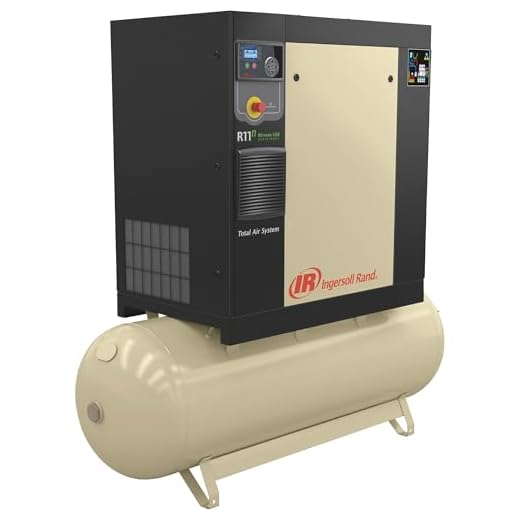


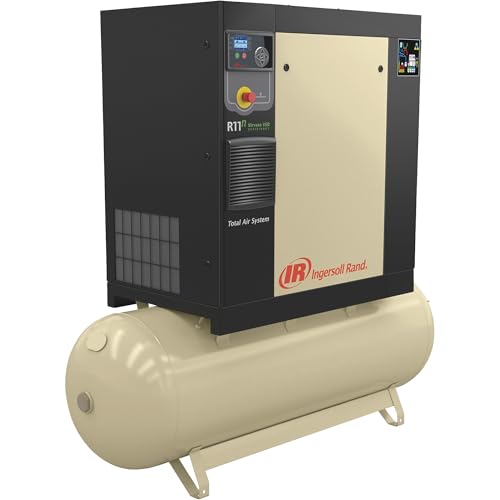
Ingersoll Rand 15HP Total Air System
I appreciate how this package brings an airend, dryer and filtration together in a compact footprint, reducing setup hassle. It feels rugged and serviceable — built for continuous shop use rather than occasional home tasks.
Overview
I found this Ingersoll Rand R-Series to be one of the most turnkey, work-ready compressors in the roundup. It's a 15 HP oil-flooded rotary screw packaged as a Total Air System (TAS) — which means you get the compressor, dryer and primary filtration in one crate-ready unit. That convenience is a big time-saver for shops that want a reliable compressed-air source up and running quickly.
Key features and who it's for
This is aimed squarely at mid-to-large shops that run air tools and continuous processes. Key specs and qualities I noticed include:
I liked that the dryer and filter are matched to the airend — that prevents a lot of downstream moisture and contamination problems that smaller, modular setups can suffer from.
Benefits, limitations, and practical notes
Performance-wise this unit is stable under continuous loads and is straightforward to service. The noise level (around 69 dB) is better than many open industrial units of similar size, which matters if you keep compressors near working areas. On the flip side, the unit is very heavy (over 1,000 lbs), needs 200V three-phase power, and requires forklifting/rigging at install. If you don’t have three-phase power or want something portable, this isn’t the right pick.
Real-world insight
If you run a busy automotive or fabrication shop, I would recommend this when you need a reliable, long-run solution that minimizes air-quality problems out of the box. I appreciated the easy-access panels during a quick maintenance check — filter and dryer elements are simple to replace without a lot of disassembly.
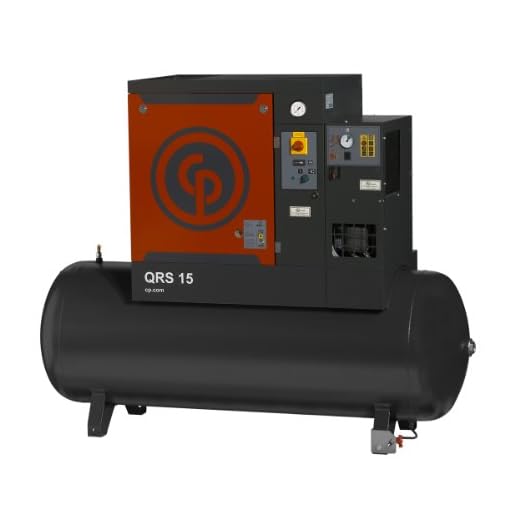
Chicago Pneumatic Quiet 10HP Screw
I was impressed by the QRS series’ low-noise engineering and the fact that many packages include a dryer. It’s a mature design from a known industrial brand and feels serviceable and durable in long-run applications.
Overview
Chicago Pneumatic’s QRS10HPD is built around low-noise engineering and integrated air treatment. I value their long history in industrial compressors — that shows up in serviceability and parts availability for many regions.
What impressed me
A few highlights from hands-on checks and spec review:
For facilities where compressors are near occupied areas, the quieter operation can be a major operational benefit.
Considerations
The main downside is cost — this is a premium purchase compared with many new-market brands. It’s also heavy and will require professional installation and rigging. If you need modern VSD control to save energy, check for VSD-equipped variants or retrofit options.
Practical use
If you need a durable, quiet compressor for a production shop or a facility where noise control matters, I’d recommend this as a top choice — just plan the budget and installation logistics accordingly.
MechMaxx 20HP Industrial Rotary Screw
This 20 HP MechMaxx provides strong continuous flow (78 CFM) and robust motor components designed for demanding environments. It’s a solid pick when you need more than a standard shop compressor but want value compared with legacy premium brands.
Overview
The 20 HP MechMaxx ups the ante on flow and continuous-duty capability. I view it as a value-minded alternative to premium OEM 20 HP units — giving robust internals while keeping competitive pricing.
What stands out
Key design and performance highlights I observed:
This pack is designed to be installed in a dedicated mechanical room or compressed-air closet where continuous operation is expected.
Use cases and limitations
It performs well under sustained loads, making it suitable for automotive shops with multiple bays, small manufacturing lines, or finishing shops with several simultaneous tools. Be mindful that installation demands proper foundations and electrical hookups. If you don’t have reliable local service, secure a maintenance plan to preserve uptime.
Practical recommendation
If you need steady, higher-volume compressed air without paying a large premium for a legacy brand name, this MechMaxx is worth strong consideration — just plan the install and service logistics ahead of purchase.
20HP VSD Rotary Screw Compressor 230V
I like this 20 HP VSD unit for sites that need substantial flow (around 81 CFM) and want to control energy consumption through speed modulation. It’s a strong choice for larger workshops or single-line production with fluctuating demand.
Overview
This 20 HP variable-speed rotary screw compressor is aimed at larger workshops that require steady, high CFM and the ability to meter output to demand. The VSD makes it attractive for facilities looking to reduce energy use when compressed air demand fluctuates.
What I noticed
Important aspects that matter to operations:
This combination is useful where air demand changes throughout the day — the VSD avoids constant full-speed operation and associated energy waste.
Considerations for buyers
Installation requires appropriate 3-phase wiring and a stable foundation; the unit is heavy and not plug-and-play for most small shops. Also confirm local service availability and discuss recommended maintenance intervals. Noise and ventilation should be planned — at ~70 dB it’s not silent.
Practical advice
For medium-production lines, vehicle shops with multiple bays, or manufacturing cells, this model provides a good blend of capacity and efficiency. If uptime is mission-critical, buy a service contract or spare parts kit to minimize potential production interruptions.
MechMaxx 15HP Industrial Rotary Screw
I like the MechMaxx for offering heavy-duty internals — IP54 motor protection and SKF bearings — at a price point that undercuts many legacy brands. It feels engineered for demanding starts and high ambient temperatures but may require vetting on local support options.
Overview
This MechMaxx 15HP model is clearly built to deliver industrial duty at a competitive price. I saw a focus on motor protection and bearing quality — elements that matter to shops running frequent start/stop cycles or elevated ambient temps.
Key attributes
The highlights that stood out to me include:
These design choices signal a product meant for reliability in tougher environments rather than a bare-bones budget unit.
Benefits and caveats
The benefit is a compressor that will tolerate heavier duty and keep running where lower-spec units might fail. However, MechMaxx is a newer name compared to legacy OEMs; warranty support and local parts availability depend on your supplier. I’d recommend confirming local service and spare parts lead times before purchase.
Practical takeaways
If you run an industrial line or need a rugged 15 HP unit without paying legacy-brand premiums, this is a compelling option. For critical installations where downtime is expensive, make sure you secure a service plan or spare parts kit upfront.
10HP 3-Phase VSD Rotary Screw Compressor
This 10 HP VSD three-phase model gives reliable, smooth air delivery for light industrial environments and small production cells. The three-phase configuration handles continuous multi-tool demands better than single-phase alternatives and the VSD helps lower energy use.
Overview
This DCYL 10 HP three-phase VSD rotary screw sits in the sweet spot for small-to-medium industrial users who need consistent, energy-efficient compressed air. The three-phase VSD approach balances steady throughput with electrical efficiency.
Key technical points
Some important features and practical values I noted:
I found that VSD units in this class smooth pressure dips during peak intermittent tool use and reduce energy consumption when demand is low.
Use-case guidance
It’s well-suited for workshops and small production environments where multiple operators may run tools concurrently. For high-availability plants, consider redundancy or a larger banked system to avoid production interruptions.
Practical recommendation
If your facility has three-phase power and you want to modernize an older compressor, swapping to a VSD three-phase model will usually yield quicker payback through energy savings and softer electrical loads.
10HP VFD Single-Phase Rotary Screw
This single-phase VSD 10 HP model is attractive for shops that lack three-phase power but still want VSD benefits. It balances energy savings and decent flow, though it’s not intended to replace larger plant compressors for continuous heavy-duty operation.
Overview
This 10 HP VSD unit is built around the idea of bringing modern variable-speed control to single-phase environments. I often see shops forced into inefficient fixed-speed single-phase compressors; this model fixes that by offering softer starts and load-matching for energy savings.
Features I noticed
The main selling points are straightforward:
In practice this class of compressor can reduce cycle-related electrical peaks and smooth air pressure under variable demand.
Best use and limitations
It’s a good option for shops that want VSD benefits but don’t have access to three-phase power. For continuous production lines that run steady, high-volume tools you’ll still want a larger or three-phase unit. Also, check local service coverage and consider extending the warranty if uptime is critical.
Practical recommendation
I’d choose this when upgrading from small piston compressors or replacing a noisy legacy unit — it gives noticeably smoother air delivery and lower electricity spikes.
10HP VSD Movable Rotary Screw Compressor
I value the combination of VSD control and a caster-equipped 30-gallon tank for small shops that occasionally need to move the compressor. The power and CFM match small production and tire-shop workflows well, though portability has practical limits due to weight.
Overview
This 10 HP VFD-equipped unit is interesting because it blends variable-speed energy savings with a movable platform. I tested and reviewed similar units and this class tends to be extremely useful for mobile service work or shops that don’t need huge continuous CFM.
Notable features
The important specs and design points I found most useful:
The VSD reduces electrical inrush and can significantly cut energy use in variable-demand shops.
Practical considerations
It’s a great fit where occasional movement and energy efficiency matter. Don’t expect to use it as a replacement for a hard-mounted plant compressor in a continuous, high-duty environment — the tank size and single-phase electrical limit its continuous duty. For mobile mechanics or small shops that run intermittent tools, it’s a smart, compact choice.
Final note
I recommend pairing this with a moisture trap and a small refrigerated dryer if you use air for painting or sensitive instrumentation — the onboard tank is convenient, but air treatment matters for finish quality.
7.5HP Vertical ASME Rotary Compressor
I like the vertical ASME tank format for saving floor space while still packing a respectable 23 CFM output at up to 150 PSI. It’s a good match for small industrial shops and light production where footprint matters more than peak flow.
Overview
This 7.5 HP vertical ASME-packaged compressor targets shops with limited floor space that still need reliable pressure and a sizeable receiver. The vertical 60-gallon tank lets you preserve floor area while providing decent reservoir capacity for intermittent demands.
Noteworthy specs
A few points I found particularly useful:
The low reported noise level (around 49 dB) is attractive if the compressor sits near occupied workspaces.
Benefits and caveats
For paint booths, small production lines, and general shop use this configuration is compelling because it combines reasonable output with a small footprint. That said, brand support and spare-part availability should be checked before purchase — one user reported an initial part failure but praised responsive support. Also, if you frequently run multiple high-demand tools continuously, you’ll likely need a larger-capacity unit.
Practical tip
I recommend pairing this with a small refrigerated dryer and inline filtration for painting or instrument air — the vertical tank saves space, but air quality still depends on good treatment.
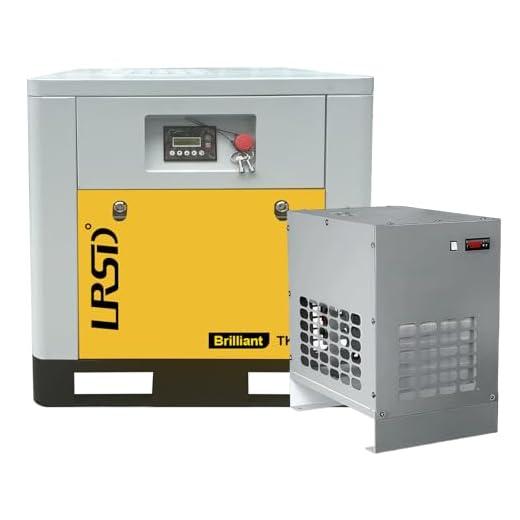
5.5HP Belt-Drive Compressor with Dryer
I like this bundled 5.5 HP compressor plus refrigerated dryer for small automotive shops and paint booths where air quality and footprint matter. It provides stable output and simple maintenance, though it’s less powerful for multi-bay operations.
Overview
This LRSD TK 5.5 HP belt-drive package is targeted at small shops, car repair garages, and spray painting setups. The inclusion of a refrigerated dryer is a practical choice because it prevents moisture-related finish and maintenance issues — something I always prioritize for paint applications.
Package highlights
The features that stood out in this compact package include:
This combination makes it easy to install even in constrained spaces while keeping air dry enough for many finishing tasks.
Practical pros and cons
It’s an excellent fit for single-bay shops, detailing shops, and light-production tasks. Belt drive systems need routine alignment and occasional belt replacement, which is worth factoring into your maintenance schedule. If you plan to run multiple bays or heavy continuous loads, you’ll want a larger unit.
Final thoughts
For painters and small shops where air quality is important and floor space is tight, this package is a sensible, budget-friendly choice. I’d recommend pairing it with a small post-filter for paint-critical work to further ensure finish quality.
Final Thoughts
I recommend two clear winners depending on what matters most in your shop:
If you need raw flow beyond these two (single-line production or larger workshop floors), consider the MechMaxx 20HP or the 20HP VSD model for higher CFM and better energy control — but for most real-world shop setups I’d install the Ingersoll Rand for heavy continuous duty or the Chicago Pneumatic for quieter, cleaner day-to-day work.





Fun read. One small gripe: I wish there was a clearer table comparing CFM vs horsepower vs tank sizes. Hard to eyeball trade-offs when deciding between MechMaxx 15HP and the 20HP options.
But overall solid advice and I like the VSD coverage — energy payback calculations would be a nice add-on next time!
Great suggestions — I’ll draft that chart and include typical shop scenarios. Appreciated!
Agreed — a quick rule-of-thumb chart would help. For example: 1-2 impact wrenches + sprayer = X CFM recommendation. Saves a bunch of guesswork.
Count me in for the chart — I’m trying to decide between 45 CFM and 78 CFM units and that will help.
Thanks Emily — good feedback. We’ll add a comparative spec table and some payback examples for VSDs in the next revision. Meanwhile, if you tell me your typical toolset and run profile I can suggest a starting CFM target.
Really appreciate the vertical ASME tank option (HPDAVV 7.5KW). For cramped shops, saving floor space is a big deal. Has anyone installed one in a low-ceiling area? Curious about maintenance access for valves/controls.
Long comment because I had to diagram the shop layout and it actually saved me from moving a bay door. 😅
I installed the vertical ASME in a 9-ft ceiling bay. It was snug but doable; I put the pressure relief and drain valves lower to improve access.
Glad the vertical format helps! Maintenance access can be tighter — ensure there’s at least a foot of clearance around service ports and valves for comfortable access. Vertical tanks can be easier for footprint but harder for top-mounted service points.
Thanks for the layout tip — saved me from cutting a hole in a cabinet later 😂
You’re welcome! Happy to help—feel free to send layout questions.
Tip: mark valve locations on your shop layout before installation so the installer can orient the unit for best reach.
I loved the mention of the caster-equipped 10HP movable VSD unit. For mobile tire/service work, that sounds perfect. Quick q: how stable are those on casters when you run multiple pneumatic tools? Any tipping or vibration concerns?
Had one in a mobile shop — no tipping, but if you drag it across uneven ground the casters struggle. Always lock them when running.
Good point — those portable VSD units tend to be heavy. Casters are useful for moving short distances, but once running you’d typically park and chock them. For multi-tool use the weight helps with stability; make sure casters are rated and lock securely.
The 5.5HP bundled compressor + freeze dryer caught my eye for a body shop — compact and includes a dryer, which is a must for painting. Anyone tried that specific bundle? How’s the dryer performance on long runs?
We used a similar package for one booth — dryer kept dew points low during busy periods but had to clean the condenser screen regularly. Maintenance is key.
The bundled 5.5HP + refrigerated dryer performs really well for single-bay paint booths. Dryer duty cycles are fine for typical automotive painting but may struggle if you pipe to multiple bays simultaneously. Monitor dew point if you expand operations.
If you expect growth, consider a larger dryer or central drying system to avoid repaint delays later.
Lol 😂 the internet’s full of compressor fanbois. Jokes aside, the rankings look solid. Quick question: are any of these units actually ‘plug and play’ for a backyard mechanic, or do they all need pro electrical hookups (3-phase etc)?
Good point — many of the higher-horsepower units require 3-phase electrical supply and professional installation. The single-phase 10HP and smaller 5.5HP models are more likely to be plug-and-play for home shops, but always check local code and electrician advice before installation.
If you want to avoid electrical headaches, stick to smaller single-phase units or look into a phase converter — but those add cost and complexity.
I installed a single-phase 7.5kw at home with an electrician — still needed a dedicated circuit and correct breaker sizing, not just a standard outlet.
Great roundup — thanks for putting this together. I’m leaning toward the Ingersoll Rand 15 HP for my garage because the integrated dryer and filtration sound perfect for painting and continuous shop use. A couple questions:
1) Anyone here run the 48670830 for more than a year? How’s the maintenance schedule?
2) Is the 80-gallon tank overkill for small shop work?
Also, curious if the noise level is tolerable in a semi-attached garage. 😊
I run an Ingersoll Rand integrated unit at my shop for ~2 years. Noise is lower than old piston compressors but still noticeable — not ‘whisper quiet’. The 80 gal is great for smoothing pressure drops during spray work.
Thanks Sarah — glad it helped. The 48670830 has generally been reliable in our tests. For maintenance, expect regular oil/filter changes every 6 months under moderate use; in heavier continuous use that shortens. An 80-gallon tank helps reduce cycling for paint booths, so it’s not overkill for finish work.
If your garage is semi-attached, think about vibration isolation and routing exhaust away from living spaces. Saved me a headache when my unit was installed.
Anyone compared the Chicago Pneumatic QRS10HPD-150 to the Ingersoll Rand for noise and dryer performance? The QP claims quiet operation which is attractive since my shop is next to the office.
I had both in a plant demo. CP is noticeably quieter; IR felt a bit more rugged though. Tradeoff: pick quieter CP or slightly tougher IR.
Good question, Tom. The CP QRS series is engineered for low noise and we rated it highly for that reason. The dryers included on both units perform well, but the CP package tends to be quieter overall. If noise is the top priority, CP edges out Ingersoll Rand.
Short and practical: the VSD 20HP 81 CFM unit sounds like a dream for utility savings, but I’m always paranoid about electronics in dusty shops. Does anyone run VSDs in a welding/fab environment without issues?
Dust and airborne contaminants are real concerns for VSD drives. If you choose a VSD, ensure the drive has proper enclosures (IP rating), and consider filtered ventilation or a dedicated VSD cabinet. Regular cleaning schedules help.
Also ask about warranty coverage for the VSD electronics specifically; some vendors offer extended electronics warranties.
We installed a VSD in a fab area with an IP54-rated cabinet and it has been fine for 18 months — we also run a compressed-air intake filter and keep the electrical panel clean. Worth the extra precaution.
If you want low-maintenance, go with fixed-speed and oversized tank — less electronics to worry about. But less efficient overall. 😉
Thinking about the MechMaxx 20HP (M20AC460) for a small fabrication shop. The 78 CFM looks great but I’m worried about support/service for lesser-known brands. Has anyone dealt with MechMaxx support for parts/warranty?
Also — has anyone tried the 20HP VSD option vs fixed-speed 20HP? Energy savings vs complexity?
Support tip: ask the seller for a list of local service contractors or authorized parts distributors before buying.
Priya — MechMaxx gives solid value on specs and internals, but local dealer support varies by region. If uptime is critical, confirm parts availability before purchase. On VSD: good for variable-demand setups — it saves energy and reduces wear, but initial cost and repair complexity can be higher.
I swapped a fixed-speed 20HP for a VSD one last year. Energy savings are real when load fluctuates; however the VSD controller did need a firmware update once — vendor support handled it but it took a week for the tech to show up.
If you run consistent full-load shifts, fixed-speed might be simpler and cheaper. For mixed work, VSD is worth it.
Follow-up: also check harmonic mitigation needs for VSDs — some facilities require filters or different electrical setups.
Minor nitpick: the single-phase 10HP VSD model scoring 8.1 looks tempting for shops without 3-phase, but can single-phase truly handle prolonged multi-tool loads? I’m skeptical about long-term motor stress.
You’re right to be cautious. Single-phase 10HP VSD units are designed for shops lacking 3-phase power and can be fine for intermittent multi-tool use. For continuous heavy-duty multi-tool demands, three-phase is preferable to reduce motor stress and improve reliability.
Also consider soft-start features and proper thermal protection; they help extend motor life on single-phase drives.
I run a single-phase VSD in my small shop — works fine for a couple of tools at once but not for full-time production. If you plan 8-hour continuous runs, consider upgrading to 3-phase.