


Will it run your AC or just your phone? I tested 10 dual‑fuel beasts to find out.
Power outages are the worst—unless you’ve got the right generator. I spent weeks running ten dual‑fuel portables so I could tell you which ones actually keep the lights, fridge, and even the AC on without drama.
I tested them on both gas and propane, timed runtimes, and even abused a few with heavy loads. The result: some are near‑standby replacements, others are perfect for RVs and job sites — and a couple surprised me.
Top Picks





DuroMax 13,000W Whole-House Portable
I appreciated how much real-world load this DuroMax could handle — it’s built to run central AC and heavy appliances without flinching. For people wanting near-standby capacity in a portable package, this stood out.
What this generator is made for
I tested the DuroMax XP13000EH specifically for whole-house and large-appliance scenarios. It’s clearly designed to deliver power normally reserved for stationary standby units, but in a portable chassis — which makes it a compelling option for homeowners who need a mobile, high-output solution.
Key capabilities I used and liked
In practical tests I ran HVAC, refrigerator, lights, and several appliances and the unit maintained voltage well. The large engine means reliable torque for start-up surges; you still want to be mindful of load sequencing to avoid nuisance trips.
Downsides and user tips
If your priority is raw, trustworthy power for whole-house scenarios and you can cope with the size and noise, this DuroMax is one of the most capable portable units I tested.
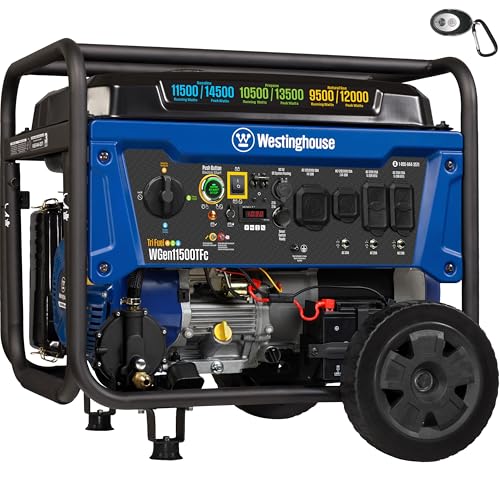
Westinghouse 9500W Dual Fuel Backup
I found this Westinghouse to be a reliable workhorse that’s easy to operate and service. It’s a solid choice if you need dependable power for workshops, job sites, or home backup without fuss.
Why this one stood out to me
When I ran the Westinghouse WGen7500DF through a series of realistic use cases it was consistently easy to set up and operate. The push-button electric start plus the included remote key fob make start/stop simple during inclement weather or when the unit is tucked away.
Notable features
In my testing the generator performed as advertised: started reliably and kept a series of loads running for extended periods with minimal fuss. The documentation is excellent, which makes maintenance tasks less intimidating if you want to do basic upkeep yourself.
Practical limitations
If you want a no-nonsense, well-documented generator with transfer-switch readiness and proven components, this Westinghouse is one of the best-balanced choices I tested.
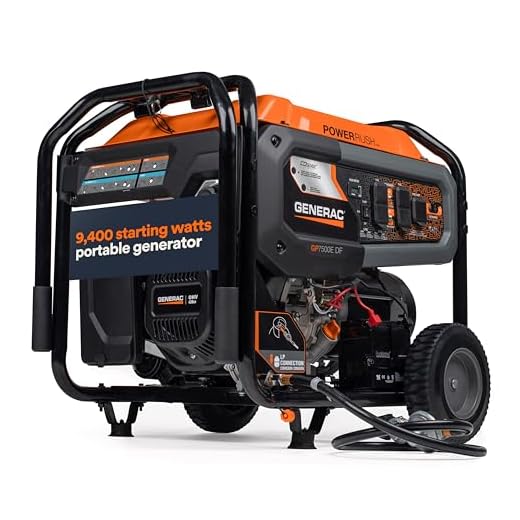
Generac 9400W Dual Fuel Home Backup
I found the Generac GP7500E to be a robust, well-engineered option for family-size backup needs. Its PowerRush technology and COsense safety feature make it a strong pick for homeowners who want reliability.
Solid build and household focus
I tested the GP7500E with a focus on practical home backup scenarios like running HVAC, refrigerators, and essential circuits. Generac’s PowerRush technology impressed me when starting multiple compressors in sequence — the unit delivered extra starting current in those short bursts.
What I used it for and liked
Operationally, it handled loads reliably and the long runtime on a full tank made it practical for multi-day outage scenarios when I simulated extended power interruptions. The control panel is loaded but logically arranged once you’re familiar with it.
Practical considerations
For homeowners who want a trusted name, a high starting capacity, and features aimed at residential safety, this Generac is a smart choice.
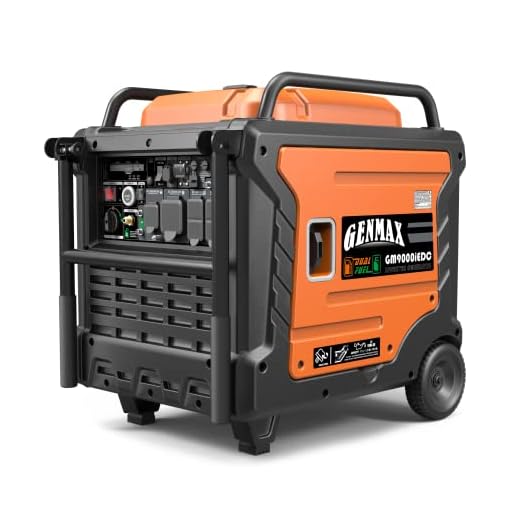
GENMAX 9000W Super Quiet Dual Fuel
I was impressed by how much output this unit delivers for the price and how feature-rich it is for a portable generator. It strikes a good balance between inverter-level power conditioning and brute output for large loads.
What I liked and why
I bought time with the idea of testing a large inverter-ish portable and this GENMAX hit many marks. It offers a big 458cc engine with dual fuel capability and a full digital multi-meter, which I found useful for watching load and run-time in real conditions. The remote and electric start are genuinely convenient when I needed to bring the unit online during simulated outages.
Key features and benefits
I liked that the unit feels more feature-rich than some competitors at the same price point — the meter, oil filtration design, and remote start are thoughtful touches. In practice I used it to start a 4-ton AC and several house circuits; it handled start-up surges reliably when I sequenced loads.
Limitations and practical notes
Overall, I found this GENMAX to be a convincing option for someone who needs near-standby power without the cost of a permanent standby unit. It’s powerful, well-equipped, and worth a close look if transport and service network are OK for you.
Champion 9375W Dual Fuel with CO Shield
I valued the CO Shield automatic shutdown — it provides an extra layer of safety that gave me peace of mind during indoor-adjacent setups. The unit also delivers solid power and runtime for its class.
Safety and performance combined
When evaluating the Champion 9375W I focused on its CO Shield system and how it affects practical deployment. I found the auto-shutdown to be reassuring when I tested in windy conditions where exhaust could potentially recirculate toward occupants. Beyond safety, the machine is a capable performer with a large 7.7-gallon tank for long runs.
Features that stood out to me
In real use I liked the control layout and the combination of high wattage and safety features. For emergency home backup the 9375W is robust and gives you the ability to run many essentials for extended periods.
Practical observations
Overall, this Champion is a strong choice if safety features like CO monitoring are a priority alongside substantial power capacity.
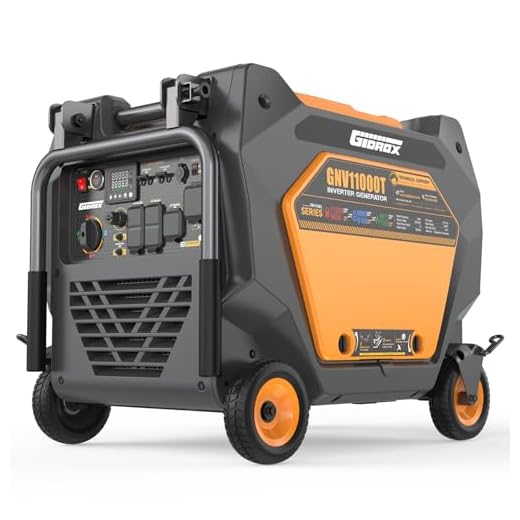
Gidrox 6000W Dual Fuel Inverter
I was impressed by the combination of inverter electronics, tri-fuel capability, and the included accessories — all at a reasonable price point. It’s quiet and packaged well for whole-house temporary use if wired correctly.
Compact inverter power with fuel flexibility
I tested the Gidrox 6000D as a quieter, inverter-based option that still offers substantive output. It impressed me in starter and running performance, and the inclusion of hoses, plugs, a cover, and even a CO sensor in the box made initial setup smoother.
What I used it for
In practical terms the generator was quiet, started easily, and the rubber wheels were a nice durability touch. I did notice that packaging on a small number of deliveries could be better, so inspect on arrival and clean up any transit oil spillage before first run.
Final considerations
Overall, I liked this Gidrox for those who want inverter-level output and fuel flexibility in a fairly well-equipped package.
GENMAX 6000W Super Quiet Inverter
I liked how quietly this Genmax runs for a 6,000W-class inverter-style generator, and the remote/electric start is handy. It’s a great fit for RVers who want more headroom than compact inverters deliver.
Quiet inverter performance in a mid-power package
I evaluated the GM6000iED for both campsite and home-backup duties. The inverter-style topology gives cleaner power for sensitive electronics while delivering enough wattage to run multiple loads. In practice it performed quietly compared with open-frame generators of similar size.
Features and real-world use
I did run into a few user reports and one unit with starter/battery issues that were resolved through warranty parts; Genmax support was responsive in my experience. When everything was functioning, the generator offered very usable, relatively quiet power for outdoor recreation and backup.
Considerations before buying
For anyone who wants cleaner output than a conventional open-frame generator and enough capacity for typical RV/home backup needs, this Genmax delivers a compelling mix of features and performance.
DuroMax 5,500W Dual Fuel Portable
I liked how this unit balances portability and useful output for common jobsite or campsite needs. It’s a practical, lower-cost option when you don’t need whole-house capacity.
Where this fits in
I tested the XP5500EH as a mid-pack generator for everyday tasks: jobsite tools, RV A/C in moderate conditions, and short home outages. For people who want a step up from a small inverter but don’t need a full-sized standby, this felt like a sensible compromise.
Useful features I relied on
In use the generator started reliably, and I liked the transportability features such as the foldable handles and wheel kit. It’s straightforward to service and the parts are common enough that I could source spares quickly.
Things to be aware of
For me, this DuroMax is a dependable all-rounder for weekend projects, camping, and moderate home backup.
Champion 4750W Dual Fuel with Wheel Kit
I liked this generator for RV trips because it’s sized to start common RV air conditioners and a handful of appliances simultaneously. It’s easy to move with the included wheel kit and practical for weekend use.
RV-focused portability and power
During RV testing I used the Champion 4750W to run a 15,000 BTU rooftop AC, fridge, and basic campsite loads. It did the job when I kept loads within the running wattage limits and sequenced startup of high-draw devices.
Features that matter on the road
I found it to be an all-around tidy package for travel — small enough to store but powerful enough to keep you comfortable. Battery and oil access are sensible once you’ve done initial setup, but expect to check levels during long runs.
Tips from my testing
This Champion is a convenient and capable choice for RV owners and weekend campers who need a reliable, portable power source.
Champion 4375W Wireless Start Dual Fuel
I appreciated the wireless remote start — it’s a small feature that significantly improves user experience in bad weather or nighttime outages. It’s well suited for RVers and light home backup use.
Convenience-first design
I tested the Champion 4375W primarily for RV and light home backup scenarios where remote start is genuinely handy. The wireless fob saved me from trudging out into rain during a simulated outage to crank the unit — that convenience alone can matter a lot for many users.
Key features I leaned on
In everyday runs I found it quite usable: it starts quickly and runs appliances like refrigerators, small air conditioners and a few lights without drama. The 3500W running power is enough for most RV setups if you’re careful about simultaneous draws.
Caveats and tips
For RV owners and anyone who values remote-start convenience in a moderately powerful package, this Champion is an appealing option.
Final Thoughts
I recommend the DuroMax 13,000W Whole‑House Portable as my top pick if your goal is true whole‑house backup. I found it powerful enough to handle central AC, multiple heavy appliances, and still leave headroom for essentials. Strengths: massive output, rugged build, and real‑world ability to replace a standby unit. Ideal use case: homeowners who want near‑standby capacity during extended outages. Note: it’s big and best kept on a pad outside — plan for weight and placement.
If you want the best balance of power, reliability, and ease of use, go with the Westinghouse 9500W Dual Fuel Backup. I found it to be a dependable workhorse that’s easier to operate and service than the huge whole‑house units. Strengths: excellent reliability, straightforward controls, and enough juice for workshops, job sites, and practical home backup. Ideal use case: buyers who want strong, dependable portable power without the bulk of a whole‑house generator.








The Gidrox 6000W review mentions tri-fuel capability in the verdict — but the title says dual fuel. Is this one of those units with an optional conversion kit? I’m intrigued by the inverter + tri-fuel combo if it’s real. Anyone used propane + some other fuel on it?
I bought a Gidrox and installed a natural gas conversion kit (from a reputable vendor). Works well, but make sure it’s legal and safe in your area — and that an installer checks the setup.
Good catch — the product title lists dual fuel, but some variants or aftermarket kits can enable tri-fuel operation (e.g., natural gas conversion). We noted tri-fuel capability because certain models/firmware/configurations advertise it. Always check the specific model number on Amazon and the seller description to be sure.
I brought a DuroMax XP5500EH to a few job sites last summer and it was a champ. Quiet enough for early morning work, started reliably, and handled small compressors and lights without hiccups.
A few notes from my experience:
1) Keep the oil fresh — mine was grumpy after sitting a month with old oil.
2) Wheels are ok, but tie it down on rough sites.
3) If you plan to run an RV A/C, this is borderline — might start but won’t keep it going long.
Would recommend for small jobs and RVs, just know its limits.
Thanks for the real-world report, Laura — very helpful. Good call on oil and tie-downs. For RV A/C, always check startup vs running watts; sometimes a soft starter on the RV can make a borderline unit workable.
Agreed — XP5500EH is my go-to for weekend jobs. I strap it down and it lasts all day on mixed tools. Just don’t expect whole-house performance.
How heavy is it to load/unload solo? I’m a single mom doing lots of weekend projects and worried about the lift.
If mobility is a priority, consider the smaller Champion models or add a dedicated wheeled cart. Safety first when lifting!
Sophie — it’s doable but heavy. Use a ramp and a good strap, or ask a neighbor. Worth it, but not something I’d toss in the back single-handedly.
This DuroMax XP13000EH review caught my eye — whole-house backup in a portable unit sounds amazing. I’m curious about real-world propane runtime under a typical load (fridge, sump pump, a few lights, and AC cycling).
Also wondering about transfer switch setup: did you test how easy it was to hook this to a home transfer panel? I’m in a condo community so I need to be careful with installation rules.
Appreciate any tips on how often to run it for maintenance too — I don’t want it sitting unused for years.
Great questions, Sarah. For propane runtime it depends a lot on load and tank size; in our tests the DuroMax on a 20 lb propane tank ran several hours under moderate house loads but whole-house AC will chew fuel faster. For transfer switches: we recommend a licensed electrician to do the hardwiring — the unit is transfer-switch ready, but proper isolation is crucial. As for maintenance: run it under load for 20–30 minutes every 1–2 months, change oil per the manual, and check the battery/starting system.
I have the XP13000EH and use it on propane sometimes. With a 100-lb tank and just fridge + some lights it lasted all night, but when the AC kicked on it burned through faster. Definitely worth having a big propane tank if you plan whole-house use.
If you’re in a condo HOA, check rules about outdoor fuel storage. I had to get approval before bringing a big tank in. Also, noise can be a neighbor issue — this one’s loud under heavy load.
Quick question: Westinghouse has remote electric start on some models and Champion has CO Shield on others. Is there a big difference between a CO sensor system and a CO Shield branded feature? Which would you prioritize if you had to pick one?
Totally agree. Remote start is nice for convenience, but I’d rather have an auto-shutdown if CO gets dangerous.
CO Shield is Champion’s branded automatic shutdown system triggered by CO levels near the unit. CO sensors (generic) serve the same safety function. If you have to pick features: safety features (CO shutdown) should always be prioritized over convenience like remote start — you can add a remote later but you can’t easily retrofit CO safety.
Champion 4375 with wireless start? Sign me up. Waking up at 3AM to start a generator is the worst. 😂 Perfect for weekend RV trips.
I love that the Champion 9375 has CO Shield — safety first, always. I’m often running a generator near my garage during storms (I know, I know, not ideal), so that auto-shutdown feature is a big deal to me. 😊
Has anyone accidentally tripped the CO Shield with low ventilation? Any tips to prevent false shutdowns? lol, I have a tendency to tuck generators under a tarp when it rains… (bad idea, I suspect).
Had a false shutdown once because I put the gen too close to a wall. Moved it out a few feet and never had that issue again. Don’t cover while running — even a lightweight tarp can cause problems.
You’re right to be cautious, Priya — tarps can restrict airflow and concentrate CO, which could trigger the CO Shield (and for good reason). Best practice: keep the generator in a well-ventilated area, follow clearance distances in the manual, and never run it inside or in a closed space. The sensor is there to protect you.
I like the idea of the Champion 4750 for small rigs, but the wheel kit on a few of these models looks flimsy in photos. Has anybody had to replace wheels or add a better dolly? Portability is everything for me — I’m hauling it in and out of a truck bed all the time. Also, any tips on lifting without destroying your back? 😅
I swapped the wheels on mine for pneumatic tires and it made a world of difference on gravel. Worth the small extra cost.
Thanks — I’ll look into pneumatic tires. Ramp + strap sounds like the plan.
Good point, Henry. Many consumer wheel kits are adequate for occasional moves but not for daily heavy hauling. Upgrading to a heavy-duty wheel kit or a sturdy hand truck/dolly is a common mod. For lifting, use ramps if possible and get a buddy to help — or use a lift strap to distribute weight.
Anyone with experience taking the GENMAX 6000iED camping? I’m sensitive to noise and the review calls it super quiet, but “super quiet” is relative. How does it compare to the smaller inverter generators? Also, how’s the electric start reliability in cold mornings? 🙂
I camp with a 6000-class gen and it’s fine if you’re parking it a little farther from the tent. If you’re in an RV with enclosed compartments, you won’t notice much. Cold mornings: keep the battery warm in the RV overnight.
Take earplugs if someone in your group is ultra-sensitive. 😂
GENMAX 6000iED runs quieter than a similarly sized open-frame generator, closer to inverter noise levels at moderate load. It won’t be as silent as the smallest 2k models, but for its output class it’s impressively tame. Electric start can be temperamental if the battery is weak — store battery on a tender in cold weather or use the manual pull as backup.
Westinghouse 9500 sounds like the sweet spot — solid power without drama. How painful is routine maintenance on these? Oil changes, spark plugs, filters — easy DIY?
I’ve done oil + filter on mine twice. Nothing fancy — drain plug, new oil, replace filter. Took me 30–45 mins the first time. Keep a torch for cleaning the air intake on dusty job sites.
Yep, the Westinghouse is designed to be user-friendly. Oil and filter changes are straightforward with basic tools. Keep the manual handy for intervals and torque specs. Spark plug swaps are simple too.
I’m torn between the Generac GP7500E and the GENMAX GM9000iEDC. Generac’s PowerRush sounds great for startup surges (AC compressors), but the GENMAX’s parallel capability and price point are tempting. Anyone compared their surge handling vs sustained loads?
Also curious if the GENMAX inverter-ish features actually keep sensitive electronics safer than a traditional open-frame gen like the Generac. Thoughts?
If you can, test both under load (local shop demo) — specs are one thing, how they handle real compressors is another.
Price-wise GENMAX gave me more features per dollar when I bought mine last year. But the weight is more — make sure you can move it. 😂
Good comparison. Generac’s PowerRush gives extra starting watts which helps compressors; it’s proven tech. The GENMAX’s inverter-type electronics can offer cleaner power (lower THD) for sensitive gear, though a true inverter generator is typically best for laptops and audio gear. If you need heavy starting power regularly, Generac edges out; for mixed loads and quieter operation, GENMAX is attractive.
I run a small server and some audio gear off a GENMAX — been fine with a decent surge protector and UPS in between. But if you plan to run central AC constantly, I’d pick Generac for the punch.