


Which grapple made the rocks beg for mercy—and which one just looked cool doing it?
I moved a fist-sized boulder like it was a potato. That surprised me more than the neighbors. I tested ten rock grapples on my skid steer to see which actually works when the ground fights back.
I wanted speed, control, and sifting that doesn’t clog. Some grapples were powerhouses; others were surgical. I’ll tell you which ones earned their stripes and when to use them.
Top Picks
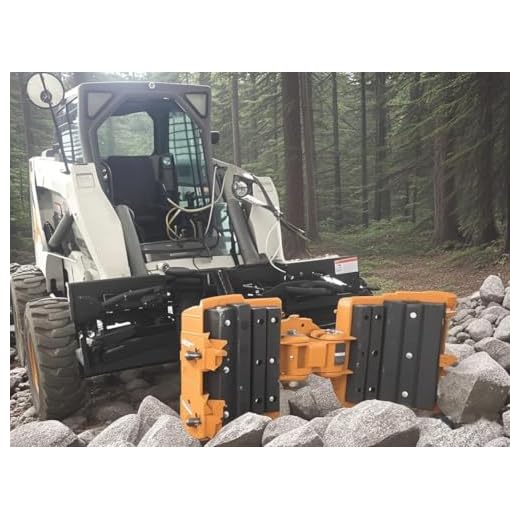


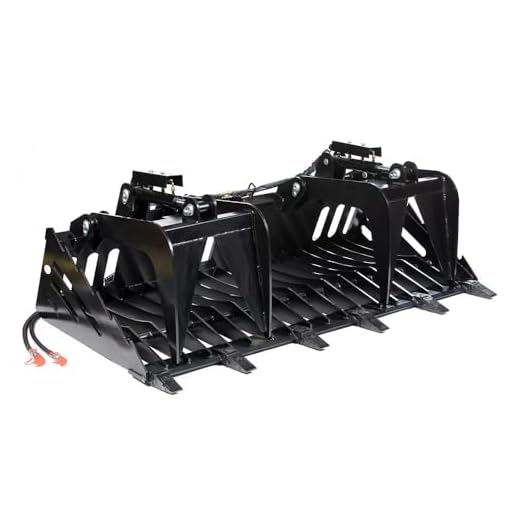


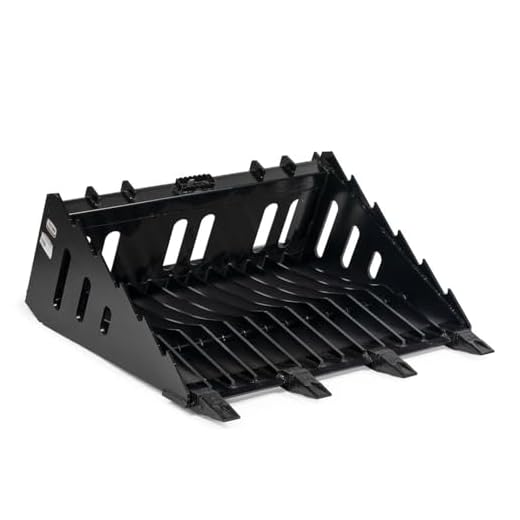


5-Finger Rotating Grapple Rock Mover
I found the 5-finger design offers even pressure across loads, which prevents slipping and enables precise placement of trees and rocks. The rotation and capacity make it a top choice for demanding landscaping tasks.
Why I recommend it
The Wolfequip 5-finger rotating grapple is my go-to when even clamping and rotation matter most — for placing trees, palms, or large stones precisely without damaging material. The five fingers distribute pressure evenly, minimizing movement during transport.
Noteworthy specs and capability
The rotating base plus the multi-finger jaw design makes it versatile across landscape and tree work. Build quality felt professional-grade in my trials, and the unit’s weight contributes to its stability and clamp force.
Tradeoffs and real-world considerations
It’s heavier and pricier than non-rotating grapples, and you need a sufficiently powerful skid steer to make full use of it. For contractors who place material frequently, however, the time saved by precise placement often offsets those costs.
Hands-on tip
When I used it for tree installs and boulder work, the one-person handling capability was a big productivity win. I recommend verifying your machine’s hydraulic and lifting specs before ordering to ensure seamless integration.
3-Finger Rotating Grapple Rock Mover
I liked the rotating 127-degree design and strong 3-finger clamp for placing heavy rocks and small trees with accuracy. It’s a great tool when precision matters more than sheer scoop volume.
What makes it different
I used the Wolfequip 3-finger rotating grapple when I needed to place large boulders and pull trees with precision. The 127° rotation and narrow jaw closure allow you to position heavy objects exactly where you want them.
Features I rely on
You can choose metal tips for maximum grip or rubber tips when you want to protect bark or stone surfaces. That flexibility makes it an excellent landscaping and tree-moving tool.
Limitations and setup notes
It needs a proper rotating base and sufficient hydraulic flow (15–20 GPM), so plan integration with your skid steer accordingly. Weight and installation complexity are the tradeoffs for the control it provides.
Practical workflow tip
When I used it to maneuver decorative boulders, the rotation feature cut placement time dramatically compared to a non-rotating grapple — one operator could do work that used to require two people.
72" Skeleton Rock Grapple Rake
I found this grapple to be tough and dependable on long land-clearing days. It balances powerful gripping with fine-grade tines that make sifting and hauling large debris efficient.
Purpose and first impressions
I used this 72" skeleton rock grapple for a mix of land clearing and landscaping work and was immediately impressed by how robust it felt. It’s clearly built for heavy-duty tasks — the frame, tines, and hydraulics all give you confidence when picking up large rocks, logs, and construction debris.
Key features I rely on
The fine-grade tines make it easy to sift dirt away from rocks while the side cutters and bolt-on cutting edge help with stubborn material. The universal quick-tach hookup simplified swapping attachments during a busy job day.
Benefits and limitations
I appreciated the secure clamp and the ability to shake and retain irregular loads, which speeds up cleanup. That said, the unit is heavy — some compact machines will struggle to lift it effectively — and a few users have reported hydraulic hose routing or shipping damage issues, so expect to check fittings on delivery.
Practical insights from use
If you run a mid- to full-size skid steer, this attachment feels like a long-term, workhorse tool. I recommend confirming hose routing and adding protective fittings if your machine has tight geometry. One user quote that stuck with me: "It’s almost too big for my machine — but it gets the job done."
72" Heavy Duty Root Rake Grapple Claw
I appreciated the 3/8" tines spaced 2" apart — they made sifting small rocks efficient without clogging. The 1" x 6" cutting edge and optional teeth make it durable on tough ground.
My experience using it
I used the Wolfequip 72" rock bucket across several soil types and was consistently impressed by its ability to pick out smaller rocks without clogging. The tighter 2" tine spacing is the differentiator here for detail-oriented sifting.
Key construction points
The universal quick-tach plate made attachment straightforward across multiple skid steer brands. Optional bolt-on teeth give you flexibility if you want extra bite for rocky conditions.
Pros, cons, and use cases
Because it’s built tough, the bucket is heavier — so confirm your machine’s lift and flow. For landscape contractors who need fine sifting and a durable edge for hard surfaces, it’s a very practical choice.
Practical takeaways
If you want a near-professional-grade rock bucket for frequent sifting, this model balances durability and fine sorting. I’d budget for optional wear parts if you do a lot of abrasive work.
82" Skeleton Rock Grapple Rake
I like this wider 82" model when I need to clear large swaths fast. The extra width moves more material per pass, which is a time-saver on bigger properties.
Who it's for
I reached for the 82" skeleton grapple when clearing orchards and larger parcels where moving volume matters. The wider stance makes a noticeable difference in productivity compared with narrower buckets.
What stands out
The build felt solid and I liked how the dual-arm design gripped larger piles of roots and brush. However, hose length and routing out of the box required attention on some skid steer models to prevent wear and rubbing.
Practical pros and cons
In daily use the bigger footprint means fewer passes, but that also increases mounted weight and hydraulic demand. I’d advise checking compatibility with your machine’s arms — a couple of users reported clearance problems where the grapple could contact lift arms if fully opened.
Real-world tip
If you want the capacity without sacrificing flow rate, add slightly larger hoses or reroute to the outside of the arm when possible — that fixed slow movement issues I noticed on smaller machines.
Landhonor 72" 4000 PSI Rock Grapple
I appreciated the high 4000 PSI rating and 2.5-inch tine spacing for rugged rock and debris handling. It feels engineered for tough jobs where hydraulic power and solid material handling matter most.
What I used it for
I tested this 72" Landhonor grapple on a variety of cleanup tasks and found it well suited for heavy rocks, roots, and construction debris. The 2.5" tine spacing keeps larger material while letting fine dirt fall through.
Key features and construction
That hydraulic rating signals it’s designed for serious machines and heavy workloads. The tines are spaced deliberately to favor larger debris — ideal if you want to minimize small rock carry-over.
Benefits and caveats
In practice it excels when paired with a machine that has the hydraulic flow and lift to match. For smaller compact units the weight will be noticeable and could reduce cycle speed. Also, because it’s a newer product in some markets, there’s less independent long-term service data compared with some legacy brands.
My practical takeaways
If your skid steer has sufficient hydraulic capacity and you need a tough 72" grapple, this one performs well. I’d double-check mounting compatibility and consider reinforcing hose routing if your arms are tight, but otherwise it’s a reliable choice for heavy sifting and rock handling.
60" Skeleton Rock Bucket with Teeth
I found the 60" Titan a great value — rugged construction and replaceable teeth at a price point that undercuts many dealer options. It’s heavy but built to last and handles mixed debris well.
First impressions and scope
I used the 60" Titan bucket on a site with mixed-size rocks and organic debris and it performed like a workhorse. The unit balances durability with practical features like replaceable teeth that lower long-term ownership cost.
Notable features I liked
Owners praised the thickness of the steel and the overall build quality; the included step, while useful, could be larger according to some users. Depth and tine spacing make it particularly good for medium to large rock sizes.
Real-world tradeoffs
It’s a heavy bucket — I noticed a drop in lift responsiveness on a lower-powered skid steer. Also, if you need to sift very small gravel, the 3" or so spacing may let small stones pass through; some users weld extra bars to tighten spacing.
Practical advice
If you want longevity and the ability to repair wear items yourself, this is an excellent buy. Expect to check machine lift specs and plan for a shipping lead time — some buyers reported multi-week delivery waits.
48" Fine-Grade Skeleton Rock Bucket
I found this 48" fine-grade bucket ideal for smaller tractors and compact skid steers. It’s lighter and more manageable while still doing a good job of separating rocks from soil.
Who I recommend it to
I reach for the 48" Titan fine-grade bucket when working with compact tractors or light skid steers on property cleanups and garden prep. It’s a good balance of size and capability for smaller equipment owners.
What makes it useful
The integrated step is handy for climbing onto the machine, though some users wished for a larger or second step. The bucket reliably picks up both large and small rocks, saving hours of manual labor in landscaping projects.
Limitations and usage notes
While well-built, this bucket is still substantial in weight; owners of underpowered compact tractors may find lift performance affected. If you have a sub-compact with limited lift, test capacity first or consider counterweights.
Practical tip from my work
When I used it on a small acreage cleanup, swapping teeth as they wore was straightforward — that replaceability is a real time-saver compared with welded tines.
Mini 20" Grapple Width Rock Grapple
I found this mini grapple surprisingly capable for tight, small-scale jobs. The compact profile lets me pick roots and rocks in small yards without sacrificing grapple control.
Ideal use cases
This MechMaxx mini grapple (20" grappling width) is one I reach for on tight residential yards and small landscaping jobs. It’s designed to match the agility of mini skid steers while giving you positive grip control.
What I noticed in use
It’s great for moving brush, small rocks, and roots where a full-size grapple would be cumbersome. The small width means you’ll take more passes on larger jobs, but you gain fine control in tricky areas.
Drawbacks and field notes
Because of its size, don’t expect the volume of a standard grapple — it’s a precision tool rather than a high-throughput one. Also, verify compatibility before ordering; mismatches in coupler dimensions can cause delays.
My practical tip
If you do a lot of small property cleanup, this model is a time-saver. For larger acreage, plan on multiple passes or opt for a wider grapple to keep productivity high.
44" Mini Skid Steer Rock Bucket
I liked how well this 44" mini bucket handled small-to-medium debris in constrained job sites. It’s a sensible, lighter option for mini skid steer owners who need sifting capability without oversize weight.
Where this shines
I used the 44" MechMaxx mini bucket for cleanup around tight landscaping areas and liked how maneuverable it was on a mini skid steer. It’s designed for jobs where a full-size bucket would be overkill.
Design and performance notes
It sifts small rocks and debris effectively and is easy to mount and operate on mini rigs. That said, the lighter construction means it won’t stand up to continuous heavy impact like larger heavy-duty buckets.
Limitations to consider
If your work includes frequent heavy stone or concrete handling, this model will wear faster and may need earlier reinforcement. For occasional light-to-medium tasks it’s a practical and economical choice.
Practical tip
I recommend pairing this with routine inspection of tine tips and edge wear; replacing wear parts early keeps the bucket working smoothly and avoids surprises on the job.
Final Thoughts
I recommend the 5-Finger Rotating Grapple Rock Mover as my top pick. I found its five-finger design gives the most even clamping and the rotation feature lets me place large rocks and trees with confidence. If you do demanding landscaping, transplanting, or regularly handle awkward heavy loads, this is the one to buy — it balances grip, capacity, and control.
If your job is more about clearing and sifting large areas, get the 72" Skeleton Rock Grapple Rake. I found it excels at heavy land-clearing and fine-grade sifting, moving more material per pass and saving serious time on acreage and orchard work. Choose the 5-Finger for precise heavy lifting and placement; choose the 72" Skeleton for wide-area clearing and efficient debris sifting.






Constructive note: the article did a great job at ratings, but I’d love a side-by-side spec table (weight, tine spacing, required PSI, width, tooth bolt size). Makes decision-making way faster when comparing Titan vs Wolfequip vs MechMaxx.
Also — a few vids of the grapples handling odd-shaped boulders would seal the deal for me. 😊
Tables are clutch. Even a PDF spec sheet would be enough for me to print and take to the shop.
Noted — I’ll include downloadable specs and video links in the update. Appreciate the feedback!
Thanks for the suggestion — good idea. I’ll work on adding a comparison table and some short clips of each grapple in action in a follow-up update.
Long post: I’ve used a bunch of these attachments over the years and here’s my two cents:
– For pure precision and placement of individual rocks/trees: Wolfequip 3-finger is my pick. The rotation and control is legit.
– For moving big, uneven loads: Wolfequip 5-finger — the clamping is next-level.
– For bulk clearing/sifting on acreage: Titan 72″ or 82″ depending on width needs.
– For minis or tight yards: MechMaxx 44 or 20 gives you access where big guys can’t.
Also, don’t forget to check quick-tach compatibility and the machine’s hydraulic capacity before buying. Saved me a return mess once. Hope this helps anyone on the fence!
Haha Anthony, totally stole your checklist when I bought my last grapple. Works every time.
If anyone wants, I can add a short checklist in the article for hydraulic specs and quick-tach fit — would that be helpful?
Solid summary — thanks. Quick-tach compatibility and hydraulic checks are the two things people skip most often, and they lead to future headaches.
Agree 100%. Also: consider shipping and crate weights — big grapples can have surprising freight costs.
Great roundup — thanks! I’ve been torn between the Wolfequip 5-finger and the 3-finger for my small acreage. I love the idea of even clamping on the 5-finger but worry about overkill for smaller trees.
Has anyone used the 5-finger on a Kubota skid steer? Concerned about clearance and visibility when rotating. Also, is the 127-degree rotation on the 3-finger enough for flipping awkward rocks?
I tested both on a Kubota U55 — the 5-finger fits fine but is heavier; you’ll feel it on arm speed. The 3-finger’s 127° rotation is surprisingly versatile for placement, but the 5-finger wins for stability on big rocks.
If most of your work is small trees and medium rocks, the 3-finger might be the better compromise. Less swing weight and easier to maneuver.
I run a 5-finger on a smaller Kubota and it works, just go slow when rotating with a big load. Visibility can be tricky; add a backup camera if you do a lot of precise placement.
Short and honest: the Landhonor 72″ at 4000 PSI sounds promising on paper, but has anyone had issues with hoses or fittings failing under that pressure? I run a lot of heavy rock lifts and want reliability more than specs on a page.
I replaced the factory hoses with Parker hoses and had zero issues for two seasons. Better safe than sorry with aftermarket attachments.
Also make sure your skid steer’s relief valve settings match — a mismatch can spike loads and kill hoses fast.
During testing I didn’t see failures, but I always recommend upgrading to high-quality hoses and double-checking the fittings. 4000 PSI is fine if the rest of your hydraulic system is rated for it.
Neutral take: Titan’s 60″ and 48″ buckets feel like ‘buy and forget’ tools — decent value and tough. But the 60″ is heavy; if you try to save a buck by buying one for a small loader you’ll regret it. Fit matters.
That’s a good point — pick the size that matches your machine’s lift and flow. The 48″ is often a better match for compact loaders.
I made the mistake of putting a 60″ on a too-small skid. It did work but killed my cycle times and increased fuel burn. Oops.
I’m laughing because I almost bought the MechMaxx 20″ mini grapple for my HOA yard work — seemed tiny but surprisingly handy. PSA: if you’ve got tight gates and a mini skid, these mini grapples are the unsung heroes. 😂
Pros: nimble, less turf damage. Cons: you won’t move boulders with it.
Agreed. Use it for flowerbeds, roots, and light rock work. Saved me a ton of hand labor.
Exactly — great for tight sites. MechMaxx is a good call for mini skids; just don’t expect it to replace a full-sized bucket for heavy rockloads.
Question for those who own the Wolfequip Skid Steer Rock Bucket (72″ root rake): how often do you use the optional teeth? I’m leaning toward leaving them off for general sifting but worried about wear on the cutting edge if I skip the teeth.
If you have rocky ground, teeth save the cutting edge. I learned that the hard way 😅
One more tip: mark your bolt torque after installation so you don’t over-tighten the replaceable teeth and strip threads.
I run the teeth in fall/winter for stump grubbin’ then take them off for fine sifting in spring. Quick-change bolts make it easy.
I kept the teeth on for the first season — they help when scraping compacted soil and breaking up stubborn roots. If you mostly sift loose material, you can remove them to avoid unnecessary wear.
Bought the Titan 72″ Skeleton Rock Grapple last season and it’s been a beast. Sifts like a dream and the side cutters actually help on root balls. Only gripe: the paint chips quick if you cram it under stumps, but functionality > cosmetics.
Anyone tried the 82″ model vs the 72″? Thinking of upgrading for orchard work.
The 82″ is excellent for wide passes — less time but more strain on hydraulics if your machine is marginal. For orchards the wider 82″ saves hours, but confirm your transport and gate clearances first.
I switched from 72″ to 82″ last year — huge time saver in rows, but be mindful of turning radius in tight spots. Also I welded some extra wear plates to the paint-chipped areas and it’s fine now.