

Small beam, big lift — which one saved my back (and my schedule)?
I once tried lifting a bulky HVAC unit with the wrong spreader and nearly turned a 30-minute job into an all-day circus.
I tested five 4400 lb aluminum spreader beams so you don’t have to learn rigging the hard way. Short, simple, and painfully practical: these picks focus on length, included hardware, and real-world handling.
Top Picks




6' 4400 lb Aluminum Spreader Beam Kit
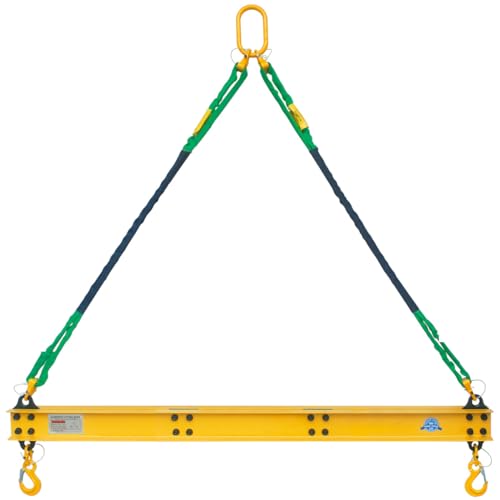
This kit comes ready to use with a 6' round sling bridle and Grade 80 fittings, making it the easiest option to deploy straight out of the box. It balances high capacity with low weight really well for commercial work.
Overview
I reached for this 6' kit when I needed a high-capacity spreader that I could put into service immediately. It ships with a 6' two-leg round sling bridle and G80 5/16" sling hooks already attached, so you skip the extra procurement step. For general commercial lifting tasks where a 2-ton (4,400 lb) capacity is sufficient, this is a very practical choice.
Key features and benefits
I liked how the locking pin design made swapping sling lengths straightforward — no special tools required. The unit is proof tested to 1.5x its capacity which gives me confidence on site when I’m logging checks before a lift.
Practical usage notes
I used this for setting equipment into concrete vaults and for off-center loads; the lighter aluminum saves you from wrestling a steel beam but still gives a robust feeling. A user review I saw summed it up: "It is very light for tonnage." My only gripe is cosmetic: some packages arrive with scratches from shipping, so inspect on arrival.
Limitations and final thoughts
If you want to reduce setup time, this kit is great, but if you already own slings you might prefer a bar-only option for cost. Always inspect prior to use, never exceed the working load limit, and avoid shock loads. For most shops that want an out-of-the-box solution, this was my top pick.
4' 4400 lb Aluminum Spreader Beam Kit
The 4' kit gives excellent control in confined areas where a 6' beam would be too wide. You still get Grade 80 hardware and proof testing, plus a 4' round sling bridle included.
Overview
I reach for the 4' kit when space is limited or I need more precise load control. The shorter span reduces swing and makes alignment in narrow openings much easier than a longer bar. It’s still rated at 4,400 lbs and comes ready with a 4' two-leg round sling bridle.
Key advantages
This combination of a compact footprint and included hardware means less prep time. For example, I used it to lift HVAC units through a tight roof hatch where a longer spreader would have been awkward.
Limitations and practical tips
The shorter spread distance is a virtue in many settings but becomes a limitation when you need to distribute a load over wider lift points. If you anticipate both tight and wide tasks, consider pairing this kit with a longer bar in your fleet. Always perform pre-lift checks and respect the working load limit.
6' 4400 lb Aluminum Spreader Bar Only
This 6' aluminum spreader bar is the cost-effective choice when you don't need included slings. It preserves the same 4,400 lb capacity and Grade 80 connectors but at a lower price point.
Overview
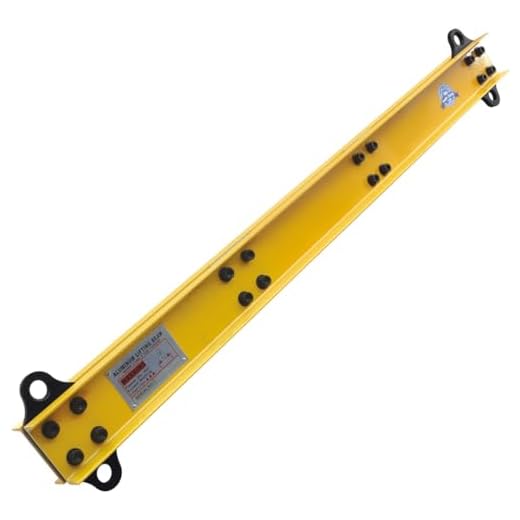
I recommend this 6' spreader bar to teams that already have slings and hardware in inventory. It offers the same rated capacity (4,400 lbs) and aluminum construction as the kit version but without the supplied bridle, which is why the price is lower.
Key features
If you maintain an inventory of slings and hooks, this saves money and keeps logistics simpler. The bar itself is light enough for two people to position without heavy equipment, but still feels solid when rigged.
Practical considerations
For a shop that rotates different sling lengths, this bar is flexible — the locking pin connectors let you adapt sling lengths on the fly. On the flip side, plan to budget for the slings and Grade 80 fittings if you don’t already own them.
Final thoughts
This is a good value option that delivers the essential performance and safety testing you need. I’d choose it when I want to control costs and I already have compatible slings on hand.
4' 4400 lb Aluminum Spreader Bar Only
This 4' bar-only option is a straightforward, reliable choice for teams that want a mid-length spreader without extra hardware. It’s light, proof tested, and easy to store or transport.
Overview
I recommend the 4' bar-only spreader to crews that need a versatile mid-length beam but prefer to use their own slings and fittings. It’s the simplest way to add a tested aluminum spreader to your toolbox without paying for hardware you already own.
What it offers
A colleague used this for a repetitive shop lift where a 6' bar was too long and a 2' bar too short; the 4' length hit the sweet spot. Because it’s a bar-only model, you control the hardware choices and inspection history of the slings you attach.
Practical notes
This is a dependable, no-frills option. Expect to buy or supply your own slings and hooks, and inspect all parts before use. If you want a clean, cost-effective spreader that’s easy to store, this is the one I’d pick.
2' 4400 lb Compact Spreader Beam with Hooks
This 2' spreader is purpose-built for very tight lifts where even a 4' beam will be cumbersome. The added swivel self-locking hooks make rigging quicker and reduce hook rotation during lifts.
Overview
I picked the 2' spreader when I had to lift objects inside narrow access points where longer beams simply wouldn't fit. It’s a handy specialty tool for that niche problem: rated for 4,400 lbs, but compact enough to work inside tight openings.
Features I appreciated
The swivel self-locking hooks are the standout: they let the hook rotate freely during hook-up, then lock to resist accidental disengagement. That behavior speeds rigging and reduces the need for secondary securing measures.
Practical limitations and usage tips
This is a specialty item — great if you frequently deal with confined spaces, but it won't replace a longer spreader for general use. I recommend keeping this in the fleet as a complementary tool and double-checking load geometry before every lift.
Final Thoughts
Pick the 6' 4400 lb Aluminum Spreader Beam Kit as your go-to if you want the fastest, most reliable setup for commercial jobs. It earned my top spot because it arrives ready to use (Grade 80 fittings and a 6' round sling bridle included), balances capacity with low weight, and speeds rigging on-site. Ideal for general installs, HVAC moves, and crews that need a turnkey solution.
If you work in tighter footprints or need more precision, grab the 4' 4400 lb Aluminum Spreader Beam Kit. It gives nearly the same control with a shorter span, keeps the Grade 80 hardware and proof testing, and makes confined lifts far less fussy. For teams who already own slings and want to save money, consider the 6' or 4' bar-only options — same capacity without the extra kit price.
For extremely tight lifts where clearance is the limiting factor, the 2' Compact Spreader with swivel self-locking hooks is the specialist pick. Use it when a 4' bar just won't fit.
Guide: How I chose and used these 4400 lb aluminum spreader beams
I evaluated these spreader beams based on three core factors: length (fit vs. stability), included hardware (kit vs. bar-only), and real-world handling (weight, hooks/shackles). All five share a 4,400 lb working load and proof testing, so the differences come down to how you use them.
Quick comparison
| Model | Best for | What I liked | When to skip |
|---|---|---|---|
| 6' Kit | On-site commercial lifts | Ready-to-use kit, great balance | Tight clearance jobs |
| 4' Kit | Confined spaces | Precise control, includes bridle | Wide loads needing more spread |
| 6' Bar-only | Cost-sensitive teams with existing slings | Same bar at lower price | Need new slings/hardware |
| 4' Bar-only | Simple store-and-go bar | Light, easy transport | Need included fittings |
| 2' Compact w/ hooks | Very tight lifts | Swivel self-locking hooks, compact | Wide loads or unstable shapes |
Practical rigging tips I rely on:
On inspection and maintenance:
Final practical notes from my tests:
If you want one quick rule: go kit unless you already own certified slings and fittings. That single choice reduces setup time, avoids mismatched components, and gets your lift done cleaner and faster.
FAQ
Yes—each item here is rated to 4,400 lb, but that rating assumes correct rigging geometry and evenly distributed load. Angle, sling type, and attachment points change the effective load on each leg. Always follow the manufacturer’s rigging chart and never exceed the working load limit under the given configuration.
If you don't already own Grade 80 slings and fittings, buy a kit—the included round sling bridle and hardware save time and ensure compatible components. If you already have certified slings and want to cut cost, the bar-only gives the same structural piece at a lower price.
Match beam length to the load width and site clearance. Use 6' for general-purpose lifts and stability, 4' when space is limited but you still need spread, and 2' only when access is extremely tight. If in doubt, I favor the 4' kit for balance between control and clearance.
Yes—they speed hook-up and reduce unwanted rotation during lifts. For quick-turn jobs and awkward pick points, the hooks save minutes and reduce stress on rigging connections.
Quick checklist: inspect bar for cracks or deformation, verify proof test/inspection tags, check Grade 80 fittings for wear, confirm sling angle and capacity, and do a slow trial lift a few inches to verify balance before committing to a full lift.





I’ve been using the 4′ spreader beam (with bridle) for small commercial installs and it has been excellent.
– Compact for elevator shafts and downtown installs
– Precise control when aligning awkward loads
– Included sling feels well-made
One small gripe: the sling’s color faded after some sun exposure but performance didn’t change. Overall rating from me: solid choice for confined work.
Agree on the sun issue — I cover slings with a tarp on long jobs. Functionally they hold up well though.
Good idea, Nina. I added a heat-shrink color sleeve to the eye of the sling and it’s easier to spot at a glance.
Thanks for sharing, Emma — good to know about the sun fading. For long outdoor exposure, storing the sling in a covered place or a bag helps preserve the webbing.
Did you ever swap out the sling for a different color to keep track of wear? We tag ours with a small ID strip.
I’ve been eyeing the 2′ spreader with swivel hooks for factory maintenance work. My concerns:
1) Compatibility with our existing chain hoist hooks — will the swivel self-locking hooks mate cleanly?
2) How much clearance do they need to swivel properly?
3) Any tips for quick inspections before a lift?
Would appreciate feedback from anyone using the 2′ in a production environment.
Swivel self-locking hooks typically accept standard hook sizes, but measure throat opening and pin diameters to confirm compatibility. For inspections: check locking mechanism, look for cracks/deformation, ensure swivel rotates smoothly, and verify markings for capacity.
We use them with chain hoists — make sure your hook latch clears the spreader eye and check that the swivel has a full 360° unobstructed. For quick checks I look for play at the swivel and latching action.
Love the 2′ option for tiny jobs — it’s like the ninja of spreader bars 😂 Perfect when a 4′ would be overkill (and my boss hates when I bring oversized gear inside). Also those swivel self-locking hooks are a lifesaver.
PS: anyone else accidentally try to use a spreader like a pry bar? Not that I have. 😅
Totally relate on the boss thing. The 2′ fits in the back of my pickup and doesn’t look like I’m moving an elephant.
Glad I’m not alone. Learned the hard way to keep it for lifting only 😬
Ha — don’t use it as a pry bar! The 2′ is great for tight spots and the swivels really help with rotation control during lifts.
Great roundup — thanks! I ended up buying the 6′ kit (the one with the 6 ft round sling bridle) because we do a lot of on-site lifts and the ready-to-use setup sounded perfect. The unit is noticeably light for its capacity, which helped our crew move it around without the crane jockeys complaining.
Question: has anyone had any issues with the included Grade 80 fittings binding up after a few months? I try to keep everything greased but curious about long-term maintenance.
I use a light anti-seize on the pin threads and wipe down the shackles after each job. No binding so far after about a year. YMMV depending on exposure.
Glad it was helpful, Sarah. We didn’t see binding on the test units, but it’s a good practice to inspect and lightly lubricate pins and shackles regularly — especially if you work in dirty or salty environments.
Same here — regular inspection and a quick wipe keeps them smooth. Also, store them dry if you can.
Longer post because I get asked about this a lot at work:
I manage a small rigging team and we’ve switched between the 4′ kit and the 6′ kit depending on the job.
– The 6′ gives better load distribution for long, flat pieces but is awkward in narrow corridors.
– The 4′ is our go-to for urban installs and fits better through doorways.
– The 2′ is only used for very tight lifts with high rotation control needs.
Storage tips: label each beam with length and date of last inspection. Keep slings in a separate bag and never leave them wrapped on the beam for long-term storage (traps moisture). Hope that helps others deciding which length to get.
If anyone wants, I can add a short pre-lift checklist to the article based on these comments.
Nice — colored tape is a quick fix. We also keep a laminated checklist in the kit bag for pre-lift checks.
Excellent practical advice, Zoe. The storage and inspection note is especially valuable — thanks for sharing the workflow.
Labeling saved us from mix-ups too. We use colored tape for length and a dry-erase tag for inspection dates.
Technical question for the group: the article mentions ‘Grade 80 connectors’ and ‘proof testing’ on several items. For those who care about certifications, are these typically accompanied by a test certificate from the vendor on Amazon, or is that hit-or-miss? I need to keep records for OSHA inspections.
Some sellers will provide batch numbers linked to a test report. If they balk, move on — documentation is worth the extra cost.
Yep — I always ask the seller for a test report and make them email it. Keep that PDF with your equipment log.
Great question. It varies by seller. Some listings include downloadable certificates or ship a copy with the hardware; others only state ‘proof tested’ without paperwork. If you need traceable proof for inspections, request the certificate before purchase or buy from suppliers who list test certificates in the product details.
Thanks — I’ll contact sellers directly. Makes sense to avoid a paperwork headache later.
Also check for clearly stated SWL (safe working load) and marking on the hardware itself. If it’s not stamped, question it.
Quick question: anyone measured the actual weight of the 4′ kit vs the 6′ kit? The article mentions ‘light weight’ but I’m wondering if either would be fine for back-of-truck transport without extra help.
I toss the 4′ in my small van solo no problem. The 6′ takes two if you want to avoid awkward angles.
We weighed both during testing. The 4′ kit (with bridle) was roughly 14–16 lbs lighter than the 6′ kit with bridle, mostly due to sling length and hardware. Both are manageable for two people to carry into the truck bed, but if you’re doing frequent transport, the 4′ is easier.
Bought the 6′ bar-only and swapped in my own slings. Saved a few bucks and glad I did. The machining looks clean, and weight savings are real. One nit: the paint chipped a bit during shipping, but cosmetic only, didn’t affect performance. Would buy again.
Good to hear the bar-only worked with your slings. If the finish is a concern, a quick touch-up with rust-preventive paint helps — especially if you store it outdoors.
Same experience. I also added a thin rubber bumper to the ends to avoid paint chips when stacking.
Thanks — I’ll try the bumper trick.
Useful article but I wish the Amazon listings included a carrying case or at least some basic storage straps. Got the 6′ bar-only version (no slings) to save money and it arrived with no bag — awkward to stack in the shop.
Thanks for the feedback, Carlos. Several of the bar-only items are sold that way to keep costs down. A third-party soft case or DIY foam cradle in a toolbox works well for storage.
I sewed a simple canvas sleeve for mine and added velcro straps — cheap and effective. Took maybe an hour.
Safety-first takeaway: 4,400 lbs is a lot. Don’t be tempted to ‘just eyeball’ capacity. Anyone here ever use these for unusual lifts where load distribution was tricky?
Good reminder. For unusual lifts, calculate center of gravity and use appropriate lifting points. If in doubt, get an engineer to sign off — it’s cheaper than a failed lift.
We’ve done asymmetrical loads — we always consult a rigger and sometimes add a tag line or adjust sling angles. Safety over speed.
I prefer the 4′ bar-only option for our maintenance van — simple, reliable, and easier to store. No frills, just does the job.
Same here. Bar-only + our existing inventory kept costs down and simplified training.
That’s a common preference — bar-only is great if you already have the slings and want to save space and money.