
My Top 6 Aluminum Rolling Warehouse Ladders I Recommend


Which ladder would I trust to climb at 3 a.m. with coffee in hand?
Hands down: the right rolling ladder can save your back — and your dignity. I’ve pushed, rolled, and stood on all six of these to see which ones actually keep you steady when the job gets tall.
I look for solid welds, grippy steps, smooth rolling, and simple safety features. Short story: some feel built for warehouses. Others belong in a library or a loft. I’ll tell you which is which, fast and honest.
Top Picks


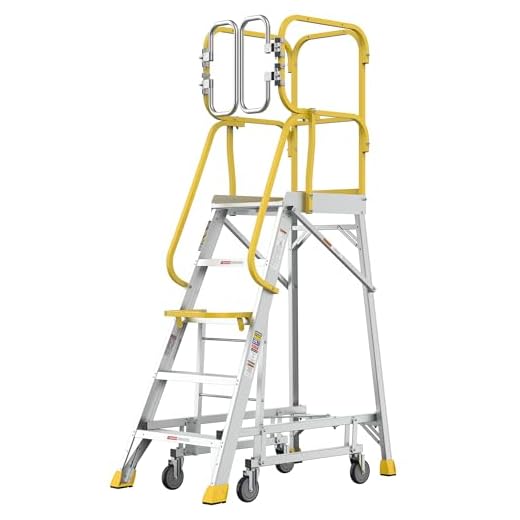


Tri-Arc 7-Step All-Welded Rolling Ladder
Sturdy, well-built, and clearly designed for industrial use — excellent for repetitive, high-reach tasks in warehouses. The welded construction and Grip Strut steps give confidence when I'm working at height, though it’s not intended for light residential use.
Purpose and overview
I recommend this model when you need a serious workhorse for industrial settings. It’s a 7-step, all-welded aluminum rolling ladder built to stand up to repeated use in warehouses, stockrooms, and other commercial environments. The design focuses on durability and operator safety rather than portability or low cost.
Key features I look for
These elements make the ladder feel very stable when I'm standing on the platform and doing tasks that require both hands.
Benefits, limitations, and practical notes
The main benefit is straightforward: this is built for repeated, heavy use. If your operation requires an OSHA-compliant rolling ladder that won’t need frequent replacement, this is a strong choice. That said, it’s heavier and larger than consumer-oriented models — it’s not the kind of ladder you’ll be storing in a garage for occasional use.
If you need something mobile within a large facility, the casters and welded frame reduce setup time and maintenance headaches. However, if your work is lighter-duty or you frequently move ladders between remote sites, consider a lighter, simpler option to avoid the higher price and heft.
Tri-Arc 3-Step All-Welded Rolling Ladder
A compact, professional-grade option for lower-height work — very handy around docks, small stockrooms, and receiving areas. The all-welded frame feels reassuringly solid, and the small footprint makes it easy to store and position.
Why I recommend this compact model
This 3-step Tri-Arc ladder is a great compromise when you need OSHA-level safety in a smaller package. It’s aimed at facilities where operators need a quick, reliable access point but don’t require the reach of taller ladders.
Notable specifications and features
These specs make it a useful tool for inventory checks, light maintenance, and any job that needs short, stable elevation.
Practical insights and usage tips
If you mostly work at lower elevations but still want the reassurance of a commercial-grade ladder, this is a reliable pick. It stores easily and the casters cut down on the time it takes to move between aisles. Keep in mind the limited height — for higher shelving you’ll want a taller model — and expect to pay more than a basic consumer step stool because this is built to professional standards.
5-Step Rolling Platform Ladder with Guardrail
Great for tasks that require standing on a platform and free hands — the 360° guardrail makes working at height feel much safer. It balances stability and mobility well, though it’s heavier than compact step stools.
What this ladder is for
I reach for a rolling platform ladder like this when I need a safe, work-ready standing surface at modest heights — inventory picking, light maintenance, or stockroom tasks. The full 360° guardrail and a roomy standing platform let me work hands-free without feeling exposed.
Standout features
Those features combine to make it feel like a small, mobile work platform rather than just a ladder step.
My practical takeaways
In my experience this type of ladder is excellent where safety and standing comfort matter — for example, when you need to use tools on a shelf or perform light repairs at height. It’s not as compact as a step stool, and you’ll want a clear area to roll and park it. If your work involves long periods standing or carrying tools while working, the guardrail and platform make a huge difference in comfort and confidence.
10FT Sliding Aluminum Ladder with Hardware Kit
Excellent when you need a long-reach, attractive ladder for lofty bookshelves, lofts, or attics — the included track kit simplifies installation. It’s heavier and requires careful mounting, but the 450 lb rating is reassuring for normal household tasks.
Intended use and strengths
I reach for a 10-foot sliding ladder when I need access to very tall shelving or loft spaces where a standard step ladder won’t do. The big advantage is a full-length ladder you can slide along a track, giving quick access to upper shelving without re-positioning multiple times.
What’s included and why it matters
Having the hardware kit included removes a lot of the guesswork about compatibility, but you should still verify that your wall or shelving can accept the mount points.
Practical considerations
This is a premium solution for homes or studios with very tall storage or library shelving. You’ll need to plan for installation — ensure you’ve got proper backing in the wall or shelf header and follow instructions precisely. If you’re not comfortable mounting it yourself, budget for professional installation to guarantee safety and longevity.
3-Step Aluminum Ladder with Tool Tray
Perfect for everyday home tasks where portability and compact storage matter most. It’s lightweight and handy, though the advertised heavy-duty load claims seem optimistic compared to user experience — it’s best for typical household loads.
Where this ladder shines
I keep a ladder like this around the house for quick jobs — changing bulbs, reaching upper cabinets, or doing small repairs. Its fold-flat profile makes it easy to tuck behind an appliance or hang on a wall so it’s not always in the way.
Features I appreciate most
These features make it a very practical everyday step stool for kitchen, garage, or utility tasks.
Limitations and honest advice
The advertised 600 lb rating caught my eye, and while the ladder feels solid for normal household use, multiple users have questioned the true maximum safe load. I treat the 600 lb number with caution and stick to typical user weights and light tool loads. If you need a heavy-duty, worksite-rated step ladder, choose an industrial model instead — but for general home use, this one is convenient, space-saving, and dependable.
8FT Rolling Library Ladder with Track Kit
A sleek, lightweight option that’s ideal for home libraries or lofts where quiet, floor-friendly movement matters. It’s designed for elegance and convenience but isn’t a heavy-duty industrial ladder, so keep load limits and wall-mount requirements in mind.
Who this ladder is best for
I recommend this rolling library ladder when aesthetics, quiet operation, and lightweight mobility are priorities — think home libraries, boutique retail displays, and loft spaces. It’s intended to be an attractive functional element rather than a rugged industrial tool.
Features that matter
If you value a refined look and quiet operation, those details make the ladder fit naturally into living spaces.
Limitations and installation notes
The ladder’s strength and function are great for books and household use, but it’s not a replacement for industrial rolling ladders. You’ll want to confirm the load rating for your selected size and ensure your shelf or wall can accept the sliding hardware. Take advantage of the included hardware kit and, if you’re not comfortable with mounting, have a handyman or carpenter do the track installation to ensure a safe, secure fit.
Final Thoughts
If you need one ladder for REAL warehouse work, I recommend the Tri-Arc 7-Step All-Welded Rolling Ladder. It’s the sturdiest of the bunch, built for repetitive, high-reach tasks with welded construction and Grip Strut steps that inspire confidence. Use it for stocking, maintenance, and any job where you climb multiple times a day.
If your priority is safe, hands-free work at a reachable height, go with the 5-Step Rolling Platform Ladder with Guardrail. The full platform and 360° guardrail make it ideal for inventory counting, light assembly, or any task where you need to stand and work for a while. It trades a little portability for real working comfort and stability.
FAQ
Short answer: yes, but with caution. Small surface irregularities are fine for the big rolling ladders (they're built to handle warehouse concrete). Avoid trying to roll across large cracks, ramps, or debris. Always lock the casters before you climb.
Most rolling ladders have caster brakes or a foot-activated locking system. Push the lock fully into place and give the ladder a firm nudge before climbing. If you’re using a platform ladder, engage the guardrail and any platform locks as an extra measure.
In a warehouse setting I prefer welded frames. They feel stiffer and hold up better under continuous, heavy use. Riveted frames can be fine for light or occasional use, but welded construction is the more durable choice for daily industrial work.
Yes — the track must be fastened to strong studs or a ledger board. The ladder’s weight plus sideways forces when you climb mean flimsy drywall anchors won’t cut it. If you’re not sure about your wall, hire a pro for mounting.
Quick visual check before each shift (wheels, brakes, steps, guardrails). A more thorough inspection monthly: check welds, fasteners, caster bearings, and any track hardware. Replace worn casters and repair loose hardware right away.
For portability, the 3-Step Aluminum Ladder with Tool Tray or the 3-Step Tri-Arc All-Welded are your friends. They’re compact and easy to move. Just remember they’re not meant for heavy industrial cycles like the 7-step model.






I’ve been eyeing the Tri-Arc WLAR107245 (the 7-step) for our warehouse for months. The review badge says “Best heavy-duty warehouse ladder” and that 9.2 score looks solid. Does anyone know how easy it is to move around when fully loaded with tools? I worry about tipping when someone leans to reach a pallet.
Also, check the floor — uneven floors make a difference. We added rubber leveling pads and that helped a lot. 👍
We have the 7-step at my shop. It’s heavy but solid. Moving it with one person is doable, but with tools on the top it feels safer if someone steadies it. No tipping issues so far, but we trained staff to always face the ladder and keep hips centered.
Good question — the WLAR107245 is built for industrial use, so the welded frame and Grip Strut treads give it excellent stability. Still, it’s best practice to position wheels on a flat surface and keep your center of gravity over the ladder. For repetitive reach work, consider the 5-step with 360° guardrail if you need freer movement on the top platform.
Quick poll: for a small retail stockroom — Tri-Arc WLAR103245 (3-step) or the Aluminum 3 Step Ladder with Tool Tray? I’m torn between professional-grade and something lighter.
Anyone using either for daily restocking?
If you need something that will see regular, professional use and give confidence in a busy environment, the Tri-Arc WLAR103245 is the safer bet. The all-welded frame and Grip Strut treads are built for repeat use. The Aluminum 3 Step with Tool Tray is great for occasional light tasks at home — more portable, but less industrial.
I had the Tri-Arc 3-step in a small shop — lasted years and never felt wobbly. The tool tray on the other one is handy, but for retail I prioritized sturdiness.
Loved the write-up on the 5 Step Ladder with the 360° guardrail. Safety first, am I right? 😅
We used a similar guardrail ladder in a furniture warehouse and it really changed workflow — people felt comfortable using both hands up top. Downsides: heavier and you need a bit more storage space. Still, if your team does overhead inventory a lot, I’d recommend it.
Totally — the 360° guardrail is a game-changer for tasks that require two hands. The extra weight is the trade-off for stability and safety. Glad your team benefited from it.
Do you notice more wear on floors with that heavier ladder? We’re cautious about scuffing our polished concrete.
A little scuffing at first. We added protective wheel sleeves and trained people to roll it gently. That helped.
Worth noting: many of these ladders have replaceable wheel covers if yours get trashed.
Also check caster specs — some are designed to be floor-friendly.
I installed the 10FT black ladder in our reading nook and it’s gorgeous — feels like a library straight out of Pinterest. Not cheap to hang, but looks amazing and is super sturdy. Worth it if aesthetics + reach is the combo you’re after!
Would you mind sharing a pic? Trying to convince my partner 😅
Love hearing that! The 10FT often scores high for homes where appearance matters. Thanks for the endorsement, Olivia.
Small gripe: the ‘600lbs’ claim on the Aluminum 3 Step Ladder with Tool Tray feels a bit optimistic. I mean, it’s sturdy for home tasks, but I’ve had one flex a little when reaching for attic beams. If you’re planning to use it for construction-ish jobs, I’d be cautious.
Still love the tool tray though — makes painting a one-person job.
Agreed. Ratings are a baseline, not a free pass to load it with gear and a person doing a yoga pose up top 😆
Good point — advertised load ratings often reflect static testing in ideal conditions. For construction or scenarios with lateral force, choose an industrial-rated ladder like the Tri-Arc options.
Thinking about the 10FT Aluminum Rolling Library Ladder with the 4FT Sliding Hardware Kit for our loft bookcase. A few concerns:
1) How hard is the installation of the telescopic hook track?
2) Does the brake wheel actually stop the ladder smoothly or is it jerky?
3) Is 450 lbs realistic if two small people stand on it (I know this is a weird question 😂)?
Any real-world installers or homeowners who used the 10FT ladder care to chime in?
We had pros install ours because the wall was oddly framed. Worth the cost — no creaks and the ladder slides like butter now.
Installation typically requires careful measurement and secure anchoring to the wall/track — it’s not a quick DIY unless you’re comfortable with drilling into studs and aligning the track precisely. The brake wheel on most of these kits is designed to slow and catch the ladder rather than produce a sudden stop, but smoothness depends on correct installation and maintenance. As for 450 lbs: that’s the rated capacity, but I wouldn’t recommend two adults on a narrow ladder at the same time — it’s safer for one person plus some lightweight items.
Two people on a ladder = recipe for disaster lol. Even if the ladder “can” take 450 lbs, it’s about balance and safety, not just the number.
I installed a similar track last year. It took a full afternoon and an extra pair of hands to hold the track while we screwed it into studs. The brake works fine after a few uses (breaks in), but alignment is everything. If the track is even slightly off the ladder will stick.
Picked up the Tri-Arc WLAR103245 (3-step) for a tiny stock closet — perfect fit. Compact, solid, and doesn’t feel cheap. Not glamorous, but does the job.
One tip: fold the handrail down (if yours allows) when storing to save a few inches.
Yes, the 24-inch width is nicer than you’d expect — more room for your feet when reaching sideways.
Nice! Did you get the 24-inch wide step? I’m wondering if the width makes a real difference in tight aisles.
Thanks for sharing your setup, Linda. The WLAR103245 is designed for small footprints, so glad it worked for your closet. Good tip about the handrail — many users don’t realize that storage adjustment.
Trying to decide between the 8FT Lightweight Aluminum Rolling Step Ladder and the 10FT Library Ladder. My use case:
– primarily bookshelves and loft access at home
– occasional heavy boxes (20-40 lbs)
– aesthetic matters (don’t want an industrial look)
Would the 8FT be enough for loft access or is the 10FT worth the extra hassle of mounting?
I had the 8FT for a tall bookshelf and it was fine, but my loft door was still out of reach. Measure twice before buying!
If you occasionally handle heavier boxes, make sure to practice safe lifting on a ladder. The 10FT gives you more headroom, but check clearances (doors, light fixtures) first.
If your loft really needs the extra reach, the 10FT is the practical choice — the 8FT is better for standard bookshelves and lower lofts. The 10FT offers the higher reach and higher capacity (450 lbs), but it does require careful mounting and is heavier. For aesthetics, both have sleek options; choose based on the height you need and how much installation you want to commit to.
Also consider whether you want the track visible. The 10FT track can be more of a design element; some people love it, others not so much.
Anyone worried about wheels and scratching hardwood floors with those rolling library ladders? I live in a rental and the landlord would lose it if I scratched the living room wall or floor.
Also, do the hook-track systems allow quick removal if you need to move the ladder out of the way for a party? Or is this a permanent fixture?
Our 8FT lightweight ladder has soft wheel covers and hasn’t scratched anything. But the track was definitely meant to be installed and left — not a quick flip-out for parties.
You can get removable wheel sleeves and felt pads. They help, but the track holes will still be an issue if you remove it later.
If it’s a rental, ask your landlord first. Some will allow it if you promise professional install and restore on move-out.
For hardwood floors and rentals: look for ladders with rubberized or floor-safe casters and confirm the track mounting method. Some sliding kits are semi-permanent but can be uninstalled; you’ll likely have to patch and paint afterward. If you need a non-permanent solution, a free-standing rolling library ladder (without a wall track) or a portable rolling ladder might be better.