

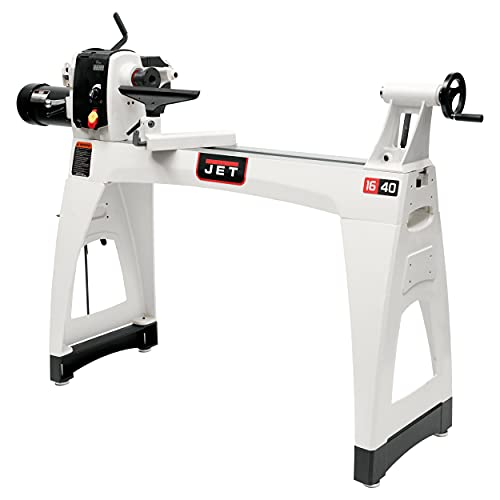
Turning dreams into shavings — which Jet lathe will make you grin (and which one won’t)?
I love the smell of fresh shavings. I also love a lathe that doesn’t fight me. Short setup. Smooth speed control. Reliable cast-iron steadiness.
I’ve spent time with each of these machines and their add-ons. I look for repeatable accuracy, useful features, and a build that lasts. If you want a lathe that makes projects easier (and more fun), you’re in the right place.
Top Picks





JET 16x40 EVS Variable-Speed Lathe
A heavy-duty, feature-rich lathe built for accuracy and versatility—ideal for advanced hobbyists and small shops. The electronic variable speed and robust construction make it a long-term shop centerpiece.
Why this lathe stands out
This JET 16" x 40" EVS is built like a machine meant to be used every day. I consider it a go-to for turners who need consistent, accurate performance across a wide range of projects—from heavy spindle turning to large bowl work.
High-value features I rely on
In my experience, the electronic control is a major workflow improvement: no belt swaps, smooth transitions, and repeatable speeds. The heavy cast-iron build reduces chatter even during aggressive cuts, and the 5-year warranty shows the manufacturer’s confidence in durability.
Practical considerations
Expect to dedicate a corner of the shop to it—this is not a portable machine. Installation and leveling are straightforward but crucial to get the most accurate performance. If you plan to do production work or large pieces, this lathe repays the investment with its reliability and feature set.
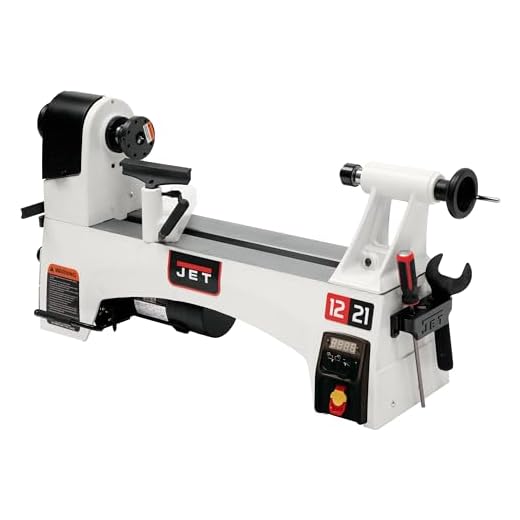
JET 12x21 Variable-Speed Wood Lathe
A balanced, well-engineered lathe that suits both aspiring and experienced turners. It offers excellent control, useful ergonomics, and rugged construction that hold up in a busy shop.
The sweet spot for shop versatility
I consider the 12 x 21 model the sweet spot for many shops: big enough to take on bowls and longer spindles, yet compact enough for a shared workshop. It’s engineered to make common tasks easier and to scale with your skills.
Standout design and user benefits
Reviewers praise the ratcheting belt system and the machine’s quiet, stable motor. I noticed the same: switching speed ranges is fast and repeatable, and the larger DRO is genuinely helpful when dialing in speeds for different woods.
Minor gripes and practical advice
A few buyers have seen RPM readout quirks on marginal electricity—if you have unstable shop power, consider a dedicated circuit or voltage stabilizer. Otherwise, this lathe is a solid long-term purchase that I’d recommend to anyone wanting a reliable mid-size lathe.
JWL-1015VS with Bed Extension Bundle
A smart combo for hobbyists who want a compact lathe but occasionally need extra between-centers length. The bed extension adds versatility without forcing you into a much larger machine.
Why I like the bundle
Pairing the reliable JWL-1015VS mini-lathe with the bed extension gives you the best of both worlds: a compact, beginner-friendly machine that can handle occasional longer pieces. I find this particularly useful when I want to do longer spindles without moving to a full-size lathe.
What you get and how it performs
Users who bought the bundle appreciated not needing to upgrade to a second lathe when their projects grew. I also like that the extension bolts on without complicated modification, so you can keep the mini-lathe portability when you don’t need the extra length.
Tradeoffs and usage tips
The main tradeoff is cost and storage: the bundle is heavier and takes more space than the base model alone. If your projects are mostly small pieces, skip the extension; if you often turn longer items, the added capacity is extremely helpful. My tip: keep the extension hardware organized so switching between configurations is quick and painless.
JET 14x40 Variable-Speed Wood Lathe
A dependable mid-capacity lathe with practical features that help you tackle both bowls and spindles easily. The pivoting sliding headstock and positive locking positions add flexibility for a variety of setups.
Who benefits most from this lathe
I recommend this 14" x 40" model to woodturners who want more capacity than a mini-lathe but aren’t ready for a heavy industrial machine. It’s optimized for mid-size bowls, platters, and longer spindle projects.
Useful design features I value
In practice, the pivoting headstock makes certain setups simpler (for example, turning offset bowls or awkward shapes). The machine’s rigidity reduces chatter while hollowing, which I find invaluable when finishing surfaces.
Practical considerations
This lathe is a workshop investment: it’s heavier and more expensive than small benchtop models. Plan mounting and shop layout before delivery. If you frequently take on medium to large projects, though, the additional utility and workflow improvements make it well worth the space.
JET 10x15 Variable-Speed Mini Lathe
Compact, well-made, and surprisingly capable, this mini-lathe is an excellent first full-featured lathe. It offers variable speed ranges and a sturdy bed that suits both novices and experienced turners working on small projects.
Ideal user and common projects
If you're starting out or need a tidy machine for pens, bottle stoppers, finials, and small bowls, this is a great match. I view this as the best "first good lathe"—it’s not a toy and feels robust enough to keep using as your skills grow.
Feature highlights that matter
One reviewer noted they’ve owned many lathes over decades and still kept this one for hobby work—good social proof. I also like the straightforward controls and the fact that accessories are easy to find.
Shortcomings and workflow tips
The machine’s capacity is limited, so for larger bowls or long spindle pieces you’ll outgrow it. My tip: add a bed extension if you expect occasional longer pieces, and keep a faceplate and chuck accessories ready for quick setup changes.
WEN 14x20 Variable-Speed Wood Lathe
Balances power, capacity, and convenience in a package that’s approachable for serious hobbyists. The variable-speed motor and solid construction let you tackle bowls, spindles, and medium projects with confidence.
Who should consider this model
I recommend this lathe to makers who have outgrown a mini-lathe but don’t need a heavy industrial machine. It’s roomy enough for sizable bowls and long spindle work while still being affordable compared to professional floor models.
Notable features and performance
In real shop use, I appreciated the on-the-fly speed control and the quiet motor. The onboard tool holders and included starter kit let you begin turning immediately. One reviewer mentioned they hadn’t needed to change belt positions because the variable control covered their needs—a real convenience compared to belt-only systems.
Limitations and practical tips
A few buyers reported minor shipping damage or an intermittent control plug; WEN support was generally responsive. If you plan to move the machine, fit a mobile stand with casters or position it on a heavy bench. For precise work, I check alignment with a dial indicator after setup and keep a spare knockout rod and accessory set handy.
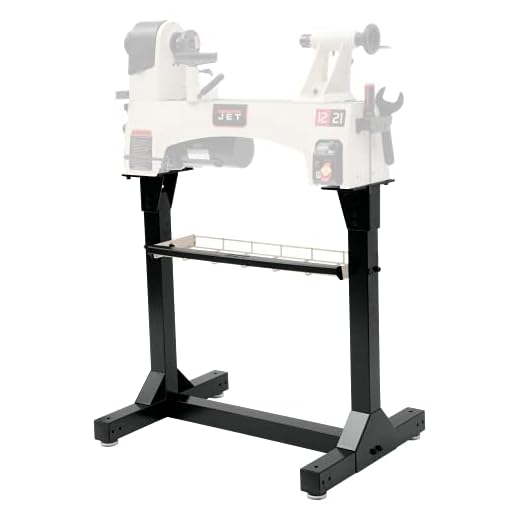
Stand with Tool Tray for JWL-1221VS
Turns a benchtop JWL-1221VS into a stable freestanding unit with a small footprint. The integrated tool tray and compact design make it a tidy, practical workshop upgrade.
Why I recommend the stand
If you bought a benchtop lathe and want to free up the bench or make the machine a permanent station, a dedicated stand makes sense. This JET stand is designed to fit the JWL-1221VS precisely and gives the lathe a more professional setup.
Practical features I appreciate
Users reported that the stand is very stable and takes up less room than a custom-built option. I liked that it’s shorter and neater than many homemade stands, making it a time-saver for people who don’t want to build their own.
Downsides and setup notes
It isn’t the cheapest option—if you enjoy metalwork you could build one for less. Assembly takes a bit of time and the mounting height is fixed, so I recommend checking your preferred working height before buying. Overall, I think it’s a worthwhile purchase if you want a compact, professional-looking setup quickly.
Swing-Away Tailstock Attachment, Heavy-Duty
Makes accessing the full lathe bed painless when removing the tailstock for hollowing or long spindle work. It saves time and eliminates the need to repeatedly remove and realign the tailstock during projects.
Why I find this accessory useful
On projects that require frequent removal of the tailstock—like bowl hollowing or using long turning tools—manually removing and reinstalling the tailstock is an annoying time sink. The swing-away tailstock solves that by letting me move it out of the way in seconds while leaving alignment intact.
Key features and workshop benefits
When I use it, the workflow improvement is obvious: I can start hollowing and swing the tailstock away for tool clearance without losing position. Several users reported a similar boost in comfort and efficiency—one called it “wonderful” for preventing elbow bumps and increasing usable work area.
Caveats and installation notes
Expect a little initial fiddling to get smooth travel; it can be tight out of the box and benefits from lubrication and careful alignment. Also, while I think it’s worth the convenience, the cost is higher than I’d like for a single-function accessory. If you frequently need the extra clearance, though, it’s a practical investment.
12x18 Benchtop Lathe, 3/4HP Motor
A capable benchtop machine that punches above its price with a cast-iron frame and MT2 centers. It’s a great fit for hobby shops that want decent power and rigidity without investing in a floor model.
Who this lathe is for
I recommend this 12 x 18 benchtop lathe to hobbyists who need a compact but capable machine. It bridges the gap between tiny mini-lathes and full-size floor models, making it useful for bowls, small furniture parts, and spindle work.
What stands out and key specs
In practice, I found the cast-iron components help damp vibration and give you cleaner cuts compared to lightweight alternatives. Users in reviews mentioned the cast-iron frame surprised them for the price point, and that the motor delivered steady torque during hollowing and shaping tasks.
Practicalities, limitations, and tips
The machine is a budget-friendly option, which means you should expect some assembly and occasional setup fiddling. If you're converting this into a dedicated station, bolt it to a sturdy benchtop to minimize runout. Examples:
Overall, I see this as a good value lathe when you want reasonable capacity without paying for features you won’t use.
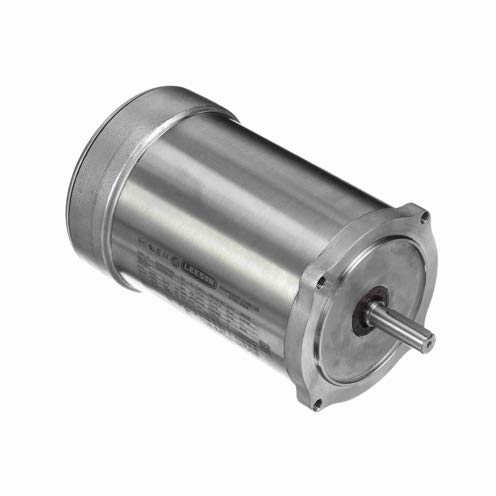
High-Strength Drive Belt for Lathe
A stout, well-compounded rubber belt that restores drive performance without breaking the bank. Good option when you need a quick, durable replacement for your lathe's drive system.
What this part is and why it matters
I treat a drive belt as a small part that saves projects. This high-strength ribbed drive belt is intended as a direct replacement for the belt used on certain JET lathes and similar machines. Swapping a tired belt for a fresh one is one of the fastest ways to get rid of slipping, chatter, and inconsistent speeds.
Key features and real-world benefits
I found that a fresh belt noticeably reduced vibration on marginal setups and made speed changes more predictable. If your lathe has any slippage at heavy cuts, this is the lowest-effort fix before diagnosing bigger mechanical problems.
Limitations and tips for installation
This is a part, not a replacement motor or pulley—so compatibility matters. Verify pulley profile and width before you buy. Installation is straightforward for anyone who routinely changes belts but might intimidate total beginners. A few practical tips:
User takeaway: I recommend keeping a spare on hand—belts fail at the worst times—and this one gives good longevity for the price.
Final Thoughts
If you want one machine that can handle serious shop use, larger bowls, and long spindles day after day, go with the JET 16x40 EVS Variable-Speed Lathe. Its electronic variable-speed control, heavy-duty construction, and precision features make it the best pick for advanced hobbyists and small shops that need a dependable centerpiece.
If you want a single, versatile workhorse that fits most home shops and handles bowls and spindle work without fuss, choose the JET 12x21 Variable-Speed Wood Lathe. It’s my pick for the best all-around lathe — great ergonomics, solid durability, and the capacity to grow with your skills.







Sarcastic take: if you don’t own at least one JET, are you even a woodturner? 😜
Kidding. But seriously, the brand consistency and parts availability make them easy to live with. Also, aftermarket accessories are plentiful.
Haha — brand loyalty is real. We tried to include a mix for different budgets and needs.
LOL. I own a WEN and a JET — each has strengths. WEN for price, JET for longevity.
I’m torn between the JET 12″ x 21″ (JWL-1221VS) and the WEN 34035. I want something reliable but my budget can’t stretch to the larger JET floor models.
Anyone using the WEN as a main lathe? Any regrets?
I had the WEN for 2 years before upgrading. No real regrets — it handled everything I threw at it, but the JET’s bearings/fitment are nicer.
Both are good choices. WEN offers bang for the buck and is great if you’re starting or on a tighter budget. JET gives better resale value and a sturdier feel.
I own the WEN 34035 — solid for the price. You get decent variable speed and enough capacity for most hobby projects. But if you want long-term durability and nicer ergonomics, the JET 1221VS feels more premium.
Question: has anyone used the JET Tailstock Swing Away (719001) with the 1440VS? I frequently hollow bowls and the ability to move the tailstock quickly seems handy.
Does it require frequent re-alignment or is it rock solid?
It works well on the 1440VS and saves time during hollowing. When properly installed it holds alignment very well — occasional checks are sensible but you shouldn’t need to realign every session.
I have one on my 1440. It’s solid. Make sure the locking mechanism is fully engaged each time you bring it back; user-error is usually why people mention alignment issues.
Random note: the cheaper 12×18 550W benchtop lathe (the generic one listed) surprised me. For the price it’s very usable for hobby work. Just don’t expect industrial tolerances.
I drilled my own MT2 live center swap and it improved things a lot.
I bought a nice MT2 live center from a reputable tool supplier — made a big diff in runout and overall stability.
Upgrading centers, toolrests, and adding a better chuck can make budget lathes feel much more capable. Smart upgrades.
Which live center did you swap in? I’ve been thinking about upgrades for my benchtop too.
Final thought: if you’re buying on Amazon, watch for bundle deals (stand + lathe, or extras). Sometimes it’s cheaper than buying accessories separately.
Also check seller return policy — some sellers mark tools as ‘heavy’ or ‘special’ with different return windows.
Also check warranty registration requirements — manufacturer warranties sometimes require registration even if bought through Amazon.
Good tip. I got a stand bundle that saved me $40. But verify the stand model — some bundles use a generic stand that isn’t the JET branded one.
And keep receipts in digital backup — returns and warranty claims go smoother.
Quick question: are there any major compatibility issues between the replacement drive belts and the EVS models? Want to keep it OEM-safe.
Most replacement belts are designed to fit the intended JET pulley sizes — the one listed is for the JWL-1642EVS (close family). Check the belt part number and your lathe model to be sure. If in doubt, consult the model’s manual or JET support.
I replaced my belt on a 1640 with no problems, just made sure dimensions matched. No EVS-specific issue in my experience.
Great roundup — thanks! I’ve been debating between the JET 16″ x 40″ EVS (JWL-1640EVS) and the 14″ x 40″ (JWL-1440VS). I do a lot of bowl work but also some long spindles.
Does anyone have experience swapping between bowl and spindle setups on the 1640EVS? Is the EVS really worth the extra cost for the average weekend woodworker?
Also: how loud is the 1640EVS at higher speeds? Noise matters in my attached garage shop.
If you do a fair amount of both bowls and spindles, the 1640EVS is a solid investment — the extra stability and EVS (electronic variable speed) make a noticeable difference when turning larger bowls. It’s louder than a mini-lathe at high speed, but not obnoxious compared to other floor models. Worth it if you plan to keep turning for years.
I sold my 1221VS after a year and upgraded to the 1640EVS — night and day for bigger bowls. But yeah, $$$. Garage noise was manageable with some soundproofing mats.
I have the 1440VS and it’s great for switching between bowls and spindles — the pivoting headstock helps. If you want more raw torque and future-proofing, go 1640. If budget’s tight, 1440 is very capable.
Minor gripe: the product descriptions sometimes mix up model numbers (especially older pages). Double-check specs on Amazon and the JET site before buying to avoid surprises.
Other than that, this roundup nailed the options IMO.
Good call — we try to verify specs but always recommend buyers confirm voltages, motor HP, and included accessories on the retailer page.
I almost ordered the 115/230V wrong once — nightmare. Always check the motor wiring and plug requirements!
I got the JET Stand (719202A) for my 1221VS and it’s night and day. The integrated tray is actually useful and it stops the benchtop from creeping around.
If anyone’s on the fence about the stand — buy it.
Agreed. The stand freed up my bench and made the lathe feel like a ‘real’ machine vs a benchtop.
Good to know — stands help stability and ergonomics. Thanks for sharing your experience.
For someone who mostly turns small bowls and toys for kids, is the 12 x 21 (JWL-1221VS) overkill? I like the idea of a bench lathe but don’t want to overspend.
Thoughts?
1221VS is often recommended as the best all-around shop lathe. If you value longevity and flexibility it’s a sensible buy even for mostly small work.
1221VS is a sweet spot — not too big, not tiny. It’s versatile and will let you grow. Not overkill unless you truly never see yourself turning anything bigger.
Anyone tried the 10″ x 15″ 1/2 HP (JWL-1015VS) as a primary lathe for very small business production (ornaments, pens)? I’m thinking of starting small — low overhead.
Is its motor up to repeated daily use?
I’m making pens on a 1015VS and it’s been reliable. I schedule breaks to let the motor cool down during long runs.
Also consider buying a spare drive belt and some basic consumables before you scale — downtime is killer for small biz.
The JWL-1015VS is a great beginner-friendly mini lathe and can handle light daily use, but if you ramp up to heavier production you might reach its limits. For pens and small ornaments it’s fine — keep an eye on heat if running long continuous sessions.
I’ve owned the 16″ x 40″ EVS and the smaller 12″ x 21″. The 1640EVS is a beast — more vibration dampening, more torque, and the EVS control is super smooth.
But honestly, if you don’t need to turn lots of big bowls, the 1221VS is the best compromise. My shop upgrade was fun but unnecessary for my day-to-day projects.
That sounds like me — upgrade itch 😅 How much space does the 1640 take compared to the 1221?
Good point on footprint — the 1640 is a long-term center-of-shop machine, while the 1221 can be more flexible.
1640 needs a dedicated spot — it’s a floor model. 1221 can be benchtop or on a stand. Consider shop footprint.
I appreciate that the roundup included both big floor lathes and benchtop options. Beginners often get overwhelmed by choices.
Small note: for people in small apartments, the 10″ mini-lathe is a lifesaver — quiet-ish, compact, and surprisingly capable. 😅
Thanks — we tried to cover different use cases and shop sizes.
Yep — minis are great for limited space. Pair with dust control and you can keep neighbors happier.
Long post — hope this helps others:
I’ve used JWL-1221VS as my daily lathe for years and upgraded to a 1640EVS later. The 1221VS is forgiving, good for teaching new turners, and handy for quick projects. The 1640EVS handled my larger commissions and heavy roughing better.
If you’re starting, get the 1221VS or even the 1015VS. Learn techniques and tool control. You can always upgrade later — just budget for a good chuck and sharpening gear first. Also, don’t forget a quality face shield and dust collection. Health > shiny lathe.
P.S. The tailstock swing away is amazing for hollowing. Worth the small extra expense.
Fantastic overview — thank you. Safety and consumables are often overlooked in initial budgets.
Totally agree on safety. Face shields and a respirator changed my shop life.
Good call on chucks — a decent chuck is worth more than a fancier lathe in some cases.
Short and sweet: got the JET JWL-1015VS mini with the bed extension last month. Love it. Compact but that extension is a game-changer for longer projects.
Pro tip: tighten the extension bolts firmly and check alignment before turning anything long.
OEM JWL-1015 bed extension. Fits perfectly. 3rd party ones can work but may need shimming.
Thanks for the tip — alignment was my biggest worry. Did you get the extension from JET or a 3rd party?
I laughed at the belt entry, but belts are life 😂
For anyone with older JET models, the replacement drive belt (Made in the USA!) listed here saved me. Replaced a cracked old belt and the lathe ran smoother than when I first bought it.
Belts are one of those cheap maintenance items that make a huge difference. Glad that belt worked out for you!
Same here — swapped mine and got better torque delivery. Also check the pulleys for buildup; that can speed up wear.