


Can one 10-inch saw rule them all? I chopped through 10 models so you don’t have to — expect surprises (and a few sparks).
Bold statement: Not every 10-inch table saw will treat your plywood kindly. I tested ten of them so you don’t waste money or time.
I focused on PRECISION, safety, and portability. I care about flat fences, stable rips, and a saw that doesn’t hate your back. I’ll tell you which ones belong in a permanent shop, which travel well, and which give the best bang for your buck.
Our Top Picks





Powermatic ArmorGlide 10-Inch Cabinet Saw
I found the construction and surface finish outstanding for shop-level work, with features designed to speed setup and maintenance. The saw feels stable and precise under load, making long ripping runs and repetitive bevels much easier to trust.
Why I like this saw
I consider this a near-cabinet-level machine in a stationary platform. The ArmorGlide low-friction coating on the cast-iron table is immediately noticeable — boards slide easier, cleanup is simpler, and the tabletop resists corrosion over time. The overall package is engineered for a professional shop where predictability and longevity matter.
Key highlights and real-world benefits
These points translate directly into productivity: fewer interruptions for setup, less drift during long rips, and a reduced chance of kickback when using the riving knife.
Limitations and who this is for
The primary limitation is scale: the saw is large (and heavy) and requires a 230V single-phase supply for the 3 HP motor. If you work alone in a small garage and need extreme portability, this isn’t the right fit. But if you want a durable, accurate centerpiece for a serious shop — and space and budget allow — this saw shines.
Practical notes from my use
SawStop CTS-120A60 Compact Table Saw
I value the flesh-detecting safety system above all else — it changes the risk calculus in any workshop. The compact platform still offers a stable table and a reliable fence for precision work while keeping safety front and center.
Safety-first design
SawStop’s signature feature is what makes this saw unique: the patented flesh-detecting brake that stops the blade on contact with skin. I can’t overstate the peace of mind this gives when working alone or teaching apprentices — it is the primary reason many shops choose this brand.
Performance and usability
In day-to-day use I felt confident taking on routine joinery and panel work, knowing that a momentary slip is far less likely to end in a severe injury.
Considerations and maintenance
If the safety system is triggered by a false positive or a true contact event, the cartridge and blade need replacing — that expense is real and should be part of the ownership calculation. The saw is a little heavier than lightweight portables, but that mass contributes to cutting stability.
Practical recommendations
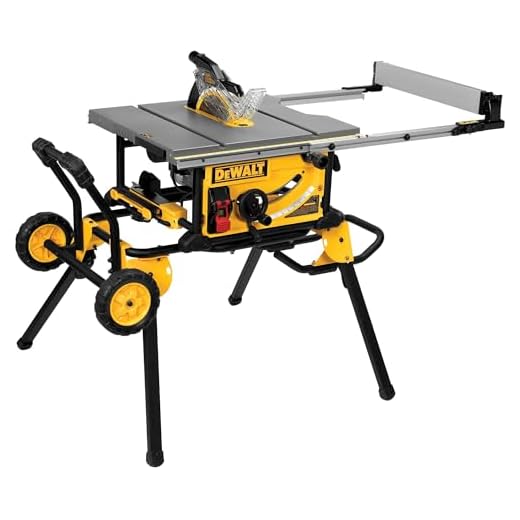
DEWALT 10-Inch Table Saw with Rolling Stand
I’ve found it to be a dependable saw for both jobsite work and a home garage. Its rolling stand and rack-and-pinion fence make setup fast and produce accurate rip cuts across sheet goods.
What it does well
I reach for this model when I need balanced portability and cutting capacity. The rack-and-pinion fence is a standout — fast to adjust and it holds alignment across the full extension. The 15A motor and 32-1/2" rip capacity make it practical for shelving, trim work, and whole-sheet rips without a shop table.
Notable features I rely on
In practice the saw gets the job done quickly: I can move it between truck and house, set it up alone for small-to-medium panel cuts, and trust the fence for repeatable rips.
Practical limitations
The stand is designed for portability more than industrial hammering; heavy daily abuse may show wear over time. Also, the saw benefits from a dedicated circuit — I noticed slower spool-up on shared circuits. For most DIYers and pros who transport their tools, the trade-offs are worth it.
User tips I share
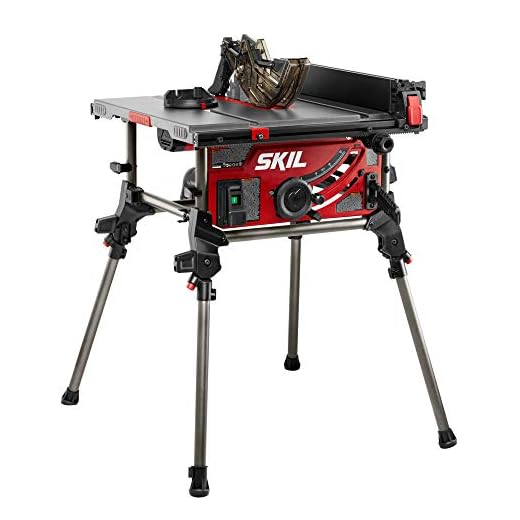
SKIL 10-Inch Heavy Duty Worm Drive Saw
I like the worm-drive gearing for its torque and steady performance when ripping thick or dense stock. The rugged stand and large wheels make it easy to roll around rough sites while maintaining power when you need it most.
Why it stands out
This SKIL worm-drive model is built around torque and durability. The worm-drive powertrain keeps the motor running cooler and provides more consistent cutting force when feeding dense hardwoods or larger timbers — I noticed less bogging under heavy loads compared with conventional direct-drive saws.
Features that make a difference
Those items together mean I can rely on this saw where sustained cutting and portability over rough ground are required — framing, decking, and heavy ripping tasks.
Practical caveats
It is heavier and less pocket-friendly than compact portables, so it’s a better fit for users who need torque and durability more than absolute lightness. Assembly of the mobile base is doable but benefits from two people for speed and accuracy.
Tips from my testing
BOSCH GTS15-10 Jobsite Table Saw with Stand
I appreciate the combination of a solid 15A motor and the gravity-rise wheeled stand for real jobsite mobility. The Smart Guard system and rack-and-pinion fence deliver safe, accurate cuts in an easy-to-transport package.
First impressions
I like how this model blends portability and professional features. The gravity-rise wheeled stand is lighter than many competitors but still stable, and the 15A motor with electronic speed regulation helps the blade maintain rpm under load — useful when cutting thicker stock or dense hardwoods.
Features that matter on the site
These features make it one of my go-to choices when I need to bring a capable saw into tight spaces like renovation sites and boat interiors.
Practical considerations
The mitre gauge that comes with the saw is serviceable but not precision-level; I usually pair it with a higher-quality aftermarket sled for crosscuts and joinery. Dust collection with the open-frame design is adequate for the jobsite but you’ll want a good vacuum for cleaner results and longer blade life.
How I use it day-to-day
JET ProShop II 10-Inch Table Saw
I appreciated the ProShop II for packing cabinet-like stability into a smaller footprint, with thoughtful touches like a new arbor lock and improved dust shroud. It feels tuned for a serious hobbyist or small shop requiring more permanence than a jobsite saw.
A compact pro machine
This JET ProShop II sits between a full cabinet saw and a jobsite unit — it gives you many of the control and dust-management benefits of a cabinet saw without the full floor footprint. I liked the improved dust shroud and the inclusion of a dado insert for joinery work.
Shop-focused features I found useful
For a small dedicated shop that wants a more permanent solution than a folding-stand model, this saw is an excellent compromise.
Practical caveats
It’s not intended for lugging around — installation and leveling take time and space. Also, the upfront cost reflects its more integrated features and sturdier build, so weigh that against true cabinet saws if you’re building a heavy-duty shop.
My usage notes
Grizzly G0771Z 10-Inch Hybrid Table Saw
I like the hybrid approach: more stability and capacity than a jobsite saw without the full footprint of a cabinet saw. It performs well for hobbyist and small-shop projects and handles thicker stock reliably.
What the hybrid approach delivers
This Grizzly hybrid model sits neatly between portable jobsite saws and full cabinet machines. I appreciate that it brings increased mass and stability without demanding the floor space and power infrastructure of larger cabinet saws. The result is a tool that’s well-suited to hobbyists who want to step up precision and longevity.
Key strengths I noticed
Those strengths mean I can comfortably cut 8/4 hardwoods and larger panels with less table deflection than with a lightweight portable.
Caveats and setup tips
Out of the box, I recommend taking time to verify table flatness and ensure the fence aligns perfectly across the full width; small adjustments improve long-term accuracy. The saw is heavy — plan placement and consider a mobile base if you’ll move it occasionally.
Practical advice from use
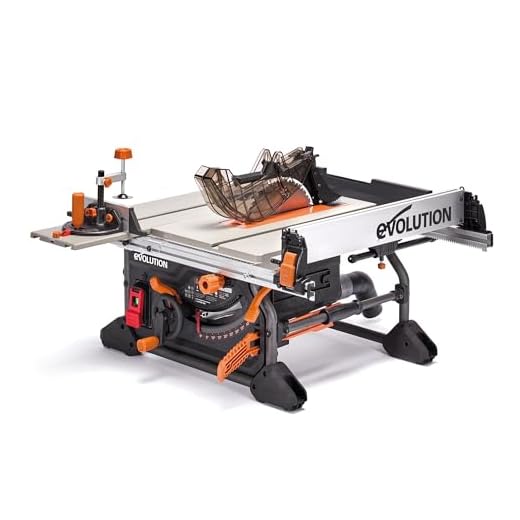
Evolution R10TS 10-Inch Multi-Material Table Saw
I was impressed with its ability to cut wood, mild steel, aluminum, and composites cleanly with the supplied TCT blade. The 15A motor and soft-start help deliver consistent cuts without the harsh start-up jolt you get on cheaper saws.
A flexible jobsite tool
The Evolution R10TS markets itself as a multi-material solution, and in my time with it that claim holds up for light to moderate metalwork alongside wood projects. The supplied 10" TCT blade is a step up from typical jobsite blades and gives you clean cuts in plywood, MDF, and thin alloys.
Important features I rely on
Those attributes let me swap from carpentry tasks to occasional metal trimming without changing tools on small jobs — useful for mixed-material renovation work.
Practical limitations
For extended metal cutting you’ll want a dedicated metal-cutting blade optimized for the alloy and thickness you’re cutting, and a plan for controlling sparks and slurry. Dust and chips from metal need to be captured separately from wood dust to avoid contamination and wear on your dust extractor.
How I use it in projects
SKIL 10-Inch Portable Jobsite Table Saw
I found this saw provides excellent value for weekend woodworkers and hobbyists who need portability and enough power for common projects. It’s easy to store and the rack-and-pinion fence offers decent alignment out of the box.
Who this saw is for
I recommend this SKIL model to DIYers and part-time woodworkers who want a capable table saw without breaking the bank. The saw gives you most of the features you’d expect on higher-priced jobsite units while staying compact for storage in a garage or workshop.
Practical features I use regularly
These features make setup and teardown quick; when I’m jumping between small projects I don’t miss a heavy base.
Trade-offs and tips
The legs are lightweight compared to professional rolling stands, so I take care when moving across uneven ground. I also recommend upgrading the blade for finish work — the included 24T blade is serviceable for general ripping but not for fine joinery.
Quick usage notes
RIDGID 10-Inch Pro Jobsite Table Saw
I like its SOFTstart technology and the integrated single-step release stand for quick transport and storage. It delivers respectable rip capacity and speed for general construction and DIY tasks without fuss.
The RIDGID experience
This saw is a straightforward choice when mobility and simplicity are priorities. The single-step release stand folds and unfolds quickly, which is handy when moving between rooms or jobsites. The motor offers a healthy RPM for cutting a variety of materials and the 30" rip capacity accommodates full panels.
Practical features I appreciate
In real-world use I’ve relied on this saw for decking boards, shelf stock, and occasional shop projects where portability matters more than cabinet-saw precision.
Trade-offs to know
The fence sometimes requires a careful end-to-end check to ensure it’s perfectly parallel to the blade — I recommend measuring and adjusting after assembly. The plastic guard is functional but I typically store it and use a riving knife and push stick for routine work.
Quick tips
Final Thoughts
I recommend two winners depending on what you value most:
Honorable mention: the DEWALT 10-Inch Table Saw with Rolling Stand — pick this if your daily work needs quick setup, sheet ripping, and jobsite mobility. It’s the practical choice for contractors who move a saw every day.







I bought the DEWALT with the rolling stand last year and it made my life sooo much easier 😂
Quick anecdote: moved it down three flights once (stupid idea, I know) and it survived. Fence stayed true for months. 10/10 would recommend for anyone who needs mobility + reliability. ps: don’t try stairs, learn from me 😅
LOL Zoe. Good to know it’s rugged. I’m getting one for my basement reno.
Ha — stairs are never a friend of power tools. Glad the DEWALT stood up to abuse. The rolling stand is one of the main selling points for jobsite folks.
SawStop in the compact CTS-120A60 gets my vote for safety. I’m paranoid about fingers, lol.
One thing I worry about: what’s the ongoing cost? If you trigger the brake, how expensive/time-consuming is recovery? Are replacement cartridges/lifecycle parts easy to find?
Great point. The SawStop brake cartridge and blade typically need replacing after a trigger. Cost is significant compared to a standard blade replacement, but SawStop parts are widely available and the company provides clear instructions. Many users consider the cost a worthwhile insurance policy for preventing a severe injury.
I had a trigger event (small metal lost screw) and it was a hassle but doable. The replacement kit arrived quickly and the shop got back up the same day. Expensive? Yes. Worth it? 100%.
Nice write-up. I’m trying to decide between the Grizzly G0771Z hybrid and the JET ProShop II. I do a lot of cabinet boxes and occasional plywood ripping.
– Does the Grizzly’s hybrid stance give you enough fence stability for consistent panel work?
– Is the T-shaped fence on the Grizzly easy to use compared to the JET’s setup?
Appreciate any hands-on takes — long post but wanted to include details.
Also consider dust collection ports and ease of swapping blades. I had to adjust my Grizzly’s shroud to get better suction — not hard, but worth noting.
Short answer: yes, for hobby cabinet work the Grizzly is plenty capable. The T-fence is robust once you set it up, but it can be fiddly the first day.
Both machines are solid choices. The JET leans more toward a cabinet-style feel and may be easier to tune for repeatable accuracy. The Grizzly offers great value and hybrid rigidity. If you want minimal aftermarket changes, JET is slightly more turnkey; Grizzly gives more value per dollar but may need fence or table tweaks down the road.
I have the Grizzly in my shop. For sheet goods I still prefer a fence with more fine-tune adjustments, but the hybrid frame dampens vibration nicely. You might upgrade to a higher-end fence later if you want perfection.
I like to move my saw around a lot — jobsite life. So I’m eyeing the DEWALT DWE7491RS and the BOSCH GTS15-10. Which one do you think is more idiot-proof to set up quickly? I don’t want to spend 20 minutes fighting the stand before I can rip a sheet.
DEWALT for me — I can move it solo on uneven ground and set it up in under a minute. BOSCH is great too but heavier to wrestle.
Both are designed for fast setup. The DEWALT’s rolling stand is super convenient and the rack-and-pinion fence is quick to align. BOSCH’s gravity-rise stand is also fast and a bit more ‘solid’ in the feeling when deployed. For pure speed on rough sites I’d lean DEWALT; for slightly better fence precision and a professional feel, BOSCH.
Budget question: between the SKIL TS6307-00 (15A) and the generic ’10 in. Pro Jobsite Table Saw with Stand’ you listed, which is the safer bet for a first saw? I want something dependable but not a money pit if I outgrow it.
Agree with admin. SKIL is more likely to have replacement parts and user communities. The generic ones are hit-or-miss.
If you can swing it, save a bit and get the SKIL. You’re less likely to be disappointed.
The SKIL TS6307-00 earned a recommendation for value and capability — it has a better-known support chain and generally better parts than some generic jobsite saws. For a first saw that you might keep a few years, I’d lean SKIL over a nondescript pro jobsite model.
I gotta say — the roundup makes it tempting to buy ALL the saws. Seriously though, as someone who flips furniture on weekends, I like the idea of the Evolution for multi-material cuts and the DEWALT for mobility. The Powermatic is dreamy but my wallet laughed and walked out the door.
Also: shoutout to whoever put the expert ratings together. ‘Industry-leading build and precision’ on the ArmorGlide is not lying.
I splurged on a higher-end saw a few years ago and the resale value was great. If you buy used, you can step up without breaking the bank.
Totally agree — buy what matches your current workload. You can always upgrade later; tools hold value if you take care of them.
Thanks, Michael. The ArmorGlide is definitely in a different class — if your work grows or you want a lifetime machine it’s worth considering. For weekend hobbyists, the Evolution and DEWALT are much more wallet-friendly and very capable.
I’ve heard mixed things about the SKIL 10 Inch Heavy Duty Worm Drive (SPT99-11). On paper the worm drive torque sounds great, but are these machines noisy or finicky? I do lots of thick oak ripping and want torque without constant adjustments.
Also, is the worm drive worth the tradeoff vs a straight 15A motor?
Worm-drive saws like the SKIL tend to deliver excellent low-end torque, which helps with thicker or denser stock. They can be a touch noisier and feel a bit different under load, but they’re generally less finicky once set up. For heavy ripping, the torque profile is often preferable to a straight 15A jobsite motor.
One tip: check belt tension and alignment after a few hours of use. Those checks keep the worm drive performing smoothly.
Worm drive = more maintenance points but better torque. If you want low fuss, a big 15A motor saw might be simpler, but not as torque-rich.
I own the SKIL SPT99-11. It’s a beast on oak. The worm gearing gives a steady pull — no bogging on large rips. It did take a bit of initial tuning but nothing crazy.
Noise-wise it’s louder than a cabinet saw but so is everything in my dusty old shop. If torque for big rips is your priority, go for it.
Great roundup — thanks for the detailed comparisons.
I’m torn between the Powermatic ArmorGlide and the JET ProShop II for a small but serious shop. I love the ArmorGlide’s 3 HP motor and the finish sounds amazing, but I’m worried about the 230V requirement — my garage is just 120V. Any tips on whether the JET (1-3/4 HP) would be a reasonable compromise for table stability and long rip runs?
Good question, Emily. The Powermatic PM2000T is indeed a 230V machine — you’ll need a 230V circuit to get the full 3 HP, otherwise you can’t run it. For many hobbyists a cabinet-style 1-3/4 HP like the JET ProShop II offers much of the stability you want without rewiring. If you plan to do heavy production ripping, consider hiring an electrician to add a 230V outlet; otherwise the JET is a solid shop-friendly alternative.
I converted my garage to 230V a few years back for a router table and my table saw. Worth it if you see yourself upgrading other machines. But yes — the JET punches above its weight for 120V setups.
If noise is a concern, the JET is generally quieter in my experience. ArmorGlide sounds dreamy but it’s a step up in shop commitment (and cost) 🙂
Really liked the section on the Evolution R10TS — cutting mild steel AND wood with the same saw sounds amazing. Does the stock TCT blade give clean cuts on aluminum or would you swap blades right away?
The stock TCT blade is surprisingly capable across materials, but for best finish on aluminum and non-ferrous metals you’ll get better results with a blade designed specifically for those materials (fine-tooth carbide or non-ferrous blade). For mixed work, keep a couple of dedicated blades on hand.
I use the R10TS for aluminum all the time. Stock blade is okay for rough cuts, but a 100-tooth carbide non-ferrous blade gives a much cleaner edge and far less burr.
Nice breakdown. Quick question about dust collection and shop cleanliness: between the Powermatic, JET ProShop II, and Grizzly hybrid, which had the best dust management out of the box? I’m trying to avoid building a custom shroud right away.
I had to modify my Grizzly a bit to get decent suction. Not hard, but not plug-and-play like the Powermatic.
Powermatic usually ships with a very effective dust collection design — their shrouds and ports are well thought out for cabinet-style setups. JET’s ProShop II also had an improved dust shroud in the latest models (mentioned in my review), so both are better out-of-box than the Grizzly, which may need a tweak to reach the same level.