


Do I fold under pressure? Not with these 10 brakes — from pocket-friendly bench units to full-width shop beasts.
I love clean bends. A perfect 90° is oddly satisfying and saves hours of rework.
I tested 10 box and pan brakes across real shops and garages in 2026. I focused on how they hold up, how repeatable the bends are, and whether they actually make my job easier — with a little stubbornness and a lot of metal.
Top Picks




Baileigh 48" 11-Finger Heavy Duty Brake
A very robust manual finger brake built to handle heavy use and full-width bends. It offers a deep box depth and repeatability features that make production runs easier.
Overview
This 48-inch Baileigh is a workhorse for shops that need manual precision across a full 4-foot width. It bends 12-gauge mild steel and can handle 16-gauge stainless in many applications. The design prioritizes rigidity and repeatability, which I appreciate when doing longer parts or small production runs.
What stands out
When I used it, the stop rod and robust fingers made repeat bends simple and accurate. The 3-piece finger design is especially handy for configuring the brake for complex boxes without sacrificing strength.
Practical notes and limitations
Because it’s nearly two thousand pounds, you’ll need a plan for delivery and placement — tractor-trailer or shop lift is typical. It’s an investment, but for a shop that needs manual capability at this scale it’s a sensible long-term buy. If you only do occasional small pieces, this may be overkill.
JET 72" Heavy-Duty Box and Pan Brake
A full-width 72" brake built for shops that need long part capability with precise results. The heavy frame and ergonomic features make it an excellent choice for larger fabrication shops.
Overview
This 72-inch JET brake is aimed at fabricators who need manual bending capacity for very large parts. With robust construction and ergonomic additions, it’s built to deliver accurate, repeatable bends across a full 6-foot width.
What makes it work well in larger shops
On long panels and oversize parts, this brake provides a level of control that smaller machines simply can’t match. It feels stable and remains accurate when properly installed and anchored.
Considerations and deployment
You’ll need to plan for delivery, floor space and possibly a fork or crane for placement due to the machine’s weight. If your shop regularly produces large panels or long channels, it’s an outstanding manual solution; otherwise it’s more capacity than many small shops require.
Grizzly 48" 12-Gauge Pan and Box Brake
A stable, well-sized machine for medium to heavy fabrication tasks. It combines a precise finger set and solid frame to deliver repeatable 12-gauge bends across 48 inches.
Overview
Grizzly’s 48-inch pan and box brake is aimed at serious fabricators who need full-width capacity and accuracy. It’s built with hardened fingers and a substantial frame to keep deflection low during demanding bends.
What I like about it
In my experience the hardened fingers produce clean break lines and stay true over many cycles. If you make deeper pans or channel work regularly, the extra box depth and finger selection reduce setup time and improve results.
Considerations before buying
This unit’s shipping weight and size mean it’s not for a garage bench — plan for installation, floor anchoring, and freight. It’s a strong choice for a small shop or light production line that outgrows bench-top brakes.
Baileigh 24" 5-Finger Pan Brake
A compact, well-built brake that balances capability and price for small shops. It handles typical hobby projects reliably and is easy to set up and use.
Overview
I like this 24-inch Baileigh because it hits the sweet spot for hobbyists and small fabricators who need a reliable box-and-pan brake without an industrial footprint. It bends up to 16-gauge mild steel across 24 inches and comes with five removable fingers of varying lengths so you can form pans, boxes, channels and other shapes with good repeatability.
Key features and practical benefits
I found the counterweight assist genuinely helpful during longer bends; it reduces fatigue and gives better control. For a home shop, the finger assortment covers the majority of small-box work without needing extra tooling.
Limitations and real-world usage
The machine's 24" length and 16-gauge capacity are the main limits — if you need wider parts or thicker mild steel you’ll need a larger brake. Also, this unit is hand-operated, so high-volume shops will want a powered machine. That said, for occasional to moderate use I’ve found it durable and accurate enough for most repair and fabrication tasks.
JET 40" BPF-1240 Bench Box Brake
A rugged machine that balances strength and operator comfort, with features like foot clamping and counterweight assists. It’s reliable for 16–18 gauge work and performs consistently in a moderate-use shop.
Overview
The JET BPF-1240 is a 40-inch bench box-and-pan brake engineered for shop durability with ergonomic features. It’s intended for fabricators who need a mid-length manual brake that still handles meaningful material thicknesses.
Features I find useful
In my shop the foot clamping and counterweight assist reduced fatigue, especially during a sequence of mid-length parts. The machine is solid enough for routine production of carts, panels and similar projects.
Practical considerations
If you work heavily with stainless, the clamping teeth may wear sooner than expected, so consider hardened replacements or alternate tooling. Also, the lack of a degree wheel means I use a square or simple gauge for repeatable angles during production.
Baileigh 48" 16-Gauge Counterweight Brake
A straightforward 48" brake offering 16-gauge capacity with counterweight assist and a broad finger set. It’s a reliable option for schools, shops and hobbyists needing full-width capability.
Overview
This Baileigh BB-4816E bridges the gap between a hobby bench brake and a shop-level machine. It provides full 48" coverage at 16-gauge capacity and includes a generous selection of hardened fingers for diverse box and pan work.
Useful features and benefits
In everyday use I appreciated the consistent bends and how the counterweight reduced strain during longer bends. The finger assortment and gap adjustment made set-up flexible for short runs and prototypes.
Practical notes
This model is well suited to educational environments and light production shops. If you need to regularly bend 12-gauge material across 48" you’ll want to step up to a heavier-capacity model, but for most small-to-medium tasks this machine works consistently.
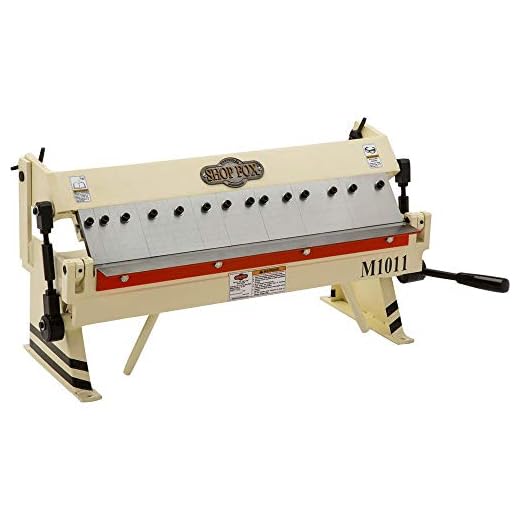
Shop Fox M1011 24" Compact Brake
An affordable, well-made 24" brake that raises the quality of small projects. It’s not Pexto-grade, but for hobbyists it’s a noticeable step up from import no-name units.
Overview
I view the Shop Fox M1011 as a pragmatic choice for makers who want a reliable 24" box-and-pan brake without paying premium prices. It bends up to 20-gauge mild steel across the width and includes a healthy assortment of fingers to tackle varied work.
Features I found useful
In everyday use the machine feels solid and predictable. You won’t find roller bearings or high-end cam clamps, but the parts fit well and the extra fingers greatly improve usability on narrow workpieces.
Limitations and real-world tips
This is a hobby/light-production machine — pushing full-width 12-gauge material or high-volume work will stress it. Expect to check hardware on delivery and have a basic set of replacement fasteners handy. For most DIY projects, though, it’s a dependable performer.
KAKA 48" 16-Gauge Heavy Duty Brake
Delivers solid bending capability across 48 inches with a decent finger set and adjustable angle control. Manufacturing quality can vary, but it offers very competitive value when assembled correctly.
Overview
The KAKA W-4816Z is targeted at users who need full 48" capacity for 16-gauge work without the premium price tag. It supports stainless, copper, aluminum and mild steel for sheet metal projects where a full-width manual brake is useful.
Highlights and practical use
I found that when the unit arrives well-aligned, it produces clean bends across the width, and the finger set makes forming several box sizes straightforward. Several buyers noted the surface finish and fitment can vary, so I recommend a careful inspection and a few setup checks before first production.
Limitations and buyer tips
Expect to spend a bit of time aligning the fingers and checking fasteners right after unpacking. If you’re comfortable with light adjustments you’ll get a lot of capability for the cost; otherwise consider a brand with stricter QC for critical production environments.
VEVOR 24" Portable 5-Finger Brake
A portable and reasonably capable 24" brake that’s convenient for on-the-go work and small shop tasks. Alignment and handle length are areas to watch, but it offers solid capability for the price.
Overview
The VEVOR 24" brake is designed for portability and quick setup in garages, small shops, or mobile work scenarios. It comes with multiple modular finger segments that let you build common pan and box profiles without specialized tooling.
Features and field notes
In my hands it was easy to assemble and very handy for small repairs and custom panels. Users should expect to spend a little time aligning the fingers for precise bends; the included hardware is functional but not as robust as larger shop machines.
Limitations and tips
I recommend using good lighting to read the bend marks and mounting the brake to a solid bench when possible. If you do moderate amounts of sheet work, consider adding longer handles or a mechanical advantage aid to make thicker bends easier and reduce operator strain.
VEVOR 30" Light-Duty Metal Bending Brake
A budget-friendly brake that performs well for occasional bends and light materials. It’s not designed for daily production, but it’s a surprisingly capable tool for the price point.
Overview
VEVOR’s 30-inch brake is a low-cost option for makers who need straight-line bending without a large investment. It handles common sheet materials and is a good fit for personal workshops and small projects.
What to expect in practice
I used this unit for a variety of thin-gauge tasks and found it well suited to occasional use: it’s heavy enough to be stable and the handles provide sufficient leverage. For a weekend fabricator or occasional contractor it’s a very practical choice.
Limitations and tips
This isn’t a daily production brake — the thumbscrew clamps slow repeat setups and the parts aren’t engineered for heavy continuous cycles. I recommend mounting it solidly to a bench and using a speed square to verify bend accuracy for best results.
Final Thoughts
I recommend the Baileigh 48" 11-Finger Heavy Duty Brake as my top pick. It's the best all-around manual brake I use for production-style work. With an 11-finger setup, deep box depth, and features that improve repeatability, it handles thick material and full-width bends across 48" with confidence. Buy this one if you do frequent runs, work with heavier gauges (think 12 ga and up), and need consistent results without going hydraulic.
If you need capacity for very long parts, go with the JET 72" Heavy-Duty Box and Pan Brake. Its full 72" width, heavy frame, and ergonomic touches make it ideal for larger fabrication shops that routinely bend long panels, ducts, or siding. Be ready for the extra footprint and muscle, but expect precise, stable bends on long runs.






I bought a Shop Fox M1011 last year and for hobby work it’s been solid. Not Pexto, like the review says, but the value is there.
Question: anyone combined a Shop Fox with a small shear for weekend projects? Curious about workflow.
I pair my Shop Fox with a bench shear. It’s clunky but effective. If you want smoother edges, add a deburring step before bending.
A compact shear works fine — just ensure your material isn’t too thick for the M1011 capacity. Also clamp the part well before bending.
If you’re doing aluminum a lot, a better shear helps. For steel, the bench shear + M1011 combo is fine for hobby stuff.
Question for folks who own the JET 40-Inch (BPF-1240): does the foot clamping actually help with longer parts? I’m thinking of using one for sheet metal trays.
Foot clamping is handy for holding a part while you set fingers or make incremental bends. For longer trays, combine with side supports.
It helps but isn’t a substitute for a proper clamp table if you’re working long lengths. Still, an ergonomic bonus.
I used it for trays — made setups faster. Just ensure the foot mechanism is lubricated occasionally.
Great roundup — thanks for putting this together. I was torn between the Baileigh 48-Inch (BB-4812) and the Grizzly 48″ for a small production run.
I’ve used a Baileigh at a buddy’s shop and the fingers are rock solid, but the Jet 72″ would be overkill for my space. Does anyone have experience running long batches on the Baileigh BB-4812? Any tips on setup or fixturing?
If you’re doing long batches, set up a simple stop block system and mark your fingers for repeatability. BB-4812’s depth helps for box forming. Also check finger alignment before each run.
If space’s tight, consider the Baileigh 24″ for prototypes and BB-4812 for final runs. Helps avoid moving the big unit around.
I ran small production with the BB-4812 for a couple months. Agree with admin — stops save you so much time. Also, keep extra fingers handy; swapping is easier than trying to straighten bent ones mid-run.
Funny thing: I almost ordered the VEVOR 24in because it was cheap and portable. Ended up getting the Baileigh 24-Inch BB-2416E for a home shop — night and day in build quality.
VEVOR is tempting for the price, but alignment issues scared me off. Anyone fixed alignment problems on the VEVOR units?
I had a VEVOR 30″ and shimmed the hinge and added an extra clamping bar. It helped but still not as consistent as a branded brake. If you’re handy, it’s doable.
VEVOR units can be tuned, but it takes time and patience. If you need repeatability and less headache, Baileigh’s 24″ is the better out-of-box choice.
I’m surprised the JET 72″ scored a 9.0. That thing is a tank and would be perfect for long sheets, but costs an arm.
Anyone here regretted going with a 72″ because of shop space or maintenance?
Space was the issue for me. Bought a 72″ then had to reorganize the whole bay. If you have the room and volume, it’s worth it though.
Maintenance is low on those JETs if treated well. Biggest pain is moving parts if you ever need to relocate it.
72″ is definitely a commitment. Consider long-term needs — if you’ll grow into it, it’s a great investment. Otherwise a 48″ with good supports can work for most.
Noticed the expert_rating variance — from 9.5 to 7.0. Makes sense. For small shops thinking of scaling, would you recommend buying up front (like the JET 72″) or start smaller and upgrade later? 🤔
If you have a clear growth plan and the space, buy up front. Otherwise start with a 48″ and scale — easier on cash flow and you can sell/trade later.
I upgraded over time and it worked fine. Renting space or partnering for big jobs is an option before buying a 72″.
Buy what fits your current workflow; oversized equipment sitting idle is wasted money.
KAKA INDUSTRIAL looks like a decent value. The review mentions variable manufacturing quality — that’s my worry.
Does anyone have experience assembling or reworking the KAKA to be more precise? I don’t mind a bit of tinkering.
I had to shim the backstop and straighten one finger on mine. Took a weekend but once tuned it’s been fine.
KAKA can be a bargain if you’re prepared to adjust and align. Check critical tolerances on delivery and be ready to shim or re-bolt parts for better parallelism.
If you like tinkering, it’s fun. If you want instant perfection, go with Baileigh or Jet.
Short and sweet: Baileigh BB-2416E is my top pick for a garage hobbyist. Compact, easy to store, and handles most DIY projects without drama. 👍
Glad it worked out for you. It is a solid choice for hobbyists — good balance of size and capability.
Agreed. For those on a budget who still want decent results, that Baileigh is hard to beat.
Minor nitpick: the review badges are super helpful, but I’d love a quick ‘best for beginners’ vs ‘best for pros’ table.
Otherwise solid article. Also — does anyone know if replacement fingers are universal between brands? Or do you need brand-specific spares?
Good suggestion — we’ll consider adding a simple buyer’s matrix. On fingers: many are proprietary in bolt pattern and size. Some can be adapted but easier to buy brand-specific spares.
There’s some cross-compatibility among older machines, but modern brakes tend to vary. Best to measure before ordering.
I had to get brand-specific fingers for my Baileigh. Adapters are extra work and not always worth it.
Big LOL at the ‘no wobbling’ claim on one of the VEVOR models 😅
Seriously though, for 18-gauge and thinner it’s been okay for me. Not built for production but portable and light.
Marketing often embellishes. For occasional light work, VEVOR models are serviceable — just temper expectations.
Haha yeah. Wobbling is relative. Mine had minimal movement once bolted to a sturdy bench.
I appreciate the inclusion of both heavy-duty and budget options in the list. Too many roundups only list the pricey stuff.
Anyone tried mixing brands — like using a Grizzly for primary work and a VEVOR for quick portable jobs?
Yup, that’s my setup. Grizzly in-shop, VEVOR on site. Works well as long as you know their limits.
That’s a practical approach. Use the heavy-duty for production and a portable for fieldwork or quick fixes. Saves wear on the main machine.
Long post incoming — hope that’s okay. I run a small school fab lab and we bought two units: the Baileigh 48-Inch BB-4816E for class projects and a VEVOR 30in for demo/portable use.
Here’s what I’ve learned after a semester of students using them:
1) BB-4816E is forgiving and holds up to repeated beginner mistakes. Fingers are sturdy.
2) VEVOR 30in is great for demos but expect alignment checks each week.
3) Safety: teach clamping before bending; students try to hold parts with fingers too close.
Overall, budgeting for one solid in-shop brake and one portable demo unit is my recommendation for educational settings.
That’s excellent feedback — real-world school experience is super helpful. Safety note is spot-on; students need clear clamp protocols.
Thanks for sharing the school perspective — very useful. I’m setting up a makerspace and this helps a ton!
This should be a sticky post for educators. Great detail, Hannah.
Totally agree with the clamp-first rule. Also lock out power (if powered) and use PPE. Glad the BB-4816E held up.
Anyone compared the Baileigh BB-4816E (16-gauge) to the BB-4812 (12-gauge) in terms of daily use? I do light production and wondering if the 16-gauge saves me money without losing necessary capability.
If you occasionally need 12-gauge, go with the BB-4812. But if 16-gauge is your regular go-to, the 4816E saves space and cost.
I switched from a 12-gauge capable unit to 16-gauge and haven’t missed the heavier capacity. Depends on your material mix.
For light production with mostly thinner materials, the 4816E is a good balance. The 4812 is overkill unless you need consistent 12-gauge work.