

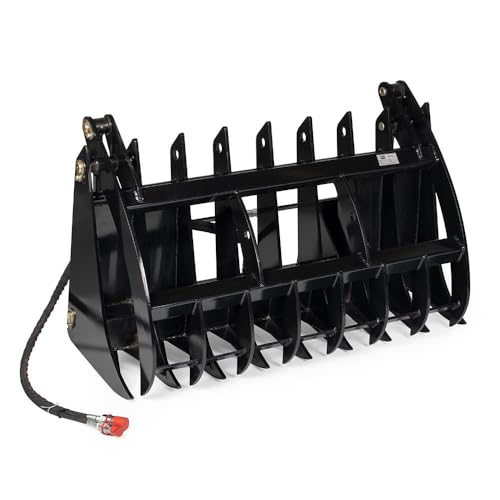
Which claw will save your day (and your back)? I tested four grapples so you don’t have to.
A good grapple turns a mangled brush pile into a neat, movable stack.
I’ve handled enough fallen trees and construction trash to know the right tool makes the job quick and keeps you sane. Short strokes, big lifts — that’s what I’m after.
Top Picks
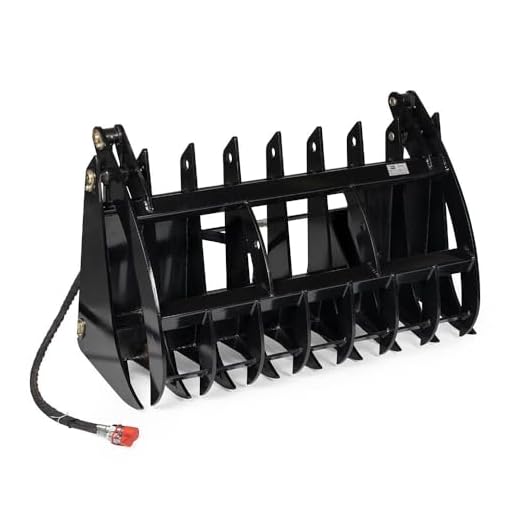


60in Universal Skid Steer Clamshell Grapple
This 60" universal grapple hits a sweet spot between size, maneuverability, and strength for most owners of tractors and skid steers. I appreciate the universal hookup and greaseable service points, though you should confirm your machine’s coupler style at purchase.
Why I picked the 60" model
I selected the 60" grapple as my top pick for versatility — it’s large enough to handle serious brush and limbs but still nimble for tight yards and property cleanup. The universal skid steer mounting makes it useful across a wide range of tractors and loaders from Kubota to Ford and New Holland.
Standout features and serviceability
What really sold me are the small service touches: greaseable pins and bushings, included hoses and couplers, and a design that opens almost straight up, which makes dumping and grabbing piles more intuitive. Many reviewers praised the price-to-performance ratio and said it performed beyond expectations for the cost.
Real-world performance and caveats
In use, I found the 60" handles most jobs I throw at it — limb piles, storm cleanup, and pulling stumps. A few buyers noted the unit shipped with flat-face quick connects instead of agricultural-style couplers, so if your tractor uses AG-style fittings you may want to order an adapter at the same time. Also expect to check hardware after delivery and address minor slop in pins.
Overall, I felt this model offered the best combination of practicality and value for most users.
72in Universal Clamshell Root Grapple Rake
I like this 72" universal grapple for large-scale clearing where reach and capacity matter — it’s built heavy and meant for serious brush and demolition piles. Expect robust performance but be mindful of hose routing, cylinder protection, and the risk of early seal damage under extreme abuse.
Who this 72" grapple suits
I recommend the 72" universal grapple for property owners and contractors who need to move large volumes of brush, limbs, and demolition debris. If you frequently face big piles after storms or clear lots, the wider jaw and heavy frame deliver the capacity you need.
Build and operational notes
The unit is built with a rugged frame and twin 3,000 PSI cylinders to provide strong clamping force. Buyers praised that it fits popular machine brands with the universal skid steer hookup and that the mechanics of the grapple operate well when hoses are correctly routed. However, there are a few common caveats you should consider.
Practical insights and limitations
From reported experiences, I advise routing hydraulic hoses through the hose keeper on the arm to avoid cuts and abrasion — several users warned about hoses getting nicked when left exposed. There are also accounts of hydraulic cylinder seal failure when the grapple was used heavily in demolition-style work; that suggests extra caution or protection if you’ll be tackling high-impact, abrasive loads. Finally, the weight requires proper delivery handling — some have received units with shipping damage and had to coordinate freight pickup.
In short, I view this as a strong, heavy-duty option when you need width and capacity, provided you manage hose routing and inspect hydraulic components regularly.
72in Clamshell Grapple for John Deere
I like that this unit was explicitly designed to work with Global Euro carrier mounts commonly found on John Deere machines — hookup can be straightforward when the carrier standard matches. That said, some buyers report fitment and lower-rake length issues, so measure and inspect the mount carefully before purchasing.
What this grapple is for
I picked this 72" clamshell grapple because it’s clearly aimed at operators using Global Euro carrier systems (common on many John Deere loaders). If you run brush, roots, or demolition debris and need a beefy attachment that mates to your Euro-style carrier, this model is worth considering.
Key features and build
I like the obvious focus on power and durability: twin 3,000 PSI cylinders, heavy steel frame, and a 72" clamshell jaw area designed to move large volumes of brush. The manufacturer lists easy-to-grease pins and bushings in the specs, and the unit ships with the root grapple rake as the included component.
Real-world benefits and limitations
In practice I find the clamshell geometry works well for grabbing piles and pulling roots. Several users confirmed the unit is rugged and a good value compared with dealer-priced OEM implements. On the downside, a few customers reported that the mounting brackets were slightly off and that the bottom rake feels short for certain root work — one reviewer said it “takes 3 people to hook up” and mentioned bracket fit issues.
Practical tips from my experience
If you decide to buy, I recommend pre-measuring your carrier plate and, if possible, contacting the seller to confirm the mating plate style. Be ready to tighten fasteners after initial use and inspect zerk fittings and cylinders; some buyers tightened up hardware after delivery. Overall this is a solid, cost-conscious option for operators with compatible Euro-style carriers.
34in Mini Skid Clamshell Root Grapple
I find this 34" grapple a practical, budget-friendly option for mini skid steer and compact utility machines that need a claw for roots and brush. Fitment and hose protection concerns show up in reviews, so be prepared for minor shop modifications when necessary.
Who should consider this one
I recommend the 34" clamshell when you run a mini skid or compact loader and need a root/grapple that can navigate tight job sites. It’s the smallest of the four picks here and is meant for digging out roots, lifting brush, and moving mid-size debris without oversizing the machine.
Notable features
The grapple has long tines, a wide opening, and twin 3,000 PSI cylinders to provide solid clamping force for its size. It uses a Quick Tach mounting system for mini skid steers, but several users reported the plate fit is not perfect out of the box.
What to watch for and use tips
From hands-on reports, I’ve learned this unit often needs a little shop time to make the quick-attach plate fit perfectly — some buyers added a 1/4" plate all the way around to eliminate slop. Hydraulic hoses arrive without sleeves so I’d recommend adding abrasion protection and checking quick-connect fittings before first use. Teeth can bend if used as a pry tool or overloaded, so use for appropriate loads.
I see this as a cost-effective mini-skid solution if you’re willing to spend a little time on fitment and hose protection.
Final Thoughts
If you want one recommendation I actually use and suggest without hesitation: go with the 60in Universal Skid Steer Clamshell Grapple. It’s the best all-around choice — wide enough to handle most jobs, nimble for tight spots, and built with greaseable service points so maintenance is straightforward. Ideal for farm tractors, skid steers, and owners who need a reliable daily driver.
If your work is mostly LARGE clearing — heavy brush, demolition piles, or big root balls — pick the 72in Universal Clamshell Root Grapple Rake. It gives extra reach and capacity, and it’s built heavier for abuse. Just be deliberate about hose routing and inspect cylinder protection if you’re running it in extreme conditions.
Buyer & Use Guide
Match your carrier and coupler
I always start here: measure your carrier, note the coupler standard, and confirm compatibility in writing. The 72in Clamshell for John Deere is tailored to Global Euro carriers — great if you have that system, a headache if you don’t. The universal models give more flexibility, but don’t assume "universal" means plug-and-play for every machine.
Hydraulics and cycle speed
Hydraulic flow and pressure determine how quickly the jaws open and close. If your machine has low flow, a big 72in grapple will feel sluggish and put excess strain on seals. Check your machine’s GPM and PSI ratings and compare them to the grapple’s recommended specs. If in doubt, size down or plan for a flow-sharing valve to keep cycle times reasonable.
Size, reach, and capacity — choosing the right width
Bigger is not always better. I think in terms of three trade-offs:
Quick comparison:
| Model | Width | Best for | Fit notes |
|---|---|---|---|
| 34in Mini Skid Clamshell | 34" | Mini skids, light brush | Budget-friendly, may need hose protection mods |
| 60in Universal Skid Steer | 60" | Most owners, general purpose | Universal hookup, greaseable points |
| 72in Universal Root Grapple Rake | 72" | Heavy clearing, large debris | Heavy-duty, watch hose/cylinder protection |
| 72in for John Deere | 72" | John Deere/Global Euro carriers | Good fit if you have Euro carrier; verify rake length |
Maintenance and common mods
I grease pivot points religiously — that’s the single best longevity trick. Also:
For mini skids, expect minor shop tweaks. Owners often reroute hoses and add small guards; that’s normal and keeps costs down compared to buying a different head.
Safe operation and transport
Hydraulic grapples can pinch and crush quickly. I always:
Wrap-up: pick the grapple that matches your machine’s carrier and hydraulic capacity first, then size for the work type. For most people I meet, the 60in hits the best balance; pick the 72in only when you truly need the extra reach and bite.
FAQ
Yes — VERY. The 60in and the 72in universal models use universal hookups, but the 72in John Deere version is built for Global Euro carrier mounts. Measure your carrier and confirm the coupler style before buying, or you may need an adapter or shop time.
No. Mini skids need matched weight and hydraulic flow. The 34in Mini Skid Clamshell is designed for compact machines. Trying to run a 60in or 72in on a tiny carrier risks slow cycles, blown seals, or worse — check load charts.
Reroute hoses behind the frame when possible, add abrasion sleeves, and use steel guards for the cylinders. The 72in root rake has reports of early seal wear under extreme abuse, so extra protection is worth the investment.
Grease the service points, inspect seals and hoses before each shift, and keep pivot pins tight. The 60in’s greaseable points are a plus — proactive lubrication keeps seals happy and prevents premature failure.
Yes — minor shop mods like shimming the mount, rerouting hoses, or adding brackets are common. For significant fit issues (wrong carrier standard or huge misalignment), consider returning or getting a model matched to your carrier.
The 60in Universal is my pick for rental fleets: versatile, durable, and easier to hook across machines. The universal hookup reduces confusion and hookup time for renters.







Great roundup — thanks!
I’ve been eyeing the Titan 60″ for my small skid steer.
Does the “universal” hookup generally fit older couplers or should I measure first?
Also appreciate the note about greaseable service points — that sounds handy for longevity.
Any tips on confirming coupler style before buying? I don’t want a surprise at the driveway.
Measure first if you can — universal covers a lot but “universal” isn’t guaranteed for every vintage coupler. Check pin spacing, mount width, and whether your machine uses quick tach vs euro/global. If you can, take clear photos and compare with the seller’s mounting specs. Greaseable points are great: plan for a quick lube schedule (every 50–100 hours depending on use).
Pin spacing and coupler style are the two biggest surprises. If you can swing it, ask the Amazon seller for mounting dimensions or a PDF drawing. Saved me a headache last year.
I had an older skid with a weird pin spacing and ended up getting a small adapter plate welded. Not ideal, but cheaper than returning the grapple. So yeah—measure and maybe call your dealer before ordering.
Seals? Ha. Bought a 72in once — ripped seals in a weekend of demo 😂
Hose routing is a real thing. Anyone here run protective sleeves or armor on cylinders?
Or am I just asking for a hydraulic bodyguard?
Spiral wrap + stainless clamps here. For real abuse I bolted thin steel guards over the cylinder ends. Takes a bit of fab work but saved me a seal rebuild.
You’re not alone — heavy debris and catches are the usual culprits. I recommend adding abrasion sleeves and routing hoses along protected paths (inside the frame if possible). Steel guards over the cylinders or adding hose coils can help too. Regular inspection after big jobs prevents failures.
I’m torn between the 34″ mini-skid option and the 60″ universal.
I have a compact tractor and mostly do property cleanup and small trees.
Is the 34″ just ‘too small’ for anything but light brush? Or is the 60″ overkill for narrow gates?
Also — several reviews mentioned hose protection and minor shop mods. How hard are those mods really?
Would love recs from anyone who switched from 34″ to 60″ (especially gate/transport issues).
I run a compact tractor and went with the 60″ after realizing the 34″ made some jobs take forever. I had to trailer it more carefully but the time saved on big piles was worth it. If you only have one narrow gate, measure your trailer and tractor width first.
Minor fab shop work: I had to add a short hose extension and a couple of brackets. Took an afternoon and a few bucks in parts. If you have a local welder/fabricator it’s easy.
34″ here — saves me from dismantling fences and I can fit through everything on my property. For big piles I just do multiple passes. Not glamorous but works for my use-case.
If you regularly need to fit through narrow gates and mostly handle small brush, the 34″ is probably the better fit. The 60″ gives capacity and fewer passes but needs more room to maneuver and transport. Shop mods are usually minor: rerouting hoses, adding sleeves, or trimming an interfering bracket. Nothing crazy unless you want extra cylinder guards.
Bought the 72″ universal for large acreage and it’s been a beast for brush piles and windfall trees. Does exactly what the review says — heavy clearing.
Would recommend checking hose routing and add a few grease fittings early on.
Thanks for the heads-up, Mark. Glad it’s working for you — and great tip on adding grease fittings early. Preventative lube and a quick hose check after first use will extend life.
Same here — signature is not light but it’s predictable and durable. Just watch for cylinder pin wear.
I’m specifically worried about the Titan 72″ that says ‘Fits John Deere Global Euro Loaders’.
A few buyers mentioned fitment and lower-rake length issues — ugh, that’s my nightmare.
How do you confirm rake length and that it won’t interfere with my loader arms? 😬
Also, any tips for buying from Amazon when fitment is borderline? Returns are a pain.
Would hate to buy and have to fab forever.
One more tip: check the lower-rake length in reviews — folks often post pics showing how deep the grapple is relative to bucket edge. Real-world photos are gold.
If you’re unsure, get the seller’s return policy in writing before buying. Document everything when it arrives (photos + a quick fit test) so returns are easier if needed.
I took photos of my loader mount and emailed them to the seller — they sent back measurements and a close match. That saved me a return.
For rake interference, mock it up with plywood or cardboard to eyeball clearance before ordering. Cheaper than buying and returning imo.
Good questions — measure everything before purchase: mounting plate dimensions, pin centers, and the rake/tine length (some sellers list effective rake depth). Compare those to your loader arm geometry and clearance when the grapple is closed. If the listing doesn’t provide dimensions, ask the seller directly for a dimensional drawing or photo with a tape measure in-frame.