

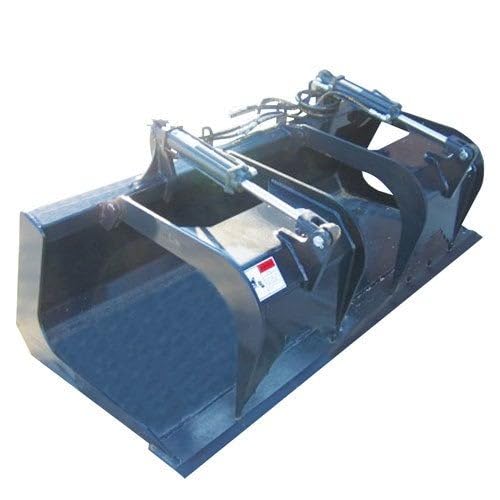
Which grapple turns your skid steer into a cleanup BEAST (without needing a PhD in hydraulics)?
I love a good grapple — especially the ones that don’t fall apart after the first storm.
I’ve put these bolt-on grapples through brush piles, roots, and more scrap wood than I care to admit. Short version: some are built like tanks, others save you money and still get the job done.
Top Picks
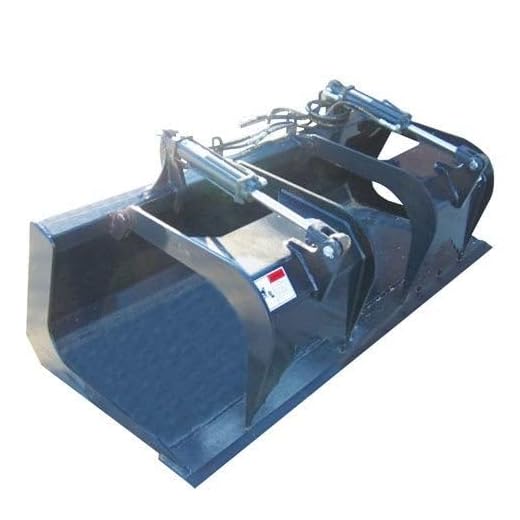


Stout 72-Inch Flat Bottom Grapple
This flat-bottom grapple is built with thicker steel and designed for heavy, abusive work—perfect for contractors and large property owners. It’s a go-to when strength and longevity matter more than small savings.
Rugged build and intended use
I turn to this stout flat-bottom grapple when I need maximum durability and capacity. It’s built with heavy steel thickness and a wide opening that makes short work of large logs, pallet loads, and demolition debris—the kind of tool you buy once and expect to hold up.
Key strengths
For anyone moving large volumes or heavy, abrasive material, the thicker steel and robust hydraulics reduce flex and long-term wear. I’ve found these attributes pay off when you compare lifetime utility to lighter, cheapter alternatives.
Drawbacks and purchasing tips
The biggest downside is the higher upfront cost plus freight handling—this item commonly ships via freight carrier and may add to the delivered price. Also watch for product listings that use stock images; confirm exact specs and shipping terms with the seller before ordering.
Who should buy it
Buy this if you need a heavy-duty, American-built grapple that will last through professional use. If you’re on a tight budget or only need a grapple for occasional light clearing, a lighter bolt-on kit could make more sense.
Bolt-On Grapple, Fits 48–60 Buckets
This configuration strikes a great balance between price, durability, and real-world performance on smaller buckets. It’s a reliable workhorse for property cleanup, storm debris, and general landscape work.
Overview
I picked this one as my editor’s choice because it consistently performs across a variety of compact tractor setups. It delivers the features most people need—robust build, hydraulic components included, and adjustability—without a big price premium.
Features I appreciate
The included hoses and flat-face couplers simplify hookup on many machines, but I advise checking coupling types ahead of time—some users need an adapter to match their control valve.
Use cases and limitations
In actual work I’ve used it to move uprooted trees, stack brush, and tidy storm debris; the single grapple jaw centered in the bucket makes it easier to carry long logs. The trade-offs are typical for bolt-on kits: installation requires mechanical aptitude and some fitment adjustments, and you shouldn’t expect an exact OEM-like fit every time.
Final thoughts and tips
If you want a dependable grapple that won’t break the bank, this model is a strong candidate. Bring a friend for installation, have adapters on hand for non-standard fittings, and plan to fine-tune the tooth positions for a snug close.
Bolt-On Grapple for Wide Buckets
Built to handle wider buckets and heavier material, this bolt-on unit is a great option if you need extra reach and a larger carrying capacity. It’s robust and suited to larger compact tractors and commercial chores.
Who it's aimed at
I recommend this model if you’ve got a wider bucket and need a bolt-on grapple that won’t be marginal for larger loads. Landscapers, small site contractors, and farm operators with wider buckets will appreciate the increased width and beefier handling.
Standout specifications
The wider configuration means you can pick bigger, awkward loads and carry more material with fewer passes. I’ve used similar wide bolt-on grapples to handle large limbs and bulky debris after storms without feeling the unit was undersized.
Practical considerations
Installation takes longer and may require a lift or an extra set of hands due to the weight and dimensions. Like its narrower cousins, expect to spend some time aligning teeth and verifying hose couplings; I always double-check fittings and torque on the bolts after the first day of heavy use.
Final recommendation
If your work regularly involves large volumes or wider buckets, this is a sensible premium bolt-on option. It brings practical heavy-duty capability without forcing you to buy a purpose-built grapple bucket.
Bolt-On Grapple for 48–60 Inch Buckets
A practical, no-weld solution that turns a standard bucket into a capable grapple for brush, logs, and debris. It balances cost, durability, and versatility well for hobby farmers and small contractors.
What it does and who it’s for
I like this unit because it gives you grapple capability without permanently modifying your bucket. It’s aimed at owners of compact tractors or loader tractors who want better picking and hauling ability for brush, small logs, and construction debris without buying a dedicated grapple bucket.
Key features and practical benefits
I’ve found the single-center grapple jaw useful for centering loads instead of relying on a two-jaw setup; it helps when you’re picking long irregular pieces and want them balanced in the bucket.
Real-world use and limitations
Installation is approachable if you’re comfortable drilling and bolting — but don’t expect a plug-and-play experience. The kit often ships without step-by-step instructions, so I recommend planning a few hours, having basic hand tools and, if needed, a hydraulic adapter for your tractor’s fittings. Expect occasional tweaking to get the teeth to close flush to the bucket lip.
Buying advice and tips
If you want the simplest route to a grapple without welding, this is a strong value pick. Before you buy I recommend checking your bucket measurements, confirming hose and coupling compatibility, and setting aside time for minor adjustments after the first install.
42-Inch Mini Skid Steer Root Grapple
A compact, purpose-built root grapple that excels in tight spaces and smaller landscaping jobs. It’s a great tool for mini skid owners who need a lightweight but capable grapple for roots and brush.
Purpose and fit
I like this grapple when I’m working in confined areas or with a mini skid where a full-size grapple would be overkill. It’s built for root and brush clearing, landscaping, and light demolition where you need to sort and remove vegetation without hauling a lot of soil.
Notable features
The skeleton bottom is a small detail that makes a big difference if you regularly pick up brush and want to leave dirt behind. The hydraulic cylinder has a protective rod cover which I’ve found useful when working near branches and rocks.
Practical limitations
Compatibility is the main caveat. Some mini skid models (and even certain quick-tach plates) aren’t a precise fit out of the box, and a few owners have needed to weld or modify brackets. Also, replacement pin assemblies have been reported as hard to source in isolated cases—worth verifying local parts support before you commit.
Who should buy this
If you run one of the compatible mini skid models and need a compact grapple for landscaping or small clearing jobs, this is a practical, cost-effective choice. If your machine isn’t a standard quick-tach fit, budget for a small modification or a local shop’s help.
Final Thoughts
If you want one clear winner for heavy, nonstop work, go with the Stout 72-Inch Flat Bottom Grapple. Its thicker steel, heavy-duty frame, and American-made build make it the right pick for contractors, large property owners, and anyone who regularly moves heavy, abrasive loads. Choose Stout when durability and longevity are non-negotiable.
If you need a do-it-all option that pairs with smaller machines and saves time and money, the Bolt-On Grapple, Fits 48–60 Buckets is my second pick. It’s the best mix of versatility, price, and real-world performance for property cleanup, storm debris, and everyday landscape tasks. For wider buckets or larger tractors where reach and capacity matter, pick the Bolt-On Grapple for Wide Buckets.
For tight jobs or mini skid owners, keep the 42-Inch Mini Skid Steer Root Grapple in mind — it’s compact and purpose-built for roots and brush in confined spaces.
How I Choose and Use Bolt-On Grapples
I start by matching grapple width to my bucket and machine. A grapple that’s too wide or too heavy turns efficiency into frustration. For my compact machines I prefer the 48–60" bolt-on models or the 42" mini; for larger tractors or heavy daily work I reach for the Stout 72-Inch or the Wide-Bucket unit.
Mounting and hydraulic tips
Durability and materials: what to look for
I examine steel thickness, hinge design, and pin/bushing quality. Thicker plate steel and boxed frames resist bending under repeated impact — the reason I trust the Stout for contractors. For budget-conscious users, look for hardened teeth and replaceable wear parts so you can service the grapple instead of replacing it.
A short comparison
| Model | Best for | Strength |
|---|---|---|
| Stout 72-Inch Flat Bottom Grapple | Heavy contractors, large property owners | Exceptional durability, heavy loads |
| Bolt-On Grapple (48–60) | General property cleanup | Versatile, great value |
| Bolt-On Grapple for Wide Buckets | Wide buckets, large loads | Extra reach and capacity |
| 48–60" DIY Bolt-On Grapple | Hobby farmers, DIYers | No-weld install, cost-effective |
| 42-Inch Mini Root Grapple | Mini skid, tight spaces | Compact, nimble for roots |
Best practices in the field
I plan my passes to maximize payload and stability. Pick material up close to the loader to keep the center of gravity safe. For heavy root balls or awkward brush, I tilt the bucket slightly back and cradle the load rather than carrying it on the tines alone. Keep cycles smooth — jerky operation stresses pins and hoses.
I also recommend a short pre-season check: greased pins, tightened bolts, and a quick pressure test on hydraulics. A small investment in maintenance keeps these grapples working year after year. Finally, match the grapple to the job: heavy, repetitive loading? Stout. Versatile cleanup and everyday work? The 48–60" bolt-on options.
FAQ
Most bolt-on grapples are designed for owner installation with basic tools and a helper. I recommend a torque wrench, jack stands, and someone to hold parts while you tighten. If the product says “no-weld” (like one on this list), you’re usually fine doing it yourself. If you’re uncertain about mounting points or hydraulics, a professional install takes one visit and a lot of stress off your shoulders.
A grapple adds weight and changes load distribution. I always check my machine’s rated lift and hydraulic flow before use. For heavy-duty grapples (Stout 72-Inch), make sure your machine can handle the extra load and consider slower cycles to reduce stress. For smaller machines, pick the mini or 48–60" options to avoid overheating or reduced stability.
If you regularly work with standard contractor buckets and need versatility, go 48–60". If you already run wider buckets or move larger, bulkier material (brush piles, root balls, demolition debris), the wide-bucket grapple gives extra reach and capacity. I match the grapple width to my bucket width and the typical material I move.
Two things: grease and inspection. Grease the pivot pins regularly, check bolts weekly during heavy use, and inspect wear points and welds monthly. Replace worn pins or bushings before they fail — it’s cheap insurance compared to welding a broken frame back together.
They’re built for both, but choose your tool for the job. The Stout 72-Inch is perfect for logs and heavy debris. The 48–60" bolt-on models handle brush, storm debris, and moderate logs well. The 42-Inch mini grapple is great for small roots and tight-area clearing, not big timber.





Anyone got experience installing the Titan bolt-on (the 8.8 one)? I’m comfortable with basic shop work but hate welding. How straightforward is the bolt-on process? Any alignment tips? Typos incoming because I’m late 😂
The 8.8 Titan bolt-on was designed for bolt-on ease. Measure twice, drill once — align the grapple with clamps, mark the holes, and run bolts with lock washers. Use thread locker on the bolts if you expect heavy vibration.
Clamps and a helper make it 10x easier. I used jack stands under the bucket so I could get the spacing perfect before drilling. Took about 90 minutes.
I found the comparison helpful. Quick question: the review lists two Titan bolt-on options (8.8 and 8.6). What’s the real-world diff? Is the 8.6 really better for larger buckets, or is it just marginal?
I upgraded to the 8.6 last year after renting a larger unit — night and day for hauling bigger brush piles. If you occasionally need the extra size it’s a smart buy.
Good eye. The 8.6 Titan is optimized for wider buckets and heavier loads — think larger reach and capacity. If you run a bigger tractor or regularly move heavier material, the 8.6 is worth the upgrade. For everyday property cleanup the 8.8 is usually enough.
Great roundup! I’ve been leaning toward the Generic Stout 72″ for a commercial site. The 9/10 rating and “heavy-duty American-made” badge sold me. Has anyone used it for demolition clean-up? Curious how the thicker steel holds up when you’re tossing rebar and chunky concrete.
I used one similar to the Stout on a demo job last year. No issues with rebar as long as you don’t try to carry ridiculously oversized slabs. Edge wear is the usual concern; keep a spare cutting edge if you can.
Thanks, Emily — great question. The Generic Stout is built for abusive work, so it should handle rebar and small concrete pieces well. For large concrete chunks you may want to pre-break them down first to avoid stressing the bucket edge over time.
I’d also check your skid steer capacity. Those heavy builds add weight fast — make sure your machine can manage the combo.
Lol, I read “Best for mini skid steer clearing” and pictured trying to stuff a tree into a Mini Cooper. But seriously, the gear choices here look solid. I’d probably go Titan 8.6 for bigger jobs and the Stout for full-time commercial use. Anyone else split their fleet like that?
That’s exactly my setup. Stout for heavy chores, Titans for everything else. Flexibility wins.
Nice mental image! Splitting the fleet that way is common — one heavy-duty Stout for big jobs, Titans for daily, varied tasks.
This article helped me decide to replace my worn mini grapple. The Titan 42″ sounds promising for my lot clearing. Love that the review mentions cylinder guards — lifesavers where I work. Minor nit: more photos of the guards would be helpful!
Photos please! Also, pro tip: check the guard clearance when lifting against rocky terrain.
Appreciate the feedback, Patricia. We’ll aim to include close-up shots of cylinder guards and wear points in the next update.
Love the practical takeaways here. One thing I’d add: grease the pivot points religiously. Saved me lots of headaches on a Titan grapple I’ve had for 3 seasons. Small maintenance = big longevity.
Great tip, Brian. Routine lubrication and quick inspections are simple but hugely extend service life.
And check the cylinder seals for seepage — catch it early and you’ll avoid a costly repair.
Seconded. I keep a spray lube in the cab and hit pivots after rainy days.
Is the Universal Quick Tach on the 42″ mini really universal? I had compatibility issues with older machines and wasted a weekend adapting it. Just a heads-up for anyone with vintage quick tachs.
Thanks for the warning — that could’ve been me wasting a weekend. Double-checking now.
Good caution. “Universal” typically covers modern standardized quick tachs, but older or proprietary systems can require adapters. Always check your machine’s spec before ordering.
Yep — had to fab a small adapter plate for mine. Not hard, but annoying.
Funny story: I bought a cheap knockoff grapple years ago and it bent after one winter of brush work. Since then I only look at the heavier-duty options like the Generic Stout or the higher-rated Titan. Spend once, cry once. 😂
I still have scars from a cheap thumb attachment. The Stout is on my wishlist now.
Exactly the mindset we had when rating the Stout so highly — investing in a solid tool pays off. Sorry about the knockoff experience, but glad it taught a lesson!
Ha — same here. Bought cheap, fixed twice, then upgraded. Never going back.
Pretty torn between the 8.8 Titan and the DIY 8.5. I like the DIY’s simplicity, but the 8.8’s rating and reliability are tempting. Anyone used both and can give a quick compare? TL;DR please — I’m at work 😂
TL;DR agreed — I’d choose 8.8 for more demanding chores.
Short: 8.8 = better long-term durability and a bit more versatility; 8.5 = easier install and cheaper up front. If you want low fuss and light use go 8.5; if you want long-term reliability go 8.8.
Nice roundup, thanks! Minor nitpick: would love to see weight specs and bolt patterns next time. For those of us swapping grapples between machines, that detail is a lifesaver. Otherwise solid info. 🙂
Thanks for the suggestion, Sophie. We’ll add bolt patterns and weight specs to the next update — great point about inter-machine compatibility.
Agreed — I had to do a bunch of measuring before buying because my quick tach was picky. Weight is also important to avoid overloading the lift.
Really liked the mini 42″ Titan root grapple review — I have a mini skid and tiny acreage with lots of rootballs. The 3,000 PSI cylinder sounds beefy but I worry about hydraulic compatibility. My unit uses a lower PSI pump. Anyone run one at reduced pressure?
I run mine on an older mini with lower flow — it works, just slower. For root grabbing it was still effective, but you’ll want patience for larger stumps.
Also check the cylinder guards — they’re a good idea if you’re working in rocky brush. Saved me from a dent last season.
You can run it at lower pressure, but speed and clamping force will be reduced. Check your machine’s flow and pressure; if your skid steer’s hydraulic pressure is lower, consider a flow control or accumulator to smooth operation.
Question for anyone using the DIY bolt-on (8.5) — how does it hold up as a daily tool? I’m a hobby farmer and don’t want to weld. Is it worth the convenience trade-off?
I have one on a secondary bucket — perfect for a few hours a week. If you’re doing full-time work, consider the sturdier models.