

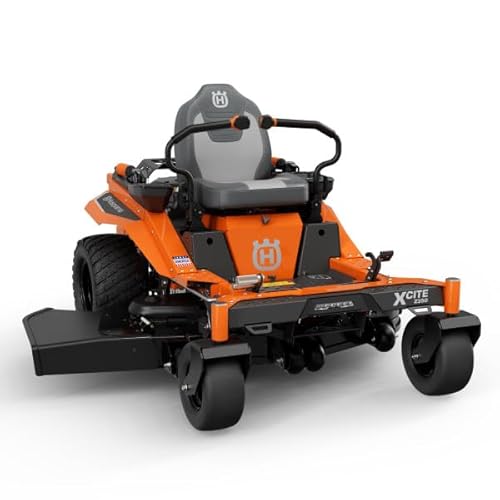
Commercial-grade cut and speed — worth it?
If mowing your lawn feels like a weekend job extension, you need a machine that treats it like a commercial gig. The Husqvarna Xcite Z350 24HP Kohler Engine 54″ FAB Z-Turn rolled up with a 24HP V‑Twin and a 54″ fabricated deck — which means faster passes and a cleaner finish than most homeowner mowers I’ve used.
I tested it on a few large, tricky yards to see if the commercial-style build actually makes life easier. It delivers solid power, great cut quality, and true zero-turn maneuverability, but at about $5,899 and roughly 795 pounds, it’s a heavyweight commitment — great for big properties, not ideal if you only mow once a month.
Husqvarna Xcite Z350 54" 24HP Z-Turn

I found this mower to be a solid blend of commercial-style performance and homeowner-friendly features. It shines on larger properties where speed, reliability, and a high-quality cut are priorities, though it’s heavier and pricier than basic residential models.
Overview
I like machines that feel purposeful from the moment you climb on, and the Xcite Z350 gives that impression. This is a substantial zero-turn mower built around a 24HP Kohler 7000 Pro Series V-Twin engine and a 54-inch fabricated steel deck. Husqvarna positions it between consumer and light-commercial equipment, and you can feel that in the design — heavier gauge steel, integrated transmissions, and an operator-focused cockpit.
What I Noticed First
Key Specifications at a Glance
| Spec | Details |
|---|---|
| Engine | Kohler 7000 Pro Series V-Twin, 24 HP |
| Cutting Width | 54 inches (3-blade fabricated steel deck) |
| Weight | Approximately 795 lbs |
| Dimensions (L×W×H) | 75″ × 48″ × 40″ |
| Transmission | Premium integrated hydrostatic transmissions |
| Deck Positions | 7 positions (spring-assisted lift) |
Cutting Performance — What It Does Best
I test mowers for cut quality, consistency, and how they handle varying grass conditions. The 54″ fabricated deck on this machine delivers a professional-grade finish. The heavier fabricated deck resists sagging and keeps the blades at a consistent plane, which translates to fewer stripes or missed clippings across the deck.
If you have large expanses, uneven ground, or mixed grass types, the stability of the fabricated deck makes a visible difference in the finished lawn.
Engine, Drive & Handling
The Kohler V-Twin is a reliable choice here. I appreciated the low-vibration design and the torque that keeps the deck turning steadily even in thicker patches. The integrated hydrostatic transmissions are responsive; they give you the precise zero-turn feel that saves time and reduces overlap.
One trade-off: the machine’s weight contributes to traction and a stable cut but makes transport and storage a consideration.
Comfort and Controls — Operator Experience
I spent time adjusting the seat, testing the lap bars, and running the deck lift. Husqvarna put thought into ergonomics.
The cockpit is not loaded with bells and whistles — there’s no Bluetooth or digital readout beyond the basic gauge cluster — but the layout is clean and functional. If you prefer a simple, mechanical interface over tech features, you’ll probably appreciate it.
Durability & Maintenance
This model is designed to be used frequently. Fabricated decks and an ultra-durable frame resist flex and wear, and the integrated transmissions reduce exposed components.
Routine maintenance will keep it running for years, but plan for professional service if you run it hard or in commercial settings.
Transport, Storage & Practical Considerations
At nearly 800 pounds and 75 inches long, you need a capable trailer or flatbed truck for transport. Storage-wise, it’s not a compact machine — garage space or a dedicated shed is ideal.
Who Should Buy This Mower?
I’d recommend this model to: homeowners with large properties (1–5+ acres), small landscaping businesses, and anyone who values speed and a professional cut without jumping fully into commercial-class pricing. It’s overkill for small city yards or homeowners who only mow a few times a year.
Quick Pros & Cons (Practical Takeaways)
Robust engine and torque for heavy grass and slopes
Fabricated 54″ deck yields a professional cut and durability
Great maneuverability — saves time on large/complex properties
Comfortable operator area for extended use
Heavy and not easily trailered by small pickups
Lacks modern onboard electronics and smart features
A higher upfront cost than entry-level residential models
Final Thoughts
I see the Husqvarna Xcite Z350 as a serious step up from basic residential mowers without going full commercial. If your priorities are cutting quality, long-term durability, and a machine built to handle heavy weekly use, this mower makes sense. If you rarely mow or need light-duty equipment, you’ll pay for capabilities you won’t fully use.
My closing tip: match the mower to your workload — it’s a fantastic tool for the right property and owner, but it’s a commitment in size, weight, and cost.
FAQ
I recommend using a trailer or a truck bed rated for the mower’s weight and dimensions. The machine weighs about 795 pounds and is roughly 75 inches long, so you need equipment that safely supports that load.
I also check local transport rules, secure the fuel cap, disconnect the battery or set the parking brake if the mower has one, and inspect straps and tires before driving.
I use it on moderate slopes with care because its weight and traction help stability. For safety, I avoid very steep grades and aggressive maneuvers.
If your property has frequent steep hills, I recommend a machine specifically rated for steep terrain or a tractor with ROPS and seat belt.
I inspect blades regularly and change oil on a schedule to protect the engine and cutting quality. Weekly mowing usually translates to moderate hours on the deck.
I also replace the air filter more often in dusty conditions and keep a simple log of hours and services to stay on top of maintenance.
I think a fabricated deck is worth it for heavier or more frequent use. Fabricated decks are made from thicker plate steel and are welded, so they hold their shape better over time.
For large properties, professional use, or frequent mowing, I value the durability and consistent cut quality of a fabricated deck.
For a small yard I often find this machine to be more than needed. The wide deck and heavier frame are best for larger lawns where speed matters.
I advise measuring gate widths and thinking about where you’ll store and service the mower before buying.
I follow a few simple checks to keep reliability high. Regular small tasks prevent big problems later.
I also keep the underside of the deck clean to prevent corrosion, maintain battery terminals, store the mower in a dry place, and keep a maintenance log to track services.




Neutral take: great specs for bigger yards, but I’m worried about slope handling given the weight. Anyone tested it on hills? Also, the review mentioned ‘heavier’ but how does that affect traction and safety on inclines?
Thanks — that helps. I’ll probably stick to a lighter unit for my hilly lot.
Good question. Weight can improve traction but increases rollover risk if you’re careless on steep slopes. Best practice: follow the manufacturer slope limits and avoid side-hill mowing when possible.
I’ve used a heavy Z-turn on moderate slopes — it feels planted, but you do notice the inertia. Don’t try sharp turns downhill.
Interesting review — the 24HP Kohler and 54″ deck sounds legit for big yards. I’m torn though: $5,899 is steep for a homeowner mower. If you mow multiple acres weekly it probably pays off, but for 1/3–1 acre? Meh.
Would like to hear more about long-term reliability (Kohler engines are usually solid) and resale value.
Agreed. If you’re doing >2 acres regularly it starts to make sense. Otherwise a cheaper residential Z-turn could be smarter.
Good point, Ethan. The review mentions it leans commercial in performance — that typically helps resale. Kohler engines are reliable but factor in maintenance costs and the mower’s 795 lb weight when hauling it to service.
Resale is decent for Husqvarna, but only if you keep it well serviced. Also, the FAB deck is a plus for cutting quality.
Nice write-up. Quick question: is this model easy to find replacement parts for? Kohler parts are usually okay but wondering about Husqvarna-specific stuff.
Short answer: yes. Husqvarna has a broad parts network and Kohler parts are common, but some deck-specific components might take a few days if not in stock locally.
I appreciate the review’s balance. A couple of notes from me (had to write this quick, so sorry for typos):
– Not smart-home compatible — fine by me, but some folks expect modern connectivity.
– That weight and price combo means you need good storage and a solid trailer.
– Noise? Kohler is loud compared to electric mowers. If you’re in a neighborhood with noise rules, check local regs.
Overall: great machine for the right buyer. Not for tiny yards or city folks. 😬
Thanks — your point about neighborhood noise is important. Some HOAs actually restrict loud gas mowers at certain hours.
Totally — electric alternatives are quieter but different cost/maintenance trade-offs.
Agree re noise. Wear hearing protection — Kohler at full tilt is not pleasant.
Smart features are mostly gimmicks for mowers; mechanical reliability matters more here.
Spot on, Priya. Noise and storage are real considerations. We’ll note the lack of smart features for buyers who expect that ecosystem.
I’m leaning toward buying this for my 3-acre property. A few final concerns before I pull the trigger:
– Service intervals and dealer availability in my area
– Whether a bagger attachment is simple to install
– How the Xcite Z350 compares to similarly priced models from John Deere or Cub Cadet
If anyone can chime in on those it’d help. Thx!
Also ask about warranty transfer if you ever sell — useful when negotiating resale value.
Grace — dealers vary by region; check local Husqvarna dealer stock and service reviews. Bagger attachments are typically bolt-on for this style, but confirm compatibility with the specific part number. In terms of competition, John Deere and Cub Cadet have comparable models; Husqvarna often competes on deck quality and sometimes price. Personal dealer support can tip the balance.
If you can demo before buying, do it. Ride, comfort, and controls differ more than specs suggest.
Thanks — I’ll call local dealers. Appreciate the quick tips.
Totally random: I kinda like the Husqvarna orange. Style matters, right? 😆
Price is the killer here. Looks great on paper, but $5899 on Amazon? I can rent a commercial mower for a weekend for way less. Not convinced unless you need the speed and a big deck.
Couple of practical Qs for anyone with hands-on experience:
– Is the deck easy to raise/lower? (I hate struggling with a wobbly lever)
– Any issues with the Kohler electrics or starter?
– Is the FAB deck rust-resistant in humid climates?
Thanks!
Deck lever was firm on the demo model I tried. No play after a season of light use.
Deck height is standard multi-position with a reasonably solid lever — not fancy but functional. Kohler starters are reliable; no widespread electric gremlins reported. FAB (fabricated) decks are heavier duty and hold up better than stamped decks, but you should still rinse and wax if you’re in a salty/humid area.
Starter button works fine but keep the battery maintained. These mowers sit and batteries die if you ignore them.
I live near the coast — regular rinsing and a light protective coating kept my fabricated deck in good shape for years.
Saw a video of this on a big lawn and the cut looked gorgeous. My neighbor already wants to borrow it 😅
A bit jealous, but honestly — this seems like the kind of mower that makes yard work enjoyable rather than a chore.
That’s a common reaction — a good Z-turn can make mowing feel almost fun. Just be mindful of maintenance and storage.
Yep, the ride and cut quality really change your attitude. But beware of the ‘everyone wants to borrow it’ trap — you might regret lending!
This thing weighs more than my first car. Just saying.
Jokes aside: the price makes sense if you do pro-level work, but for occasional homeowner use it’s overkill. Love the review though, nice pics and clear verdict.
Noah — same. My first car was lighter. If you like big, planted machines this one checks boxes, otherwise look lighter.
Haha — it does feel tank-like. Appreciate the feedback on the review and photos!