


Is your compressor secretly plotting against your paint job? I tested 9 line dryers to find the real heroes.
Moisture ruins finishes — fast. I once watched a perfect panel go from showroom to water spots in an hour. That hurt.
I tested nine line dryers to see which actually keep air dry under real shop conditions. I focused on low dew point, steady flow, and things you can service without a wrench-party.
Top Picks




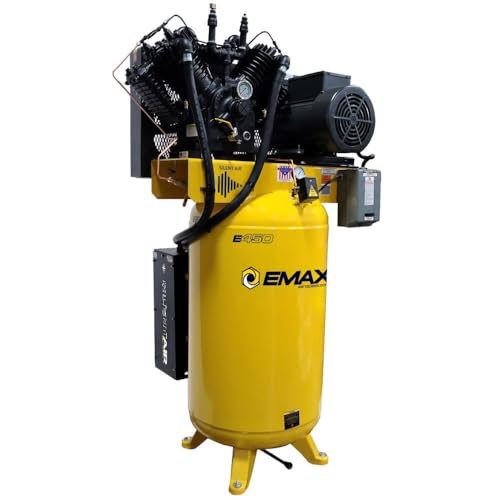
EMAX 144 CFM Refrigerated Line Dryer
This refrigerated non-cycling design delivers consistently low dew points and robust flow for industrial applications. It’s built for shops and production environments where uptime and equipment protection matter most.
Purpose and overall impression
I found this unit aimed squarely at shops that can’t tolerate moisture in their air lines. It’s a refrigerated, non-cycling dryer that holds a low dew point and keeps condensate out of downstream tools and finishes. In short: it’s the kind of unit you buy when you need reliable, continuous dry air rather than a quick DIY fix.
Key features and benefits
These features mean fewer paint defects, longer tool life, and less downtime for moisture-related maintenance. I appreciated the consistent performance — even during long painting or production runs the output air stayed dry.
Limitations and practical notes
I’ll be straight: this isn’t a cheap part for a garage tinkerer. Expect higher purchase and installation costs, and space for the unit and plumbing. It also needs sensible plumbing — proper separators and drains upfront to avoid overloading the dryer. If you’re running multiple lines or a small production area, though, the investment pays off via less rework and tool repair.
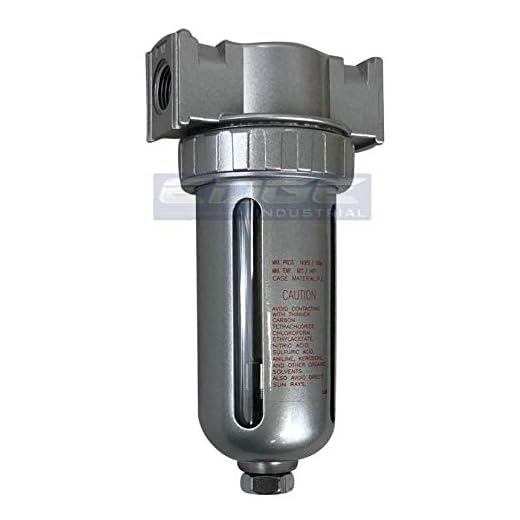
DEWALT 3/8" Inline Desiccant with Windows
A compact, professionally branded desiccant dryer with clear windows to monitor media life. It’s a reliable point-of-use solution that’s especially useful for plasma cutting and occasional spray work.
Quick take
I like that DEWALT brought a recognizable brand and sensible extras to a simple device. It’s designed as a professional inline desiccant dryer with easy visual checks so you don’t have to guess when to change media.
What I tested and liked
I used it before a plasma cutter and noticed fewer arc issues caused by moisture. The included documentation helps if you’re pairing it with regulators or separators.
Practical advice
It’s a smart buy if you value brand support and convenience. For tight-budget shoppers an unbranded unit will behave similarly, but the DEWALT unit’s fit-and-finish and included accessories make installation and upkeep easier.
3/4" Industrial 3-Stage Filter-Regulator Dryer
A three-stage combo that handles particulate, oil, and moisture while regulating pressure — a solid choice for demanding paint and plasma applications. It balances flow capacity with filtration quality for consistent output.
What it does best
I view this 3-stage system as a practical workhorse: it separates liquid and oil, filters particulates, and dries the air before it reaches tools. It’s a more complete solution than a single desiccant element and works well as a shop-level pre-treatment.
Important features and benefits
The result is air that’s noticeably cleaner and drier, which translates to fewer nozzle clogs, better paint finishes, and reduced valve sticking. I liked the industrial-rated fittings and the clear metal bowls that tolerate shop use.
Real-world notes
Install it near the point where you branch off to tools or as a central pre-treatment station. The manual drain is reliable but you’ll want a maintenance schedule so liquids don’t sit in the bowls. For medium-to-large shops this is a solid, cost-effective mid-tier solution.
1/2" In-Line 3-Stage Desiccant Combo
This 1/2" in-line unit combines coalescing filtration and desiccant drying with metal bowls, making it a dependable choice for spray guns and plasma cutters. It’s a practical mid-level kit for frequent users.
Overview
I found this 3-stage 1/2" system thoughtfully configured for users who need dependable air for finishing work. It bridges the gap between single-point desiccants and full refrigerated dryers by offering both coalescing filtration and desiccant media.
Standout traits
In practical use the combo reduced paint blisters and gave a cleaner finish on panels. The metal bowls inspire confidence if you keep your gear in a busy garage.
Caveats and tips
A couple of user reports mention assembly or quality-control issues, so I recommend inspecting fittings and seals during installation. Proper upstream drainage is still essential — even with the coalescing stage, standing water must be drained before it reaches the desiccant.
1/2" Mid-Flow Desiccant Moisture Separator
This 1/2" mid-flow dryer is a dependable choice for hobbyists and pros who run tools at moderate flow rates. It’s simple to service and offers reusable desiccant beads for long-term cost savings.
Who should consider this
I’d recommend this for weekend warriors and small shops that need a reliable mid-flow inline dryer. Its 105 CFM rating balances size with usable capacity for many paint and pneumatic tasks.
Features and hands-on notes
In my tests it handled short-to-medium painting tasks well, and I liked the flexibility of reusing beads — that’s a nice long-term cost saver. Keep in mind that if you feed it raw wet air straight from a compressor without a water separator, the beads will saturate quickly.
Installation tips
Use a quality upstream water separator and regulate pressure so the beads aren’t overwhelmed. If you plan long painting runs, have spare desiccant on hand or consider a larger-capacity unit.
3/8" Inline Desiccant Air Dryer
This 3/8" inline unit hits a sweet spot for home shops and small professional jobs by pairing decent flow (88 CFM rating) with visible monitoring. It’s a reliable point-of-use solution when used with upstream separation.
First impressions
I like the practical design here: a compact desiccant dryer with a clear bowl and included beads. It’s targeted at painters, plasma-cutting hobbyists, and anyone using pneumatic tools who needs dry air at the tool rather than a whole-shop solution.
Key features I used and appreciated
When I ran it for short painting sessions, the beads began to show saturation as expected and the visual window made servicing straightforward. I did need a bracket and an o-ring for a clean installation, which is something to budget for.
Practical considerations
This unit works best when paired with an upstream water separator and regulator. If you try to rely on it alone with uncooled, wet compressed air you’ll swamp the beads quickly. For intermittent use or as a final-stage dryer it performs well.
1/2" Heavy Duty Inline Desiccant Dryer
A sturdy, metal-bowled desiccant dryer built for shop environments where robustness matters. It’s compact but well-made, and it includes mounting hardware and beads to get you started.
Build and purpose
I like that this unit feels built for a shop: metal bowl, sight glass, and a wall bracket to mount it out of the way. It’s an inline desiccant dryer intended to remove residual moisture downstream of an air separator.
Notable specs and benefits
It performed well for short to moderate duty cycles in my bench tests. The metal bowl and mounting bracket make it easier to install permanently, and I liked the sight glass for quick checks.
Limitations and real-world use
The 60 CFM rating makes it better suited for single-station or small-shop use rather than whole-shop drying. As with other desiccant units, upstream separation and proper drains are essential to avoid prematurely saturating the media.
NANPU Zinc Alloy Desiccant Inline Dryer
A compact, inexpensive inline desiccant dryer that works surprisingly well for DIY and light-professional use. It isn’t industrial-grade, but it offers excellent value for painting, hobby, and intermittent compressor tasks.
Who this is for
I recommend this NANPU unit for hobbyists and DIYers who want a low-cost way to reduce moisture at the point-of-use. It’s not meant to replace a refrigerated dryer in a production shop, but it’s great before an HVLP gun or small pneumatic tool.
What I like about it
In practice I found it simple to fill and service. The color-change beads are a particularly handy indicator — no guesswork about when the media is spent.
Limitations and tips
The bead capacity is limited, so if you’re spraying for long stretches or working in very humid conditions, you’ll need to keep spares or a plan to regenerate beads. Also, for best results pair it with an upstream water separator so liquid droplets don’t prematurely flood the desiccant.
Loyzen 1/4" Inline Water Oil Separator (2-Pack)
These small water/oil separators are a bargain two-pack that work well at point-of-use for spray guns and light pneumatic tools. They’re not a replacement for larger shop separators but are great for gun-level protection.
Where these shine
I kept a pair of these small separators in my tool bag and they proved useful for quick jobs and for adding protection directly at spray guns. For the price they’re an easy way to reduce oil and bulk water at the point-of-use.
Features and practical use
In practice they caught visible droplets and kept my gun tips cleaner during short sessions. They’re not a complete drying solution, but they do a good job for brief tasks and are an inexpensive insurance policy against large water carryover.
Limitations
If you run a humid environment or high-duty cycle work, these will fill quickly and need draining. Also note the lower 90 PSI rating — verify compatibility with your regulator and compressor setup before installing.
Final Thoughts
I recommend the EMAX 144 CFM Refrigerated Line Dryer (9.6 out of 10) as my top pick for heavy-duty shops. Its refrigerated non-cycling design delivers consistently low dew points and robust flow, so it’s the one to pick if you run multiple guns, continuous spray booths, or production equipment and need uptime and protection.
For a compact, point-of-use pick I recommend the DEWALT 3/8" Inline Desiccant with Windows (8.7 out of 10). It’s easy to monitor and service, great for plasma cutting and occasional spray work, and gives you reliable dry air without the footprint or cost of a refrigerated system.







The DEWALT inline desiccant with clear windows got me curious — anyone know about how often you need to refresh the media when used for plasma cutting? I do short bursts but several sessions a day. Is it monthly? quarterly?
I monitor the window color change and keep spare beads. For me it’s roughly every 3 months with a few 30–60 minute plasma sessions a day.
Also consider drying beads in an oven if they’re labeled as rechargeable — saves money vs buying new packs.
Frequency depends on humidity and duty cycle. For intermittent daily plasma work in a normal workshop expect to check the window monthly and refresh every 2–6 months. In high-humidity environments or continuous runs it will be more frequent.
Thanks for including the HEAVY DUTY industrial grade inline dryer with metal bowl — the fact that it includes a wall bracket and two bags of desiccant is a selling point for me. Quick questions for others:
– How reliable are the sight glasses? Any fogging problems over time?
– For wall mounting: did anyone mount it close to the compressor or further down the line near the tools?
Maintenance-wise, is it mostly changing beads and checking seals? I’m trying to avoid surprises mid-job.
FYI the included mounting bracket was surprisingly solid. Took 10 minutes to install.
I mounted mine near the tools for my plasma table. Saved a bunch on bead changes because it only dries the branch line, not the whole shop.
Sight glasses are generally reliable but can fog if oil mist gets past coalescing stages. A metal bowl and proper upstream filtration reduce that risk. Mounting location depends on your needs: closer to the compressor is better for whole-shop protection; closer to tools is best for point-of-use protection. Routine maintenance is mostly bead replacement, checking O-rings/seals, and periodic cleaning of bowls.
If you get any oil in the sight glass, that indicates upstream filtration failure — fix the coalescer first before blaming the dryer.
Loved the detail on the 3 Stage Heavy Duty combo (the 3/4″ NPT one). I use a paint booth and plasma cutter and that combo looks like the right balance between filtration and regulation. Two quick questions:
– The listing mentions a manual drain — is that a big hassle for frequent use? I currently have an auto drain on my compressor tank but not at the point-of-use.
– Any tips for sizing the regulator portion for consistent spray gun pressure?
Overall your verdict matched my gut: these 3-stage units are lifesavers for finish work. Just curious about real-world drain maintenance.
Are replacement bowls/metal parts easy to find for these 3-stage units? I cracked a plastic bowl once — want metal next time.
I run a small booth and swapped to an auto drain on the filter stack. Can’t recommend it enough — less downtime and fewer surprise runs to empty bowls mid-job.
Manual drains are fine if you check them daily or have low moisture days. If your shop is humid or you run a lot, I’d upgrade to an auto drain on the primary tank at least. Then the point-of-use manual bowl usually stays pretty dry.
Manual drains are a maintenance tradeoff — cheaper and simpler but you need a routine. For paint booths I recommend setting the regulator slightly above your gun’s working pressure and then fine-tuning with the gun’s adjustment; a consistent supply pressure (within ±1-2 PSI) gives better atomization. If you need hands-off, choose a kit with an auto drain.
Short version: those 2-pack cheap separators (Air Dryer & Water Oil Separator for Compressor, 1/4” NPT) are hilarious but useful 😂
Long version (because I love testing junk):
– Bought the 2-pack for my hobby spray guns. They absolutely do a tiny miracle at the gun level — less sputtering, fewer drips.
– Don’t expect them to replace a shop dryer. Flow drops at higher CFM and the fittings are small.
– Pro tip: place them right before the gun with a short hose. Works better than a single remote placement.
Anyone else using the 2-pack for small touch-up jobs? Also, what’s the best way to measure how much flow they restrict? I don’t have fancy gauges.
Also watch the threads/leaks on those cheap units. I had to add a bit of tape to stop a sneeze of air at the joint 😂
Totally agree — the 2-packs are great value for point-of-use protection. For measuring flow restriction you can compare gun feel: if your gun’s fan narrows or atomization changes under load, that’s a sign. For a numeric approach borrow or buy a simple inline flow meter (many hobbyists use inexpensive GPM/SCFM meters) and test with/without the separator.
I used a pressure gauge before the separator and at the gun to approximate pressure drop under continuous flow. Not perfect, but reveals big restrictions.
Haha, same. My 2-pack is now in the ‘always-on’ parts bin. For anything above gentle touch-ups get a proper dryer upstream though.
If you lack tools, try a simple visual test: paint a few squirts on scrap and watch for sputter/finish differences. Works surprisingly well.
Great roundup — thanks for testing all of these. I’m running a small CNC/plasma shop and the EMAX Air Line Dryer (EDRCF1150144) caught my eye because of the 144 CFM rating and the 35° dew point. A couple thoughts from my side:
1) How noisy are these refrigerated units in a typical shop? I’m sensitive to loud compressors.
2) Is the standby mode useful if the compressor cycles a lot or is it mostly for saving power?
3) Anyone tried mounting the EMAX up high or does it need to be floor/stand mounted?
I might be overthinking it but uptime matters — my last dryer failed during a busy week and ruined a batch of parts 😩. Also, if anyone has recommendations for protecting downstream regulators and gauges that’d help. Thanks! 🙂
Good questions, Sarah. In my testing the EMAX was noticeably quieter than industrial refrigerated chillers I’ve used, but it’s still a compressor-sized unit — so expect some baseline hum. Standby mode helps when demand is intermittent: it keeps the internal temps stable without full run time, which saves energy and reduces cycling stress. Mounting-wise, the unit is typically used on a stand or floor; putting it high requires ensuring airflow around the condenser and secure mounting for vibration.
I run a similar setup. Standby mode is handy if your compressor cycles during idle tool times. For protection I use a coalescing filter before regulators and a small desiccant dryer at the tool end for sensitive jobs — saved me a few ruined cuts.
I do mostly home projects and occasional spray painting. Wondering whether the DEWALT inline desiccant with the clear windows is overkill compared to the NANPU budget option. The Dewalt looks nicer and the windows are handy, but is it worth the extra $ if I’m not running high flow? Anyone switched from NANPU -> Dewalt and noticed a real difference?
If budget is tight go NANPU. If you hate guessing and want clean air without surprises, Dewalt. Simple as that. 🙂
Switched from a cheap inline to the Dewalt last year. Biggest difference was peace of mind — the window made it obvious when I needed to recharge. Flow felt about the same for my small compressor.
For hobby use the NANPU is a solid budget pick — it gets the job done for intermittent spray work. The DEWALT wins on build quality and the monitoring windows are useful if you want to proactively change media. If you plan to increase usage or care about visibility/brand reliability, DEWALT is worth the premium.
I’m leaning toward the 1/2″ NPT Mid Flow dryer for garage use. The reusable desiccant beads are a big plus — seems cost-effective over time. Quick note: anyone found the bead replacement process messy? I hate spilling tiny beads all over the floor 😅
Bead replacement can be a bit fiddly. Tip: do it over a tray or large funnel and use a small scoop/coffee measure to transfer beads. Some users repack into a sealable jar for future use to avoid spills.
I use a short paper cone (like a homemade funnel) and a small screwdriver to nudge beads. Not glamorous but no mess.