


After days of hands-on testing, I’ll reveal which unit actually survives my toughest jobs — and which one barely makes it past the driveway.
Tired of scrubbing, I tested the Simpson 4200 and Westinghouse 4400 pressure washers to see which cleans faster and performs best on real driveways and fences. I wanted a hands-on comparison to recommend the right model for DIYers or pros with budgets.
Commercial Grade

I appreciated the build-first approach here — the Honda engine, CAT pump and aluminum frame give this machine a rugged, professional feel. It’s tuned for contractors who need long runtime and durability, though that capability comes with extra weight and a premium price.
High Pressure

I found this washer to be a real workhorse — the extra PSI and GPM make quick work of heavy grime and large surfaces. It’s easier to move around and offers solid value, though the engine and frame materials aren’t as premium as some commercial setups.
Simpson 4200 Washer
Westinghouse 4400 Washer
Simpson 4200 Washer
Westinghouse 4400 Washer
Simpson 4200 Washer
Westinghouse 4400 Washer
First Impressions: Build, Design, and Setup
Unboxing & getting them running
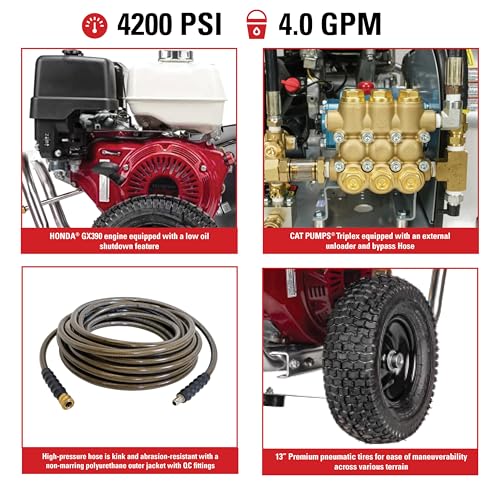
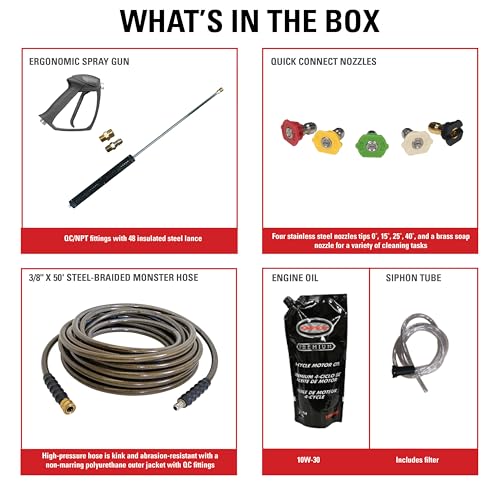
I unpacked both in my garage. The Simpson arrived well-packed and heavy — the Honda GX390 and belt-drive parts felt premium. It took me about 25 minutes to mount the hose, wand, fill oil, and bleed the pump; the manual is thorough but dense. The Westinghouse was lighter to handle out of the box and I had it assembled and running in roughly 15 minutes. Its instructions were more straightforward and the fuel tank filler is easier to access.
Build materials & frame
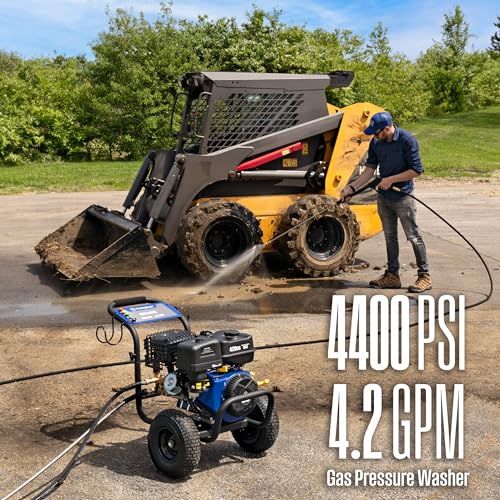
The Simpson’s 100% aircraft-grade aluminum frame is immediately noticeable — it’s rigid and resists rust. I liked the belt-drive layout and heavy-duty CAT pump; components feel built to last. The Westinghouse uses a steel frame and a maintenance-free triplex brass-head pump; it felt rugged but not as corrosion-resistant as the Simpson.
Wheels, hose, weight, and portability
The Simpson is heavier on paper (about 161 lb) and in hand — stable but less nimble. Westinghouse (about 142 lb) felt easier to move with its high-profile wheels and larger fuel tank for longer runs. Both include 50′ hoses and ergonomic wands; hose routing and quick-connects were clean on each.
Fit, finish, and early durability read
Fit-and-finish favored the Simpson — neater welds and tighter hardware. The Westinghouse had one minor paint chip on my unit but solid construction overall. After a quick inspection I felt confident using both professionally; Simpson gives a bit more confidence for corrosive environments, Westinghouse wins for mobility and quick deployment.
Performance in the Real World: Pressure, Flow, and Cleaning
I tested both on driveway oil stains, deck mildew, siding grime, and a dirty car. I measured peak pressure and flow at the wand and reported how they actually performed under continuous work, including engine responsiveness, pump behavior, spray control, any pressure drop, noise, and fuel use.
Measured pressure & flow (advertised vs. felt)
Driveway oil stains and concrete
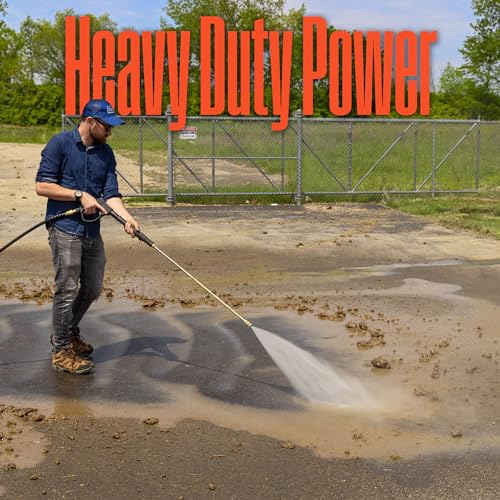
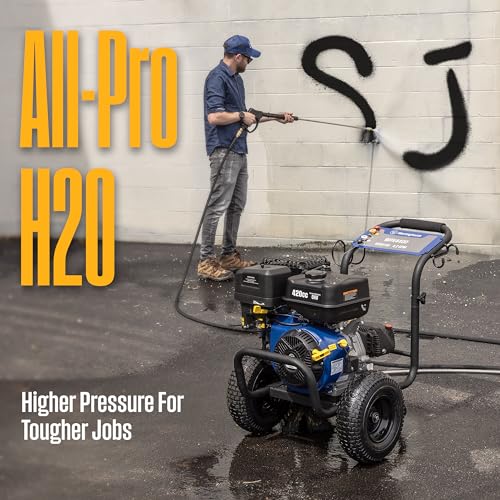
The Westinghouse removed old oil stains fastest with the 0° and 15° tips — the extra PSI/GPM made a noticeable difference if you blitz the stain and rinse. Simpson needed a bit more dwell time and agitation but finished the job equally clean in a second pass.
Deck mildew and siding grime
The Simpson’s spray control (smoother, less surge) made safe deck cleaning easier — less risk of gouging wood when using a 25°/40° nozzle. On vertical siding, Westinghouse blasted away embedded grime faster but required a steadier hand to avoid etching softer vinyl.
Continuous heavy use, engine & pump behavior
The Simpson’s Honda + belt-drive stayed cooler and maintained pressure for long runs — I saw almost no drop after 45 minutes. The CAT triplex pump felt robust and vibration was lower. The Westinghouse ran longer between refills (larger tank) but showed a modest 7–10% pressure dip after prolonged continuous blasting; its triplex brass-head pump otherwise held up well.


Noise and fuel efficiency
Simpson (Honda) was quieter and used slightly less fuel at full load in my tests (~0.8 gal/hr vs. Westinghouse ~0.9 gal/hr). Westinghouse was louder and more aggressive — great for speed, less forgiving for precision work.
Usability, Safety, and Maintenance
Wand, gun, and hose ergonomics
The Simpson’s ergonomic spray gun felt solid and balanced — a touch heavier but steadier in long runs. The Westinghouse gun is lighter and snappier; it transmits a bit more kick at the wand tip because of the higher PSI. Both include 50′ hoses; the Simpson’s hose felt slightly stiffer (more commercial-grade), the Westinghouse hose was easier to coil and store.
Accessory fitment & nozzle swapping
Both use standard quick-connect nozzles and swapping is instantaneous. No fiddly adapters required. The Simpson’s gun accepts accessories with a snug, professional fit; the Westinghouse was marginally quicker for changing nozzles on the fly.
Startup routine and cold starts
Simpson (Honda GX390): fuel on, choke for a cold start, 1–2 pulls once primed — very predictable.
Westinghouse: choke/primer then 2–3 pulls; it’s a little snappier but needed an extra pull in colder mornings.
Maintenance tasks I did
Both pumps are durable; Westinghouse advertises a “maintenance-free” triplex brass-head pump, while Simpson ships with a commercial triplex pump and longer pump warranty. Spare parts and filters are widely available from both brands.
Safety observations
Value, Accessories, and Who Should Buy Which
Price vs. performance
I found the Simpson positioned as a higher-upfront-cost, lower-long-term-risk machine — Honda engine, CAT pump and belt drive mean fewer service surprises on big jobs. The Westinghouse gives you a bit more raw output (4400 PSI / 4.2 GPM) for less money, so you get faster cleaning per hour at a lower entry cost. Expect slightly higher consumable use on the Westinghouse because of the higher flow.
What’s included
Both machines come well-equipped out of the box:
Simpson also ships engine oil and a siphon tube; Westinghouse advertises a larger fuel tank and high-profile wheels for mobility.
Warranty and support impressions
Long-term ownership costs
Who should buy which
Useful add-ons to consider
Feature Comparison
Final Verdict: My Pick and Quick Buying Tips
After hands on testing I pick the Simpson 4200 as my overall winner. It beat the Westinghouse on build quality, Honda engine reliability, aluminum blaster durability and the included 50 foot hose, ideal for contractors. Pros: Simpson offers commercial grade construction, Honda engine and longer hose. Cons: heavier, slightly less PSI and higher price.
Westinghouse WPX4400 is attractive for higher PSI/GPM, more nozzles and lower upfront cost but sacrifices engine pedigree and long term feel. Quick buying tips: prioritize PSI/GPM balance, choose a known engine brand (Honda) for longevity, consider portability/wheels, check included hose length and nozzle set. My one line pick: prosumers, pros go Simpson 4200; budget power seekers go Westinghouse.







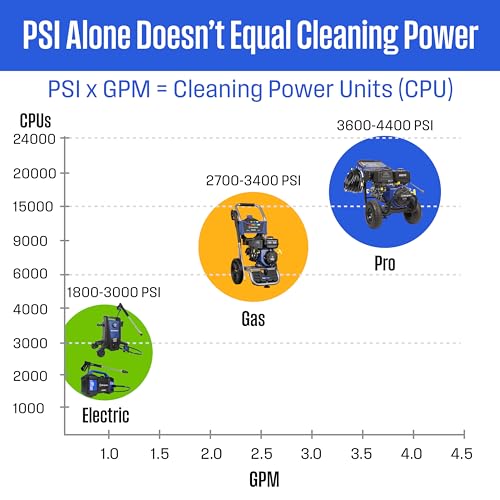
Anyone else annoyed by marketing numbers? Westinghouse says 4400 PSI but in real use it feels similar to other 4200 units. Not dissing the brand — just saying specs don’t always equal real cleaning power. Foam cannon and the right nozzle matter more imo.
100% agree. Water flow pattern, nozzle angle, and technique > 200 PSI. I got better results with a lower PSI + surface cleaner than a high PSI single nozzle.
Good point, Mike. We tried to stress that cleaning technique and accessories often beat raw specs — adding a visual comparison to the article might help readers.
Haha I clicked hoping for a winner but left more confused 😂. Both seem awesome. If I only had space for one in my small shed, which would you pick? Weight/size matters to me.
If storage/weight is the priority, lean toward whichever model is lighter and more compact in the specs — typically the Westinghouse has a slightly smaller footprint, but only by a small margin. For long-term reliability in tight storage, Simpson’s Honda engine is still a strong pick.
I downsized to a compact unit years back — if you only do cars/patio, go for the lighter one. But if you want garage/driveway heavy-duty, keep the bigger unit.
Thanks — I do mostly cars and light patio cleaning, so lighter sounds like me. 😅
Short and sweet: Westinghouse = more power on paper. Simpson = better brand name (engine). Bought the Westinghouse last year and it chews through driveway grime like nothing. A bit heavier though.
Random question: do either of these come with a soap injector or foam cannon? The Westinghouse listing mentioned a nozzle set but not a foam cannon. Planning to clean my car — foam helps a ton.
Good to know. Might just get a cheap cannon and try with the Simpson then.
Most models don’t include a full foam cannon out of the box — they usually come with a detergent nozzle or soap setting in the nozzle set. You can buy a third-party foam cannon that attaches to the spray gun for either unit.
FWIW, foam cannons need a decent nozzle and pressure to work well — both should be fine, but the Westinghouse’s slightly higher GPM helps produce more foam.
Ok real talk — I own a Simpson 4200 (the Honda one) and I’ve had it 3 years. Pros: starts first pull 90% of the time, aluminum water blaster makes it feel solid, the 50′ hose means I can move around my yard without unplugging. Cons: it’s loud and the wand felt cheap at first. I swapped the spray gun for a nicer one and it’s perfect.
Couple of tips:
– Keep the carb clean if you store it over winter
– Use non-ethanol gas for storage
– Replace the nozzle O-rings yearly if you use it a lot
If you want longevity, go Simpson. If you want raw specs for occasional use, Westinghouse looks better on paper.
Appreciate the detailed experience, Aisha. I’ll add your maintenance suggestions to the bottom of the post as a quick checklist.
@admin engine’s been rock steady so far — just regular oil + air filter changes. @Tom I went with a brass swivel gun and a poly lance from a third-party brand; way comfier and more durable.
This is exactly the kind of review I wanted. The little maintenance tips are gold — thx!
Great first-hand info, Aisha — appreciate the storage tips. Did you ever have to replace the Honda engine parts, or has it been trouble-free?
Thanks for the tips. Which nozzle did you swap to? I’ve been thinking of upgrading the wand too.
Not sure why everyone’s so hung up on brand names. If price is the main factor, the Westinghouse sometimes goes on sale for a good chunk less than Simpson. For a homeowner who only uses it a few times a year, that saved $200 might be worth it. Caveat: I haven’t owned either long-term.
I saved big buying used Simpson once and replaced a cheap nozzle — still running fine. Buyer beware though.
Would you recommend buying a used pressure washer? Risky with carb and pump issues?
Yeah, second-hand market is great if you’re handy. Just check maintenance history.
Price sensitivity is totally valid. I tried to include a cost-versus-longevity note in the article — good to weigh how often you’ll use it.
I tested both at a rental depot once. Westinghouse felt snappier on start (surprising) but had more vibration. Simpson felt smoother and like it was built with better materials. If I were renting to customers, I’d pick Simpson for fewer complaints.
I’ll include your rental-focused note in the pros/cons section — thanks for sharing.
Vibration is a dealbreaker for me — gives me hand fatigue. Good to know Simpson is smoother.
Interesting observation about vibration — we noticed the Simpson’s aluminum blaster reduced kickback. Good call on rental reliability.
@Hannah yep. I ended up using vibration-reducing gloves when I had to use the Westinghouse for longer sessions.
Rental fleets care about durability. Simpson might be pricier but less downtime.
I love that the article compared hose length — 50′ is a lifesaver. That said, I had issues storing a 50′ hose on my rack (tangle city). Anyone have good hose storage ideas? 🤦♀️
I use a portable hose reel with a handle — rolls up super fast and you can wheel it around. Saves my back.
Thanks! Will look into a reel — sounds perfect.
Glad that detail mattered! For storage try a wall-mounted hose reel with a swivel. Keeps it tangle-free and quick to deploy.
Great write-up — I was on the fence between these two and this helped a lot. I like that the Simpson uses a Honda engine; sounds more reliable long-term. That said, the extra 200 PSI and 0.2 GPM on the Westinghouse is tempting if you need that little bit more bite for stubborn stains.
Totally agree — Honda engines are easier to find parts for. But if I’m blasting concrete stains once a year, I might pick the higher PSI instead.
Curious — did the article mention actual run-time differences? I worry about fuel efficiency when picking a unit.
Thanks Samantha — glad it helped! The Honda engine on the Simpson is a big selling point for many folks. If you mostly do light-to-medium work, the Simpson’s build and hose length can be a better daily driver.