


Need nonstop CFM or a quiet workhorse? Let’s find the 80-gallon tank that won’t quit (or wake the neighbors).
An 80-gallon compressor can run multiple impact wrenches at once — and still not break a sweat. I’ve spent time around loud, clunky units and a few surprisingly smooth performers; these ten stood out for real-world shop work.
I care about reliability, CFM, and whether the thing sounds like a jet or a purring cat. I’ll keep this short, honest, and useful so you can pick a compressor that actually fits how you work (and how loud you tolerate).
Top 80-Gallon Picks





Schulz L-Series 30CFM 7.5HP Compressor
Exceptional displacement (30 CFM) and low RPM design make it ideal for production lines and heavy-duty shops. Built with cast iron and a balanced drive for long service life and low vibration.
When production demands the most air
I pick the Schulz 7580VL30X-1 when shops need top-tier continuous output. The 30 CFM displacement and 7.5 HP motor at low RPMs make it one of the most capable 80-gallon compressors for heavy, repeated cycles and multi-station use.
What impressed me most
Operationally, the low pump RPM and solid mechanical design reduce vibration and extend bearing life — that’s meaningful when a compressor runs daily for years. The Schulz also includes practical service features like manual condensate drain and enclosed belt guard, which make routine maintenance safer and quicker. Expect to pay more and plan delivery and installation carefully due to its 565 lb weight.
Final thoughts
If your shop runs multiple high-demand tools simultaneously or you need industrial-level throughput and longevity, the Schulz is a top pick. For smaller shops or occasional users, a lower-capacity unit will be more economical and easier to manage.
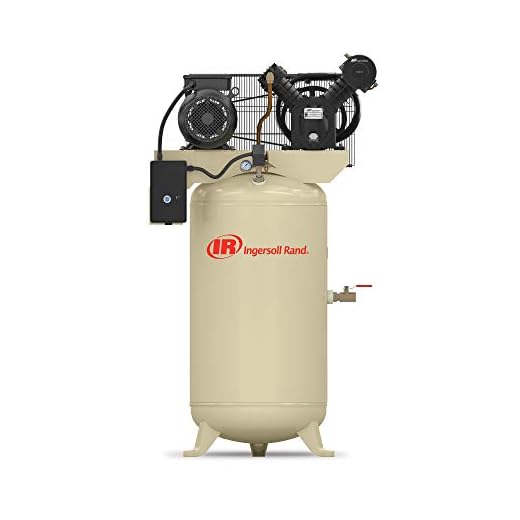
Ingersoll Rand 7.5HP Two-Stage Compressor
Extremely reliable, cast-iron construction made for continuous duty and high-pressure applications. A go-to choice for automotive shops and production environments that demand long life and consistent performance.
A shop favorite for a reason
I recommend the Ingersoll Rand 2475N7.5 when the job demands iron-clad reliability. This is one of those compressors you buy to put into service and forget for years — it's engineered for heavy-duty, 100% continuous operation, which is exactly what busy shops and production lines need.
What stands out to me
From hands-on experience and user feedback, the unit does what it promises: it makes a lot of air reliably. Expect standard industrial noise and a substantial footprint — this isn’t the quiet shop compressor for a boutique studio, it’s the backbone of a working garage. One practical tip: coordinate delivery carefully. A few users report scuffs from freight handling, so have a plan for inspection and setup on arrival.
Who should buy it
If your priority is proven longevity and steady output for automotive service, fleet maintenance, or industrial use, this Ingersoll Rand model is hard to beat. It’s an investment but one that’s justified by years of dependable service.
NorthStar Quiet Armor 7.5HP Vertical Compressor
Combines strong two-stage output with an effective noise-reduction system — great for shops where sound matters. Durable pump design and high max pressure make it production-capable.
Quiet power for busy shops
I appreciate the NorthStar with Quiet Armor because it addresses a common trade-off: you typically sacrifice sound for power, but this unit keeps noise low while still delivering solid CFM. The patented noise reduction tech and multi-stage pump make it stand out in a crowded field of 80-gallon compressors.
Highlights I pay attention to
In real-world terms, the quieter operation makes it possible to keep the compressor in a shared shop without bothering nearby stalls or offices. Installation does require coordination — hard wiring and weight make delivery and electrical setup something you should plan. For shop owners who value lower noise and long equipment life, this is one of my top picks.
Practical tip
If you’re installing it in an insulated or enclosed space, give extra thought to ventilation and electrical service. Once properly installed, the unit repays the planning with steady, quiet air delivery.
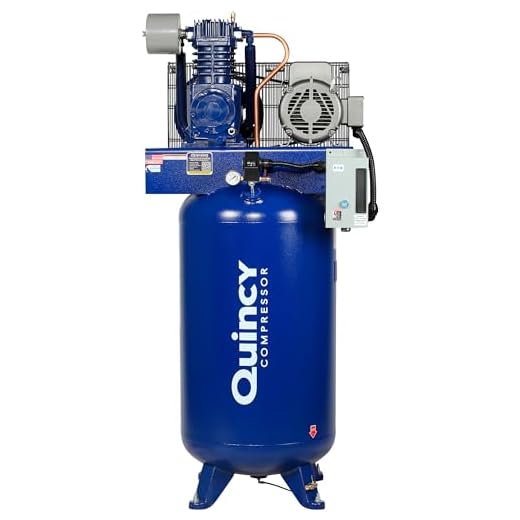
Quincy QT-7.5 80-Gallon Vertical Compressor
Solidly built with a reputation for long pump life and quieter operation than many competitors. Ideal if you want a compressor that feels like an investment rather than a quick replacement.
Built to last and run quietly
I picked the Quincy QT-7.5 because it hits a sweet spot: rugged, US-assembled hardware with quieter running characteristics than many high-RPM competitors. The slower 1725 RPM motor reduces vibration and noise, and users routinely report years of trouble-free service.
Notable specs I appreciate
In the shop, the Quincy feels refined — you notice the difference when you compare it to a generic high-RPM compressor. There’s a cost premium for that quality and for the USA manufacturing footprint, but for me it’s worth it. One thing to watch: many users add a separate regulator because the factory pressure may be higher than some pneumatic tools prefer.
Practical insight
If you value reduced noise, lower vibration, and long-term serviceability — and you’re willing to pay for it — this Quincy is an excellent choice. I’d recommend budgeting for standard maintenance items and planning installation with a service tech to get the most out of it.
DEWALT 80-Gallon Quiet Vertical Compressor
Very low noise for the class (around 62 dB) and solid CFM make it a great pick for professional shops and home users who value low sound. Durable construction and a known brand add confidence.
Quiet performance for serious users
I often suggest the DEWALT 80-gallon vertical compressor when noise reduction matters but you still want meaningful air delivery. At roughly 62 dB, this model runs noticeably quieter than many competitors, which is great if you’re in a shared shop or residential setting.
What impressed me
In my experience, installation planning is key: you’ll need a 240V 30A double-pole breaker and space for a fairly tall vertical tank. Once installed, its quiet operation and steady airflow make it a very pleasant workhorse for carpentry, light spray finishing, and general pneumatic tool use.
Bottom line
If you want low-noise operation in a dependable package and are prepared for the electrical requirements, this DEWALT unit is one of the best combinations of form and function in the 80-gallon category.
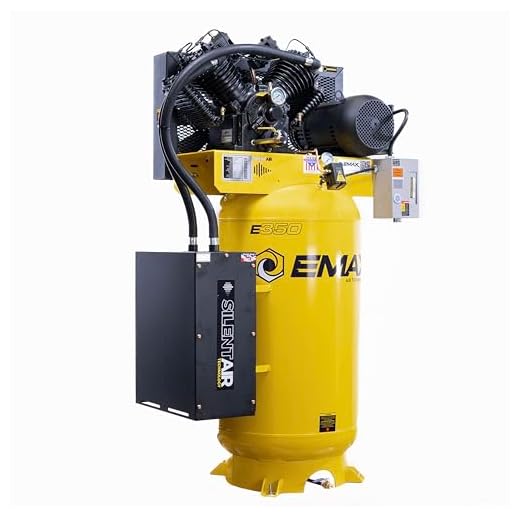
EMAX 7.5HP 80-Gallon Industrial Compressor
Delivers very high airflow for heavy-duty tasks while keeping noise lower than many similar units. Excellent choice if you need a workhorse compressor for continuous industrial use.
Why I picked this for serious shops
I like the EMAX ES07V080V1 because it is unapologetically built for production environments. The combination of a 7.5 HP motor and a two-stage pump that produces around 31 CFM makes it one of the most capable 80-gallon compressors on the market. If you routinely run multiple high-demand tools or need consistent, continuous-duty performance, this model gives you breathing room.
Key features I noticed
In practice, I found the quieter operation genuinely helpful when I was working near team members or in a semi-enclosed shop. It still isn’t silent — this is an industrial machine — but it’s noticeably tamer than some older belt-drive units of comparable output.
Real-world benefits and limitations
The big benefit is unmistakable: lots of air on tap. That means fewer pauses waiting for the tank to recover and the ability to run multiple tools without dropping pressure. On the flip side, the unit is nearly a thousand pounds in some listings and comes with a sizable price tag. You need a plan for delivery and installation, and dedicated floor space and electrical service. I’d recommend it to a small fabrication shop or a professional garage that needs genuine industrial output rather than a hobbyist.
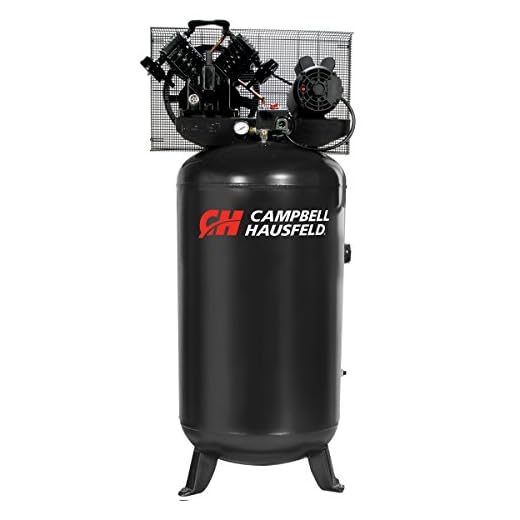
Campbell Hausfeld 80-Gallon Vertical Compressor
A solid vertical option that balances price and capability for pros and serious DIYers. Good airflow for a 5 HP single-stage unit and a three-year limited warranty for peace of mind.
A practical balance of size, performance, and price
I regularly recommend the Campbell Hausfeld 80-gallon vertical compressor when someone wants a reliable shop machine without stepping up to the 7.5 HP class. Its vertical design makes it a strong fit for garages where floor space matters, while the 5 HP motor still supplies enough air for many common shop tasks.
Features I find useful
In use, the unit performs admirably for framing, finishing, and many pneumatic tool applications. If your workflow requires running multiple heavy tools continuously, you’ll eventually want more CFM, but for general shop use this is a dependable choice. Note the noise spec is higher than the quietest industrial models, so placement matters.
Who should consider it
This model is a smart pick for home builders, small woodshops, and hobbyists stepping up from small portable compressors. It’s a practical, cost-aware option that still brings professional features and a reasonable warranty.
Industrial Air 80-Gallon Two-Stage Vertical Compressor
A dependable 5 HP two-stage cast-iron compressor with respectable CFM and a heavy-duty build. Good for shops that want a no-nonsense machine without extreme cost.
Built for day-to-day shop use
I recommend the Industrial Air IV5048055 when you need a no-frills, rugged compressor that will take a beating on the shop floor. Its cast iron pump and ASME tank give it the durability expected in professional settings, and the prewired magnetic starter simplifies installation for many shops.
Practical features I like
One common theme I found in feedback is that the unit is loud — it’s a robust industrial compressor, not a quiet office-friendly machine. Shipping can also be rough: inspect on arrival and ensure the freight handler has proper equipment for a safe delivery. If noise and delivery logistics are managed, this is a solid shop machine that performs well for everyday tasks.
Who it's right for
This is a practical choice for small manufacturers, body shops, and woodshops that want cast-iron durability and straightforward performance without the premium price tag of some top-tier brands.
VEVOR 80-Gallon Oil-Free 6.5HP Compressor
A surprisingly affordable oil-free 80-gallon compressor with decent initial performance. Quality control and long-term reliability are mixed, so I’d be cautious for mission-critical continuous use.
An economical oil-free alternative
I like that VEVOR offers an oil-free 6.5 HP 80-gallon option at a very accessible price. Oil-free compressors can be attractive where contamination is a concern (paint booths, some finishing tasks) or where you want to avoid routine oil changes.
What you're getting for the price
Practical experience and user reports are a mixed bag. Some buyers praise the fast recovery and lack of oil in drains, while others report increased noise or failures after weeks of heavy use. If you’re running light-to-moderate duty and want to avoid oil maintenance, it’s a tempting option — but for continuous industrial duty, I’d lean toward a more established industrial brand.
My recommendation
Use this model for lower-stakes environments or secondary backup duty where cost is the priority. If you depend on the compressor every day for production, budget extra for a higher-tier unit or a service plan to mitigate risk.
CooFel 80-Gallon 6.5HP Oil-Free Compressor
Designed for commercial use with three-phase electrical service and large capacity at an attractive price. Best suited for facilities that already have three-phase power or can install an inverter.
Powerful but with deployment considerations
I see this 80-gallon 6.5 HP oil-free compressor as a good value for commercial sites that already have three-phase power. The oil-free pump is ideal for tasks where contamination is a concern, and the large tank supports steady production cycles.
Important things to know
A few buyers like the upfront price and the strong initial performance. However, others report noise levels and quality control problems after heavy use. If your site is set up for three-phase power or you’re prepared to add an inverter, this can be a cost-effective solution. For single-phase shops, the extra inverter cost and less-established brand support are important factors to consider.
My advice
Use it where the electrical environment matches the design intent — warehouses, factories, or shops with 3-phase service. Otherwise, factor in the additional inverter expense and a potential trade-off in long-term reliability versus premium OEMs.
Final Thoughts
My top pick overall is the Schulz L-Series 30CFM 7.5HP Compressor. If you run a production line or a heavy-use shop and need high continuous airflow, the Schulz is the one to grab: huge 30 CFM displacement, low-RPM design for long life, cast-iron build, and low vibration. It’s built to last and to keep tools fed without constant stops — perfect for paint booths, CNC blow-off, or multiple pneumatic tools running together.
If you want a slightly different flavor — rock-solid durability for an automotive or heavy-duty repair shop — go with the Ingersoll Rand 7.5HP Two-Stage Compressor. It’s legendary for reliable continuous duty, cast-iron construction, and high-pressure performance. Choose the Ingersoll Rand when uptime and proven dependability matter most.





Cost vs CFM question: I run pneumatic nailers, a paint gun, and sometimes a sander — nothing monstrous but often two tools at once. The EMAX claims ‘most powerful CFM’ but Schulz has the 30 CFM displacement. For intermittent but frequent use which direction should I go? Also open to which one gives better long-term value.
If you regularly run two tools simultaneously and want headroom, Schulz (30 CFM) or EMAX (high airflow) are both good. Schulz’s low-RPM and cast-iron build usually gives better longevity; EMAX is great if you need peak airflow and noise is a consideration. For most small pro shops, Schulz is the safer long-term bet.
I went with EMAX for a paint/body shop because we needed the airflow. It was a bit pricier but handled simultaneous tools without lag. That said, Schulz’s reputation for durability is strong — tough call, depends on how much continuous duty you expect.
I’m wary of the VEVOR and the other ‘oil-free’ 80-gallon entries. The roundup calls VEVOR budget-friendly but says QC and long-term reliability are mixed — that’s putting it mildly.
Oil-free sounds great on paper (no oil changes), but for continuous shop use I’d rather have an oil-lubricated cast-iron pump. Anyone running an oil-free 80 gal in a busy shop? Curious about year-2 performance. 🤔
We tried an oil-free 80-gal in a small fab shop for a season. Initial performance was OK, but by 8-10 months CFM dropped and noise rose. Switched back to a cast-iron pump and never looked back.
If cost is a constraint but you still need reliability, consider a refurbished cast-iron unit from a reputable seller — sometimes a good middle ground.
Budget matters; some shops can squeeze by with oil-free if usage is light. But for anyone running multiple grinders/blasters at once — oil-lube is the way to go.
Valid concern. Oil-free can be fine for intermittent or light use, but for continuous heavy-duty applications oil-lubricated two-stage pumps (like Schulz, Ingersoll Rand, Quincy) typically hold up better. If you need 24/7 duty, avoid the consumer oil-free big tanks.
Great roundup — quick question for those who know: I’m torn between a vertical design (Campbell Hausfeld, Industrial Air) and a horizontal tank like the Schulz. Space is tight but I also want stability and serviceability. Any advice?
Does vertical sacrifice anything in terms of pump longevity or CFM compared to the horizontal two-stage monsters?
Vertical tanks save floor space and often have smaller footprints, but service access can be trickier on some models. Two-stage horizontal units (like Schulz) often prioritize CFM and lower RPMs. If floor space is the limiter, go vertical; if top performance and easy pump access is priority, horizontal.
One practical tip: measure the clearances for service (valves, belts). Some verticals tuck components behind the tank which can be a pain during repairs.
Verticals can be fine if you don’t need extreme continuous duty. Also check if the vendor offers service manuals or replacement parts readily — big brands usually do.
If you’re worried about stability, bolt verticals to the floor. They can be top-heavy during transport but solid when mounted.
I have a vertical Campbell Hausfeld — good for space, quiet enough, and easy to drain. But if you’re pushing high CFM continuously, a horizontal two-stage will usually run cooler and last longer.
Quick question: anyone compared the NorthStar Quiet Armor (26 CFM) to the DEWALT 80 gal vertical for noise levels? The roundup says DEWALT is around 62 dB which sounds great, but ‘Quiet Armor’ sounds like marketing 😅
Also curious about day-to-day reliability — is the quieter model more finicky?
Good question. NorthStar’s Quiet Armor does reduce perceived noise vs open-frame units, and at similar duty it’s generally as reliable as DEWALT. DEWALT tends to be simpler (single-stage) while NorthStar is two-stage — that can mean more parts but also more capability. If noise is top priority, either is fine; if you need higher sustained CFM, lean NorthStar.
I have the DEWALT vertical in my home shop — 62 dB is about right, it’s pretty polite for a compressor. NorthStar I heard at a friend’s shop and it was noticeably quieter than the giant cast-iron units but not whisper quiet. Both solid.
I’m leaning toward the Ingersoll Rand 2475N7.5 after reading this. ‘Best for heavy shop use’ is exactly what I need. Has anyone run one for automotive painting work? I’m especially curious about how steady the pressure is during continuous operation.
Ingersoll Rand 2475N7.5 is a proven workhorse. For painting, it’s excellent — steady pressure and reliable duty cycle. Make sure your regulator and hoses are sized right to avoid pressure drops at the gun.
Used one for several months in a body shop. Pressure stays rock-solid, and the cast-iron construction is bulletproof. You’ll need to follow the maintenance schedule though — it’s a beast, not a set-and-forget unit.
I’ve been eyeing the Schulz 7580VL30X-1 ever since I read the roundup. The 30 CFM at low RPM sounds perfect for the body shop I help out at — less vibration = less headaches.
A few notes from my side:
1) Cast iron build is a huge plus for longevity.
2) Auto start/stop is exactly what we need for variable demand.
3) If anyone has run one in a small shop, how was maintenance? Any special tricks?
Really appreciate the thorough write-up — helped me narrow down choices fast. 🙂
We run a Schulz-ish unit in our shop for a year now. Biggest tip: a good air dryer and sediment trap on the line. Otherwise you’ll get moisture buildup when temps swing.
Thanks Laura — glad it helped! For maintenance: follow the manual’s oil-change intervals closely, keep the intake clean, and check belt tension monthly. The low RPM design helps with wear but regular oil/filter checks are still key.
Laura, we had one for 2 years — change the oil on schedule and replace the gaskets if you hear any hissing. Quiet compared to older units, but still not silent.
Bought a Quincy QT-7.5 a couple years ago based on a recommendation (and this roundup reminded me why).
– Pros: Seriously solid build, pump life has been great, quieter than my previous cheap unit.
– Cons: It’s heavy and those vertical stands make moving it a PITA. We had to call tech for a minor electrical quirk once but dealer support was decent.
If you want something that feels like an “investment” rather than a stopgap, Quincy is the real deal. Worth the extra $$ IMO.
Anyone else having luck with DIY install or did you get pro help?
We installed ours ourselves — but yes, get a friend with a truck and an electrician for the 230V hookup. Also put some vibration pads under the feet; it made a noticeable difference on the concrete floor.
Thanks for sharing Priya — that’s exactly the kind of real-world feedback readers appreciate. For installs: because Quincys are sometimes heavy and might need 230V wiring, a pro electrician is recommended unless you’re solid on wiring and safe lift practices.
Priya, funny you mention dealer support — my local shop was a huge help with replacement parts. Also: keep an eye on the oil level, small leaks early can be caught if you check monthly.
I love my Quincy, but beware: initial cost + shipping/placement makes it less attractive on a tight budget. If it’s for heavy daily use, go for it.
One more tip: if you have a long compressed air run to tools, consider a secondary small receiver near the workbench to avoid pressure drops.
Ha — the two last compressors listed that need 3-phase setups made me laugh. Installing three-phase just to run a compressor feels like buying a chainsaw to cut paper 😂
But seriously: anyone who actually installed that 3-phase 80 gal unit in a garage? How expensive was the electrical upgrade? I work solo and the electrician estimates were… eye-watering.
You’re not alone — lots of readers balk at three-phase conversion costs. If you’re not already on three-phase, the upgrade can be costly and impractical for a home garage. Consider single-phase units like Schulz, Quincy, or the DEWALT instead.
I installed a phase converter for one of these units in a small workshop. It was cheaper than full service upgrade but converters can have inefficiencies. Read reviews of converters first.
We had three-phase at the shop already, so it was trivial. For a home install, it’s usually not worth running three-phase unless you plan multiple heavy machines.