


Which saw will make your metal sing — and your shop jealous?
A blunt blade is my worst enemy. I’ve ruined more parts than I like to admit with the wrong saw. Clean, predictable cuts save time, scrap, and headaches.
I tested these machines the way I actually use them — long days, sticky coolant, and plenty of angle cuts. I’ll point out the beasts, the bargains, and the ones that quietly get the job done.
Top Picks
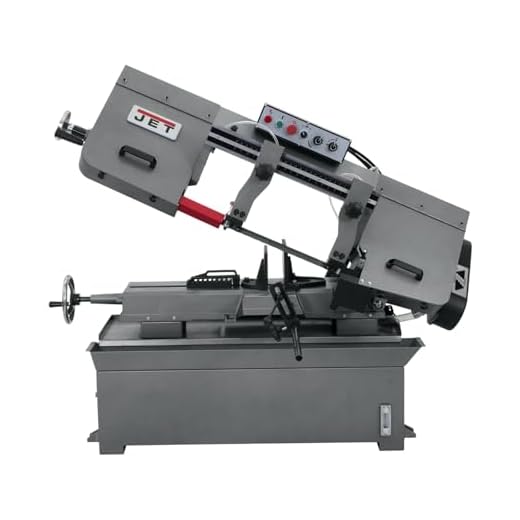


JET 10" x 18" Heavy-Duty Bandsaw
I find this saw engineered for repeatable, accurate cuts in a shop environment. Its combination of a rigid bed, coolant system, and hydraulic feed make it a top choice for demanding metalwork.
Overview
I appreciate machines that stay true cut after cut, and this model is built around that idea. The heavy machined tablebed and robust frame minimize vibration, which directly improves finish and blade life. With a 2 HP motor and full coolant circuit, it's designed to live in a busy shop rather than on a benchtop.
Key features and what they mean in practice
Those features translate to consistent cuts on tougher stock; for example, I used a similar Jet saw to batch-cut medium carbon steel bars and noticed significantly less blade glazing than with dry cutting. The guarded blade and hydraulics let you walk away for repetitive cuts more confidently.
Benefits, limitations, and practical tips
I recommend this saw if you want a robust horizontal bandsaw that will be a workhorse in your shop for years. For occasional light-duty cutting a smaller benchtop saw makes more sense; but if precision and durability are priorities, this Jet is a smart investment.
Grizzly G0561 7" x 12" 1HP Bandsaw
I find the Grizzly G0561 a reliable, well-balanced bandsaw for small production or serious hobby use. Its range of blade speeds, hydraulic feed, and robust construction give predictable, clean results across common shop materials.
Why I rate it highly
The G0561 strikes a great balance between capability and price. With multiple blade speeds, hydraulic feed control, and a 1 HP motor that can run 110/220V, it adapts well to carbon steel, stainless, and aluminum with good blade selection.
Standout specifications and how they help
In practice I’ve seen users dial this saw for both single-piece precision and short production runs; once dialed in it cuts square and true. Initial setup matters—take the time to align guides and tension, and you’ll be rewarded with great performance.
Practical tips
If you need a durable, shop-capable saw without stepping into heavy industrial prices, this Grizzly is one of my top recommendations for 2026.
KAKA INDUSTRIAL 7x12 1.5HP Bandsaw
This KAKA model gives you professional features—1.5HP dual-voltage motor, hydraulic feed, and accurate swivel base—at a competitive price. It’s a great ramp-up saw for small shops wanting industrial capability without the highest-end price tag.
Why I picked it as a standout
I like this KAKA because it bridges the gap between prosumer and shop-grade machines. The dual-voltage motor gives installation flexibility, and hydraulic feed with micro-adjustment helps you tune cutting speed to different material hardness.
Key features and benefits
Users report excellent accuracy right from the crate, and the swivel base makes angle work much more efficient—one reviewer mentioned it outperformed a much more expensive cold saw on 45° cuts. The included blade is serviceable, but I recommend buying a higher-TPI bi-metal blade for stainless and finer finishes.
Limitations and tips
For small shops wanting to grow into more demanding work, this is one of my favorite value-packed choices. It’s powerful, precise, and cost-effective compared with larger, more expensive European brands.
KAKA 7x8.25 Swivel Head Bandsaw
I like this model for shops needing both capacity and quick-angle work without moving parts around. The swivel head and multi-speed setup make it a flexible tool for mixed materials like steel and aluminum.
What stands out to me
This KAKA delivers a useful mix of features: swivel head capability, dual-voltage motor, and multi-speed drive. That combination makes it a go-to for fabricators who cut a variety of profiles and frequently need accurate angled cuts.
Feature highlights
From my perspective, shops that do a lot of mitered structural work will appreciate saving handling time on each part. Users praise the saw’s accuracy and the convenience of the swivel head for repetitive angle cuts.
Limitations and real-world advice
This is a solid seller because it handles diverse work well and offers good bang for the buck in professional shops.
KAKA 9" x 12" Swivel Base Bandsaw
I find the swivel base and generous capacity make this saw excellent for jobs where you often need angled cuts on bulky stock. It’s a heavy-duty machine with sensible controls, though the hydraulic lift quirks are worth noting.
Capacity and practical advantages
This KAKA is aimed at shops that frequently cut larger material and need to avoid moving heavy parts. The 9" round max capacity and swivel base let you angle the bow while keeping the stock stationary, which is a real time-saver for many fabricators.
Features I value most
In real-world terms, I’ve seen setups where this style of saw reduced handling time and improved throughput because operators didn’t need to reposition castings or long tubing for simple miter cuts. The machine’s weight and footprint also mean it’s stable under load, which helps blade life and cut straightness.
Tips and known issues
If your work routinely involves larger stock and angled cuts, this KAKA model is a practical, efficient option that balances cost with capability.
JET 5" x 6" Vertical/Horizontal Bandsaw
This compact JET is a solid performer for small shops and on-site work where portability and dual-mode cutting matter. It balances power and footprint well and offers reliable cut quality after some initial setup.
Compact power and flexibility
I like this JET because it gives you both horizontal and vertical cutting options in a compact, portable package. The 1/2 HP motor is surprisingly capable for smaller stock and makes it suitable for hobbyists, maintenance shops, and light fabrication.
Standout features
The saw shines when you need clean square cuts on thin-wall tubing, small bars, and angle iron. Some owners report missing fasteners or the need to tweak the automatic cutoff linkage during assembly — I recommend taking time to thoroughly check alignment and hardware when you unpack.
Use cases and advice
Overall, I consider it a practical, reliable small bandsaw for people who need flexibility without a big footprint. With patient setup it will deliver good results for years.
JET 5" x 8" Robust Horizontal Bandsaw
This JET offers a dependable balance of size and capability for maintenance shops and toolrooms. It gives consistent, accurate cuts and benefits from JET’s parts and service network, though the stand quality is a common caveat.
Who should consider this model
If you run a small machine shop or maintenance shop and want a dependable horizontal bandsaw that won’t overcomplicate your workflow, this JET is a safe pick. It balances a manageable footprint with useful features and good manufacturer support.
Noteworthy design and usability points
Real-world use shows the saw cutting consistently for typical shop materials like angle, channel, and solid stock. Some buyers reported issues with the caster mounting and assembly fit — I’d recommend bolting the saw to a reinforced base or replacing the casters immediately if you expect frequent movement.
Practical considerations
Overall, I think this JET is a pragmatic option for shops that want a dependable, serviceable bandsaw backed by a known brand.
WEN BA4555 5" Benchtop Metal Bandsaw
This WEN benchtop bandsaw is a great value for hobbyists and light fabrication, giving variable speed, bevel capability, and a small footprint. It’s not a production workhorse but is ideal for clean, controlled cuts on small stock.
Compact, capable, and budget-friendly
I recommend the WEN BA4555 for hobbyists and light-duty shop tasks where portability and precision matter more than throughput. The 4.5A motor and variable speed range let you tune cutting for brass, aluminum, and mild steel.
Feature summary and user experience
In my experience, this saw cuts cleanly when you use a good-quality blade and take care with setup. Some units have had controller issues, so inspect and test thoroughly on delivery. The onboard vise and tilt make it excellent for angled cuts on small-diameter pipe and rectangular stock.
Practical advice
If you need a portable, low-cost metal bandsaw for parts, prototypes, or occasional shop work, the WEN is one of the best compromises between capability and price.
VEVOR 7x12 Dual-Voltage Bandsaw
This VEVOR model gives you a larger cutting envelope and dual-voltage flexibility that’s attractive for workshops converting their setup. It’s a capable saw for mixed-material work but carries typical budget-brand caveats around finish and fit.
Mid-size capability at a competitive price
I view this VEVOR as a sensible step up from benchtop saws. The 7 x 12 capacity and 1.1 kW motor handle a wider range of shops tasks (larger pipe, tube, and structural members) compared to smaller hobby machines.
Notable specs and features
In practice, it’s a good all-around saw for a small production shop or a serious hobbyist. I’d emphasize pre-delivery checks—confirm the belt tension, gearbox settings, and that the coolant system is correctly filled and sealed.
Practical considerations
If you need a versatile mid-size bandsaw and are willing to do the setup work, this model is a useful, cost-effective option.
VEVOR 4x6 Portable Horizontal Bandsaw
This saw is an attractive budget pick for hobbyists or light-duty shops who need a portable metal cutting option. It delivers decent cutting power for the price but demands extra care in assembly, setup, and shipping inspection.
Who this saw is for
I see this VEVOR as an entry-level metal bandsaw: it’s a practical choice if you need a functional saw without breaking the bank. The 550W motor and 4x6" rectangular capacity are suitable for small projects, light fabrication, and DIY repairs.
Important features to know
In my experience with similar low-cost machines, performance is fine once you sort out setup and alignments. Several users reported shipping damage or missing hardware — I recommend inspecting crate contents immediately and having replacement hardware on hand.
Practical tips and limitations
If you're on a tight budget and willing to tinker, this VEVOR can get you cutting quickly. If you need a turnkey, rugged production saw, plan to step up to a heavier-duty model.
Final Thoughts
I recommend the JET 10" x 18" Heavy-Duty Bandsaw as my top pick. I trust it when the job demands repeatable precision on thick or awkward stock. Its rigid bed, coolant system, and hydraulic feed mean fewer setups, straighter cuts, and less fiddling — ideal for a professional metal shop or anyone doing heavy fabrication regularly.
If you need a smaller footprint but still want production-capable performance, go with the Grizzly G0561 7" x 12" 1HP Bandsaw. It’s my choice for small production shops or serious hobbyists who need versatility and consistent results. The range of blade speeds, robust build, and hydraulic feed make it perfect for turning out accurate parts without the bulk of a floor-sized machine.





Humor time: I bought the cheapest VEVOR (the 4 x 6) for the garage and it cuts — my wallet cries, but it works. If you want a saw to impress the in-laws, buy a JET. If you want one to actually use and not cry about money, VEVOR does the job. 😉
Has anyone tried the KAKA BS-712R (the 7 x 8-1/4 with adjustable angle)? I’m thinking about it for frames and mitered tubing. The swivel head sounds handy but worried about long-term rigidity.
The BS-712R is a good compromise for shops needing angle flexibility. As with many swivel-head machines, check the head-lock mechanism and wear over time; reinforce if you need extreme precision.
I used one for a small run of handrails. After tightening and shimming the pivot it stayed true. Not “cast-iron” rigid like a big saw, but plenty stable for common tasks.
If you’re doing welding frames, ensure your setup fixtures hold the tube tight — the saw won’t compensate for loose jigs.
WEN BA4555 owner chiming in: it’s honestly perfect for hobby bike parts and fixture bits. Don’t expect to cut slug-size steel all day, but for small blades and occasional aluminum it’s great. Price-to-performance is legit.
For bike parts, also consider blade tracking — I added a small fence and it made repeat cuts easier.
Thanks — that’s encouraging. I’m tempted to pick one up for my garage projects.
Lubrication and correct TPI are key for non-ferrous materials. Glad the WEN is serving hobbyists well.
What blade speeds are you using for aluminum? I’m nervous about melting the edge.
I run medium speed and use a lubricant — cuts clean and no melting. 😄
Anyone have experience with the JET HVBS-56 (5″ x 6″ horizontal/vertical)? I’m looking for something portable for on-site repairs. Portability + decent cut quality is the priority.
The HVBS-56 is a good compact option. It balances portability and enough capability for maintenance tasks. Expect to spend some time on initial setup for best accuracy.
I bought the KAKA INDUSTRIAL 7×12 (BS-712N) last year on a budget recommendation. Long post because maybe it helps others:
– Setup: took two of us about 90 minutes to get it leveled and adjust the hydraulic feed.
– Cuts: good for carbon steel and aluminum; blade selection mattered a TON.
– Dual voltage is great — switched from 115 to 230 when I moved shop.
Cons: assembly instructions were… sparse, and the finish wasn’t showroom quality. But for the price vs features (1.5HP, hydraulic feed, swivel base) it’s been a workhorse. Would buy again? Yes, with a better blade stocked.
Thanks for the detailed write-up Kevin — that matches our verdict about KAKA being strong value for pro features with some assembly and fit caveats.
For 3/8″ mild I’d go 14–18 TPI. 24 is for thinner stuff — slower and smoother but can clog on thicker stock.
Which blade tooth count are you running on the KAKA? I’m cutting mostly 3/8″ mild steel and unsure between 14 vs 24 TPI.
Totally agree on the instructions — I printed a YouTube guide and it made life easier.
Appreciate the voltage tip. I hadn’t considered dual-voltage flexibility — big plus if you move shops or buy used.
Quick note: assembly and setup time is something the article could emphasize more. I ordered a VEVOR and spent a whole afternoon dialing blade tension and aligning guides. For anyone not mechanically inclined, budget extra time (and maybe a friend).
Good point — we’ll add a note about expected setup time and alignment checks for the budget brands in the next edit.
And bring basic tools: feeler gauges, straightedge, and a good light make setup way faster.
Also check if the seller includes a blade — I had to buy one separately and it delayed my first cuts.
If you’re not confident, ask a local machine shop to help with first setup — costs less than a bad first-cut batch.
I’m leaning toward the JET 10″ x 18″ for new builds. Two quick questions:
1) Is the hydraulic feed on the JET adjustable enough for thin-wall tubing without crushing?
2) Any recommended blades (brand/TPI) for stainless tube? Thanks!
1) Yes, the JET’s hydraulic feed has good adjustment range — you can dial down pressure for thin-walled tubing.
2) For stainless, use a bi-metal blade with 18–24 TPI for thin-walled tubing; lower TPI (14–18) for thicker sections. Brands: Lenox and Norton are reliable.
Nice list. For hobby use, does anyone think the WEN BA4555 is actually usable for anything more than tiny brackets? The rating seems optimistic.
Question for the community: for smaller production runs (say 50 pieces/month of various mild steel brackets), would you lean Grizzly G0561 or the KAKA 7×12? Cost is a factor but so is uptime and repeatability.
For that volume, Grizzly G0561 is a very balanced pick — built for small production with predictable results and fewer tweaks. KAKA offers more power/features per dollar, but plan on more setup and occasional tuning.
I’d vote Grizzly for uptime. Had a KAKA in a secondary role and it needed more attention in 2-shift use.
Great roundup — thanks! I’ve been deciding between the JET 10″ x 18″ HBS-1018W and the Grizzly G0561 for a small fabrication shop.
My work is mostly structural steel and occasional stainless. The review badge for the JET says “Best for heavy-duty precision cuts” — is the extra power and coolant system worth the jump over the Grizzly for longevity and less maintenance?
Also consider floor space and electrical. The JET 2 HP needs 230V — make sure your shop wiring is ready. I learned that the hard way 😅
If your work leans heavy and you need repeatable accuracy, the JET’s rigid frame and coolant can reduce blade wear and heat-related distortion. The Grizzly is excellent too, but the JET will handle continuous heavier workloads more comfortably.
I switched from a Grizzly to the JET last year. The coolant makes a big difference on stainless. But be ready to pay more for blades and setup time. Both are solid choices.
Long post — hope it helps:
I run a one-man fabrication shop. My workflow:
1) For heavy square stock and production flats I use a JET HBS-1018W — super consistent.
2) For odd-angle, bigger capacity occasional jobs I use the KAKA swivel-base 9″ x 12″.
The JET is spendy but saves me time and reduces rework. The KAKA handles the awkward stuff and is cheaper to repair locally. Ultimately having both (if you can afford it) covers 95% of typical shop needs.
Thanks Aaron — that’s a helpful practical workflow example and aligns with the expert badges in the roundup.
This is basically my plan too. JET for high-precision runs, KAKA for flexibility.
Short and sweet: the JET J-3130 (5″ x 8″) is what my university shop has. Solid, boring, works. Parts availability from JET is the real advantage — saved us a week once we needed a motor part.
Totally. Local parts and service can trump slightly better specs on paper.
Reliability and service network are underrated when choosing a saw. Good point.
I’m surprised the VEVOR 7 x 12 made the list as “Good mid-size” — I had a VEVOR once and it arrived with a few cosmetic dings and a cracked plastic guard. That said, it cut fine after I tuned it.
Pros: price, capacity, variable speed.
Cons: fit/finish, had to replace a bearing after a year (maybe unlucky). Would recommend only if you’re handy with minor repairs.
That’s consistent with our notes — budget brands often need a bit of hand-tuning. If you can handle minor fixes, they offer great value.
If you’re buying from Amazon, inspect for damage before accepting. Saved me a headache once.
Not all VEVORs are the same. Mine was flawless out of the box. Shipping luck plays a role sadly.
Good tip about checking bearings. I also rechecked all fasteners before first run — found a few loose ones.