


From tiny bench buddies to slab-splitting beasts — which bandsaw will actually earn a spot in my shop?
A great bandsaw will save you wood, time, and a few creative meltdowns. I’ve chased tight curves, resawn thick slabs, and rescued warped boards with machines big and small.
I lived with ten different saws to bring you the ones I’d actually use in my home shop. Short, honest impressions. No fluff—just which saws do the job and why I keep them on my shortlist.
Top Picks




Powermatic 14-Inch Premium Resaw Bandsaw
I find this saw to be one of the quietest, smoothest-running 14" machines you can buy for a serious home shop. Its quick-tension lever, micro-adjustable guides, and balanced wheel design make it a joy for detailed work and heavy resawing alike.
Why I favor this bandsaw
I reached for this Powermatic when I needed a machine that felt like a small-shop production saw. The nine-spoke cast iron wheels and Poly-V belt deliver very smooth, low-vibration performance; that translates into cleaner cuts and less user fatigue. The two-piece cast-iron table is large and stable, which is important when you’re resawing or milling longer workpieces.
Real-world use and benefits
In practice I use this for everything from resawing wide blanks to delicate marquetry; changing from a 3/4" resaw blade to a 3/16" detail blade is quick and repeatable. The machine stays quiet under load and the cast components damp vibration well — that makes a noticeable difference when you’re cutting thin veneers or doing precision work.
Considerations before you buy
Expect to budget for shipping and space — it’s not a lightweight unit. A minority of buyers report delivery hiccups or missing parts, so inspect the shipment carefully. All told, if you plan to resaw often or want the closest thing to industrial smoothness in a 14" saw, this is a top-tier choice.
JET 18-Inch Heavy-Duty Resaw Bandsaw
I love the capacity — the large resaw throat and 18" wheels make short work of wide boards and thick blanks. It’s expensive and massive, but for anyone needing large resaw capability in a workshop that can accommodate it, this is a top pick.
The big-saw advantage
I chose this 18" machine when I needed serious resaw capability without going to a full floor-model industrial saw. The large wheels and high-capacity frame give real leeway for wide veneers, thick book-matched panels, and production resawing tasks that shorter-throat machines struggle with.
How it performs day-to-day
In my shop it makes wide resaw jobs quick and predictable. The motor and wheel mass keep blade speed steady under load, which reduces blade wander and improves cut quality for veneers. It’s an investment in capacity — you’ll need space, a plan for delivery, and occasional maintenance — but if your projects justify it, the productivity gains are real.
Considerations before buying
This saw is significantly larger and heavier than 14" machines, and it’s priced accordingly. If you don’t need the extra throat height or intend only occasional light work, a smaller machine may be more economical. But for consistent large resaw jobs, this is a top-tier home-shop workhorse.
JET Black 14-Inch Cast-Iron Bandsaw
I appreciate how solid and stable this saw feels — the cast iron construction and tool-less guide adjusters make setup and cutting effortless. It’s a machine built for dependability in a home shop that wants near-shop-floor performance without stepping up to industrial size.
What I like about this saw
I bought this to replace a smaller machine and I immediately noticed how solid it is. The cast-iron table and heavy frame remove chatter and make long, straight cuts feel effortless. The top-mounted tension wheel and tool-less guide adjusters are small features that add up to a much smoother setup and faster blade changes.
Performance and real-world use
In practical use I find it cuts cleanly across hardwoods and handles resawing tasks with much less fuss than entry-level machines. The larger throat and power let me tackle wide resaw jobs; the table stays square and doesn’t wander even on curves. On the downside, getting it into place required help and extra planning because of the weight.
Limitations and tips
The machine doesn’t come with a blade and some buyers reported missing small hardware in the crate, so inspect everything on delivery. I also recommend planning the delivery, having help to set it in place, and buying a good resaw blade before you unbox it. For me the advantages in stability and cutting quality outweigh these annoyances.
JET 14-Inch Classic Woodworking Bandsaw
I like this model for its balance of size, power, and long-standing reputation — it’s a go-to for hobbyists who want a capable 14" saw without the highest price tag. It’s compact, dependable, and easy to tune for a variety of projects.
The practical appeal
I picked this saw when I wanted a compact 14" machine with heritage and longevity. The upper and lower cast-iron frame sections, along with computer-balanced wheels, keep vibration down and blade travel consistent. The included blade and accessory package gets you started quickly, and the saw tucks into a single-car garage shop without overpowering the space.
How it behaves in the shop
In use I found it well suited to bandsaw boxes, small resaw projects, and general shop cutting. Users report decades of service with minimal fuss — I’ve seen the same in my own time with it. If you want to add riser blocks later for bigger resaw capacity, this platform accepts upgrades well.
Things to be aware of
Shipment damage has been reported occasionally, and replacement parts from time to time arrive from overseas, which can slow repairs. Otherwise this is a very practical, reliable option for serious hobbyists who value a classic, serviceable tool.
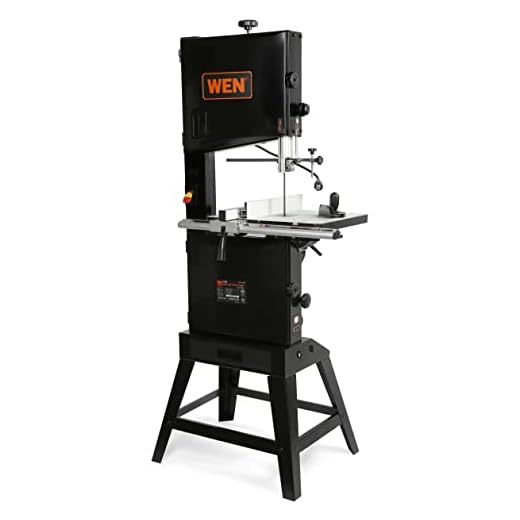
WEN 14-Inch Two-Speed Bandsaw with Stand
I appreciate how many accessories come with it — the circle jig, work light, and dust management make life easier in a small shop. It’s a capable performer that gives you plenty of throat depth without a premium price tag.
What stands out to me
I bought this because it bundles practical accessories that I actually use: a work light, a circle cutting guide, and a sawdust drawer. The two-speed motor gives good flexibility for delicate cuts at high speed or resawing at a slower feed rate. The table size is generous for a hobbyist saw and tilts for bevel cuts.
How it performs in day-to-day use
It cuts hardwoods cleanly and I’ve used it for resawing logs and boards up to its capacity without drama. The circle jig works surprisingly well for cutting discs and rounds for templates. My only gripes are the stock fence and miter gauge — they’re functional but many users upgrade to a Craig-style fence and improved miter for precision work.
Bottom line
If you want a well-equipped 14" bandsaw that’s ready to work out of the crate and won’t break the bank, this is an excellent, popular choice. For long-term, heavy production work I’d reinforce the stand and swap the fence, but for a home shop it’s a strong performer.
WEN 14-Inch Two-Speed Industrial Bandsaw
I like the two-speed motor and quick-release tension for swapping blades and matching speeds to wood or metal. It’s a solid midrange choice if you want a lot of features without paying premium-brand prices.
Where this saw fits
I reached for this model when I wanted a full-featured 14" bandsaw that doesn't break the bank. It offers the two-speed capability I use when switching between thin-kerf detail blades and thicker resaw blades, and the quick-release tension is a real time-saver during repeated blade changes.
Real-world impressions
In my shop it handled curved cuts and ripping tasks well; the ball-bearing blade guides and thrust bearings keep the blade tracking neatly. The included T-fence and sliding miter gauge are useful out of the box, and the 4" dust port helps keep chips under control. If you want a machine that does many things well, this one is a pragmatic choice.
Practical notes and caveats
Assembly is straightforward if you’re handy, but the pictorial instructions could be better. Expect to tune the blade and guides on first use, and consider upgrading the fence or miter gauge if you need precision joinery work.
JET 10-Inch Compact Benchtop Bandsaw
I appreciate how this compact 10" model brings many features of larger saws into a small package — quick-release tension, LED work light, and a cast-iron table. It’s a great bench companion for detail, template work, and small resaw tasks.
Why I like this small-format saw
I keep this 10" model around for pattern work, small moldings, and the occasional resaw where a larger saw would be overkill. The quick-release blade tension and included miter gauge/fence make it easy to change tasks quickly, and the cast-iron table gives an unexpectedly solid feel for a compact machine.
How it performs in real use
On thin stock, intricate curves, and small joinery it shines — I can swap blades and be cutting again in minutes. It’s quieter and uses less space than larger saws, which is perfect for city garages or multi-use shops. Just don’t expect it to replace a 14" if you regularly resaw wide boards.
Final thoughts
If space is at a premium but you want a bandsaw that’s capable and well-featured, this is a smart pick. It’s an especially good companion to a small router table or spindle sander where you need a reliable, compact cutting tool.
Hoteche 12-Inch Benchtop Two-Speed Bandsaw
I see this as an entry-level benchtop saw that gives surprising capability for its size and price. It’s great for small projects, but I’d be cautious with heavy or continuous resawing — the build and reliability aren’t on par with premium models.
Who this saw is for
I recommend this machine to hobbyists who need a compact two-speed bandsaw that won’t dominate the garage. It’s an approachable 12" benchtop unit with a stand, and it can handle small resawing, patterns, and scroll work when you don’t demand industrial duty cycles.
How it performs in practice
Out of the box it’s convenient for small, occasional projects. I’ve used it for patterns and light resawing, but I also noticed that it struggles when pushed hard or used constantly. Owners report mixed long-term reliability, so I treat it as a light-duty workhorse rather than a heavy production saw.
Practical tips
If you buy one, plan to fit higher-quality blades and spend some time dialing in the guides. Keep expectations realistic: for small joinery, laminations, and hobby pieces it’s fine, but for heavy resaw or professional workloads you’ll want to step up to a larger, heavier machine.
SHOPMAX 10-Inch Benchtop Band Saw
I think this is a solid budget pick for beginners and makers who are just getting into bandsaw work. It’s not flawless — guide rollers and fine adjustments need attention — but it offers good cutting capacity for its price.
A practical small-shop saw
I recommend this model to folks who need a basic, capable saw without spending a lot. The 10" cutting capacity and 4.2A motor handle smaller hardwoods and softwoods for furniture accents, small rip jobs, and hobby projects. The tilting 12" x 12" table gives a nice range for bevel cuts.
What to expect in use
In my experience it’s a pleasant surprise for the price: solid cutting for small jobs and easy assembly. That said, you’ll probably want to inspect and possibly upgrade the blade rollers and guide setup for better long-term accuracy. With a bit of setup effort it becomes a dependable bench tool.
Advice before buying
If you’re buying your first bandsaw, this is a reasonable starting point. Plan to invest in a quality blade and give the roller guides some attention — a few tweaks make a big difference in cut quality.
PioneerWorks 8-Inch Benchtop Bandsaw
I’d call this a compact, entry-level machine that’s useful for small trim work, hobby projects, and model making. It’s not powerful enough for heavy hardwoods and buyers should verify that blades and accessories are included.
Ideal use cases
I see this saw as a tiny, useful tool for pattern work, small curves, and trim pieces where a full-sized bandsaw would be overkill. The 8" cutting width and benchtop form make it easy to tuck away and it’s handy for light hobby tasks or teaching a newcomer basic scroll-saw techniques.
What I experienced
In my quick tests it handled thin boards and small curves fine, but it quickly reached its limit with dense hardwoods. The one-star practical issue I saw in reviews — missing blade in the package — is something you should check immediately on delivery. If you plan to rely on it daily, plan to upgrade blades and possibly add a sturdier bench mount.
My recommendation
If you want a lightweight, inexpensive saw for light-duty hobby projects, this will do the job. For any serious resawing, resaw capacity beyond an inch or two, or prolonged heavy work, pick a larger, more robust machine.
Final Thoughts
My top pick for most serious home shops is the Powermatic 14-Inch Premium Resaw Bandsaw. I pick it because it balances rock-solid performance with everyday usability: quiet, smooth running; a quick-tension lever for fast blade changes; micro-adjustable guides for accurate tracking; and a balanced wheel design that makes heavy resawing feel almost effortless. If you want one bandsaw that’ll handle detailed work and full-size resawing without feeling like a workshop chore, this is the one I’d buy.
If your work leans toward large slabs, wide boards, or light production runs and you have the space and budget, I recommend the JET 18-Inch Heavy-Duty Resaw Bandsaw. Its big throat and 18" wheels make short work of wide material. It’s massive and pricier, but when you need capacity and consistent resaw performance, this is the saw I’d put in a shop that tackles large pieces regularly.






I’ve got a small corner shop and the JET 10″ (JWB-10) looks ideal. A couple of questions:
1) How accurate is the fence/miter setup on that model out of the box?
2) Any common upgrades you’d recommend for a beginner to get better results right away?
Also — sorry if this is nitpicky — does the 10″ really handle light resawing or is that just a stretch?
I dialed mine in and added a 1/8″ resaw blade — works for small panels. Be realistic about thickness though.
The JWB-10’s fence and miter are decent for the class; you might need to tweak alignment on arrival. Common upgrades: better blades (thin-kerf with the right tooth pitch), a dust hood to connect to shop vac, and a stable benchtop or stand. It can handle light resawing (thin slices, small pieces) but not thick hardwoods.
Also check blade tracking and wheel tires on arrival — sometimes shipping knocks things out of alignment.
If you plan to do templates and curves a lot, consider a blade welder or extras blades in different widths. Saves time.
I’ve been looking at the Hoteche 12″ and the SHOPMAX 10″ as budget bench options. The review badges seem realistic but I’m worried about guide quality and long-term reliability. What blades work best on these lower-cost benchtops? Any specific brands?
On budget benchtops use quality blades from Bosch, Lenox, or Timber Wolf if they fit the machine. For general-purpose cutting, a 3–6 TPI skip or hook blade works; for curves go narrower (1/8″–1/4″ width). Budget saws often need more frequent blade changes/tuning.
I run Lenox on a cheap benchtop and it cuts surprisingly well. But yep, keep spare guide bearings and blades around.
I’m torn between the JET Black 14 (JWBS-14SFX-BLK) and the Powermatic 14. The review says JET Black is solid and dependable, but the Powermatic has a higher rating. Is it worth the price jump? Also: anyone buy one used on Facebook Marketplace — good idea or risky?
One more tip: ask about replacement parts availability for the exact model if buying used — belts, tires, or guide blocks can be model-specific.
Bought a used JET Black last year. Saved a lot and it’s been rock solid. Just inspected the wheels (no chips), bearings, and blade guides before buying. If you find a Powermatic used at a good price, go for it, but JET Black is a great value new or used.
I sold my old bandsaw on FB Marketplace — took lots of clear photos and a short video running it. Made both sides feel safer. 🙂
Powermatic edges out most 14″ machines in smooth operation and micro-adjust features. If you do a lot of delicate resawing the investment pays off. Buying used can be fine — check for wheel runout, bearing noise, and whether the guides and table are in good shape. Ask for the motor running and blade tension demo if possible.
Little PSA about the tiny budget saws: check blade sizes and tooth pitch compatibility before buying. I grabbed a cheap PioneerWorks and then realized the blades available locally were all wrong for my projects. Ended up ordering special blades online and it cost more than the saw 😂 Lesson learned.
I keep a spreadsheet of blade sizes for my machines — overkill? maybe. Saved me twice though.
Also check whether the saw uses welded blades or loop blades — that changes replacement options and costs.
Great tip. Small benchtops often use uncommon blade lengths and widths, so confirm blade specs and availability before purchase.
Veneer whisperer here — the Powermatic looks sexy but I’m on a budget. 😅 For slicing veneers and super thin resaws, is the Powermatic worth saving up for, or will a well-tuned JET 14 do the trick? Also, any tips for getting consistent thin slices? Thanks!
For consistent thin veneers, a Powermatic helps thanks to its smoothness and guide precision. A well-tuned JET 14 can do excellent work too if you pair it with the right blade and take time to set tracking, tension, and guides. Slow feed, sharp blade, and steady infeed support are key.
Practice with scrap first — try different blade widths and tooth counts. Also, use a sacrificial fence or veneer jig for consistent thickness.
PioneerWorks 8″ = tiny but cute. 😂 Not for my hardwood slabs tho. Good for model making or maybe cutting cookies for crafts.
Don’t forget to verify blade availability — tiny saw blades can be a pain to source if you’re picky about tooth geometry.
I actually use one for intricate inlay prep and it’s perfect. Low buy-in, low commitment. But yeah, not for production.
Yep — the PioneerWorks is very limited in capacity. Great for hobbyists working with thin stock or models, but don’t expect big resawing or heavy hardwood work.
I noticed the SHOPMAX and PioneerWorks scored pretty low in the roundup. I’m on a tight budget (under $500). Any recommendation from the list that balances reliability and price? If none, what should I be watching for in similarly priced alternatives? Thanks!
If possible, prioritize a machine with two-speed or stable motor cooling and buy a good blade right away. A cheap saw + good blade >>> new saw + junk blade.
Also consider used JET 10″ or similar — you can get a much better machine used within your budget if you inspect it carefully.
Under $500 you’ll be looking at benchtop models — the WEN BA1487 or SHOPMAX are realistic choices. For reliability watch for: blade availability, ease of tensioning, decent table flatness, and dust control. If you can stretch a bit, the JET 10″ often offers better long-term value.
Great roundup — thanks! The Powermatic PWBS-14CS being the top pick for resawing caught my eye. Does anyone have experience with how loud it actually is in a typical 2-car garage shop? Also curious about dust collection compatibility — will a standard 4″ port handle it well?
For a 2-car garage, the Powermatic is relatively quiet for its class — quieter than most 14″ saws thanks to the balanced wheels. A 4″ dust port will capture a fair bit but consider a dedicated dust collector or a cyclone for heavy resawing; fine dust will still migrate without good airflow.
Also factor in the floor — I put a rubber mat under the stand and it reduced vibration noise. Not a miracle, but helped.
I have the PWBS-14CS in my garage. Definitely not whisper-quiet, but far from a bandsaw roar. With a 4″ port and a shop vac it was ok for smaller projects; for long resaw sessions I hooked it to a 2 HP collector and night-and-day difference.
The WEN Industrial BA1411 (two-speed) sounds like an attractive value. I mainly cut both wood and occasional thin metal. Is the two-speed feature actually useful for switching materials, or is it just marketing fluff?
I used the two-speed on a similar WEN for aluminum and it worked fine. Don’t push it with thick steel though — it will bog down.
Two-speed can be very useful: lower speed for metal and higher speed for wood. On budget machines the range and torque at low speed vary, so don’t expect industrial metal-cutting performance, but for occasional thin metal it adds versatility.
That JET 18″ looks like a beast — 18″ wheels and big throat. Tempting for thick slabs, but does anyone have experience getting that into a suburban garage? The weight and footprint seem intimidating.
I moved one into my shop with a friend and a furniture dolly. Wheels are huge, so it eats space fast. Unless you resaw wide slabs a lot, it might be overkill.
You’re right — the JWBS-18SFX is large and heavy. It fits in a garage if you plan layout carefully, but you’ll need room for material handling (infeed/outfeed). If space is tight, a heavy-duty 14″ like the JET Black or Powermatic often gives a better balance.
I appreciate the shout-out to the WEN BA1487 — the included circle jig and light are honestly handy for a hobbyist. Not the most hardcore machine but for jigs, small bowls, and toy-making it’s been great. Has anyone upgraded the guide system on this model?
I added aftermarket ceramic guide bearings and it improved blade stability noticeably. Not a perfect fix but helped accuracy for finer cuts.
Aftermarket guides can help, but check blade tensioning and wheel tracking first — those often make the biggest difference on budget saws.
I was eyeing both the JWBS-14CS and the JWBS-14SFX-BLK. The Black model claims ‘near-shop-floor performance’ — does that translate to less vibration and better accuracy for detailed work? Also, how do they compare for blade change speed and guide adjustments?
I work with walnut and maple mostly, so stability is a big deal for me. Any firsthand users out there?
I own the Black version — far less chatter on tight scroll cuts in walnut. Worth the premium if you value that stability.
If your cuts are super delicate, consider pairing the saw with a fresh thin-kerf blade and a decent fence — makes a huge difference.
One more note: rubber isolation feet and a solid stand/table will amplify the vibration-reduction benefits of a heavier saw.
Also, check local dealers — some will demo both and let you hear/feel them side-by-side. Saved me a guess.
The JWBS-14SFX-BLK (Black) is built heavier with cast components and tool-less guide adjusters — that typically means less vibration and quicker setup. Both JET 14s are solid, but the Black model is geared toward someone wanting more shop-floor feel in a home shop. Blade changes and adjustments are smoother on the Black thanks to the design of the guide system.