


Which bandsaw will make your shop sing (and your projects look pro)?
A great bandsaw makes metal cutting feel almost effortless.
I’ve spent time at the Baileighs, JETs, Grizzlies and a handful of budget saws. I look for rigidity, repeatable setup, and a vise that doesn’t fight you.
Top Picks

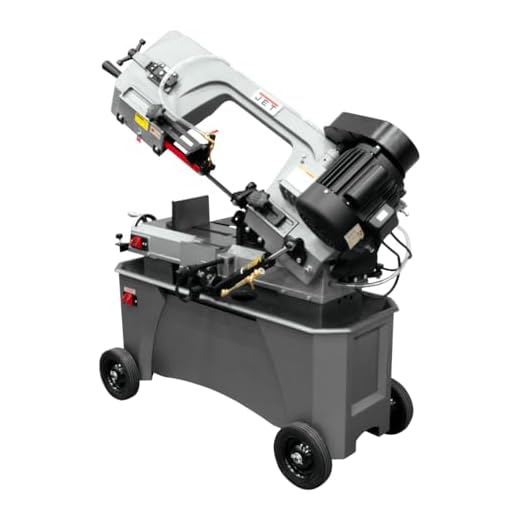


Baileigh 7 x 10.23 Horizontal/Vertical Bandsaw
I value this saw for its swivel head design and heavy cast-iron construction, which speed up mitering and maintain alignment. It's a top pick for serious shops that need precise, repeatable cuts.
What makes it special
I frequently recommend this Baileigh when precision and production efficiency matter. The swivel head lets you make accurate miter cuts without repositioning workpieces, which reduces setup time and scrap in a fabrication workflow.
Features I use most
That combination keeps blades aligned, cool, and cleaner during extended runs. In my experience, the 1 HP motor and beefy blade guides translate into long blade life when paired with proper coolant and feed settings.
Things to watch for
If you want a heavy-duty, accurate 7" class saw and are prepared to follow regular maintenance, this is one of the best I’ve used in small-to-medium production environments.
JET 7 x 12 Deluxe Horizontal/Vertical Bandsaw
I pick the Deluxe model when I want premium handling and faster setups—features like the quick-lock vise and larger infeed table make day-to-day work noticeably easier. It’s a great all-around production saw.
Why I recommend the Deluxe version
The Deluxe adds convenience features that make a real difference when you're doing frequent or multi-angle cuts. The quick-lock vise, preset miter positions, and larger infeed support reduce setup time and improve repeatability.
Features that matter in daily use
Those additions reduce fiddling during long jobs—when I’m batching parts at different angles, the convenience pays off in time saved and fewer errors. The Deluxe also retains the robust cast-iron wheel construction and adjustable blade guides of the base model.
Practical considerations
Overall, this is my go-to recommendation when you want a 7 x 12 saw that combines proven engineering with real shop-friendly features. It’s worth the premium if you value speed and convenience.
JET 7 x 12 Horizontal/Vertical Metal Bandsaw
I found this saw to be solidly built and very capable for general shop work. It balances portability and cutting capacity well, making it a dependable daily machine.
Why I like it
I rely on this mid-size bandsaw when I need both horizontal cutoffs and vertical shape work without moving to a larger machine. The build feels substantial—cast-iron components, large wheels, and a robust frame—so it holds alignment well during routine shop use.
Key features and what they mean to you
Those features translate to accurate, repeatable cuts on tubing, rounds, and plate. For example, I routinely cut 2"–6" stock and the saw holds tight tolerances when the blade and guides are set up properly.
Practical tips and limitations
If you want a reliable 7 x 12 that isn't overkill for a smaller shop, this is a great compromise. I do recommend checking packaging on delivery and testing the coolant pump immediately—there are a few reports of shipping damage or loose electrical connections, but serviceable machines generally perform very well once set up.
Grizzly G0561 7 x 12 1 HP Metal Band Saw
I appreciate the Grizzly for its strong motor, hydraulic feed control, and broad speed range. It’s a great value for shops that need 7 x 12 capacity without breaking the bank.
What I use it for
This Grizzly is my pick when I want full 7 x 12 capacity with a powerful 1 HP motor and hydraulic feed control. The machine’s feature set is well-suited to a small fabrication shop doing repeated cutoffs and beveling work.
Practical features and advantages
The hydraulic feed gives very consistent feed pressure which I like for clean surfaces and predictable blade life. The multiple speeds let you tune cutting for steel vs. nonferrous metals.
Notes on setup and use
For shops that want a capable mid-size saw with reliable control over cut pace and coolant, this Grizzly is a strong value choice in the 7" x 12" class.
JET 5 x 6 Horizontal/Vertical Bandsaw
I appreciate this model for small-to-medium shops that need dependable performance without a large investment. It’s versatile, easy to use, and backed by a solid warranty.
Why it stands out to me
This smaller JET model fits shops where space and budget are limited but precision still matters. It’s often my recommendation for people upgrading from a portable cutoff saw who want cleaner, more accurate metal cuts.
Useful features I rely on
The automatic shut-off is handy when I step away briefly and makes repetitive cuts safer. With a little attention to guide alignment, the cut quality is surprisingly consistent for the class.
Real-world considerations
Overall, I like this saw as a step-up tool that delivers practical capability without the footprint or cost of full-size industrial machines.
KAKA INDUSTRIAL 16 in Vertical Variable Speed Bandsaw
I consider this KAKA machine a solid choice when you need a dedicated vertical bandsaw with variable speed and tilting table. It’s heavy and requires proper installation, but offers good capability for shop cutting and contour work.
Why choose a vertical 16" saw
I recommend the KAKA VS-1611 when your work demands larger vertical cuts, resawing, or complex contouring that benchtop or small horizontal saws can’t handle. The 16" throat gives you more flexibility with wide or irregularly shaped stock.
Standout capabilities
Those features make it practical in a medium-size shop where downtime matters: if a blade breaks, you can weld and dress a new one rather than waiting for a replacement. The tilting table expands the range of bevel and miter operations you can perform cleanly.
Installation and operational tips
If you have the space and need a capable vertical bandsaw with useful repair features, this KAKA model is a robust option. For casual users or very small shops, the size and logistics may be more than necessary.
Rikon 4 x 6 Metal Cutting Bandsaw
I like this saw for small shops and hobbyists who need a compact machine with three speed settings. It handles common metal cutting tasks reliably when set up correctly.
Overview
I reach for this Rikon when space is tight but I still need a capable metal-cutting bandsaw. The 4 x 6 capacity makes it ideal for small tubing, pipe, and bar stock—perfect for DIYers, model makers, and light fab shops.
Standout features
The selectable speeds are especially helpful: I use the slowest setting for mild steel and the higher settings for nonferrous metals. The safety paddle is a welcome feature when I’m doing repetitive cuts.
Practical notes
All in all, this Rikon is a sensible choice for people who want a small, safe, and reasonably flexible bandsaw without stepping up to the heavier 7-inch class.
WEN 4 x 6 Metal Band Saw with Stand
I like this WEN for shop beginners and weekend warriors who want a reliable small bandsaw at a low cost. It won’t replace a heavy-duty industrial saw but does a solid job on light work.
Who it's best for
I turn to the WEN BA4664 when space and budget are primary constraints. It’s a reliable little saw for cutting brass, aluminum, copper, and lighter steel stock for hobby projects, small repairs, or prototyping.
Useful features I appreciate
Those features give good flexibility when switching materials. The auto-shutoff is handy when doing single-shot cutoffs and reduces the chance of leaving the head down accidentally.
Practical limitations and tips
For the money, the WEN is an accessible, well-featured entry-level bandsaw that I’d recommend to anyone starting a small metalworking bench.
VEVOR 7 x 12 Metal Vertical Cutting Bandsaw
I see this as an attractive spec sheet at a mid-range price point. It offers a strong motor and dual-voltage capability, but buyer vigilance is necessary for quality and setup.
Who should consider this saw
If your priority is raw cutting capacity and motor power without paying premium-brand prices, this VEVOR model is worth considering. It aims to give a lot of capability for the money, especially with the 1.1 kW motor and dual-voltage wiring.
Practical capabilities
This gives you the ability to cut larger sections and run heavier blades. In practice, that means faster cut times on thicker stock when you pair the machine with the right blade and coolant.
Caveats and tips
I’d recommend this for experienced users who are comfortable performing setup and minor fixes. For someone who wants factory-perfect finish and customer support, a higher-end brand may be a safer bet.
VEVOR 4 x 6 Metal Horizontal Band Saw
I see this as a budget-friendly option for hobbyists or light-duty shops. It gives decent cutting performance for the price but requires some tinkering and attention to packing/assembly.
Who this is for
I recommend this VEVOR saw if you need a low-cost machine to get started cutting metal, wood, or plastics and you're willing to do a bit of setup and modification. It’s aimed at the hobbyist or light-production user who prioritizes price over premium fit and finish.
Notable features
Those features give you a surprising amount of capability for a compact footprint. I’ve used similar small saws to cut mild steel bar and soft aluminum; you’ll want to choose the right blade and feed rate to avoid premature wear.
What to expect and the trade-offs
If you buy one, plan some time for assembly and basic upgrades—adding better feet, cleaning up burrs, and sourcing local coolant. For a tight budget, it’s workable; for a production environment, I’d step up to a heavier-duty machine.
Final Thoughts
I recommend the Baileigh 7 x 10.23 Horizontal/Vertical Bandsaw as my top pick for shops that demand precision and mitering versatility. Its swivel-head design and heavy cast-iron construction give repeatable, accurate angled cuts — ideal for fabrication shops, pro metalworkers, and anyone doing frequent mitered or complex cuts.
If you want premium handling and faster day-to-day workflow instead, go with the JET 7 x 12 Deluxe Horizontal/Vertical Bandsaw. I favor it for production-oriented work because the quick-lock vise, larger infeed table, and quicker setups save time across a full day of cutting. It’s my pick for small production shops and serious hobbyists who value convenience and accuracy.





WEN for the win if you’re broke like me 😂 Bought the BA4664 for light projects and it’s been fine. Not precision shop level but so much cheaper. Pro tip: change the blade and tighten the table bolts right away — mine came a bit loose out of the box.
Thanks for sharing, Olivia. Good reminder — budget saws often benefit from immediate checks (bolts, blade tension, squareness) after assembly.
I’ve been eyeing the Grizzly G0561. Does anyone have experience with its hydraulic feed control for small-diameter bars? I’m worried it might be overkill and add complexity for my mostly 1/2″ to 1″ stock.
Good question — hydraulic feed gives smoother, consistent feed rates, which can actually help with small-diameter bars by preventing chatter. You can usually set lower feed for small stock. If most of your work is tiny bars, a simpler mechanical feed like on the smaller JET might suffice.
I use the Grizzly on 3/4″ rods all the time. Set the hydraulic to a gentle rate and it removes the tendency to snag. Takes a bit to dial in, but works great.
Great roundup — thanks! I own the Baileigh BS-712MS and can confirm the swivel-head is a game changer for mitered cuts. Heavy cast iron means it takes a long time to warm up to full precision, but once it’s dialed it’s rock solid. Curious if anyone’s swapped blades for stainless work — mine chews through mild steel but struggles a bit with 300-series.
Thanks for the report, Emily — good point on blade choice. For stainless I’d recommend a higher TPI bi-metal blade or a carbide-tipped option if you’re doing a lot of it. Slower feeds and more coolant help too.
Good tip about coolant — I use a mist system and it extended my blades by weeks.
I had the same issue with 316. Switched to a 14 TPI progressive bimetal and it helped a lot. Also clamp the piece tighter to reduce vibration.
Question: For small jewelry-type metalwork, would the Rikon 4×6 be a decent pick? I mostly cut thin aluminum and brass stock — not heavy steel.
The Baileigh’s swivel head is what sold me. I do a lot of mitered brackets and being able to lock in precise angles without moving the workpiece is invaluable.
Great to hear, Grace. The swivel-head design is one of the reasons we rated the Baileigh so highly — it’s a productivity booster for repeated angle work.
VEVOR dual-voltage caught my eye because I sometimes run 110V in the garage and 220V in the shop. Anyone actually switch between voltages often? Any gotchas?
I switched once, but I made the mistake of not re-checking the motor rotation. Reversed rotation can mess up blade tracking.
Also consider that on some saws the cooling and fan orientation expects a specific voltage; consult the manual if in doubt.
You can switch, but follow the wiring diagram exactly and be sure the motor’s wiring and jumpers are set for the intended voltage. Always disconnect power before changing. Some models require a different plug or internal wiring change.
Good tip about rotation — I’ll double-check that when I rewire. Thanks!
VEVOR is like that friend who looks great on paper and shows up with duct tape. Specs are impressive for the price, but mine needed alignment, shims, and a small bracket re-welded. If you like tinkering, go for it. If you want out-of-box reliability, spend more. 😅
I bought one for a garage setup and did minor adjustments. If you’ve got time and mechanical skills, it’s a bargain.
Ha — fair characterization. We noted in the verdict that buyer vigilance is necessary with VEVOR. Thanks for the real-world example.
Also FYI — customer service took a while to respond when I asked for replacement parts. Be patient.
Same here. Good motor, but I had to re-pad the base and re-align the head. Works great now though.
Bandsaw owners: do your shops ever smell like a campfire after cutting for a few hours? 😂 I think mine is more exhaust than wood smoke, but it’s oddly comforting. Also, anyone run these near their welders or should I keep a buffer zone?
Haha, the ‘campfire’ smell is common — it’s metal dust and oil heated up. Good ventilation helps a lot. Keep a buffer from welders to avoid contamination and stray sparks; metal dust plus welding is not ideal.
I keep mine in a separate corner with a local exhaust fan. Much better air quality and no weird smells in the main shop.
I had to choose between JET HVBS-712 and the non-Deluxe HVBS-712 and here’s my 2¢:
– Deluxe: quick-lock vise = huge time saver if you’re doing batch cuts. Larger infeed table helps support longer stock.
– Standard 712: cheaper, still very solid, slightly more fiddly when clamping smaller pieces.
If you run a small fab shop and value uptime and speed, pay the extra for the Deluxe. The standard is a great fallback if budget is tight. Oh, and spare belts/blades in the shop are lifesavers — order extras!
No special mounts typically — just check the footprint. The larger table is bolted on but within the same base outline for most setups.
Julie — if you send your model number or photos I can suggest if a bench mod will be necessary. In many cases it’s just a matter of table clearance.
Does the Deluxe require special mounts for the larger table? I’m worried about replacing my current saw without modifying the bench.
Excellent summary, Daniel — this mirrors our testing notes. The quick-lock vise is underrated for workflow improvements.
I upgraded to Deluxe after a year on the standard one. Worth every penny for production runs.
Short and sweet: If you need production accuracy, go JET Deluxe (HVBS-712D). Quick-lock vise alone is worth it.
Installed the KAKA VS-1611 last month and here are some thoughts:
– It’s big and heavy. You will need help moving it into place.
– Variable speed is great for contour work; I can go from 40 to 80 m/min and get cleaner edges.
– The tilting table is excellent for odd angles, but the miter gauge was a little loose out of the box — tightened it and it’s fine now.
If you have a dedicated metalworking corner and want a vertical saw for shaping and profiles, this is a solid middle-ground between hobby and full pro machines.
Thanks for the detailed installation notes, Carlos — that’s exactly the kind of hands-on info readers need. We’ll add a note about the miter gauge adjustment in the article.
I bolted it to a reinforced concrete pad and used vibration isolation pads. Makes a big difference for accuracy.
Did you bolt it to the floor or to a stand? Thinking of where to place mine.
Long post because I’m comparing three of these in my shop and wanted to share details:
1) JET HVBS-712D — love the bigger table and quick-lock vise. Setups are fast and repeatable.
2) Grizzly G0561 — more motor power (1 HP) and hydraulic feed is buttery for thicker stock.
3) WEN BA4664 — cheap, portable, good for occasional hobby parts but don’t expect industrial tolerances.
If anyone’s debating between the Jet 712 and the Baileigh for a small job shop that does a mix of production and one-offs, ask about how much vertical cutting you do vs. horizontal. I found the Baileigh handles repeated mitering faster, but the JET Deluxe wins for small repetitive lengths.
Also — installation time was longer than expected on the Grizzly, plan a weekend.
I think WEN gets overlooked for weekenders — it’s surprising for the price. But yes, not for production.
Agreed on the Grizzly install — it’s heavier and needs a level base. Worth it if you use the hydraulic feed though.
If anyone wants, I can add a quick-install checklist for the Grizzly and KAKA in the comments section.
Thanks for the detailed comparison, Samantha — very helpful. Your note on installation time for the Grizzly is especially useful; we should’ve emphasized setup complexity in the review.
I’d appreciate that checklist, admin. Especially bolt torque suggestions and leveling tips.
Bought the Grizzly after reading this article — solid purchase. The 1 HP motor makes big difference when cutting thicker stock. No regrets.
Rikon looks cute and compact — anyone using it for model engineering or small brackets? Is 3-speed flexible enough?
I use a Rikon for small jig parts. The 3 speeds are fine for thin metals; you might need to change blades for different materials but overall it’s versatile for hobby work.
For model engineering, the Rikon is a popular choice. If you do a lot of different metals, get a couple of blade types (coarser for mild steel, finer for aluminum/brass).