

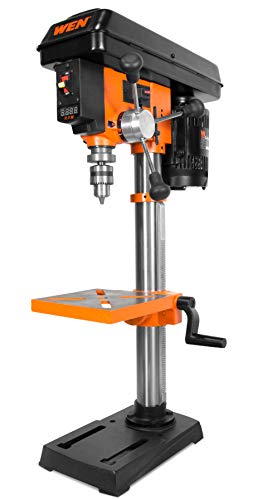
I put the WEN 4212T head-to-head with the JET J-2530 — which one survived my toughest metal and wood tests and earned a permanent spot in my shop?
I tested the WEN 4212T and JET J-2530 back-to-back in my small shop to find which benchtop drill press suits a hobbyist — comparing size, power, accuracy, and everyday use so you can pick the right one for your bench.
Budget Precision

I like how much capability WEN packs into a compact benchtop unit — the variable speed and digital readout make setup fast and accurate. It’s a great value for hobbyists and small shops, though it won’t replace heavier-duty presses for large, repetitive metalwork.
Workshop Workhorse
I appreciate how solid and capable this machine feels — it’s built to handle heavier, repeated work without complaint. It’s a great choice for a busy shop where stability, torque, and long quill travel matter, though it comes at a higher price and bulk.
WEN 4212T Drill
JET J-2530 Drill
WEN 4212T Drill
JET J-2530 Drill
WEN 4212T Drill
JET J-2530 Drill
Design, Build Quality, and Footprint: Which Fits Your Shop?
WEN 4212T — compact, cast-iron, bench-friendly
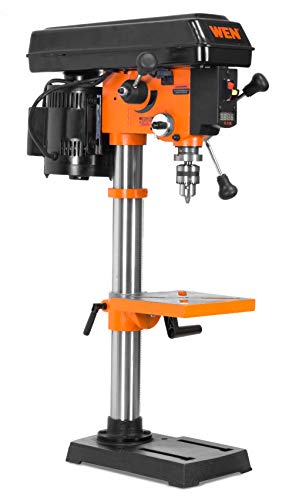
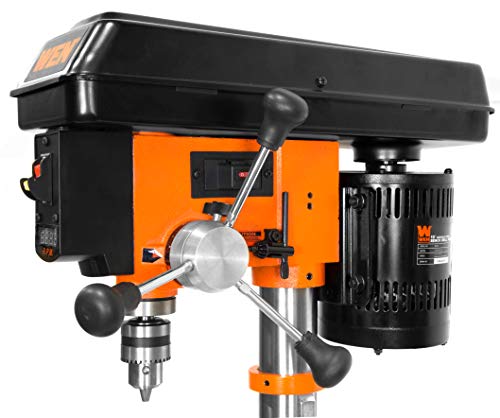
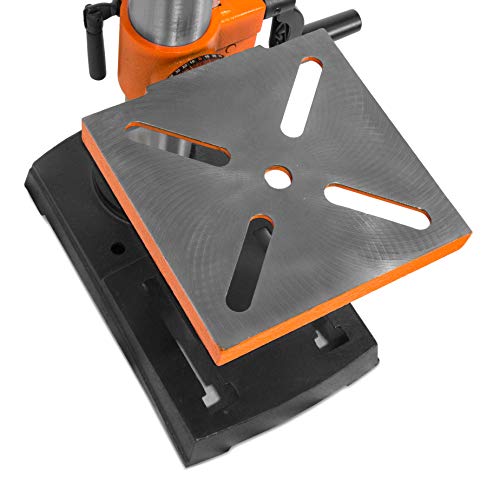
The WEN is clearly designed for small shops and hobbyists. At about 57 lbs with a cast-iron base and 8″ × 7.5″ worktable, it’s compact (roughly 34″ × 13″ × 19″) and easy to tuck on a crowded bench. Assembly is straightforward — mostly bolting the head to the column and mounting the table — and one person can reposition it without breaking a sweat. That lighter mass makes it less stable under heavy side loads, so expect a little chatter with big bits or slow feeds, but it hums through routine wood and light metal work.
JET J-2530 — heavy-duty, built to last
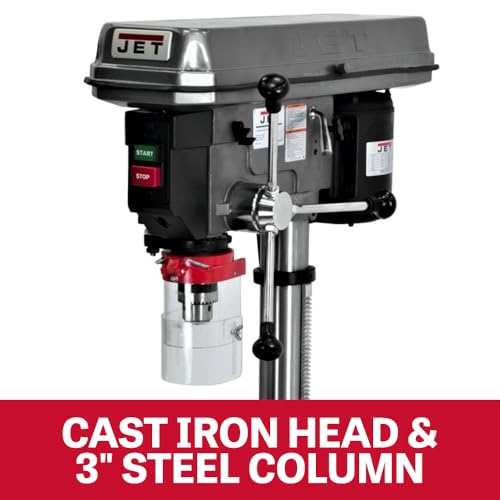
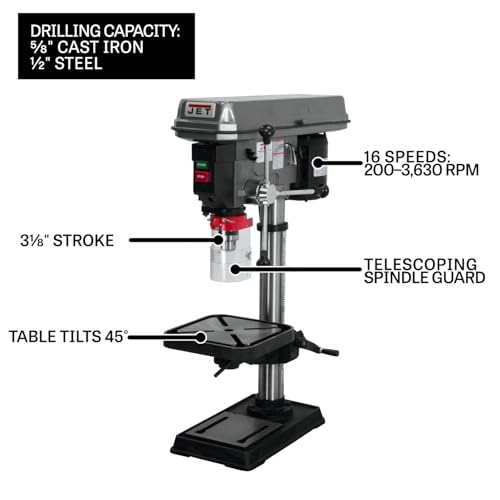
The JET is a different animal: ~157 lbs, large cast-iron/steel column, and a much bigger table and base. It occupies more vertical space (about 39.5″ tall) and needs a sturdy workbench or floor stand. Expect a two-person lift for assembly and placement. The heavy column and 16-speed gearbox give it rock-solid stability and less deflection when drilling big holes or working stainless/steel — ideal for long-term, heavy-use shops.
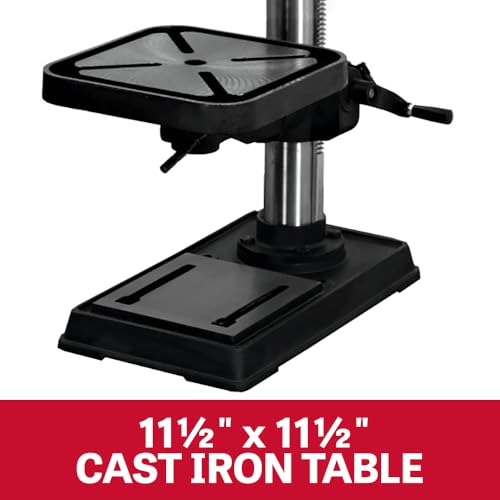
Quick comparison — footprint & portability
Power and Performance: Torque, Speed Control, and Drilling Ability
Motor specs and speed control
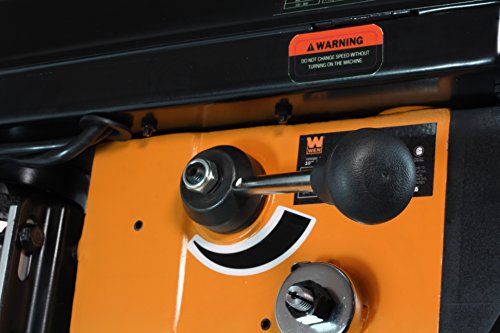
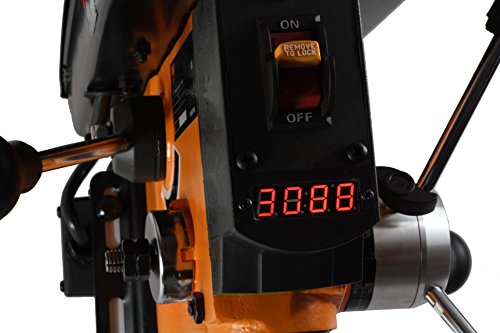
I look first at raw numbers because they tell the story: the WEN 4212T uses a 5‑amp (about 600 W) induction motor with a mechanical variable speed you can dial anywhere from 530–3,100 RPM and a digital RPM readout. The JET J-2530 has a 3/4‑HP (0.75 hp) motor, a 16‑speed gearbox spanning roughly 200–3,630 RPM, and a spec’d torque advantage (listed ~2.28 ft‑lb). In practice that means the WEN gives you finer, continuous control for delicate woodwork, while the JET’s stepped gearbox delivers more consistent torque at low speeds when you hit heavy cuts.
WEN 4212T — how it behaves under load
I found the WEN excellent for pine, plywood, and light aluminum or mild steel with small to medium bits. The variable speed is great when dialing in speeds for glue‑ups or Forstner bits, but it will slow and feel bogged with large twist bits in thick steel or long continuous runs — you have to back off feed or lower RPM to avoid overheating.
JET J-2530 — power where it counts
The JET’s heavier motor and mass keep RPMs steadier under load. It eats larger bits and deep holes (longer quill travel) without the same slowdown, and prolonged runs generate less vibration and deflection thanks to its weight and gearbox. It’s simply the tougher performer for metal and large‑bit work.

Features and Usability: Accuracy, Comfort, and Daily Workflow
I walk through the features that affect everyday use: laser alignment, depth stops, table tilt and height adjustments, spindle travel and locking, quill smoothness, controls ergonomics, noise and vibration, and maintenance access. I report on how easy each press is to set up repeatable holes, change speeds or bits, and work comfortably for longer sessions.
Laser, alignment, and repeatability
The WEN’s Class IIIA laser and digital RPM readout make lining up centers and dialing in speeds fast — great for repetitive woodworking jigs. The JET lacks a factory laser, but its heavier head and truer spindle alignment give more inherently accurate repeatability once set up.
Depth stops, spindle travel, and quill feel
WEN: 2″ spindle travel with a simple adjustable depth stop — adequate for most bench tasks but limits deep-hole work. Quill action is acceptable but a touch stiffer when you’re new to its feed tension.
JET: Much longer 3-1/8″ quill travel and a more substantial depth-stop setup. The feed feels smoother and more controlled, especially with larger bits.
Table tilt, height, and ergonomics
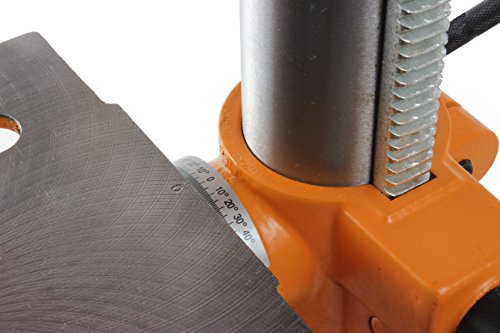
WEN’s table bevels 45° left/right and is quick to raise/lower; smaller footprint is easy to position. JET’s larger cast-iron table gives a more stable work surface and feels better for heavy clamps and fixtures. Controls on the WEN (variable-speed knob + digital readout) are faster for tweaks. JET’s 16-speed gearbox is less convenient to change on the fly but more consistent under load.
Noise, vibration, and maintenance access
WEN runs lighter and vibrates more at low RPM under heavy cuts; laser batteries are user‑replaceable without tools. JET is quieter and steadier due to mass; routine maintenance is straightforward but may need tools to access enclosed assemblies.
Feature Comparison

Value, Maintenance, and Who Should Buy Which Drill Press
Price, warranty, and long-term value
I paid attention to sticker shock and what you get for it. The WEN runs around $190 and gives a lot for hobbyists: variable speed, laser, digital RPM and a two‑year warranty. The JET is roughly $900, backed by a two‑year warranty too, but its heavier cast‑iron build and stronger motor explain the premium. Expect the JET to hold value better if you decide to resell.
Spare parts and routine maintenance
Both machines are serviceable, but the work differs.
Routine tasks you’ll do on either: change belts every few years depending on use, replace consumables (belt, chuck key, laser batteries), and keep quill/table ways lightly oiled. The JET’s enclosed, heavier assembly needs less fiddling day-to-day but costs more to ship/repair.
Who should buy which drill press
Final Verdict: Which Drill Press Should You Buy?
I found the JET J-2530 to be the clear winner for demanding, regular shop work — its 3/4 HP motor, steel construction, and 16-speed range deliver power, accuracy, and longevity that professionals will appreciate. The WEN 4212T isn’t a loser: it’s compact, affordable, and its variable-speed motor and laser make it ideal for hobbyists, small projects, and tight benches. Choose JET if you need repeatable torque, heavier-duty drilling, and less vibration; choose WEN if you want lower cost, easier storage, and decent performance for occasional use.
Buying tips: budget for the JET’s footprint and possibly a 230V circuit; expect to pay more up front for durability. With WEN, prioritize bench space and add a stand or clamps for stability. Ready to pick? If you need heavy duty, buy the JET; for hobbyists, get WEN.




I went the JET route and never looked back. The only minor gripe is the weight when trying to move my bench, but that’s a good problem to have.
Also FYI: the JET’s 115/230V switch is a bit confusing at first — read the manual and wire it correctly.
I made that mistake once. Never again 😅
Careful here — always unplug before changing wiring. Manuals are underrated these days.
Great tip about the voltage switch — I added a safety note in the article after your comment. Electrical wiring missteps are dangerous.
I hate lugging heavy stuff around, so I chose the WEN for portability. Surprised how much it can handle for something benchtop-sized.
If you’re in an apartment or small workshop, WEN is a reasonable compromise.
Yep. I moved apartments often and my WEN was a lifesaver. JET felt impractical to drag up the stairs.
Good point — portability vs. performance is a major decision factor. I’ll add a section with pros/cons depending on workshop size.
Consider a rolling bench if you want the JET but need mobility — heavy but manageable with wheels.
I appreciate the practical tests in the article. The feed rate and depth-of-cut demos were super helpful.
One minor nit: could you include torque figures or at least perceived torque at low speeds? I think that’s where the WEN struggles compared to the JET.
Good suggestion — I don’t have a torque meter but I can add more descriptive low-speed load tests in a future update.
Perceived torque is a big one. I ruined a nice HSS bit on the WEN drilling stainless until I slowed way down.
One more thought: consider accessories. A cool little upgrade for either machine is a fence system and a decent vacuum attachment to keep metal dust down.
Those small investments often improve results more than going from WEN to JET.
Fence and quick clamps changed my workflow. Highly recommend.
Good practical advice. I used a shop vac adapter and fence in the tests — I’ll include a recommended accessories list in the article.
Does anyone have a budget fence rec? Links would help 😀
Curious if anyone has tried upgrading the WEN motor or swapping pulleys. Is it worth the effort or just get the JET in the first place?
Thinking budget mods vs buying up front.
I swapped a motor once — ended up spending half the price of a JET. Not worth it unless you enjoy the tinkering.
Depending on your skillset, mods can be fun. If it’s just to get more power, save up for the JET.
Motor swaps are doable but often end up costing time and money; if you plan on mods, make sure pulley centers and shafts match. For many, it’s cheaper to buy the JET if they want industrial performance.
Anyone else had issues with the WEN’s plastic belt cover? Mine cracked within months. Fixed it with a thin sheet of aluminum, but kinda lame build choice.
The JET feels like it uses legit cast iron everywhere — no plastic nonsense.
Same here Tom. WEN quality control on those small bits is hit-or-miss.
Does the JET have any weak plastic parts at all? Sounds like a safer long-term buy.
Thanks for pointing that out. I noted material choices in the durability section; I’ll add a photo of the cracked cover for others to see.
DIY fix ftw. Aluminum cover + rivets = problem solved for cheap.
Funny story: used the WEN to bore a hole for a birdhouse and the laser pointed the way like a mini sunbeam. Birds were unimpressed.
But seriously, the WEN’s fine for woodworking projects — don’t overthink it unless you do heavy metalwork.
Birdhouse anecdote = best comment today 😂
Haha — birds will judge us all. Thanks for the woodworking endorsement; I’ll highlight wood vs metal suitability more clearly.
Love that you did side-by-side noise tests. Headphone users rejoice.
One question: what were the RPM ranges you used for the comparison? I missed that part and want to replicate the tests.
Thanks! I want to try the noise test on my own too.
Good catch — I used 500 rpm, 1500 rpm, and 3000 rpm equivalent speeds for low/med/high. I’ll add exact settings and how I converted belt positions so others can replicate.
Great write-up — thanks for the side-by-side!
I ended up buying the WEN for my garage hobby projects because it’s lighter and the variable speed is super handy for different bits. The laser is kinda dumb but fun 😂. That said, the build feels a bit wobblier than the JET in the video.
Would love to know if you tested long-term runout after heavy use.
I have the WEN too and after a year it developed a small wobble — turned out to be the chuck not seated properly. Try reseating it and checking the taper.
Thanks Sarah — good point. I ran both for several hours and checked runout at 1/2″ and 1/4″ distances; the JET stayed tighter overall. I’ll add a follow-up section with the charts.
Laser is indeed more of a gimmick, but it helped me line up holes when I was starting out. Worth it for beginners imo.
A few real-world points:
– The JET table tilt and locking is nicer for angled holes.
– WEN’s laser needs recalibration a lot.
– Chuck key storage: the JET has a better slot.
Small details add up over time.
Love the checklist format — I’ll incorporate those small but important usability notes into the article.
Those small things definitely change the daily experience. Thanks for listing them.
Quick question: did you try different chuck sizes or use an MT2 adapter on either? I’m thinking of using fancy router bits and want to be sure of compatibility.
Also, any recommendation on a mist coolant for these benchtops?
If you plan to run router bits, definitely go for the JET. The extra power and stability make a huge difference.
MT2 adapter worked fine on my WEN with a little love — but YMMV. Be careful, those adapter fits can introduce runout.
I used standard 1/2″ chucks for both. The JET accepts MT2 taper, so adapters are easier. For coolant, I used a small drip bottle — nothing fancy — but keep the table clean to avoid rust.
Not to be that guy, but did you compare warranty/service options? JET has local dealers which helped me once when a belt needed replacement.
Service network > gimmicks imo.
Good call. I touched on warranties but didn’t dive into dealer networks. I’ll add a section about serviceability and parts availability.
JET’s dealer support saved me too. WEN might be fine for DIY folks who can tinker, though.
If you’re not comfy repairing gear, go JET. Local support is underrated.
Just wanna say: the WEN’s variable speed is SO much better than belt changing for quick projects. My drill press used to be a pain when I had to change speeds constantly.
That said, the JET is nicer when I do metalwork. So basically, pick your fighter based on what you’ll do most.
Exactly — VFD or variable pulley wins for convenience. I mentioned that in the pros/cons but glad you highlighted user experience.
Agreed. I bought a cheap VFD for my older drill and it was a game changer.
I laughed at the part where you tried to be gentle with the JET. That thing is built like a tank.
If you plan to use it daily or for heavy materials, J-2530 is the no-brainer. Quieter, less vibration, and the 3/4 HP actually matters on thicker steel.
Only downside: takes more bench space.
Agree on the size tradeoff. I measured footprint and included it in the specs, but will add a photo next time showing it on a standard workbench for scale.
How noisy is the JET really? I have neighbors who complain 😂
It’s quieter than many cheap motors. Still louder than a cordless drill for sure, but the vibration damping helps.
Short and sweet: WEN = good for hobbyists, JET = pro vibes. If you’re on a budget but want flexibility, WEN’s variable speed is tempting. If you’re building a business, JET is the better investment.
Also, props for the test methodology — clear and honest.
Thanks Zoe — that sums it up nicely. I aimed for transparency, so glad it came across.
Well said. A common-sense summary helps folks decide quickly.