

Big tanks, quiet motors, and nerd-level specs — which compressor actually earned a spot in my shop?
I ruined one air tool too many before I learned to pick the right compressor. It’s not glamorous, but the right stationary air compressor keeps projects moving, reduces tool wear, and saves you from mid-job panic.
I looked at uptime, CFM, noise, rebuildability, and long-term serviceability. I favor units that work hard day after day without drama — whether that’s a thunderous two-stage for production or a quieter 7.5 HP for a busy shop.
Top Picks





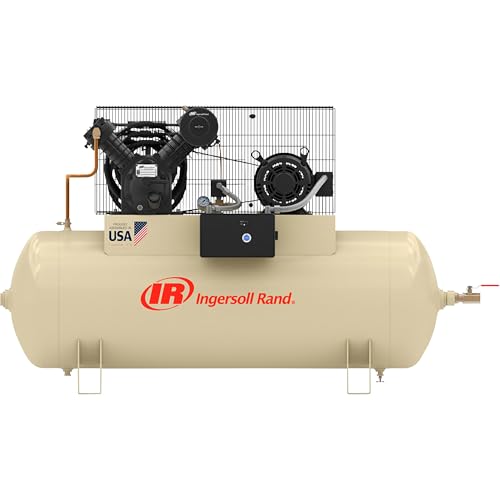
Ingersoll Rand 10 HP Two-Stage Compressor
This Ingersoll Rand two-stage compressor is engineered for continuous heavy-duty industrial use, delivering robust CFM at high pressures with legendary Type-30 durability. It’s an investment, but for production environments the uptime and build quality justify the cost.
Why I consider this industrial-grade
I chose this Ingersoll Rand Type-30 10 HP compressor for shops and plants that cannot tolerate downtime. The Type-30 legacy speaks to decades of iterations and field-proven reliability; in practical terms that means longer pump life and predictable maintenance cycles.
Important specs and advantages
For production environments, these elements reduce bottlenecks and give predictable performance across long shifts.
Considerations before buying
This isn’t a plug-and-play garage compressor — you’ll need a properly rated electrical service, likely hardwired to a 200V/3-phase or as specified, and space for installation. Routine professional maintenance and a startup kit (when recommended) extend the pump warranty and reliability.
Bottom line
If your operation depends on consistent high-pressure air delivery day after day, this Ingersoll Rand is an investment that pays off through uptime, pump longevity, and dependable output.
Ingersoll Rand Type-30 5 HP 80 Gal Compressor
The Type-30 5 HP Ingersoll Rand is a benchmark for shops that prize longevity and rebuildability. It’s built for decades of service and backed by broad parts availability, making it a favorite for long-term installations.
Why this classic still makes sense
I included the Ingersoll Rand Type-30 because it represents a dependable, time-tested approach to reciprocating compressors. For shops that value serviceability and predictable longevity, the Type-30 remains a solid bet — many shops run these pumps for years with scheduled maintenance.
Core strengths
Those characteristics translate into lower lifecycle cost and predictable repair paths when compared to disposable-budget units.
Practical notes
This compressor is not a quiet box of tricks — it’s built for durability and performance rather than stealth. If your priority is maximum longevity and you have the shop infrastructure for proper installation and maintenance, the Type-30 is hard to beat.
My bottom line
For a small machine shop or automotive repair business that plans to keep a compressor for the long term, this Ingersoll Rand 5 HP Type-30 remains an excellent professional choice.
DEWALT 60 Gal Vertical 5 HP Compressor
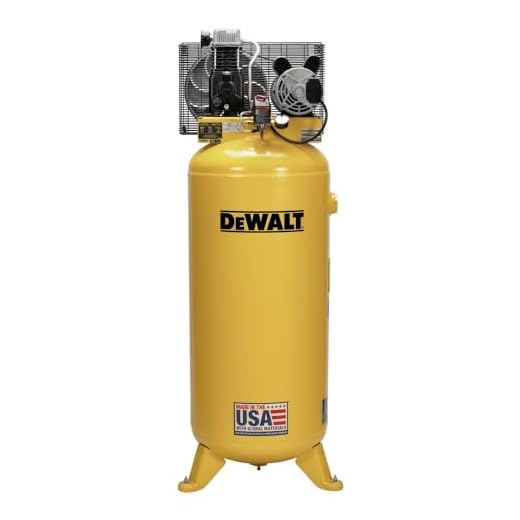
I value this unit for its combination of high CFM delivery and an ASME-certified 60-gallon tank that minimizes downtime. It’s a workhorse for busy shops that need reliable, sustained air for multiple demanding tools.
Who I recommend this for
I recommend this compressor to professional shops and small industrial operations that need a reliable, high-flow source of compressed air. If you run multiple pneumatic tools or work with demanding applications like sandblasting, paint booths, or air-hammers, this unit’s output and tank size keep workflows moving without frequent stops.
Key features and benefits
These specifications translate into practical advantages: I can run high-demand tools for longer stretches without seeing tank pressure fall off quickly, and the vertical layout lets me fit a lot of capacity into a smaller footprint.
Practical impressions and limitations
I appreciate the quieter-than-expected 70 dB rating — you can work near it without it being unbearable. That said, you must plan for a 240V supply and adequate floor anchoring; it’s heavy and intended as a stationary machine. The oil-lubed pump gives longevity but also means periodic oil changes and maintenance checks, so it's not a zero-maintenance solution.
Real-world usage notes
Overall, I find this DEWALT to be a high-performance, dependable compressor built for shops that demand continuous, high-volume air delivery.
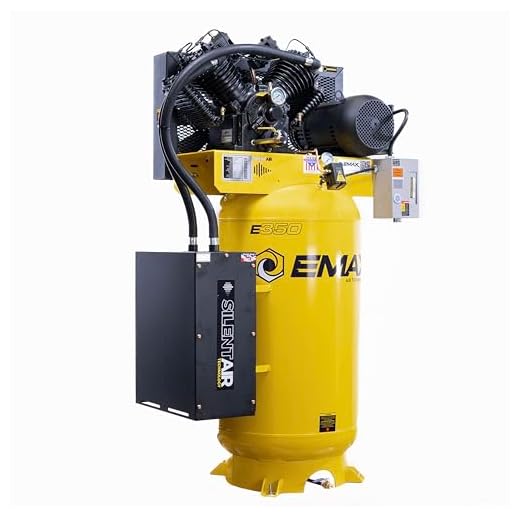
EMAX E350 7.5HP 80 Gallon Silent Compressor
I like this EMAX for its combination of strong 31 CFM output and noise-reduction features that make it friendlier on the shop floor. It’s a compelling option when you need both power and a quieter working environment.
Who benefits most from this model
If you need high CFM output but want to minimize noise impact on the shop, this EMAX E350 is a strong candidate. The 7.5 HP, two-stage arrangement and an 80-gallon tank make it ideal for production areas where both airflow and workplace comfort matter.
Strengths and features
The net effect is a compressor that keeps tools happy while making the work environment more tolerable.
Practical considerations
Cost is higher than many simple reciprocating units, but you’re paying for lower noise and robust airflow. Confirm voltage and configuration with your supplier before ordering because these machines can come in several electrical variants that need appropriate service.
My takeaway
For shops that care about operator comfort without sacrificing output, this EMAX delivers a rare balance of volume and quiet in a single package.
Campbell Hausfeld 80 Gal Vertical Compressor
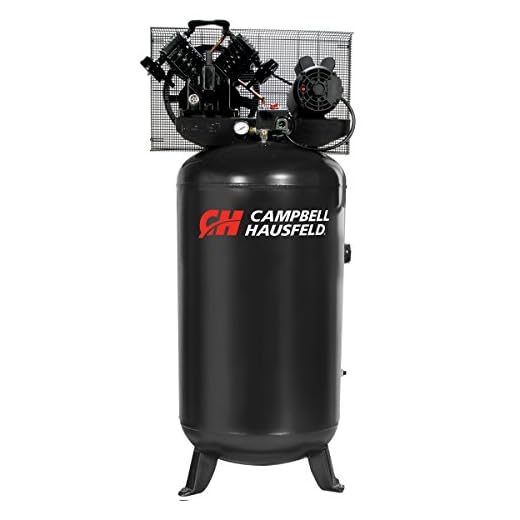
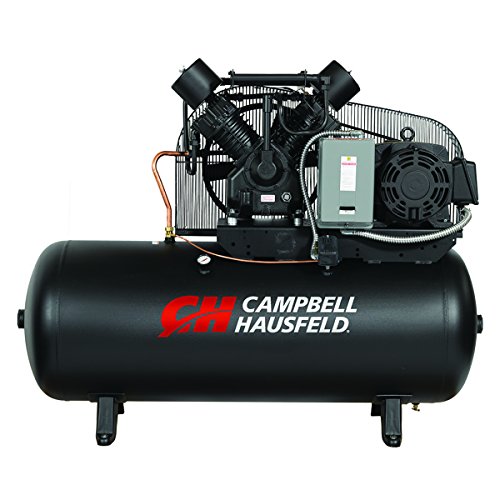
This Campbell Hausfeld unit is a solid, time-tested vertical compressor that balances flow and tank size for demanding garage and small shop environments. Its cast-iron pump and longevity reputation make it a practical pick when uptime matters.
Who this is for
I recommend the Campbell Hausfeld 80-gallon vertical compressor to professionals and serious hobbyists who want a long-lived, dependable air source. The 5 HP motor and a 2-cylinder cast-iron pump are built for durability, which pays off in continuous or frequent-use environments.
Standout attributes
Those features mean fewer pressure-related interruptions and lower long-term maintenance compared to lighter-duty compressors.
Practical considerations
Noise and size are the two main tradeoffs here: the unit runs louder than some modern, muffled designs and it’s sizable, so plan installation and vibration isolation accordingly. I also appreciate the 3-year warranty — it reflects the manufacturer’s confidence and offers real peace of mind.
Final take
If uptime, durability, and CFM matter more than sticker price or absolute quiet, this Campbell Hausfeld is a sound investment for a busy shop.
DEWALT 60 Gal Vertical 3.7 HP Compressor
This DEWALT 60-gallon, 3.7 HP compressor balances price and capability for a busy garage or small shop. It gives solid airflow for common pneumatic tasks while keeping maintenance straightforward with an oil-lubed system.
A good fit for pros and serious hobbyists
I picked this DEWALT 60-gallon compressor for folks who need a dependable, everyday shop machine without stepping up to the largest industrial units. The 3.7 HP motor and 11.5 CFM at 90 PSI make it capable of running standard impact guns, paint sprayers, and sanding tools for routine projects.
What it offers
These features result in a versatile machine that’s well-suited for garages where heavy but not continuous industrial duty is required.
Real-world considerations
Noise is the most common complaint — the unit can be loud during startup and under load, so I suggest planning for sound attenuation or placing it in a separate compressor room where possible. Also, because it’s an oil-lubed compressor, regular oil changes and filter checks will extend service life.
My recommendation
If you want a reliable 60-gallon compressor that’s friendlier on budget than larger 5–7 HP units but still delivers strong mid-range performance, this DEWALT is a sensible choice.
VEVOR 80 Gallon Oil-Free 6.5HP Compressor
This oil-free 80-gallon compressor impresses with fast recovery and high SCFM for the price, making it attractive for budget-conscious shops. Build quality and long-term reliability are mixed across reports, so I view it as a strong value if you’re willing to accept some tradeoffs.
Why I picked this as a value option
I chose this VEVOR 80-gallon oil-free compressor because it delivers strong performance numbers — 15.5 SCFM at 90 PSI and a large tank — for a price that undercuts many incumbents. Oil-free designs are attractive in finish-sensitive environments since they remove contamination risk and simplify maintenance.
Features and what they mean to you
In practice, that means you can paint or run multiple tools in short bursts without the tank pressure dropping below usable levels.
What to watch out for
While the spec sheet is very compelling, my read of user feedback shows variability: some owners report quiet, long-lived service while others hit noise or reliability issues after moderate use. If you choose this model, I recommend a careful inspection on delivery and planning a break-in period to verify any unusual noises or leaks.
Practical advice
VEVOR 80 Gal 6.5HP 3-Phase Oil-Free Compressor
This VEVOR 80-gallon oil-free compressor gives strong SCFM and a very large tank in a commercial-oriented package. It’s a sensible pick for businesses with three-phase power that want oil-free air at a competitive price, but check installation needs carefully.
Who should consider this VEVOR
I recommend this particular VEVOR 80-gallon model to commercial shops and light production facilities that have three-phase power and want an oil-free supply. Oil-free compressors are especially useful in paint booths, labs, and other environments where oil carryover is unacceptable.
Key specs and how they help you
For day-to-day commercial tasks, these translate to cleaner output and less worry about downstream filtration for sensitive processes.
Caveats and installation advice
This unit is primarily built for 3-phase service; if your shop runs single-phase, budget for a proper converter or look for a single-phase variant. As with other non-mainstream brands, inspect the machine at delivery and test for unusual noise or early defects, and consider an extended inspection during the warranty period.
My conclusion
If you can accommodate the power requirements and want oil-free air at a large capacity, this VEVOR is an economical choice. I’d pair it with a good post-filter and a measured inspection routine to get the best long-term performance.
Klutch 60 Gal 3.7 HP Vertical Compressor
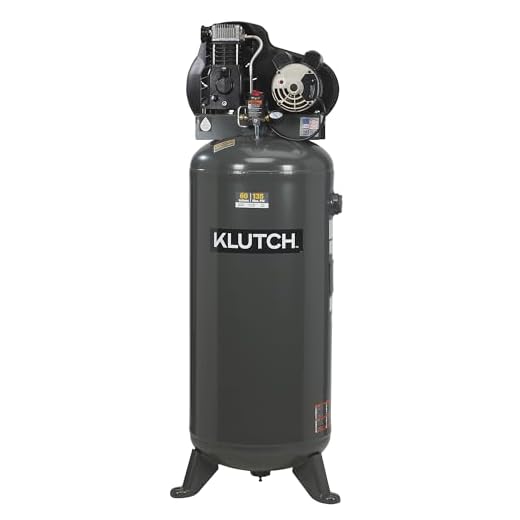
This Klutch compressor gives surprising capability for the money with 9.3 CFM at 90 PSI and a compact vertical profile. It’s a great budget pick for woodshops and hobbyists, though you should inspect for QC issues at delivery.
Ideal users and use-cases
I recommend the Klutch 60-gallon vertical compressor to hobbyists and small workshop owners who want a capable, budget-oriented compressor. For tasks like nail guns, brad nailers, small grinders, and intermittent spray work, the 9.3 CFM at 90 PSI performs well.
Notable qualities
These attributes make it a practical and compact shop unit.
What to expect on delivery
While many users praise its value and quiet operation, a subset have reported loose fittings or minor assembly adjustments needed after unboxing. I suggest a careful initial inspection, run-in period, and torque check on visible fittings.
Final thought
If you want a 60-gallon compressor without the premium price tag, the Klutch is a smart compromise — just be prepared to perform a basic quality check on arrival and keep to a regular maintenance schedule.
CooFel 80 Gal 6.5HP 2-Stage Compressor
This CooFel 80-gallon 2-stage compressor is targeted at commercial and industrial users who can supply 3-phase power. It offers strong flow and a large tank, but you’ll need to plan installation and power conversion carefully if your facility lacks 3-phase service.
Who the CooFel suits
I see this CooFel model as a practical choice for manufacturing lines or commercial shops with access to 3-phase power. In that environment its 6.5 HP 2-stage design and 80-gallon tank provide dependable pressure stability and fast recovery between tool cycles.
Key capabilities
These traits make it well suited to production tasks like nailing, spraying, or powering multiple simultaneous pneumatic tools.
Practical limitations and tips
Because this model is intended for three-phase supply, I recommend verifying site power or budgeting for a phase converter. Also, the documentation and dealer support for lesser-known brands can be lighter than for legacy manufacturers — inspect thoroughly on delivery and keep close records for warranty claims.
Bottom line
If you have three-phase power and need large capacity and respectable SCFM numbers at a competitive price, this unit is worth considering — but plan for installation and support needs up front.
Final Thoughts
My top pick for pure, no-compromise performance is the Ingersoll Rand 10 HP Two-Stage Compressor. If you run a production floor or any environment that needs continuous high-pressure, high-CFM air, this is the unit I’d install. It delivers industrial-level flow, legendary Type-30 durability, and the uptime that keeps a shop profitable. Buy it when you need maximum reliability and can support a true heavy-duty machine.
For most busy shops that want high sustained flow without committing to a massive industrial install, I recommend the DEWALT 60 Gal Vertical 5 HP Compressor. It pairs a 60‑gallon ASME-certified tank with strong CFM output, so you get fewer pump cycles and steadier air for multiple tools. I chose it as the best workshop workhorse — less installation hassle than a big two-stage and excellent day-to-day performance.
(If you need a quieter shop-floor option, the EMAX E350 is my go-to noise-friendly pick; and if oil-free air or budget is the priority, the VEVOR 80‑gallon units are strong value plays with tradeoffs.)








Great roundup — thanks! A couple questions about the Ingersoll Rand 2545E10-V: I love the idea of a two-stage 10 HP for production, but my shop’s electrical is a bit old.
– Does anyone here have experience wiring a 200V compressor like this?
– Should I expect to need a new service panel or just a dedicated circuit and contactor?
Also curious about recommended isolation mounts for vibration — my shop is above a finished room and I don’t want to rattle the ceiling.
I helped install a similar IR unit last year — electrician replaced a 60A breaker with a 100A disconnect and upgraded wiring. Worth the cost if you need uptime. And yes, isolation mounts made a big difference for us.
If the shop is above a living space, consider a short concrete pad + rubber feet and run flexible hose to decouple vibration. Also plan for maintenance access; these big units need clearance around them.
Good questions, Rachel. First, definitely have a licensed electrician check whether your shop has the correct voltage and available service; ‘200V’ specs often mean a specialty supply or a high-leg delta configuration in some regions. You will usually need a properly sized breaker, contactor, and starter (especially for 10 HP) and often a dedicated subpanel. For vibration, neoprene or spring isolation pads under the feet help — and putting the compressor on a concrete slab reduces transmitted noise. If you want, tell me your zip code and I can point to typical electrician requirements in your area.
Wow, who knew air could cost so much? 😂 Top-tier units read like ‘buy this or hire an airplane.’ For the average weekend warrior, is any of this overkill? I’m tempted to get the Klutch and call it a day.
I’m with you — saved a ton by getting a smaller unit and upgrading hoses/tools instead. 😄
Short answer: probably. For hobbyists and one-bay garages, budget verticals like the Klutch or the 3.7 HP DEWALT are usually sufficient. The industrial Ingersoll Rands are aimed at production where uptime and rebuildability justify the cost.
Quick question for folks: is single-stage vs two-stage a must if I’m running 2-3 pneumatic nailers + an impact wrench occasionally? The DEWALT 3.7 HP (175 PSI) and the 5 HP options both looked good in the article but I’m confused about what’s overkill vs needed.
If you’re not running continuous sanding or spray booths, a single-stage 60-gallon will probably do fine and save money.
Main thing to check is combined CFM demand at the pressure you use. Nailers are low-CFM; impacts need more. If your concurrent demand exceeds the compressor’s free-air delivery, you’ll see pressure drops. For 2-3 nailers and occasional impact, a 60-gallon vertical with decent CFM (like the 5 HP Dewalt or EMAX at ~31 CFM) will keep you happier than a small 3.7 HP on heavy use. Two-stage is more about efficient high-pressure continuous duty.
Also think about recovery time — fast-recovery oil-free models give good short bursts, but again, check CFM at 90 PSI.
I own the DEWALT 60 Gallon (5 HP) from your list and it’s been a beast for the last 2 years — solid CFM for sanding and impact tools. Downsides: it vibrates a bit and the drain valve is kinda cheap. If you’re doing panel work or a small fab shop it’s perfect though.
Which model year is yours? I’ve heard newer builds tightened up the mounts. Also, try a braided stainless drain line for longevity.
Thanks for the real-world input, Tom. Vibration is common on verticals; some users swap drain valves for higher-quality brass ones. Glad it’s holding up for you.
Long post: I picked up the EMAX E350 (7.5 HP, 80 Gal) after reading noise claims. ‘Whisper quiet’ is a stretch — it’s noticeably quieter than older industrial pumps we had, but still loud enough that you want hearing protection nearby. That said, the 31 CFM is legit; it handles simultaneous sanders and a brake system with hardly any pressure sag.
Pros:
– Good CFM and recovery
– Much quieter than iron-pump two-stages I used before
Cons:
– Heavier than I expected; needed a fork to get it into place
– Controls are a little spartan, and initial setup required fiddling with the pressure switch
Anyone else meter actual dB levels or have tips to further quiet it down? Also curious about filter upgrades.
Rent a forklift for a day. Moving those things is the worst part. 😂
FWIW, adding a longer muffler and insulated paneling around the room cut a lot of perceived noise for us.
I measured mine at ~78–82 dB at 3 ft depending on load — so ear protection is a must. Acoustic foam inside a cabinet helped but make sure you maintain airflow.
Thanks for the detailed field report, Evan. Your experience matches others: EMAX’s noise-reducing design helps, but any 7.5 HP package will still produce significant sound. For quieting: build an acoustical enclosure with ventilated baffles, use flexible connectors to decouple vibration, and place intake away from the enclosure to avoid recirculating warm air. Upgrading intake filters can help efficiency but check manufacturer recommendations to avoid restricting flow.
Stuck between the IR Type-30 5 HP 80 Gal and the Klutch 60-Gallon for my woodworking shop. I’m leaning toward Type-30 for rebuildability, but the Klutch is tempting on price.
Anyone had overall service/parts experience with the Type-30? Is it worth the premium long-term if I want to keep the compressor for decades? Also: how much difference does the extra tank size really make day-to-day?
Type-30 compressors (Ingersoll Rand) are famed for decades-long service and easy parts availability — many pros rebuild them multiple times. If you plan to keep the machine for years and value downtime minimization, the Type-30 is often worth the premium. As for tank size: bigger tanks reduce short cycling and give you buffer for peak demand (sprayers, large sanders). For woodworking with intermittent high-flow tools, the 80-gallon helps smooth pressure drops and reduces run time.
Agree with admin — if it’s a lifetime purchase, go IR. If it’s a stopgap, Klutch is fine.
If you’re handy, Type-30s are a fun project. If not, Klutch will get the job done and save cash for better tools.
Extra tank size also means slightly slower refill times between big jobs but less frequent motor starts overall — which is kinder to the motor.
I bought a rebuilt Type-30 used and it’s been rock-solid for 6 years. Parts were easy to find online.
I like the idea of oil-free VEVOR tanks for less maintenance, but man — the reviews online are all over the place. Some folks say great fast recovery, others complain about QC and loud rattling. Anyone run one in a production environment long-term? Any tips to keep them happy? ty 😅
Check warranty and local parts availability before buying — that’s where a lot of the stress comes from when something goes wrong.
Oil-free units are great for avoiding oil contamination and lower maintenance, but they can be louder and sometimes less robust long-term compared to cast-iron pumps. For VEVOR-type units: ensure proper break-in, keep intake filters clean, and mount on a level, solid surface. If you’re running continuous multi-shift cycles, I usually recommend a proven two-stage oil-lube for longevity.
VEVOR is great when you want cheap and fast air. Not great when you want peace of mind. 😉
I used a 80-gallon oil-free for about a year in a small shop. Recovery was fast, but after heavy use seals showed wear. Turned into my backup rather than the primary.