


Tiny presses, big punches — which Dake tool will save your knuckles (and your shop time)?
I have a press problem: I keep buying arbor presses. I swear it’s research. One minute I’m setting tiny bearings, the next I’m wrestling bushings that need more persuasion than I have fingers for.
Top Picks


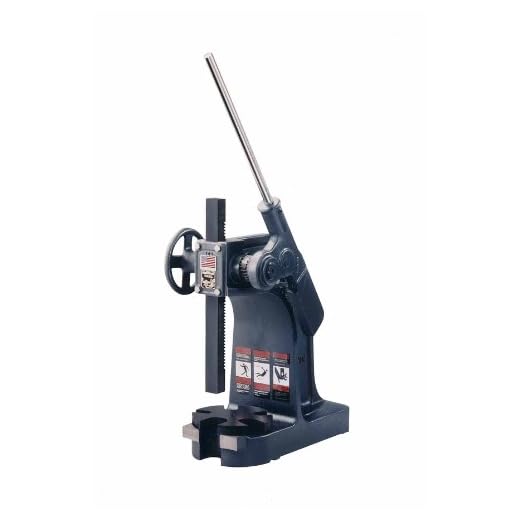

Compact 1-Ton Bench Arbor Press
This compact 1-ton single-leverage press delivers surprisingly refined performance and long-lived reliability. I’ve seen it praised for its American-made quality and tight, wobble-free operation — excellent for small press-fit, embossing, and light forming jobs.
Who should consider this press
I recommend this 1-ton arbor press for hobbyists, jewelers, PCB and insert installers, and any shop that needs a precise, low-capacity press. Its compact size makes it excellent for repetitive light tasks where alignment and smoothness matter more than brute force.
Features and what they mean in use
Real-world performance and value
Several users I know swear by this little unit as a "buy once" tool — it’s heavy for its size, with machined contact points that stay true under use. I’ve used it for embossing, installing threaded inserts, and light staking; it provides a confidence-inspiring, rigid press feel.
Limitations to accept
If you frequently need more than 1 ton, this isn’t the right tool. Also, the premium build means it costs more than many import alternatives; you’re paying for longevity and precise fit-up rather than the lowest upfront price.
Precision 1-Ton Solid Plate Press
This solid-plate 1-ton press gives a rigid, precise platform for repetitive small work like embossing and installing press-fit inserts. I value how tight the ram is and how well the mechanism holds alignment over thousands of cycles.
What sets the solid plate model apart
I picked this model whenever I needed a press that stays rock-steady — the solid plate top eliminates flex you sometimes see with slotted or removable plates. That stability is exactly what you want for precision tasks like embossing tin lids, installing press-fit inserts, or delicate stamping.
Useful features I rely on
How it performs day-to-day
For small production runs and repetitive manual operations, this press is a pleasure to use. I’ve pressed thousands of parts and the mechanism remains tight and consistent — users commonly remark about how it feels "like the first day" even after heavy use. The machined surfaces and fit-up reduce alignment headaches.
Limitations and buyer advice
This is not a heavy shop press — if you need more force or a larger work envelope you’ll quickly hit its limits. But for focused precision work, the extra cost over cheap imports makes sense: you get a dependable tool that keeps parts aligned and operators confident.
Dake 5-Ton Ratchet Floor Arbor Press
This floor-type ratchet arbor press is built like a small machine shop—solid cast iron, a ratchet lever and counterweight make repetitive heavy work much easier. I appreciate how it combines brute force with control for large pressing, broaching, or staking tasks.
What it is and who it's for
I reached for this floor-type ratchet press when I had jobs that small bench presses simply couldn't handle. It’s a purpose-built 5-ton unit designed for shops that need consistent, repeatable heavy pressing — think pressing bearings, staking large components, and heavy-duty broaching.
Key features I use most
Why I like it
In practice the ratchet device lets me set the lever angle for ergonomics while the handwheel advances the ram for precise seating. The counterweight makes repetitive cycles less fatiguing. The build feels industrial rather than consumer-grade; that shows up in how it holds alignment under load and how little maintenance it needs.
Practical notes and limitations
While I appreciate the capability, this press is large and heavy — you'll want a dedicated floor spot and a plan to move it when delivered. The price puts it out of reach for hobbyists who only need occasional light pressing; this is the kind of tool you buy for regular, heavy work and expect to keep for decades.
1.5-Ton Mid-Size Arbor Press
This mid-size 1.5-ton arbor press hits a sweet spot — more capacity than a small bench press while keeping a compact footprint. I like it for jobs where a little extra force is helpful without moving up to large floor presses.
A flexible mid-range option
I reach for this 1.5-ton press when a 1-ton unit feels borderline but a full floor press would be overkill. It’s versatile enough for a wide range of shop tasks — light forming, bearing presses, staking, and general assembly operations.
Practical features I use regularly
On performance and maintenance
The press is straightforward to maintain and operates with pleasantly smooth gearing. I’ve found it holds alignment and gives predictable outcomes on common shop jobs. Like any compact press, mounting height matters — pairing it with the right pedestal or bench significantly improves ergonomics.
Who should buy this
If you want a press that’s small enough for a bench but capable of handling tougher tasks than a 1-ton model, this is a reliable choice. Don’t expect it to replace a full-size floor press for heavy production work.
3-Ton Ratchet Leverage Arbor Press
This 3-ton ratchet press balances force and finesse well — the handwheel for fine positioning and the ratchet lever for final drive is a very practical combo. I find it ideal for medium-duty shop tasks where control matters as much as power.
Overview
I use this 3-ton ratchet leverage model when jobs require more oomph than a small bench press but not the footprint of a floor press. It’s a solid middle-ground tool for fitting, staking, pressing bearings, and light forming tasks.
Standout features
How it performs in real work
The most useful part is the combo of handwheel and ratchet: I can dial the ram down to the exact starting point with the wheel, then apply measured force with the ratchet. The ergonomics are thoughtful — the lever can be set where it’s comfortable rather than forcing awkward postures.
Tips and caveats
If you plan to use it standing for long periods, pair it with a proper pedestal (or bench) to get the ram at a comfortable height. It’s a versatile unit, but if you need 5+ tons regularly, step up to a floor-type model.
10-Ton Manual Hydraulic Bench Press
This 10-ton hydraulic bench press gives strong hydraulic force in a bench-sized package and is a go-to for heavier shop pressing tasks. I like the adjustable table and movable workhead, though assembly and pump effort can be a factor to plan for.
Why pick a hydraulic bench press
When I need more force than a lever arbor press but don't have space for a floor press, a 10-ton bench hydraulic press is my preferred choice. It’s ideal for bending, pressing, and forming parts that need controlled hydraulic power.
Notable design elements
Practical impressions
The hydraulic action makes heavy pressing tasks far less strenuous, and the adjustable table is useful when I switch between small and bulky items. That said, the hand pump gets hard to operate near full capacity, so plan your mounting height and leverage accordingly. I also recommend checking included parts carefully at delivery — reviewers have reported missing pieces and a not-always-perfect fit between photo and ship unit.
Bottom line and trade-offs
This press gives a lot of capability for the price point, but it expects a user who can assemble it and accept the physical limits of a hand pump. For frequent heavy hydraulic use, an electric or foot-pump upgrade is something I’d consider.
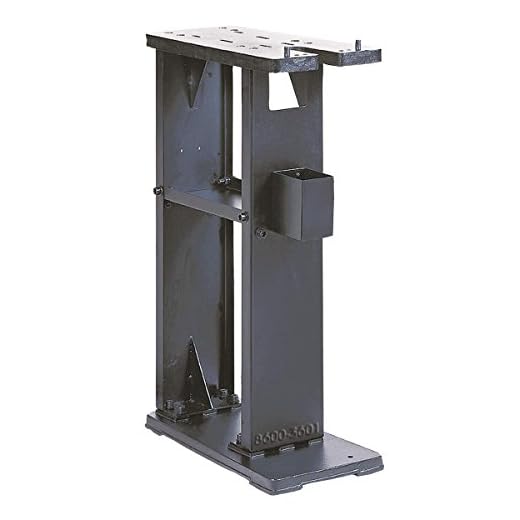
Pedestal Stand for Dake Presses
This pedestal is a straightforward, heavy-duty stand that gets your arbor press to a comfortable working height and provides a stable base for operation. I found it especially valuable when converting bench presses to floor-stand ergonomics.
Why a pedestal matters
When I moved a bench arbor press to floor use, the difference in ergonomics and stability was immediate. A purpose-built pedestal positions the press at a comfortable working height and absorbs reaction forces that would otherwise transfer to a flimsy workbench.
Key attributes of this pedestal
Practical considerations
The pedestal is a simple, effective accessory, but it does increase your shop footprint and is heavy to maneuver. I recommend planning the placement and having an assistant for installation. If you own a Dake 1 or 1-1/2 press, this is a logical match; if you have a different brand, double-check dimensions and bolt patterns before buying.
Final tips
Bolt the pedestal to a solid, level floor or a heavy, stable base if you expect to do high-force or precision work. In my experience, the pedestal transforms a small press into a dependable floor-mounted tool for routine shop operations.
Final Thoughts
If you want one press that covers the most common needs in a small shop, grab the Compact 1-Ton Bench Arbor Press. It's my go-to for precision work, embossing, and press-fit inserts — tight ram, wobble-free operation, and true bench-top convenience make it perfect for assemblies, light forming, and hobby or light-pro shop tasks.
If your work regularly needs serious force — broaching, heavy staking, or repeated large press jobs — choose the Dake 5-Ton Ratchet Floor Arbor Press. Its cast-iron build, ratchet lever, and counterweight give brute strength plus control for repetitive heavy work. Pair it with a sturdy floor space and you’ll stop fighting parts and start controlling outcomes.
FAQs
I start with the biggest job I'll do regularly and add a safety margin. Tiny bearings and embossing? 1 ton is plenty. Medium-size bushings or medium staking? Think 3 tons. Heavy broaching or automotive presses? Move to 5–10 tons. Don’t buy huge just for occasional tasks — the machine footprint, cost, and ergonomics matter.
Yes. The Compact 1-Ton and Precision 1-Ton Solid Plate models are designed for tight alignment and minimal wobble. That rigid ram and solid plate let you do repeatable embossing, inserts, and small forming tasks with confidence. I use them for delicate jobs where control beats brute force.
I like the ratchet lever for quick final drive on medium-to-heavy tasks, and the handwheel for fine positioning. The 3-Ton Ratchet Leverage model combines both so you can set things carefully and then finish with a controlled shove — great when precision and power both matter.
If you need hydraulic force but want a bench footprint, yes. The 10-ton gives smooth, powerful presses and adjustable table height. Be ready for a heavier assembly, occasional pump maintenance, and a learning curve if you haven’t used hydraulics before. I’d pick it for heavy, delicate compressions where mechanical presses struggle.
If you want floor ergonomics without buying a separate floor press, go for the pedestal. I find it turns a bench arbor press into a comfortable standing unit and adds stability for heavier ops. It’s an inexpensive way to improve posture and leverage during repetitive work.
Keep moving parts clean, lightly lubricate the ram and gear teeth, check fasteners for tightness, and replace worn keys or bushings early. For hydraulic units, monitor seals and fluid level. I set a quick weekly glance and a fuller monthly check for my busy presses.





Anyone using these presses for watchmaking/small restoration? I’m not doing heavy stuff, just delicate presses. I liked the sound of the Dake 00 and X models.
The 00 and X are frequently recommended for delicate, precise work like watch parts. The tight ram fit and low wobble are ideal for small tolerances.
Yep, watchmakers often prefer those small 1-ton models. Use soft jaws and light taps to avoid damage.
Question — do any of the small Dake models (00/X) support quick-change fixtures well? I’m doing a lot of small, repeat setups and want to avoid constant re-threading of stops.
Don’t forget to check ram clearance with added fixtures; it’s easy to overbuild a jig and lose working height.
I made a small quick-change plate with dowel locators that drops into the slotted table — saves ages on repeat runs.
Also consider magnet-based jigs for ferrous parts if you want extreme speed.
Both the 00 and X support thoughtful fixturing — slotted plates on some models help. Many users add a small T-slot table or quick clamps to speed changeovers.
Small nit: some Amazon sellers list the 00 and X dimensions differently. If you’re tight on bench space, measure twice — the working height matters, as the article notes. Otherwise, fantastic little presses.
Agree — dimensions can be inconsistent across sellers. We recommend verifying the product spec sheet or contacting the seller before buying.
Also consider the accessory plates — slotted vs solid can change how you fixturize workpieces.
Does anyone know if the Dake 1-1/2 ratchet model (3 ton) comes with the handwheel as standard from Amazon? The listing is a bit vague and I don’t want to miss the fine positioning feature.
Most Amazon listings for the 1-1/2 model specify the handwheel and counterweight included. Always check the product Q&A and photos — sellers sometimes omit accessories in the listing text.
Mine arrived with the handwheel. If anything’s missing, Amazon support was good about replacement parts for my order.
Double-check for ‘handwheel’ in the product title and images — the SKU matters. I accidentally ordered a different sub-model once.
Great roundup — I actually picked up the Dake 00 model last month for jewelery forming and it’s been stellar. Super precise and no wobble like the article says. Amazon shipping was fast too. Anyone else use it for embossing thin metals?
Thanks for the note, Sarah — glad the 00 worked out. Soft backing is a good tip; neoprene sheets or thin wood are great for delicate work.
Yep, also recommend checking the ram alignment before you start — saves a lot of headaches later.
I use the 00 for small brass embossing — works like a charm. Just make sure you have a soft backing so you don’t score the die.
Curious about the HHIP pedestal — anyone used it with the 1-1/2 model press? I need something sturdy but don’t want to pay extra for custom stands.
I paired the pedestal with a 3-ton ratchet press and it’s been rock-solid. Took about 30 mins to bolt together, no mods needed.
Yes — the HHIP pedestal fits several Dake sizes nicely. It gives a good working height and stability; just double-check bolt hole alignment before drilling.
I’ve been eyeing the 902006 5-ton ratchet press for a while. The price on Amazon was reasonable last week. Does anyone know how noisy the ratchet mechanism is under repeated cycles? I’m thinking of putting it in a small shop space.
I mounted mine on a concrete floor and it’s fine. If you bolt it to a thin wooden bench it can transmit noise more — that’s where padding helps.
Good question — the 902006 is physically robust and the ratchet has a solid click. Owners often say it feels satisfying rather than loud. Isolation pads under the pedestal can help if you’re sensitive to sound.
FYI the Amazon listing had a teardown guide link in reviews that helped me tune mine for quieter operation.
Also check the clearance and setup for the counterweight if you move it around a lot — that can rattle if not secured.
It’s not silent by any means, but it’s not obnoxious either. The cast iron dampens a lot of vibration. If it’s in the same room as people working, you might want ear protection during heavy runs.
Just a heads-up for first-time buyers: the weight of these presses is no joke. I underestimated shipping to my apartment and had to ask a friend with a truck. Measure doorframes! 😂
Yep, had to unbox the pedestal outside and wheel it in piece by piece. Not fun alone.
Good practical tip — always check shipping weight and delivery options. Some Amazon listings offer curbside only for heavy items.
Love the roundup — short and useful. One piece of constructive feedback: could you include a quick ‘best for beginners’ vs ‘best for pros’ note per model? I think that would help newcomers choose between the small Dake presses and the B-10 hydraulic.
Agreed — that would have helped me when I first bought a press.
Great suggestion, Kimberly — we’ll add a beginner/pro breakdown in an update. Quick summary: 00/X = beginners to light precision; 0/1-1/2 = intermediate; 902006/B-10 = pro/heavy duty; HHIP pedestal = accessory for ergonomics.
Minor gripe: the Dake B-10 manual could be clearer on hydraulic bleeding steps. I had to look up YouTube vids. Otherwise, that press is a beast. 😅
Same here, I watched two vids before doing the first bleed. Worth the extra 20 minutes to avoid air pockets.
Good feedback — many users supplement the manual with video walkthroughs. We’ll note that in a follow-up tip section.
I’m torn between the Dake X Model and the 0 Model. I do a mix of small jewelry inserts and some larger hardware press-ins. The review says X is better for embossing, 0 is mid-size. Any real-world comparisons?
I had the X and sold it to upgrade to the 0 Model — the extra working height made a big difference for occasional bulkier pieces.
If bench space isn’t an issue, the 0 Model gives more options. But the X feels a touch ‘tighter’ for tiny dies.
If you mostly do tiny embossing and repeatable precision, go X. If you need some extra clearance and occasional higher force, the 0 Model (1.5-ton) is more versatile. Think precision vs flexibility.
Long post because I promise it’s helpful:
I bought the Dake B-10 last year for some heavier bench pressing (bearing seating, big bushings). Assembly took me a weekend but once set up it saved hours on jobs I used to struggle with. The pump takes a bit to get used to and you’ll want to bleed it right after setup.
Pros: massive force, adjustable table.
Cons: heavy and not something you casually move around. Also consider the footprint for your shop.
Thanks for the detailed experience, Michael — the bleed and pump feel is a common theme. Glad it saved you time on bigger tasks.
I keep a spare seal kit and hydraulic oil on hand. It’s easy to order from industrial suppliers — saves downtime.
Also make sure your bench can handle the weight — B-10s can make flimsy benches wobble.
Did you source any extra seals or spares for the B-10? I’m thinking of buying but worried about long term maintenance.
LOL I thought ‘arbor press’ was some kind of woodworking arbor until I bought the 0 Model 😆
Now I’m making custom rivets and smile every time the ram drops. The 1.5-ton is a great middle ground.
Same story here. One press later and my toolbox looked like a small shop 😂
Ha! Glad it turned into a pleasant surprise. The 0 Model is a great gateway press for hobbyists stepping up from hand tools.
Welcome to the press club — soon you’ll be cataloguing dies like trading cards.
Has anyone tried the Dake 1-1/2 vs the 902006 for broaching? I’m leaning toward the 5-ton 902006 for brute force but the 3-ton 1-1/2 looks more controllable.
For broaching, if you need sheer force repeatedly the 902006 5-ton is the brute option. If you value controlled staged advancement, the 1-1/2 with handwheel + ratchet gives better finesse. It depends on part size and broach length.
I used the 1-1/2 for medium broaches and it let me dial in feed — saved ruined parts. If you ever need more force, you can step up, but the control was worth it for me.
I snatched the HHIP pedestal because my bench was too low. Pro tip: bolt the pedestal to the floor if you plan to run heavy cycles — it cuts down on creep. Also, the paint chips easily if you move presses on and off it, so be gentle.
Thanks for the installation tip, Monica — anchoring is a smart move for heavy or repetitive use.
Good call on bolting: I used anchor bolts and it drastically reduced movement during broaching operations.
I wrapped contact spots with rubber to avoid scratching the pedestal when swapping presses — helps with the paint issue.