


Which Greenlee crimper will save your back — and your afternoon?
One bad crimp can ruin a day on the job. I learned that the hard way when a single loose connection meant an extra three hours of rework.
I tested Greenlee’s top crimpers to find tools that actually make work faster and cleaner. I looked for POWER, PRECISION, and PORTABILITY — and yes, a little comfort for tired hands.
Top Picks




12-Ton Li-Ion Multi-Tool, 120V
I found this to be a powerful, full-featured crimping platform built for demanding jobs. It balances battery runtime, smart sensors, and high force to deliver consistent results across large connectors.
Overview
I consider this model a true industrial-grade crimper designed to handle large lugs and repetitive heavy work. It's intended for electricians and utility crews who need reliable, consistent crimps and advanced diagnostics right at the tool.
Key features and what they mean to me
I appreciated the smart feedback loop — when a crimp falls short I can immediately address the connector or die choice instead of discovering issues later in the field.
Benefits, limitations, and practical insights
This tool really shines on large copper and aluminum connectors where repeatability matters. The feedback features reduce rework, and the battery system makes it easier to run a full shift without hunting for chargers. That said, its size and weight mean it's not what I reach for in tight, overhead, or ladder-based tasks. It's an investment best justified if you regularly perform heavy crimps or need in-tool diagnostics.
Micro Crimp Kit 13.8mm Jaw, 110V
I found this micro crimp kit lifesaving for repetitive small crimps — it dramatically cuts hand strain and speeds throughput. It’s ideal for production work and detailed electrical assemblies.
Overview
This micro crimping kit combines portability with significant mechanical advantage — it’s the world’s first battery-powered crimper with PowerSense technology in its class. I use it when speed and repeatability are essential, such as in wiring harness assembly or boat/electrical panel production.
Why it works well in practice
Users often tell me this tool paid for itself in reduced labor fatigue and higher throughput. That matches my experience — for repetitive tasks, it’s a huge ergonomic win.
Practical tips and limitations
Dies are sold in multiple families, so confirm the jaw size and part numbers for your connectors. While the tool is versatile, its higher cost means it’s a better buy for pros or shops doing frequent small crimps rather than a one-off homeowner.
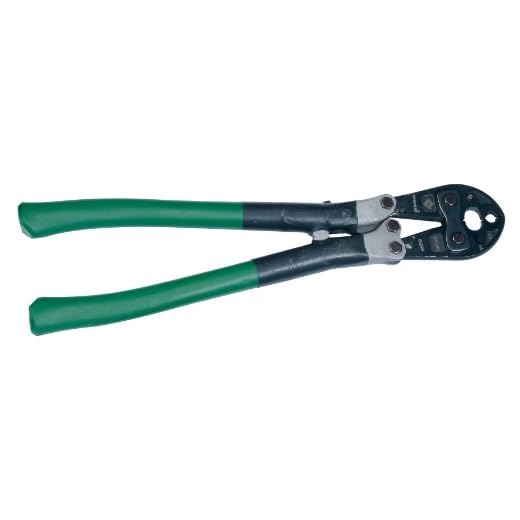
KP1022D Terminal Crimper with Dipped Grip
I rely on this tool for daily terminal work — it crimps insulated and uninsulated terminals cleanly and consistently. The dipped grips are comfortable and help during repetitive use.
Overview
The KP1022D is a simple, reliable terminal crimper that I reach for on residential and light commercial jobs. It’s a straightforward manual tool that balances cost, durability, and ease of use.
Practical features I like
Many pros tell me this is the workhorse pair they buy again and again — I’ve seen it perform reliably day after day without fancy electronics.
Use cases and limitations
This is ideal for residential wiring, automotive terminals, and general service work. If you’re doing production or larger conductor crimps, a powered or higher-tonnage tool will be more appropriate, but for everyday terminal work this model delivers dependable crimps at a very reasonable price.
Micro Crimping Tool Jaw Kit, 12mm
I saved time and energy rewiring confined spaces using the 12mm jaw kit — the LED light and one-handed operation really help. It’s compact yet powerful for small‑to‑medium connectors.
Overview
The 12mm jaw micro crimper kit is tailored for small- to mid-sized crimps where accessibility and speed matter. I reach for this kit during boat rewires and panel work that demands precise, repeatable crimps.
Standout features I rely on
One helpful tip: this 120 series uses a different die family than the 138 series, so double-check die compatibility before ordering replacements.
Practical considerations
The included charger and carrying case make it easy to keep the kit service-ready. For shop and field technicians who do many small crimps, it’s a substantial time and fatigue saver; occasional users should confirm die compatibility to avoid returns.
K111 Compact Hand Crimping Tool
I reach for this compact crimper when I need reliable crimps in tight areas or while working at height. It’s light, comfortable, and delivers consistent results without complicated mechanics.
Overview
The K111 is a compact hand crimper that’s become a staple in my kit for residential and light commercial work. It’s inexpensive, reliable, and designed to make small-lug crimps with minimal fuss.
Key features I value
I’ve used it on dozens of service calls; it’s the kind of tool that works consistently with little thought — tighten, crimp, and move on.
Benefits and limits
This is an ideal tool if you need a dependable crimper for smaller connectors and splices. It’s not intended for major feeders or large cable work, but for its intended range it performs exceptionally well and is a great value for both professionals and DIYers.
Syncro Rotation One-Hand Die Crimper
I like how the Syncro rotation simplifies die swaps and speeds up repetitive work. The color-coded and laser‑cut dies make matching grooves fast and reduce mistakes on the job.
Overview
The Syncro die-rotation crimper is designed for electricians who swap dies frequently and need maximum efficiency. I find the one-handed die rotation especially useful during production-like tasks or when working elevated where the other hand is busy.
What makes it different
For me, the time savings add up on jobs with many different connector types. The die-ID system cuts down on mistakes and rework.
Practical considerations
This tool is built to last with life testing beyond 10,000 cycles, so it’s a good choice for pros who crimp frequently. If you crimp only occasionally, the added convenience might not justify the price, but for busy technicians it’s a real productivity booster.
K425BG Overhead Service Crimping Tool
I find this tool robust and well-suited for crimping overhead service entrance connectors, splices, and taps. The fiberglass handles give strong leverage with improved durability over wooden alternatives.
Overview
The K425BG is a purpose-built manual crimper for overhead service entrance work, taps, and splices. I recommend it when you need mechanical advantage and robust durability for outdoor or service applications.
Features I appreciate on the job
For linemen or service techs working on overhead connections, the leverage and grooved jaws make consistent crimps more attainable without relying on powered tools.
When to choose this tool
If your work routinely involves overhead splices or entrance connections, this is a rugged and practical choice. It’s not the tool I’d carry for light panel work or tight enclosures, but for pole and outdoor service it’s a reliable option.
6-Ton Rotating Head Crimper, 120V
I appreciate the lightweight, in-line style and a rotating crimp head that makes awkward angles manageable. The LED work light is a practical addition for darker work areas.
Overview
This compact 6-ton crimper offers an in-line profile and a nearly full-rotation head that makes it my go-to when I need to crimp in tight or awkward locations. It’s targeted at technicians who prioritize access and agility.
Features I use most
When I’m working inside panel enclosures or behind equipment, the rotating head saves time and eliminates the need to reposition connectors repeatedly.
Benefits and limitations
It’s a practical tool for service calls and installations that require mobility and access. Just be aware you’ll need to purchase compatible dies separately, and this unit isn’t meant to replace heavier, higher-tonnage tools on very large cable crimps.
Dieless Crimper 8 to 4/0 AWG, 22.4"
I appreciate the dieless design for quick, adjustable crimps on a wide range of conductor sizes. It’s a straightforward hand tool that’s easy to adapt in the field without swap‑out dies.
Overview
The dieless crimper is a versatile manual tool I use when I need to crimp a broad range of conductors without carrying multiple die sets. It’s popular for field repairs and installations where flexibility matters.
What I like about it
This tool is convenient when I need a single tool that handles many sizes; the dieless approach avoids die logistics on multi-connector jobs.
Practical limitations
While it’s flexible, dieless crimps can lack the repeatability and certification needed for certain utility or critical applications where die-based, certified crimps are required. For repair, maintenance, and general installations it’s a reliable, cost-effective choice.
6-Ton In-Line Bluetooth Crimper
I like the combination of Bluetooth communication and an LED display for quick diagnostics on the job. The one-handed design keeps work efficient, though some buyers reported battery/packaging confusion.
Overview
This 6-ton in-line crimper is built with modern jobsite demands in mind — small enough to carry easily, but smart enough to report performance data back to your phone. I recommend it for tech-focused electricians who value real-time feedback.
What stands out
I used the display on a few jobs and found it helpful for spotting low-power cycles before they caused bad crimps.
Practical notes and drawbacks
The tool brings good balance between portability and intelligence, but be cautious about product listings: some customers received the tool without the expected batteries or heads. If you buy, double-check the included components. Overall, it’s a solid pick when you need a smart, compact crimper.
Final Thoughts
I recommend the 12-Ton Li-Ion Multi-Tool as my top pick for heavy industrial crimping. It delivers the high force and smart sensors needed for large connectors and long runs, with battery runtime that keeps you on task. Choose this if you do industrial splices, large lugs, or long production runs where consistent, high-force crimps matter most.
For repetitive small work and production environments, go with the Micro Crimp Kit 13.8mm Jaw. It dramatically cuts hand strain and speeds throughput, making it ideal for detailed electrical assemblies, panel work, and any job that needs fast, repeatable micro crimps. If you spend hours doing small terminals, this one will save your hands and your schedule.







Anyone know if batteries are interchangeable between the E12CCXLX11 and the EK628LX11? I don’t want to carry two types of packs on the truck if I can avoid it. Also, what about runtime differences under heavy loads?
Ugh batteries. The one thing that makes me nostalgic for corded tools 🤦♀️
If battery logistics are a headache, consider leaning toward the lighter inline EK628 for most jobs and renting the E12 for heavy days.
Also check charger specs — some chargers accept multiple pack sizes, but it’s still better to match manufacturer recommendations to avoid voiding warranties.
Correct — not interchangeable. I keep two smaller packs for the EK628 and one big spare for the E12. If you can, standardize on one platform across your crew to simplify chargers.
They are different platforms — E12 packs are for the 12-ton series and EK628LX11 uses a different Li‑Ion form factor. We mentioned some buyers reported battery/pack confusion for the EK425LX as well. Runtime: the E12 will typically last longer under heavy loads because of its larger pack and optimized motor gearing, but carrying at least one spare for either model is recommended.
K09-SYNCRO is underrated. The one-handed die change actually saves me minutes on every splice run compared to older crimpers. Color-coded dies = fewer mistakes. If you’re doing lots of repetitive die swaps, it’s worth the extra $$$.
So far no fading, but I do store them out of direct sunlight. Die wear is minimal if you keep them clean and don’t over-torque on wrong sizes.
Glad you pointed out the time savings — we rated the K09-SYNCRO for that exact reason. Have you had any issues with die wear or color fading?
Dieless crimper = life hack. 😂 I grabbed the Greenlee Dieless Crimper for a few aluminum runs and it’s so flexible. No die swaps, just adjust and go. Not as pretty as a die crimp for some connectors, but for fast field repairs it’s perfect. Anyone else use it on mixed copper/aluminum jobs?
I use it on both metals. Pre-cleaning the conductor helps. Also, take a quick pull test — if it fails, swap to a die setup.
Good point — dieless tools trade absolute repeatability (dies) for speed and adaptability. For mixed copper/aluminum, pay attention to proper prep and compression specs; dieless is great for quick fixes but check your crimps with a pull test when possible.
Pro tip: mark crimps with a little paint dot to track which ones were dieless vs die crimps during inspections.
Quick question for folks: I’m doing a mix of small terminal work and occasional larger lugs. Would you recommend the EK50ML13811 micro kit for the small stuff and a K111 for the tight spaces, or just get the KP1022D and live with hand fatigue? Looking for something that reduces strain but doesn’t break the bank.
If budget allows, the EK50ML13811 for repetitive micro crimps plus a compact K111 for tight lugs is a great combo. The micro kit really reduces hand strain on production-style work, while the K111 excels in cramped spots. The KP1022D is a solid daily driver but won’t eliminate strain for high-volume micro crimps.
If you only want one tool, KP1022D is the best compromise. But if you do a lot of micro crimps, split tools is worth it.
I did exactly that combo. The EK50 is a lifesaver for lots of small crimps — my thumbs thanked me 😂. K111 is clutch for when you’re up on a ladder or behind panels.
Also consider future resale — Greenlee micro kits tend to hold value. Just sayin’.
Great roundup — I actually bought the Greenlee E12CCXLX11 after reading this and it lives up to the hype. Handles 4/0 crimps on service jobs without breaking a sweat. Battery life surprised me (got through a full day of heavy crimps with one spare), and the sensors make consistent crimps every time. Only minor gripe: the case could be a bit more rugged.
Nice! I’m weighing this vs the EK628LX11 for portability. How heavy did the E12 feel after a long day?
Thanks for the firsthand report, Sarah — really helpful for readers. Which size connectors did you use most with the E12? And did you notice any warm-up time before getting consistent crimps?
I have the E12 too — agree on the case. I swapped in a hard Pelican-style box and it’s been fine. Good tip: keep an extra pack charged and rotate them.
I’ve been using the K111 for months now.
Pros: lightweight, easy to maneuver in panels, consistent crimps on small lugs.
Cons: not meant for heavy 2/0 or larger work — you’ll feel it struggling.
One tip: keep the jaws cleaned and lightly lubricated; mine stayed smooth that way.
Would recommend for electricians who work in residential/low-voltage commercial settings.
Mostly insulated for me. I also swap out handles for thicker grip foam — makes a difference on cold days.
Thanks for the detailed rundown, Aisha — the maintenance tip is great for new users. Do you use it with insulated or uninsulated lugs more often?
Do you ever wish it had a dieless option? I like the simplicity of dieless for mixed sizes, but I get the precision of dedicated jaws.
Small complaint: the EK425LX’s Bluetooth feature sounds cool but the battery/packaging info was confusing when I ordered. My unit arrived with a half-charged pack and the instructions about ‘pack compatibility’ weren’t clear. Ended up calling the seller. Feature-wise it’s handy, but Greenlee should clarify the manual and shipping charge state.
Same here — mine had 30% charge. I keep a small USB power bank and charger on job sites now just in case. Annoying but manageable.
Sorry you had that experience, Carlos. We noted that some buyers reported packaging/battery confusion in the review summary. If you DM the seller or Greenlee with the serial, they usually sort battery state or replacement quickly.
I’m planning a small boat rewire and the EK50ML12011 12mm jaw kit caught my eye (review says ‘best for marine tasks’). Anyone used it on bilge-prone areas? Curious about corrosion resistance and the LED light in salty conditions. Also, does the compact size sacrifice crimp quality on 8 AWG equivalents?
I use a similar compact Greenlee on a small boat. Rinse with fresh water after trips and let it dry fully. I also keep silica packets in the case to limit moisture.
The 12mm jaw kit is compact and the LED is handy in confined marine spaces. For corrosive environments, rinse and dry tools after exposure to salt, and apply light corrosion inhibitors to metal surfaces. Crimp quality shouldn’t be compromised for 8 AWG equivalents when using the correct jaw — just be diligent about post-crimp inspection.
If you expect lots of salt spray, consider stainless fittings and frequent maintenance. The kit worked fine for my 10–12 AWG runs in a cabin wiring job.