


Which fork will make your tractor do the heavy lifting — and look cool doing it?
Got a stubborn pallet that won’t budge? I’ve been there—cursing, levering, and wishing my tractor had arms. Then I tried a proper 3-point pallet fork and everything changed.
I test gear so you don’t have to. Short story: some forks are built like tanks, some are built for small tractors, and a few are just downright practical. Let’s cut to the useful bits.
Top Picks

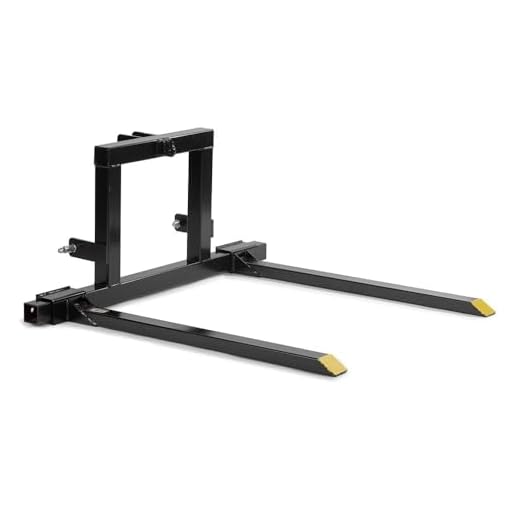

Titan 3-Point Pallet Fork Frame 48-in
I appreciate the heavy 4,000 lb rating and robust construction — it feels built to last and handle a variety of jobs. The see-through headache rack and 2" receiver hitch add practical versatility for farm and light towing tasks.
Why I like this frame
I like this frame because it feels like a proper farm-grade tool — heavy, well welded, and designed for multiple tasks. With a 4,000 lb rating it handles much heavier loads than typical Category 1 attachments, and the see-through headache rack keeps sightlines open for safer, more accurate work.
Key features and practical benefits
The frame is designed as a 3-in-1 workhorse: pallet handling, hay bale work, and light towing. The powder-coated steel finish and stout frame give confidence when moving dense loads, and the integrated receiver hitch makes it easy to switch between tasks without a second implement.
Limitations and real-world notes
I will say this: it's heavy and not a plug-and-play solution on every tractor. Several buyers commented the lower mount points required tilting the forks to work efficiently, and some needed to add bushings or modify pins for their quick-hitch. If you plan to use it on smaller tractors, measure and be prepared for a two-person lift during installation.
Overall, this is my pick when I want one frame that does more: robust lifting, basic towing, and hay handling. If you value durability and versatility over absolute lightness and no-fuss installation, this is the one I reach for on a busy property.
Category 1 1500 lb Pallet Forks
I like how affordable and straightforward this fork is to mount and use — it’s an excellent value for light farm and property chores. The adjustable tines give flexibility for different pallet widths, making it practical for general utility work.
Who this fork is for
I recommend this fork if you have a smaller tractor and need a low-cost way to handle pallets, bales, and light building materials. For hobby farms, small acreage, and occasional material handling it hits the sweet spot of price and functionality.
What I like about it
The simplicity is the strength here. Installation is straightforward on Category 1 three-point hitches and it comes with the necessary pins, so you can be operational quickly. If you don’t need the brute force of a 4,000 lb frame, this saves money and still makes everyday chores much faster than hand loading.
Limitations to keep in mind
I’d caution against pushing it past its 1,500 lb rating — expect flex or accelerated wear if used for heavier loads like dense logs or full large hay bales repeatedly. Also, it lacks the extra features (headache rack, receiver hitch, hay spear sleeves) you get on larger frames, so consider what tasks you truly need it for.
In short, this is my pick when budget and simplicity matter most. It’s a practical, nimble tool for common property maintenance without breaking the bank.
1500 lb Adjustable 3-Point Pallet Fork
I find this fork to be a sensible budget option that balances sturdiness with a light footprint for Category 1 tractors. It’s good for routine moving and stacking tasks but not meant for heavy industrial loads.
Overview and intended use
I recommend this model if you want an uncomplicated, durable pallet fork for standard Category 1 tractors. With a 1,500 lb rating and adjustable tines, it’s well suited for farm chores, barn work, and light material handling around a property.
Performance and practical tips
In practice I’ve found these forks handle pallets, bags, and boxed materials reliably when used within rating. The adjustable spacing makes them flexible for odd-sized loads. For best results, confirm your tractor’s lift capacity and center of gravity — placing heavy loads out on the tines can reduce safe capacity.
Drawbacks and final thoughts
If you expect to move very dense loads or need multifunctional features (hay spears, receiver hitch, heavy-duty headache rack), this won’t replace a heavy frame. It’s a practical, cost-conscious choice for basic daily use but be realistic about load limits and longevity under frequent heavy stress.
Overall, I’d pick this when I want something affordable, straightforward, and reliable for everyday tasks — just keep within the rated limits and it will serve well.
Final Thoughts
If I had to pick one go-to, it’s the Titan 3-Point Pallet Fork Frame 48-in. Its 4,000 lb rating, stout construction, see-through headache rack, and 2" receiver hitch give it real versatility. I recommend it for folks who move heavy loads, work on mixed farms, or want a fork that doubles for light towing and rugged chores.
If you run a small Category 1 tractor and want the best value, go with the Category 1 1500 lb Pallet Forks. They’re easy to mount, affordable, and flexible enough for property maintenance, bale moving, and lighter pallet work. The 1500 lb Adjustable 3-Point Pallet Fork is a close budget alternative if you prefer a compact footprint for everyday light tasks.
How I Choose and Use 3-Point Pallet Forks
When I shop for pallet forks I focus on three things: capacity, compatibility, and practicality. Capacity is obvious — match the rated lift to the heaviest load you plan to move, then add a safety buffer. Compatibility means the fork must mount cleanly to your tractor’s category and have the right pin sizes and lifting geometry. Practicality covers features like adjustable tines, a headache rack, and extra touches (like Titan’s 2" receiver hitch) that make the tool do more than one job.
Quick checklist before you buy
Comparing the three models
| Model | Capacity | Standout feature | Best for |
|---|---|---|---|
| Titan 3-Point Pallet Fork Frame 48-in | 4,000 lb | See-through headache rack + 2" receiver hitch | Heavy farm work, mixed use, light towing |
| Category 1 1500 lb Pallet Forks | 1,500 lb | Affordable and simple | Small tractors, property chores |
| 1500 lb Adjustable 3-Point Pallet Fork | 1,500 lb | Compact footprint, adjustable | Everyday light tasks, tight spaces |
That table sums up my practical take: Titan is the heavy-hitter; the 1500 lb units are wallet-friendly and fine for lighter chores.
Using pallet forks safely and effectively
Maintenance and storage tips I use
I clean and inspect forks after tough seasons. Grease pivot pins, look for cracked welds, and check tine straightness. Keep a small can of touch-up paint and a few spare pins or lynch pins in the shed. For storage, hang the frame or place it on blocks to keep tines off wet ground — rust is the silent enemy.
I hope this helps you pick the right fork for your tractor and chores! Enjoy your day. :)
FAQ
Most of these are Category 1-compatible. The Titan is designed for standard 3-point setups but check your tractor’s lift capacity and mounting pin sizes before buying. I always match the fork’s category to the tractor’s hitch category and confirm PTO clearances.
Yes — but within reason. The 2" receiver adds handy versatility for light towing (trailers, utility carts). Don’t treat it like a heavy-duty trailer hitch; stay within the tractor’s drawbar and the fork frame’s limits.
Think about the typical loads you’ll lift. For pallets, bales, and landscaping supplies, 1500 lb forks often suffice. If you load heavy pallets, move machinery, or need durability on a farm, go 4000 lb (Titan). I prioritize safety margin: pick a fork rated higher than my usual load.
Yes — grease the pivot points, inspect welds and pins monthly, and touch up paint to prevent rust. Also store forks indoors or off the ground if possible. I treat maintenance like cheap insurance.
Absolutely. Adjustable tines let you handle odd pallet widths and awkward loads. I find adjustable forks much more useful on small farms and mixed-use properties where cargo varies.







I liked the roundup — that 1500 lb adjustable fork (the affordable one) sounds perfect for my small acreage. How easy are the tine adjustments? Do you need extra tools every time or is it just a quick slide-and-pin?
Mine uses a locking pin and it’s quick — maybe 2 minutes to reconfigure. Just watch for rust in the slots if stored outside.
Most of the budget 1500 lb attachments use slide-and-pin adjustable tines. You usually need minimal tools (a hammer/punch occasionally) but it’s generally straightforward. Always double-check the locking pin before lifting any load.
Funny thing — I bought a budget 1500 lb fork once and the instructions had about 2 sentences and a badly drawn diagram. Bolts were missing (lol) so had to improvise. Overall it worked fine but man, packaging could be better 🤦♂️
Anyone else get a ‘mystery bolt’ bag with their Amazon shipment?
Ugh, that’s frustrating. We hear about occasional missing hardware with some budget sellers. Always inspect shipments immediately and contact the seller for missing parts — often they ship replacements quickly.
Yep — got a mystery bolt kit once. Put everything on the table and matched bolt sizes. Amazon customer service replaced the missing parts for me, took a week though.
I’m really impressed by the Titan Attachments Standard Series — that 4,000 lb rating and the 2″ receiver hitch make it seem like a legit all-rounder.
I liked the note about the see-through headache rack too; makes loading a lot easier when you can see the fork tips.
Question for others: has anyone used the Titan on a Cat I tractor with a quick hitch and also to tow small trailers? I’m wondering about balance and visibility when towing.
Thanks! 😊
I used a Titan-like frame last season to move hay and pull a small utility trailer occasionally. Visibility was fine with the headache rack, but make sure you secure the load well — the receiver hitch handles light towing, not heavy trailers. Balance was okay after I moved some counterweight forward.
Good question, Emily — the Titan frame is listed as Cat I & II and Titan Quick Hitch compatible, so fitting shouldn’t be a problem for most setups. For towing small trailers, remember to check your tractor’s rear axle rating and tongue weight limits; the 2″ receiver on the fork is handy but the tractor still dictates safe towing capacity.
I don’t tow much but swapped between quick hitch and 3-pt on a Cat I. The quick hitch made switching so much faster. Just be mindful of pin wear over time.
I’ve got a compact tractor (Category 1) and I’m torn between the two 1500 lb options mentioned. On one hand I want something lightweight and cheap that I can leave mounted most of the season; on the other hand I’m worried about stability when lifting pallets of feed or pavers.
A couple of things I wish the article covered more:
1) How these lighter forks affect front-end lift stability on small tractors
2) Whether it’s better to use ballast or front weights in routine pallet work
3) Any real-world tips for securing oddly shaped loads (like stacked bags that shift)
Anyone with experience on a sub-30 HP compact tractor?
Also consider the tractor’s manual for max rear lift and implement limits — never exceed the manufacturer’s rated capacities even if the fork frame claims a higher number.
I run a 28 HP and added 300-400 lb front ballast for pallet work. Made a night-and-day difference. For odd loads I strap them to a pallet first or use ratchet straps to keep things from sliding.
Totally agree with Daniel. Also keep your tires properly inflated to help with stability. Don’t skimp on the straps — saved me when a bag shifted unexpectedly.
Great points, Olivia. For small tractors, front ballast or wheel weights can significantly improve stability when handling rear-mounted pallet forks—especially with heavier or higher-center-of-gravity loads. Also consider limiting lift height and driving slowly when carrying uneven loads. The lighter 1500 lb forks are fine for occasional pallet work but take care with very heavy stacks.
A quick practical note: regardless of which model you pick (Titan or the 1500 lb ones), always verify your tractor’s 3-point lift rating and link arm strength before you buy.
I once saw someone use a 2,000 lb rated implement on a small lift and ended up bending the lift arms — expensive mistake. The cheaper forks are great for lighter chores but don’t push them.
Also: greasing pivot points every couple months extends life a lot.
Excellent reminder, Carlos. Tractor limits matter more than the implement rating. And routine greasing/maintenance is one of the best ways to keep forks working well.
Yep — stabilized and top-linked properly is key. I tape the top link with a bit of anti-seize at assembly to avoid galling.
Agreed. Also check the top link and stabilizers — you don’t want lateral movement when carrying a heavy pallet.
Quick question: the roundup mentions Titan Quick Hitch compatibility for the 48″ frame — does that mean it won’t work with universal Cat I hitches, or is it adapter-friendly? I’m running Cat 1 and want to keep my quick-attach.
I used an adapter plate once to mate a non-Titan frame to my quick hitch — worked fine but check clearances. If possible, get exact measurements from seller before buying.
Most listings that state ‘Titan Quick Hitch compatible’ are designed to fit Titan-style quick hitches directly. They often still fit standard Cat I 3-pt setups, but adapter plates or small mods can be needed depending on your quick hitch brand. Best to confirm the hitch hole spacing and pin sizes against your quick hitch specs.
The Titan looks like the one I’d invest in if I was more serious about farm work. That 9.2 rating and ‘best heavy-duty’ badge sold me. But curious about real-world durability — anyone had theirs for multiple seasons? Also shipping costs to rural areas were insane last time I checked for similar items. Any tips to save on shipping or where to pick up locally?
Pro tip: look for a dealer within 100 miles and ask if they’ll bring it on their next delivery run. Saves a ton vs. standalone freight charges.
Priya — the Titan’s build quality tends to get positive durability comments from users; it’s designed heavy-duty. For shipping, check local dealer pickups or farm equipment distributors; sometimes you can avoid big freight fees by arranging pickup or checking local classifieds for used models.
Also consider checking for seasonal deals — dealers sometimes discount attachments during off-season months.
If you’re okay with used, Facebook Marketplace and TractorHouse sometimes have good local finds and you avoid freight entirely. Just inspect welds and pins closely.
I’ve had a Titan-style fork for 3 years, heavy use, and it’s still solid. Paint chips a bit but no structural issues. If you’re lucky, local tractor shops will let you bundle delivery with other orders.