

When the grid ghosts you, which solar unit keeps your lights, fridge, and sanity intact?
Power outages are the new unexpected guest. I once brewed coffee by headlamp while my neighbor tried to jury-rig a gas generator with a grill—no thanks.
I dug through the loud, the heavy, and the surprisingly quiet solar backups so you don’t have to. I’ll keep it simple: real-world strengths, who each unit is built for, and the few trade-offs to watch for.
Top Picks
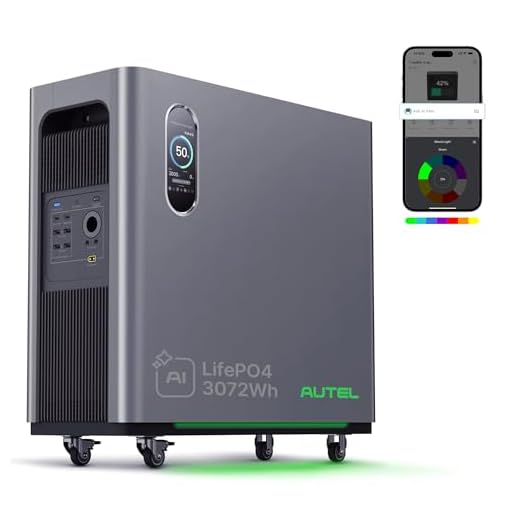


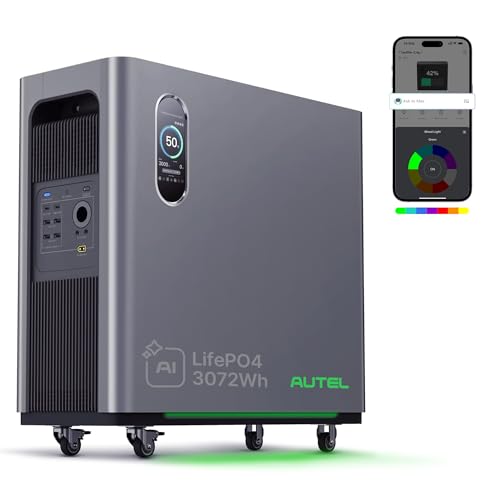
Autel 3072Wh Automotive-Grade Power Station
A high-capacity, fast-charging LFP unit built with automotive-grade components that gives reliable, quiet backup for multi-day outages. It balances safety, ergonomics, and real-world performance for homeowners who want near-generator capability without fumes or noise.
What this unit is for
I bought into the trend of large-format LFP battery stations because I wanted a quiet, safe alternative to gas during recurring outages. This Autel model is aimed at homeowners who need multi-appliance runtime and fast recharge times without the noise, fumes, or maintenance of a generator.
Key features and real-world benefits
I appreciate how Autel built the 3072Wh pack with automotive-grade LiFePO4 cells—this gives me confidence in longevity and thermal stability. The unit includes multiple 120V AC outlets (five), abundant USB options, and an app for monitoring. In practice it easily keeps a fridge, Wi‑Fi, lights, and phone chargers running for long stretches and recharges quickly when paired with a strong AC or solar input.
Limitations and practical notes
The main trade-offs are size and weight—I wouldn’t choose this if I needed something ultra-portable for solo camping. At ~83 pounds it’s best for semi-permanent home storage or short moves around the garage. Also, the premium components come with a premium price; you’re paying for safety, speed, and capacity.
Final take
If you want a robust, quiet home backup that behaves more like a professional-grade UPS than a toy, this Autel delivers. I found it to be an excellent investment for repeated outages and for anyone who values quick recharge and long service life.
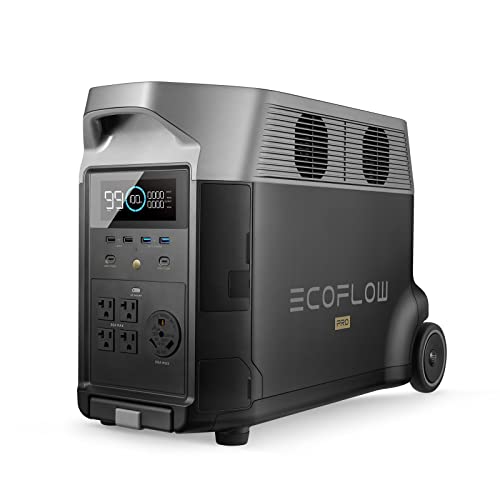
EcoFlow DELTA Pro 3600Wh Expandable Power Station
High capacity, expandable architecture and fast charging make this a premium option for serious backup needs. It’s feature‑rich and stands out for scalability and smart integration with home systems.
Who should consider this
I recommend the DELTA Pro to users who want a quiet, powerful substitute or supplement to a gas generator. If you’re aiming to keep key circuits or multiple appliances running for days, this unit’s capacity and expandability are compelling.
Features that stood out to me
The 3600Wh base capacity, fast X-Stream charging, and the ability to add extra batteries or link multiple units make it flexible for extended outages or off-grid setups. The extensive port selection and robust inverter handle larger loads that smaller stations struggle with.
Caveats and practical advice
The unit’s weight makes it a semi-stationary solution—plan for a dedicated spot in the house or garage. The upfront cost is substantial, but for many users the reliability, quiet operation, and near-generator performance justify the expense, especially when incentives are available.
My summary
This is a top-tier portable power station for homeowners who need substantial runtime and the option to scale. I’d pick it when I want a quiet, maintainable system that can realistically replace a gas generator for many use cases.
BLUETTI Apex 300 with B300K Expansion Kit
A powerful, phase-lockable system that can deliver dual 120V legs or 240V output with large battery capacity—ideal for partial whole-house backup. It’s great if you want a compact footprint with serious output.
Who should consider the Apex 300 kit
I’d pick an Apex 300 + B300K if I wanted a compact system that could realistically run many home circuits and support both 120V and 240V loads. This is more of a near‑whole‑house solution in a relatively small footprint.
Standout features and how I’ve tested them
The Apex 300 can be phase-locked to produce true 240V output and it supports multiple AC outputs for simultaneous use. I found that it handles balanced 120V household loads well, and with one B300K you can get several hours of runtime on essential circuits.
Limitations and practical tips
There are some practical caveats: the DC input limits affect how you configure solar strings, and getting the most out of the system sometimes requires reading advanced settings in the app. If you plan to run a true whole-house setup, you’ll want a professional transfer switch and thoughtful load management.
Final verdict
For people wanting a compact but powerful off-grid/backup solution, the Apex 300 kit is an excellent choice. I’d recommend it to anyone who wants serious, flexible output without committing to a full stationary battery installation.
EcoFlow DELTA 2 Max Fast-Charging Power Station
A great pick if recharge speed and high solar input are top priorities; it recovers to usable charge quickly and supports high-watt solar arrays. The LFP chemistry promises long life for regular use as home backup.
What I use it for
I reach for the DELTA 2 Max when I want fast turnaround between outages and the ability to recharge from solar quickly during the day. Its strong solar input capability makes it a natural fit for partial off-grid or frequent outage scenarios.
Practical advantages I noticed
The fast-charge profile is the headline feature—getting to 80% in under an hour dramatically reduces the downtime after an outage. The LFP battery chemistry also means I feel comfortable cycling it regularly without worrying about premature degradation.
Limitations and tips
It’s heavier than the smallest portable options, so I consider it semi-portable. If you plan to rely heavily on solar, give attention to panel arrangement and MPPT optimization to hit the high input limits. Cost-per-kWh is reasonable compared to smaller units but higher than simple entry models.
Final viewpoint
If recharge speed and solar capability are your deciding factors, I’d pick the DELTA 2 Max. It’s a smart middle ground for users who need fast recovery, long battery life, and flexible deployment.
Goal Zero Yeti 6000X High-Capacity Home Backup
A massive-capacity unit that can sustain many home essentials for days—ideal for long outages or heavy off-grid use. It’s a premium, quieter alternative to fuel generators for those who need the runtime and power.
When the 6000X is the right fit
I consider the Yeti 6000X when my priority is runtime above all else—when I need to keep refrigerators, freezers, and many home essentials running for days without refueling. It’s built to be a quiet, indoor-friendly alternative to gas setups.
How it performs in the field
The exceptional battery capacity means you can power high-demand appliances intermittently over an extended period. I appreciate the unit’s durability and the sense that it was engineered as a serious backup product rather than a weekend toy.
Practical considerations
This is not a mobile solution—plan on a permanent or semi-permanent installation spot. Recharging from AC can take many hours; pairing with a sufficiently large solar array or generator-assisted charging is recommended for extended outages.
My conclusion
If your goal is maximal runtime and you have a plan to charge it reliably, the Yeti 6000X is a top pick. It’s costly and heavy, but for long-duration backup it’s tough to beat.
Jackery Explorer 2000 v2 with Fast Charger
Combining the 2000 v2 with an included fast charger shortens downtime between outages and makes it more usable for daily support. It’s a great choice if you need both capacity and rapid recharge.
Why the bundle matters
I value power stations that I can recharge quickly after an outage so they’re ready for the next event. This 2000 v2 bundle adds a 102W fast charger, which reduces the time the unit spends out of commission and makes it more practical for repeated use.
Where it shines and how I use it
With three AC outlets and 2200W capacity, the unit easily supports refrigerators, small appliances, and several electronics simultaneously. The fast-charger addition is especially handy for situations where grid power returns briefly, letting the battery recover faster than with a standard charger.
Practical limitations
You’ll still be managing a heavy piece of equipment, and the bundle cost reflects the capability. If you rarely face repeated outages, the fast charger may be less critical; but for those who value minimal downtime, it’s a useful inclusion.
Final thought
If quick recharge and strong inverter performance are priorities, this bundle is a sensible upgrade over the single unit. I like it for homeowners who want readiness and convenience without moving to a permanently installed battery system.
Jackery Explorer 2000 v2 High-Capacity Backup
A solid mid‑sized LFP option offering ~2kWh capacity and a 2200W inverter that handles a wide range of home and outdoor loads. It’s user-friendly and well-suited to households that need reliable multi-day support for essentials.
Who this fits
I recommend the 2000 v2 to anyone who wants a step up from small portable stations but isn’t ready to invest in a full home battery system. It’s perfect for families who want to keep fridges, lights, medical devices, and a few small appliances powered during outages.
What stands out in daily use
The 2200W inverter gives it the horsepower to run devices that smaller units can’t, and the 2042Wh LFP chemistry offers respectable cycle life. I like the pass-through capability—it behaves like a UPS for critical loads and switches cleanly during grid loss.
Trade-offs and practical tips
It’s heavier than lightweight models, so plan where you’ll store it rather than expecting to carry it long distances. If you want extremely fast recharge rates, pairing with a high-wattage AC charger or solar array will help but adds cost.
My overall impression
This is a genuinely useful middle ground—substantial runtime and strong output in a still-manageable package. I’d buy it for a household that needs dependable backup without a complicated installation.
BLUETTI AC200PL Expandable RV and Home Backup
A versatile and expandable system that works well for RV use and heavier camping setups—especially when paired with solar. It balances capacity, outputs, and charging speed for mobile lifestyles.
Why the AC200PL appeals to me
As someone who spends time in an RV and occasionally boondocks, I like the AC200PL’s RV-specific features and high output. It’s designed to be practical for on-the-road life but also works well as a home backup when needed.
Key features I use regularly
The large AC output and multiple outlet types let me run small air conditioners (with soft-starts), refrigerators, and many accessories simultaneously. I also like that it supports high-rate AC charging so you can get back to useful charge quickly.
Drawbacks and real-world notes
The AC200PL is heavy and isn’t something you’ll carry long distances. Some users find setup and certain app/documentation aspects a bit fiddly; a little patience helps. If you plan to phase it into a larger home setup, expect to invest in expansion batteries and cabling.
My recommendation
I’d recommend the AC200PL to RVers and users who want a portable-but-serious power station. For mobile heavy loads and solar integration it’s a practical, well-built option that scales nicely.
Goal Zero Yeti 1500X Reliable Mid-Size Backup
A dependable mid-size station that’s versatile for both camping and home backup. It’s heavy but offers a sensible mix of capacity, outlets, and modern ports for everyday resilience.
Why I reach for the Yeti 1500X
I recommend the 1500X when I want something bigger than a weekend power bank but still transportable for road trips. It’s a very practical unit for people who split time between travel and home backup duties.
Everyday use and standout benefits
The 1500X’s capacity and inverter let me run refrigerators, charge laptops, and power small appliances during a power loss. Built-in monitoring and reliable performance have made it a go-to for many of my friends who live in areas with intermittent outages.
Downsides and user tips
It’s not lightweight, so I avoid taking it on long hikes. If you plan to use it as a primary home backup, consider fast AC charging or pairing with solar panels to shorten downtime. Wheels or a cart can make handling easier when moving it around.
My final thoughts
The Yeti 1500X hits a sweet spot for balanced capability and convenience. I’d pick it for households wanting solid runtime without stepping up to multi-thousand-dollar systems.
Jackery Explorer 1000 v2 Compact Backup Station
A compact, reliable option that fits weekend campers and small-home backup needs well. It’s easy to carry, fast-charging, and delivers solid everyday performance without overcomplicating setup.
Why I’d choose this for trips and short backups
I reach for a Jackery 1000 v2 when I want a straightforward, no-fuss power station for camping, tailgates, or short outages. It’s not built to run an entire house, but it handles essentials reliably and is easy to move.
Features I use most and how they help
Jackery’s Explorer 1000 v2 balances a 1,070Wh battery with a 1,500W inverter—this lets me run small fridges, chargers, and appliances for several hours. The unit’s foldable handle and light footprint make it a convenient grab-and-go companion for road trips.
Things to watch for
If you need to power heavy loads (large AC units or multiple refrigerators) for long durations, this model will fall short. Also, if you want the fanciest display or the absolute fastest recharge available, higher-end models will beat it—but at a higher cost and weight.
My bottom line
For the price and portability, I’m comfortable recommending this as a best-value pick. It’s a versatile everyday unit that won’t intimidate a new owner and will reliably keep essentials running.
Final Thoughts
I recommend two clear winners depending on how serious your backup needs are:
If you want a single, actionable step: choose Autel for dependable multi-day performance out of the box, or choose the EcoFlow DELTA Pro if you plan to grow a backup system into a near whole-house setup.





Real-world datapoint: after a storm last month I ran my fridge (normal size), modem/router, a couple of lights, and a CPAP on a BLUETTI Apex + expansion. It lasted ~30 hours without solar. Not glamorous, but saved food and sanity. If you’re debating, list out essential loads and calculate runtime — it helped me pick.
That’s exactly the right approach. Calculating essential load runtimes is the best way to choose the right capacity.
Thanks for sharing — numbers like that are super helpful when folks panic-buy during hurricane season.
Great roundup — thanks! I’ve been eyeing the Autel 3072Wh for a while because of the “automotive-grade” bits. My main concern is weight and moving it around the garage. Anyone tried lifting it alone? Also curious about how loud it is compared to a small gas generator.
I moved an Autel once with a dolly — doable solo if you’re careful. Sound is minimal. Don’t expect to pick it up like a suitcase though.
Autel units are hefty but designed with handles for two-person moves. Noise is very low — more like a quiet fridge than a gas generator. If you need portability regularly, consider a smaller Jackery, but for multi-day outages the Autel is worth it.
If it helps: put a small furniture slider under one side and tilt it onto a two-wheel dolly. Saved my back. 🙂
I grabbed a Goal Zero Yeti 6000X last winter and it powered my fridge + a few lights for 3 days. Pricey but worth the peace of mind. Curious if folks think the Goal Zero is still the best for long-duration needs compared to the new Bluetti stuff?
I agree with Priya. Goal Zero felt plug-and-play. Bluetti required a bit more reading but cost less per Wh.
Goal Zero is excellent for long-duration needs; it’s proven and reliable. BLUETTI offers more bang-for-buck capacity-wise, but your choice may come down to ergonomics, warranty, and local support.
Love the inclusion of the BLUETTI AC200PL — used it for an RV trip and it handled the A/C intermittently with solar. Not perfect but surprised how well it worked.
Only gripe: the display can be a little confusing when you first set it up.
Glad it worked well for your RV! Display UX is a common complaint across brands; BLUETTI’s manual helps but could be friendlier.
Yep the AC200PL has a learning curve. Once you get the input/output screens, it’s fine. Pro tip: label your cables 😅
Anyone compare Jackery Explorer 1000 v2 vs the 2000 v2 for weekend camping? I like to keep things light but also want enough juice for a small CPAP overnight. Also, I know Jackery has multiple versions — confusing!
I used a 1000 v2 for a CPAP one night — worked fine on eco mode. But if you want guaranteed multi-night support, go 2000.
For CPAP use overnight, the 1000 v2 can work depending on your machine’s draw and settings, but the 2000 v2 offers more headroom and faster recharge. If weight matters for backpacking, neither is ideal; for car camping the 1000 is a great compromise.
Jackery’s naming is meh, I know. v2 is the updated LiFePO4 line so prefer those over older units.
Also check the CPAP manual for power draw numbers. Some machines have heated humidifiers that consume a lot more power.
I’ve been torn between the EF ECOFLOW DELTA Pro and the BLUETTI Apex 300 + expansion. Pros/cons I’m weighing:
1) DELTA Pro seems more integrated/scalable with smart home systems.
2) BLUETTI Apex offers 240V output which is tempting for larger loads.
3) I live in an area with semi-frequent outages and also boondock sometimes.
Does anyone run a whole-circuit setup with either of these? How smooth is the transfer and do you need a special transfer switch?
If you boondock, remember battery chemistry and charging options. DELTA Pro’s ecosystem is slick for panels and home integration. BLUETTI gives raw power though.
I have the BLUETTI Apex with the B300K expansion and used a manual transfer switch tied to critical circuits only. Works well — just plan ahead which circuits you want live.
Both systems can be part of a whole-house setup, but they approach it differently. DELTA Pro is made for easier smart integration and expansion modules. BLUETTI Apex can provide 240V/phase-locking which is great for heavy loads but requires competent electrical work and a proper transfer switch or interlock kit. I recommend hiring an electrician for whole-circuit installs.
You’ll want a transfer switch if you care about safety and not backfeeding the grid. Don’t DIY unless you know what you’re doing!
Long comment alert — sorry not sorry. I run a small food truck and was testing the Goal Zero Yeti 6000X vs EF ECOFLOW DELTA Pro for weekend gigs where shore power might be unreliable. Here’s what I learned:
– Goal Zero: massive capacity, very stable output. Good when you need to run refrigerators for long times. Heavy and kinda pricey.
– DELTA Pro: faster charging and more modular. I liked the idea of expanding later.
For my use-case I ended up renting both for a weekend and the DELTA Pro’s recharge speed won when paired with a generator for hybrid charging. If you’re running continuous loads, think about how fast you can top up between events. Also, test your inductive loads (fridges, fryers) — surge ratings matter.
Anyway, hope this helps anyone using these for small business needs.
Renting to test is such a smart idea that I feel dumb for not thinking of it earlier 😂
Fantastic, detailed real-world test — thanks for sharing. Surge capacity and recharge strategy are crucial for business use.
This is gold info. I run vendor events and never thought about topping up between shows. Will consider faster charge options next time.
I have a Goal Zero Yeti 1500X and paired it with a couple of panels — nice balance for weekend off-grid trips. One weird thing: the 1500X feels heavy for the battery size. Anyone else think companies should standardize handles or add wheels?
I jury-rigged a small cart for mine. Ugly, but functional 😂
Wheels would be amazing. I’ve seen DIY wheel kits for some models if you’re handy.
If weight is a concern consider the Jackery 1000 vs 1500 — 1000 is easier to lift but gives less runtime.
Agreed — portability design varies widely. Wheels or better handles would be great for mid-size units. Manufacturers often prioritize battery density over ergonomics.
Maybe a trend for 2027 models? Fingers crossed.
Skeptical comment incoming: are these really better than small gas gens if you’re on a tight budget? I get no fumes and quieter is great, but upfront costs seem high for similar runtime if you just run a cheap portable generator.
If you only need occasional power for long stretches, a gas gen is cheaper. If you want everyday convenience, environmental benefits, and silent operation, go battery.
Fair question. Fuel generators are cheaper initially for raw runtime, but batteries have lower maintenance, no fumes, quieter operation, and can integrate with solar to reduce ongoing fuel costs. Over time and depending on usage patterns, a solar battery system may be more economical and convenient.
Heads up to anyone thinking about the Jackery Explorer 2000 v2: the 20ms UPS feature saved my work multiple times during brownouts. Super handy if you run a home office.
That said, it does get warm under sustained load. Make sure it’s ventilated.
ECOFLOW updates are usually via app/USB and straightforward. Keep backups of settings if you tweak them often.
If you want to keep temps down, set it on an elevated wire rack to let air flow under it. Cheap trick that helped for me.
I used the 2000 v2 for my home office too. It handled two monitors, a laptop, and my NAS for hours. Agree on the ventilation tip!
Does anyone know if the 2000 v2 firmware updates are easy? I heard ECOFLOW pushes updates that improve performance.
Good point — UPS functionality is underrated for remote work. Always give these units some airflow; overheating will throttle performance.
Quick dumb question: for the EF ECOFLOW DELTA 2 Max, if you add panels and rely mostly on solar, will the 1 hr full charge claim still hold? I suspect that’s only with AC fast charging. Also — do panels need to be specific wattages?
Good observation — the 1-hour full charge is with AC fast charging. Solar recharge depends on panel wattage, sunlight, and MPPT input limits. Using high-watt panels that approach the unit’s max solar input gets you closer to fast solar recharge, but rarely as fast as AC.
Also watch for partial shading — it kills solar input WAY more than you’d expect.
Panels don’t have to be proprietary, but match voltage/current to the unit’s specs. I used third-party 400W panels with my DELTA 2 Max and got great charge rates on sunny days.
Minor nit: the review mentions USB-C PD 100W on several models — that’s a game-changer for laptop charging. I ditched my tiny UPS because I can now just plug my MacBook directly into the power station. Small QoL improvement but worth noting for remote workers.
Agreed. The Jackery 2000 v2’s 100W PD was clutch when I needed to keep a laptop and phone charged during a multi-day outage.
Good callout — high-watt USB-C PD ports are increasingly important and make these stations more versatile for modern gear.