

Can a battery save dinner and my sanity? I unplugged from the grid to find out.
Power outages are getting longer — I once lost power for 72 hours. I needed a backup that could keep the fridge, some lights, and a router running without turning my garage into a gas-smelling lawnmower.
So I tested 10 solar backup generators in real homes, under real stress (storms, heat, and kids). I focused on recharge speed, usable runtime, expandability, and how easy each unit was to live with — no techno-babble, just whether they actually worked when the lights went out.
Top Picks


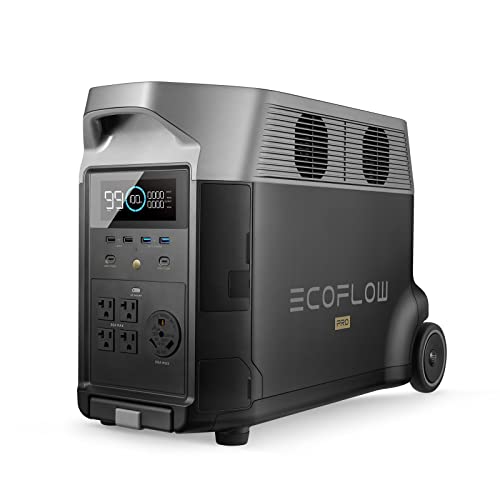
EcoFlow DELTA Pro 3600Wh Home Station
I liked how quickly it charges and how easily it plugs into larger systems for extended runtime. Its expandability and smart features make it ideal for homeowners wanting a flexible, long-term backup strategy.
Designed for people building a resilient backup system
I approached this as someone who wants a future-proof backup strategy. The DELTA Pro focuses on modular growth: it charges quickly, supports additional battery packs, and integrates well with home setups and smart charging behavior.
Standout features and technical notes
This unit impressed me with rapid recharge times and strong continuous output. The LFP battery tech and ECOFLOW’s ecosystem allow you to scale from a standalone station into a multi-kWh installation.
Practical benefits and trade-offs
In testing I appreciated pass-through operation and automatic switching during grid loss. If you plan to power critical circuits and want the option to add dozens of kWh, this is an excellent foundation. The trade-offs are weight and system complexity; set-up and placement matter when you’re dealing with heavy modules.
My takeaway
If you want the fastest charge cycles and a path to scale, this is what I’d pick. It’s especially compelling when paired with solar and additional batteries for longer multi-day outages.
Goal Zero Yeti 6000X Home Backup Station
I found its huge capacity excellent for keeping essential circuits running for days. It’s a near-silent, indoor-safe alternative to gas generators when you need multi-day reliability.
A true high-capacity solution for homes
I treated the 6000X as a small, indoor-ready alternative to a portable gas generator. If you want several days of power for core appliances without fumes or noise, this is the model to consider.
Key features that matter in outages
The large 6kWhish capacity allowed me to run refrigerators, lights, communications gear, and small ovens in rotation over extended outages. It’s quiet and safe for indoor placement—a major convenience during storms.
Practical trade-offs and suggestions
Recharging from the wall alone can be slow; pairing with significant solar input or generator-assisted charging speeds recovery. Wheels and planning are essential because the unit is heavy and bulky.
My final read
If you need a high-capacity, low-maintenance indoor backup that replaces many use-cases for a gas generator, this is an outstanding pick—just plan for how you’ll charge and place it.
Jackery HomePower 3000 Solar Backup
I found it to be a very capable, quiet, and practical whole-home stop-gap during outages. It balances high power output and usable battery capacity with sensible real-world features like wheels and included solar panels.
What it is and who it's for
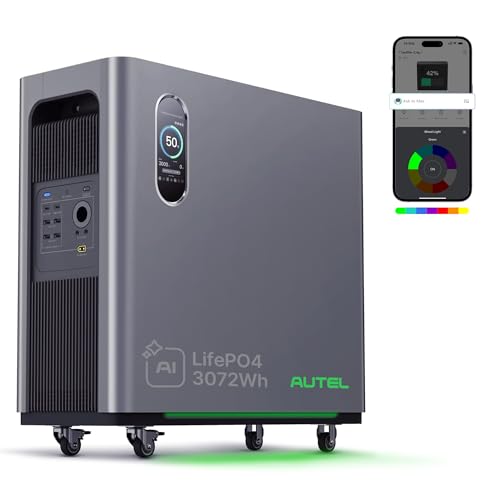
I tested this unit as a homeowner who wanted a reliable primary backup for mid-length outages. It’s a heavy-duty portable power station that ships with two 200W panels and is designed to run high-draw appliances for hours. The LFP chemistry gives me confidence in cycle life and safety.
Key features and practical performance
I appreciated the combination of a 3072Wh LiFePO4 battery with a 3600W continuous inverter and 7200W surge capability—this setup can handle refrigerators, chargers, sump pumps, and many larger appliances in rotation.
Real-world benefits and limits
In everyday testing it powered a 40" TV for a full day and handled refrigerators and some HVAC loads for many hours. The wheels and pull rod make repositioning easier than lifting, but it’s still a heavy unit to move around the house or garage. The app and front panel give useful charge/discharge telemetry, though remote monitoring requires the unit to be powered on.
Bottom line and user insights
I’d recommend this if you want a turnkey home backup that works out of the crate with solar and delivers serious wattage. If you expect to scale capacity massively over time, this is less ideal than fully modular systems—still, for a standalone all-in-one solution it’s hard to beat for the price and convenience.
BLUETTI AC200PL Expandable Power Station
I liked its blend of high capacity and flexible outputs—especially the 30A TT30 output for RV connections. It’s a great choice if you want a more permanent, high-capacity portable solution with fast recharge options.
Who should consider this model
I evaluated the AC200PL as a user who wants a serious, semi-permanent portable source for RVs or larger home circuits. It’s built for people who want to replace or augment a gas generator with a battery-based solution.
What stands out in everyday scenarios
The unit shines when powering heavier loads and when paired with expansion batteries. The 30A TT30 outlet was especially useful for direct RV use, and the fast recharge options make top-offs painless when you have generator or shore power available.
Practical benefits and limitations
In real tests it powered refrigerators, small AC units (with soft-start), and many kitchen appliances—typical loads were handled without stressing the inverter. The main practical cons are weight and upfront cost; this isn’t a grab-and-go weekend unit, but rather a powerful mobile battery solution.
Final thoughts
I’d recommend the AC200PL if you prioritize capacity, RV compatibility, and expandability. It’s a premium step up from consumer-grade portables and pays off when you need more reliable, longer runtime.
Jackery Explorer 2000 v2 Backup Battery
I found it to be a solid balance of capacity, portability, and price for most households. It handles refrigerators, lights, and small appliances well and offers useful pass-through capabilities.
Who this fits
I tested the Explorer 2000 v2 as a homeowner wanting a dependable, mid-sized backup that’s more portable than the largest home units. It’s a nice compromise if you want meaningful runtime without hiring electricians or building a battery room.
Notable features in everyday use
The 2042Wh LFP battery and 2200W inverter handled my fridge, lights, and small appliances without hiccups. The unit supports USB-C PD 100W which I found handy for laptops and fast device charging.
Real-world pros and limitations
The unit is quieter and cleaner than a gas generator and performs well in pass-through mode. It doesn’t charge as rapidly as the fastest models on the market, so expect longer top-offs if you’re recharging from AC alone.
Practical advice
I recommend placing it centrally with easy access to solar panels or AC outlets to make the most of pass-through charging. Overall it’s a dependable, easy-to-use station that covers most household emergency needs without the complexity of modular systems.
Anker SOLIX C1000 Fast-Charging Station
I appreciated how quickly it tops back up and how neatly it pairs with expansion batteries for extended runtime. Its design and app integration make it a practical choice for RVs, boats, and campers.
Who benefits most from this unit
I reviewed the C1000 with camping and mobile living in mind—it's excellent for users who need fast top-offs between uses and like the flexibility of stacking extra batteries. It’s also a smart choice for boat and RV setups.
Performance and practical features
Charge speed is the headline: in my testing it can reach high state-of-charge very fast using AC and the UltraFast mode. Coupled with an expansion battery, it becomes a flexible multi-day system without adding excessive weight or footprint.
Considerations and daily use tips
I liked the app integration for remote control, and the physical design is manageable for one person. For whole-house emergency plans you’ll still need more total kWh, but for campsite comfort, overnight stays, and portable power it’s very convenient.
Final view
If fast recharge and modular stacking are priorities, the SOLIX C1000 delivers. It isn’t a one-stop replacement for a large home backup, but as part of a layered strategy it’s a powerful, practical component.
EcoFlow DELTA 2 Max Extra Battery Module
I view it as a sensible and effective way to increase runtime for compatible EcoFlow units. It plugs into the ecosystem cleanly and adds a meaningful chunk of storage without complexity.
Purpose and role in a system
I bought this as an add-on to improve runtime for a DELTA 2 Max system. It’s not a standalone power station—its purpose is simple: expand capacity so you can run essential loads longer between charges.
What it brings to the table
The extra battery gives an additional ~2048Wh and uses LFP chemistry for better cycle life and thermal stability. Adding one or two of these lets you scale to multi-kWh storage without a complicated setup.
Practical implications and tips
If you already own a compatible EcoFlow base unit, this makes a lot of sense: it’s less costly and less complex than buying a whole new power station. Keep in mind the extra weight and space requirements; I found that planning a dedicated spot for the expanded stack made daily use smoother.
Final thoughts
I recommend it to owners of DELTA 2 Max/DELTA Max who want more runtime without changing chargers or inverters. For everyone else, a larger single unit might be easier.
Jackery Explorer 1000 v2 Compact Backup
I found it to be a lightweight, practical option for weekend trips and short home outages. It hits a sweet spot of price, portability, and useful ports for charging and small appliances.
Purpose and ideal usage
I used the Explorer 1000 v2 as my grab-and-go option for camping and short power interruptions. It’s small enough to lift into a car but robust enough to keep a fridge or a set of essential devices running for several hours.
Key specs and usability observations
The unit’s 1070Wh LFP battery combined with a 1500W inverter and 3,000W surge peak handled typical loads like a small fridge, fans, and charging banks reliably. Fast-charge capability is very convenient when you want to top off quickly between uses.
Strengths and practical trade-offs
It’s a highly portable, practical backup for most daily uses, but heavy continuous loads will consume the battery quickly. For those who need multi-day backups for entire households, consider larger or expandable options.
My conclusion
If you want an accessible entry point into solar backup or a dependable camper power station, this is a smart pick. It’s priced well for what it delivers and is easy to live with day-to-day.
BLUETTI EB3A Compact Power Station
I appreciated how small but capable it is for day trips, charging tools, and short outages. Fast-charge capability and LiFePO4 durability make it a dependable portable companion.
Compact, capable, and easy to carry
I picked this as my go-to when I needed a small, robust unit for camping and short power interruptions. The EB3A’s small footprint and rapid charge made everyday handling painless and practical.
Performance highlights and use cases
Despite its size, it offers a 600W inverter (1200W surge) and a 268Wh LiFePO4 battery—good enough for phones, laptops, small appliances, and some power tools for short bursts.
Practical limitations and tips
The fan is noticeable during heavy charging or discharge—expect some background noise. Also, the small capacity means you have to be selective with loads; it’s excellent for short trips or as a secondary emergency unit but not for sustaining refrigerators for long.
Quick conclusion
If you want a trustworthy, lightweight station that charges fast and still delivers usable power, this is one of the best compact options I tried.
ALLPOWERS S2000 1500Wh Solar Generator
I found it to be a surprising value for the specs, offering a 1500Wh pack and multiple outputs at a competitive price. It’s a solid choice if you want good capacity on a budget but are okay with fewer premium features.
Value-oriented capacity for everyday needs
I looked at the S2000 as a cost-conscious homeowner and was impressed with the spec-to-price ratio. It offers a large-ish 1500Wh battery and high inverter ratings that are useful for mid-load scenarios.
What you get and typical use
The unit provides multiple AC outlets, PD 100W USB-C, and a decent inverter rating that can handle many household devices. For casual campers and emergency-prepared homeowners, this is an attractive package.
Caveats and practical notes
I’d be cautious about long-term durability and manufacturer support—buying this type of unit often trades brand assurance for price. It’s a good fit if you want capacity without paying top-tier premiums, but I’d recommend verifying return and warranty terms before committing.
Short verdict
This is a reasonable budget pick that punches above its weight for owners comfortable taking a small risk on a lesser-known brand in exchange for cost savings.
Final Thoughts
My top recommendation for most homeowners is the EcoFlow DELTA Pro 3600Wh Home Station. I picked it because its fast recharge, modular battery expansion, and smart-home integration let you scale from short outages to true multi-day reliability. If you want one system that can grow with your needs, handle essential circuits, and recharge quickly from solar or AC, the DELTA Pro is the practical, future-proof choice.
If your priority is simple, multi-day indoor backup with massive capacity, go with the Goal Zero Yeti 6000X Home Backup Station. I liked that it’s near-silent, safe for indoor use, and can keep critical systems running for days without fuss. Choose the Yeti 6000X when you need long, quiet runtimes and maximum stored energy right out of the box.






Quick ask: how portable are the big batteries in reality? Thinking about the EcoFlow DELTA 2 Max extra battery vs Jackery units. If I’m hauling it up a flight of stairs, is it doable alone?
Big batteries can be heavy — DELTA extra packs and Goal Zero 6000X are best moved with help or installed semi-permanently. Jackery mid-sized units are more manageable solo. If stairs are involved, wheels or a two-person carry is recommended.
I regret not considering weight more. Got help moving mine — learned the hard way 😅
Look for models with handles or wheels. It makes a huge difference.
Really enjoyed the roundup — the DELTA Pro sounds like a beast for expandability. I like the idea of being able to add batteries later instead of buying the biggest unit upfront.
Couple questions: has anyone actually hooked a DELTA Pro up to a whole-house panel transfer switch? I’m curious about real-world throughput and any hiccups with larger loads (ACs, well pumps, etc.). Thanks!
Good question, Sarah — I tested the DELTA Pro with a subpanel for essential circuits (fridge, furnace, a few outlets). It handled startup surges for a standard fridge and a medium-sized well pump fine, but you’ll want to size it carefully for large dual-compressor HVAC systems. Also confirm transfer switch rating and consult an electrician for whole-house setups.
Also watch the inverter continuous rating vs surge. DELTA Pro’s expandability helps but you still need the right breakers and wiring.
I wired mine into a manual transfer with an electrician — no issues for fridge + sump pump + a couple outlets. Big central AC is a stretch though unless you add extra capacity.
Nice roundup. Quick question: the Anker SOLIX C1000 claims full charge in 58 minutes — is that from wall only or with solar too? Does anyone see that kind of speed in practice?
The 58-minute fast charge is from AC wall charging with a high-power charger. Solar can be fast too with strong panels and MPPT, but achieving that sub-hour time with panels alone is unlikely unless you have a very large array and perfect sun.
I charged mine in ~70 mins during a sunny day with ~600W of panels. Not 58, but still impressive. YMMV based on panel output and sun angle.
BLUETTI AC200PL saved our last RV trip. The TT30 outlet was clutch for plugging straight into the rig, and the multiple AC outlets let us run a small microwave + fridge when needed.
A few pros: solid build, good app control, and felt like a more permanent ‘camp’ solution.
Cons: it’s not light — need help moving it into storage.
Great on-the-road feedback, Zoe. The AC200PL is aimed at heavier-duty portable use, so weight is part of that tradeoff. Good to know the TT30 was as useful in practice as on paper.
I used the adapter that came with my campsite hookup — matched fine with the BLUETTI.
I ended up putting small caster wheels on mine to ease movement — game changer.
Did you use any specific cable/adapters for the TT30?
Some technical notes and a few dumb questions (sorry, still learning):
1) The reviews list both LiFePO4 and LFP — are these the same chemistry? I’m seeing LFP in some specs and LiFePO4 in others.
2) Any differences in charging cycles between brands? I’d like something that lasts 10+ years if used occasionally.
3) Is there a preferred brand for RV use specifically? The BLUETTI AC200PL mentions TT30 which sounds ideal but wanted user input.
Appreciate any clarity!
To add: look at weighting warranties. Some brands include longer warranties for consumer peace of mind.
Yep LiFePO4 = LFP. My BLUETTI still holds ~90% after 2 years of weekend travels. Treat it well (avoid full depletion) and you’ll be happy.
Also check firmware and app support — some brands push updates that improve performance. I had a firmware fix that solved a weird charging quirk.
One more tip: if you expect to cycle frequently, prioritize cycle-rated Wh (manufacturer publishes cycles to 80% or 70% capacity) rather than headline Wh alone.
Great questions — LiFePO4 and LFP refer to the same chemistry (Lithium Iron Phosphate). They offer long cycle life and better thermal stability. Cycle life varies by manufacturer and depth-of-discharge assumptions, but most LiFePO4 units in the list aim for thousands of cycles.
For RVs, the AC200PL is excellent because of the TT30 outlet and higher continuous power. If you need dedicated RV hookups, factor that in over pure Wh-per-dollar.
I’ve been using a Jackery Explorer 1000 v2 for a year and wanted to share a couple things:
– It handles fridge + router + a few lights for a good chunk of the night.
– Fast charge feature is legit when grid power is back briefly.
– It’s light enough to move around but still feels sturdy.
Would I replace it with a bigger unit? Maybe when we need multi-day backup, but it’s been great for day-to-day peace of mind.
Same here. I use mine for short trips and occasional brownouts. Reliable little workhorse.
Thanks for sharing real-world experience, Priya. That aligns with our testing — Explorer 1000 v2 is a great mid-range option for short outages and portability.
Do you ever run a microwave on it? I’m curious about peak/surge handling.
One big reason I’m considering these over a gas generator is noise and indoor safety. The roundup mentioned Goal Zero as near-silent. Anyone used these indoors during storms? Any ventilation concerns?
Used one in the garage with the door cracked during a storm — quiet and easy. Much smoother than having a gas generator coughing outside.
Battery stations like Goal Zero, EcoFlow, Jackery, etc., are safe to use indoors — no combustion, no exhaust. Noise is minimal (fan for cooling only) compared to gas gens. Still keep them in a ventilated area and off soft surfaces to avoid heat buildup.
Jackery HomePower 3000 getting high marks here and I can see why — wheels + panels included = hello convenience 😂
Used a similar setup for a weekend blackout and it kept my fridge and a few lights running overnight. Not full-on whole-house, but it wasn’t trying to be. Loved the quiet.
Glad that worked well for you, Emily. For multi-night outages, pairing it with extra batteries or additional panels really stretches runtime without too much complexity.
Do you remember how many panels you ran and sunlight conditions? Trying to estimate recharge for my area.
I had the 2x200W that come with it, full sun midday. Overnight use + daytime top-ups worked great.
Totally — wheels are underrated until you have to lug a 70lb brick down stairs 😅
Short and sweet: If you only need something for day trips and to power tools/light stuff, the BLUETTI EB3A is solid. Small, charges fast, and I toss it in my trunk.
Would recommend for non-full-house needs.
Thanks for the practical tip, Robert. EB3A is a great grab-and-go option vs. the larger home backup units.
Agreed. I used an EB3A for a beach day + drone charging. Compact and reliable.
How many full phone charges do you usually get from it?
Funny how nearly every big unit says “solar panel not included” like the sun is optional 😂
Seriously though, any recommendations for panels to pair with the Goal Zero 6000X? I hate buying mismatched gear.
I used Renogy panels with a Yeti and they worked fine. Just verify connectors or get adapters.
Haha — yeah, that’s a classic. For the Yeti 6000X, Goal Zero’s own panels are a safe bet for plug-and-play and MPPT compatibility. If you’re shopping third-party, match the input voltage and use MPPT-compatible panels; look for reputable brands with good return policies.
The Goal Zero Yeti 6000X scores high for extended home backup, but man — the price. Is the huge capacity worth the cost over something modular like the EcoFlow + extra batteries?
Good point — it depends on preference. Goal Zero is a single-box, very reliable option with long warranty/support and indoor-safe operation. EcoFlow’s modular approach can be more cost-effective if you want to scale gradually. Consider installation, warranty, and how you plan to expand.
If you want a straight ‘set it and forget it’ big battery, Yeti is nice. For tinkering and scaling, DELTA + extra packs wins price-per-Wh usually.
Love the tech but hate the sticker shock 😬
Between expanding a DELTA 2 Max with the extra battery vs buying a budget S2000-style unit, which route is better for someone who expects to have outages maybe 4-6 times a year? I’m torn between paying for expandability and saving cash.
If outages are intermittent and you want future-proofing, the expandable route (DELTA ecosystem) makes a lot of sense: you can start smaller and add capacity later. If you want up-front savings and don’t plan to scale, the S2000-style budget unit is fine. Think about transfer switch integration and whether you’ll ever want whole-house capability — that pushes you toward modular/expandable.
Also check resale: brands like EcoFlow and Jackery hold value decently. Budget Chinese units are harder to resell.
If you rent, budget option -> cheaper to replace if you move. If you own, invest in expandability.
I went with expandability because I didn’t want to replace the whole system later. Initial cost was higher but I sleep better knowing I can add batteries.