


Commercial cleaning power that bites—great performance, but expect a 161‑lb workhorse.
I’ve stood in front of a truck caked in years of grime and thought, “I need something that actually works—not another toy that dies mid-job.” Small consumer washers often fizzle out on contractor-level messes; the real pain is wasted time, repeated passes, and a crew left exhausted.
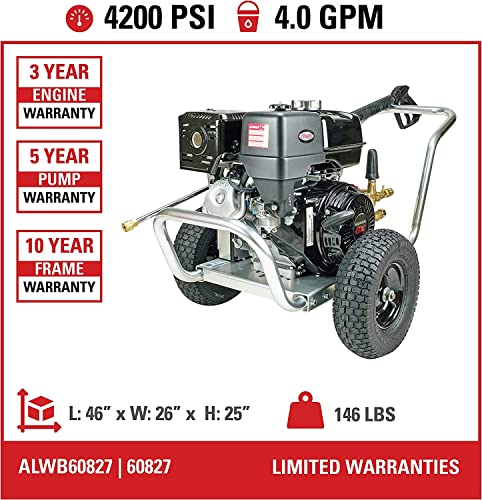
I tested the Simpson 4200 PSI Gas Pressure Washer — a Honda GX390‑driven, 4200 PSI / 4.0 GPM commercial unit with an AAA triplex pump, aircraft‑grade aluminum frame, 50′ hose and five quick-connect nozzles. It tears through heavy-duty gunk and keeps going, but it’s a 161‑lb workhorse (and 49‑state only), so plan for extra hands and routine maintenance.
Simpson 4200 PSI Honda Commercial Washer

This washer delivers relentless cleaning power and commercial durability for contractors and fleet maintenance crews. It’s a workhorse that favors long shifts and heavy-duty tasks, though it’s best handled by teams who can move and maintain a 161-pound unit.
Detailed Review: Simpson 4200 PSI Gas Pressure Washer (ALWB60827)
I’ve spent time with a lot of commercial pressure washers, and the Simpson ALWB60827 stands out as a machine built to eat through tough cleaning jobs without drama. Below I’ll walk through what it does well, how it’s put together, and where you might need to plan ahead if you’re bringing one onto your crew.
Quick Snapshot
The unit is purpose-built for contractors who need high flow and high pressure for paint prep, deck restoration, graffiti removal, equipment cleaning, and more. It pairs a Honda GX390 with an AAA industrial triplex pump and sits on a 100% aircraft-grade aluminum frame that keeps the chassis lighter and resistant to corrosion.

What I Like Most (Features & Practical Benefits)
Key Specifications Table
| Specification | Detail |
|---|---|
| Maximum Pressure | 4200 PSI |
| Maximum Flow Rate | 4.0 GPM |
| Engine | Honda GX390 |
| Pump Type | AAA Industrial Triplex |
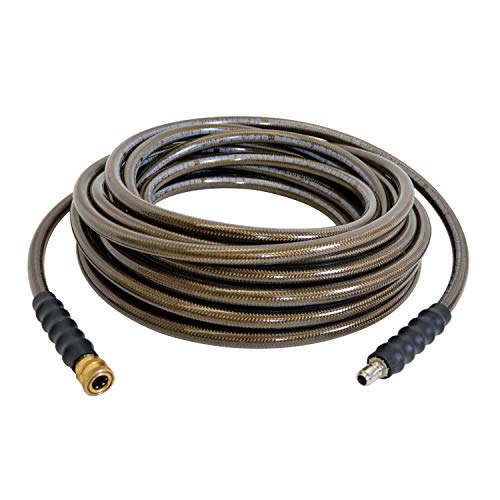
| Hose Length | 50 ft |
| Frame Material | Aircraft-grade Aluminum |
| Unit Weight | ~161 lb |
| Warranty | Engine 3 yr, Pump 5 yr, Frame 10 yr |
Real-world Performance
When I ran the Simpson at full throttle on stubborn mildew, old paint flakes, and grease, it cleared surfaces fast. The 4.0 GPM makes a real difference on large square-foot jobs — you cover ground much faster than with lighter residential washers. The belt drive system helps smooth out vibration and reduces heat transfer to the pump, which I noticed during continuous runs.
Handling, Mobility & Ergonomics
Consumables & Accessories

Maintenance & Longevity
I value machines designed to be serviced rather than discarded. The Simpson’s belt drive and quality pump simplify maintenance, and the multi-year warranties reflect that confidence. Routine tasks I recommend:
Pros and Practical Trade-offs
Who This Is For
When It Might Not Be the Best Fit
Final Notes (My Takeaway)
I treat this Simpson unit as a work-oriented investment: you’re paying for consistent power, reputable components, and a rugged frame that holds up under commercial cycles. If you plan your transport and commit to routine maintenance, it’ll repay you in uptime and fewer mid-season failures. If you need something small and ultra-portable, look at lighter consumer models, but if your day is filled with big, greasy, or mossy jobs, this is the kind of machine I reach for.
FAQ
Yes — you can use detergents, and the unit includes a soap nozzle and siphon tube to make that easy.
I recommend using detergents formulated for cold-water pressure washers and low-foaming formulas made for exterior cleaning. Avoid harsh solvents, straight bleach, or anything labeled corrosive to brass or rubber.
I also suggest testing any cleaner on a small, hidden spot first to check for discoloration or surface damage.
Moderately easy if you follow a routine and the manuals.
The Honda GX390 engine is known for durability, but it still needs regular care: change oil after the initial break‑in and then at the intervals Honda prescribes (check your owners manual), inspect/clean the air filter frequently, and check the spark plug periodically. The belt drive also benefits from occasional belt tension and alignment checks.
If you put a simple daily checklist in place (oil level, hose/leak check, and quick filter inspection), youll prevent most downtime and extend service life.
For many residential and small commercial jobs, 50′ is a practical balance of reach and performance.
If you routinely work multi-story buildings, large lots, or cant move the unit close to the work, an extension makes sense. Keep these points in mind:
I also recommend a hose reel and quality quick‑connects to keep setup fast and reduce wear.
The aircraft‑grade aluminum frame gives real advantages on jobsites.
Keep in mind aluminum can dent if struck hard, but it wont develop the surface rust problems steel can in harsh conditions.
Not because of this specific model, but I do recommend the usual commercial protections.
Also verify local licensing or business permits and any client requirements (they often ask for a Certificate of Insurance). I always check municipal rules and client contracts before bidding large jobs.
It’s listed as 49‑State Compliant because it doesn’t meet Californias stricter small‑engine emissions or air quality regulations.
California has additional requirements from the California Air Resources Board (CARB) and local air districts that some engines must meet. To buy a legal model in California, look for engines or machines specifically labeled as California/CARB compliant or contact the manufacturer for a California version.
I’d also check local dealers who sell CA‑compliant units or consult the manufacturers website for models certified for sale in California.





Longer comment — I’ve been on job sites with units like this and here’s what I’ve seen:
1) The 4200 PSI + 4.0 GPM is a brutal combo for concrete cleaning, grease removal, and heavy-duty fleet washing.
2) It’s loud and heavy, so plan for hearing protection and manpower.
3) The Honda engine is a big plus for reliability; fewer breakdowns than cheaper motors.
All that said, if you expect to be the one moving it by yourself every day, rethink the purchase. Otherwise, solid machine.
Great breakdown, Jordan. Noise and weight are the main trade-offs for the cleaning power. For single users who still want power, there are lighter consumer models but you lose the 4.0 GPM commercial flow.
Agree — used one to strip old paint off a garage floor and it was nuts. Brought a generator for other tools and earplugs for everyone. 😂
Been using a Simpson 4k-ish unit for a few seasons; the frame and build really hold up to daily use.
Warranty is generous (pump 5 years, frame 10 years) which made me feel better dropping the coin.
If you’re a contractor: get the 50′ hose, invest in decent nozzles, and schedule regular maintenance. It will pay off.
Also: bring ear protection and keep a spare spark plug in the toolbox.
Spare parts tip is golden. We keep an extra belt, nozzle set, and oil on site. Saved a job once when a tip got chewed up.
Thanks for sharing your hands-on experience, Sophie — that kind of practical advice is helpful. The included components list is just the pressure washer, so aftermarket nozzles and accessories are common purchases.
Great write-up — the 4200 PSI and 4.0 GPM combo sounds like it can tackle anything from oil stains to stripped paint.
I’m curious about mobility though: the unit is 161 lbs on the spec sheet. Is this something two people can reasonably load into a truck, or does it need a trailer/dolly?
We mounted ours on a small trailer for fleet use. Saves a lot of backache and time between jobs.
Two people + a ramp is how my crew does it. We bolted a skid to the bottom and used straps. Works fine, but not a one-person job unless you’re lifting with a truck tailgate.
Thanks, Liam — good question. The Simpson ALWB60827 is definitely on the heavy side at 161 lbs. It’s built as a commercial workhorse, so it’s common to move it with two people plus a hand truck or on a trailer.
The 50′ hose helps reduce how often you need to move the base, but for frequent transport I recommend a service dolly or mounting it in a van bed.
I noticed the listing says 49-State Compliant. Does anyone know what that means practically? Is it an emissions thing (like not CARB-compliant for CA)?
Also worried about noise and fumes when doing residential work — any mitigation tips?
The “49-State Compliant” tag typically means the engine meets emissions/regulations for 49 states but may not meet California (CARB) standards. If you work in CA or sell into CA, check CARB-compliant options.
For fumes/noise: run it outdoors in well-ventilated areas, and use hearing protection. For residential jobs consider scheduling during acceptable hours and telling clients about the noise up front.
Correct — California is strict. We had to buy a different engine for CA jobs. Also, anti-vibration mounts help reduce perceived noise a bit.
If you plan to work state-wide, double-check the engine’s compliance before ordering. Saves a headache later.
If you get noise complaints, offer a small discount or earplugs to homeowners 😂. But seriously, put a polite note on the door before starting.
I liked the clear specs in the review — especially the 50′ hose and aluminum water blaster series note.
Couple of worries though: how reliable are the starters in cold weather? And how bad is the noise level (is it intolerable on residential jobs)?
Would love to hear if anyone has cold-weather startup tips.
Best to keep it covered and off the ground when not in use. Moisture + cold = hard starts and corrosion over time.
Cold weather can be tougher on any gas engine. Using fresh fuel, stabilizer, and a proper choke routine helps. If you expect sub-freezing use, consider a block heater or storing the unit in a warm vehicle overnight.
Noise is noticeable — hearing protection is recommended on most jobs.
We keep a small battery-powered heater in our van and warm the unit briefly before startup in winter. Not perfect, but better than a dead engine on site.
If you’re doing early morning residential work, warn the neighbors about the noise. We once had an angry HOA call. lol
Quick q — does the package include different nozzle tips or just the washer itself? The spec list only says ‘Pressure Washer’ under included components and I’m trying to figure extra costs.
Also, does it come pre-assembled or is there some build time when you get it?
Yep — expect to buy a surface cleaner if you plan to do driveways fast. Saves tons of time.
Good catch, Daniel. The spec’s “Included Components: Pressure Washer” usually means the core unit plus standard fittings and a hose (this model lists a 50′ hose). Nozzle tip kits, surface cleaners, and certain accessories are often sold separately. Assembly is generally minimal — mounting the handle/wheels and connecting the hose — but larger pro rigs may require more setup.
I bought mine with a separate quick-connect nozzle kit. Made swapping tips easier between jobs.
Price seems steep at $1799.99 but the expert rating of 8.5 makes me think it’s legit for pros.
A few things I’d like clarified:
– How robust is the pump (warranty-wise)?
– Is the 1.6 gallon tank for soap actually useful on big jobs?
– Any tips on detergent usage so I don’t wreck the pump?
If you’re doing huge jobs, that 1.6 gal tank disappears fast. We keep a couple jerry cans of mixed soap in the van and feed with a hose when needed.
For contractors the price is competitive for a Honda-powered Simpson with a 4.0 GPM pump. If you only need it for home use, maybe overkill.
Do NOT mix acids unless you’re sure the pump can handle it. Learned that the hard way (oops).
Good points, Maya. The manufacturer warranty listed in the specs is: 3-year limited commercial warranty overall, pump has a 5-year limited warranty, and frame has a 10-year limited warranty. The 1.6 gal tank is useful for smaller cleaning tasks, but on large jobs most crews use a separate chemical tank or downstream injector.
Avoid running the pump dry and follow the detergent manufacturer’s instructions. Using low-pressure nozzles for soap application is recommended.
Maintenance tip: change oil on schedule and winterize if you store it outside. Pumps last way longer with basic upkeep.
“4,200 PSI of pure muscle” — I love the marketing flex. 😅
On a serious note, the Honda engine is the real selling point for me. Cheaper washers with generic engines give me nightmares.
If you want something that lasts and can handle heavy-duty use day after day, this one makes sense. If you’re just cleaning the patio twice a year… maybe not.
Exactly. I bought a cheaper unit once for home use and it died within two seasons. For commercial use you need a Honda or similar quality block.
The extra PSI and GPM translate to faster cleaning and more force for stubborn grime. For contractors time savings often justify the price difference between models.
Anyone compare this to the Simpson 3800 or other models? Curious about the marginal benefit of the extra 400 PSI and GPM.
If you have a crew and continuous jobs, the higher GPM pays for itself in saved hours. For occasional homeowners, nope.
Also check the pump type before buying — triplex pumps are the standard for longevity in this class.