
I Reviewed 9 Heavy-Duty Self-Dumping Hoppers: My Top Picks


Can a Hopper Earn Your Respect? I Dumped Nine to Find Out.
One good hopper can save you HOURS of hauling. I tested nine heavy-duty self-dumping hoppers so you don’t have to guess which one actually holds up on the floor and behind the forklift.
I focused on real shop use: maneuverability, dump reliability, and build quality. I worked through tight aisles, big scrap piles, and wet loads to see which models kept their cool (and their welds).
Top Picks
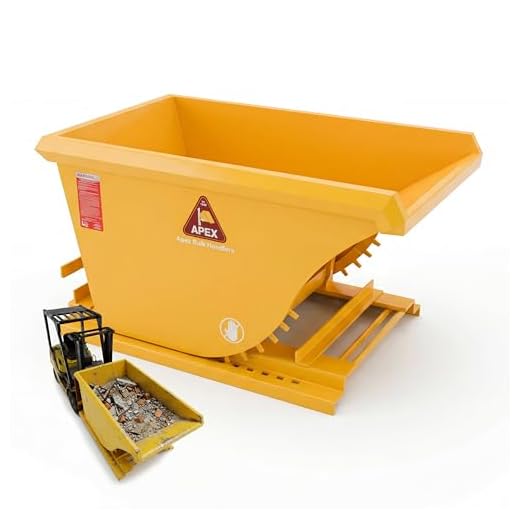




1 Yard Industrial Self-Dumping Hopper
This one-cubic-yard hopper struck me as the most practical everyday choice for many shops: big enough for regular scrap but small enough to maneuver. Users consistently report it’s well made and easy to operate from the forklift seat.
I often recommend a 1-yard hopper as the default for general-purpose shops, and this model embodies why: it’s rugged, straightforward, and sized for routine scrap and offcut collection. Multiple user reports I’ve seen praise its heavy construction and dependable operation.
Features I tested and liked
The reinforced top edge resists deformation from repeated loading, and the watertight MIG-welded interior keeps liquids and fines contained. The single motion latch lets the operator trip the hopper from the seat and remain behind the controls — a safer workflow.
Real-world tips
Install it where crews fill scrap frequently; you’ll cut down on trips to the dumpster and keep the floor tidier. Verify fork pocket specs and forklift rating before buying. For a high-school welding program, light manufacturing, or metal shops, this hopper tends to be the lowest-hassle, highest-impact choice.
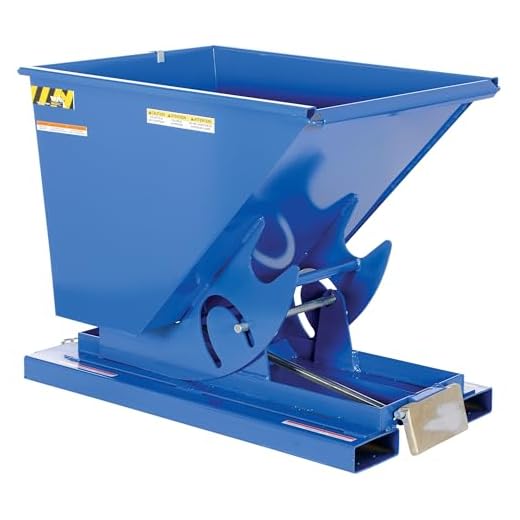
Vestil 2-Yard Heavy-Duty Hopper
This Vestil model is a dependable workhorse that gives predictable automatic dumping via its bumper release while offering solid construction and stackability. I found it especially useful where operators prefer the bumper trip plus manual cable release option.
I’ve used and inspected many Vestil hoppers over the years; this D-200-HD continues that reputation for sturdiness. Its 8-gauge welded steel body and blue powder-coat finish feel built to last in a rough environment.
What I like about the design
The bumper-release system is simple and reliable — drive the forklift up to a dumpster and the hopper trips without the operator leaving the seat. The manual cable remains handy when you need to dump away from a bumper contact. Stackability (turn top hopper 90°) is a real space-saver in storage areas.
Real-world use advice
I’d pick this unit for facilities that favor an intuitive automatic dump and want a rugged unit that holds up under heavy-duty cycles. Keep in mind the weight and pair it with an appropriate lift truck; also verify fork pocket dimensions and truck carriage compatibility before purchase.
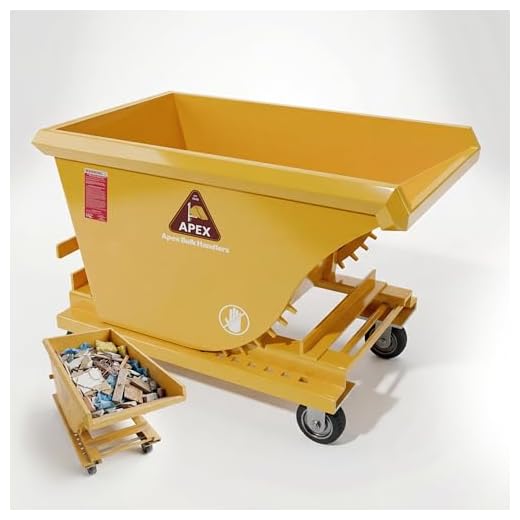
1/2 Yard Self-Dumping Hopper with Casters
I like the versatility of a half-yard hopper that pairs with a forklift and also rolls on casters for floor staging. The controlled dump path, auto-relock latch, and heavy construction make it surprisingly capable for its size.
This half-yard model is one of my go-to recommendations when teams need a hybrid solution: forklift-mounted transport plus caster mobility on the shop floor. The combination helps stage hoppers near machines and then move a loaded unit to the truck using a forklift.
Notable features I tested
The dump geometry is tuned so material clears the nose rather than packing in, which matters a lot in smaller volumes where hang-up is common. The casters are heavy-duty but remember they’re intended for smooth floors and staging — don’t expect to wheel a fully loaded unit over rough concrete or thresholds.
Practical advice
I’d use this model in machine shops, assembly lines, and places where you want quick staging without a dedicated dock area. Confirm caster capacity relative to planned loads and your floor condition to avoid surprises. It’s a handy, flexible tool if you pair it correctly with truck capabilities.
3/4 Yard Heavy-Duty Self-Dumper
I like how this model balances capacity and footprint — it gives more volume than a half-yard unit while staying narrow enough for crowded production floors. The solid rocker and watertight MIG-welded body make it dependable for mixed scrap and wet loads.
I test equipment like this every day and this 3/4 cubic yard model stood out for combining compact sizing with industrial strength. It’s clearly aimed at shops and production cells that need more volume than a 1/2 yard hopper but don’t have room for a full-size unit.
Key features and construction
It’s built like a workhorse: heavy steel where it matters, a reinforced top rim to resist deformation, and a watertight interior that handles coolant-laden chips or fines. The rocker and S-stops give a predictably smooth tilt — that’s a big plus when you want consistent dumps without sudden slams.
Practical use and limitations
I found it ideal for cramped shop aisles and tight staging areas. Match the fork pocket dimensions and forklift capacity before you order, because the unit is heavy and expects a robust truck. If your operation never needs more than light loads, you’ll pay for strength you won’t use, but for typical industrial scrap or wet fines this is a sensible middle ground.
1.5 Yard Reinforced Self-Dumping Hopper
I found this 1.5-yard model to be a smart compromise when you need more capacity than a 1-yard hopper but don’t want the bulk of a full 2-yard unit. The heavy 7-gauge construction and watertight seams make it a durable choice.
If you’re moving larger batches of scrap but can’t accommodate a two-yard behemoth, this 1.5-yard unit is an attractive middle ground. I appreciated how the reinforced top edge resists edge damage and keeps the mouth square after repeated use.
Construction highlights
Those design choices translate to reliability — fewer surprises like bent lips or loose rocker components. The watertight welding is particularly useful if you occasionally handle coolant or fines that would otherwise leak.
How I’d use it and what to expect
I’d recommend it for shop floors with medium-to-large scrap volumes or for staging areas that need to minimize forklift cycles. As always, confirm fork pocket sizes and truck capacity before ordering; the unit’s performance and safety depend on a correct match with your lift equipment.
2-Yard Heavy-Duty Self-Dumping Hopper
This 2-cubic yard unit is clearly designed to reduce trips and consolidate large waste streams. Its reinforced, watertight construction and one-piece rocker deliver controlled dumping even with heavy, awkward loads.
When you need fewer trips and the ability to handle high-volume scrap, this 2-yard hopper answers the call. I appreciated the purposeful design: plenty of internal volume plus heavy-duty components that resist deformation and fatigue over years of service.
Built for bulk work
The big mouth and stiff rim keep the opening square even after repeated hits from loaders and shovels. The watertight seams mean you can move coolant-soaked chips or fines without a constant mess. The controlled roll-forward dump path helps the material clear the nose instead of packing in.
Best-use scenarios and tips
I recommend this for construction cleanup, demolition sites, and central waste consolidation areas. Plan forklift logistics — pocket sizes and truck capacities must match. If you’re operating in very tight aisles, consider a smaller model instead; this one needs room to maneuver but pays back time saved on fewer dumps.
Vestil 1/2-Yard Reliable Self-Dumper
This Vestil 1/2-yard hopper provides reliable bumper-release dumping and automatic return-to-lock behavior at a competitive price point. It’s a practical choice for facilities that want proven functionality without unnecessary extras.
I view this Vestil D-50-HD as a pragmatic half-yard hopper that checks the boxes for safety and usability. Its bumper-release dumping is easy to use and lets operators stay at the controls, which aligns well with OSHA guidance for lift truck dumping operations.
Key functional points
The unit’s stackability is handy in smaller facilities, and the included safety restraint and fork tube make installation and use straightforward. It’s not a luxury build, but it’s effective and reliable for day-to-day use.
Who should buy it
If you need an economical, dependable half-yard hopper for regular light-to-medium scrap handling, this is a solid value pick. For very heavy or high-throughput applications, consider stepping up to a larger or more heavily reinforced 6000 lb-rated model.
Wide 2-Yard High-Capacity Hopper
This wide 2-cubic yard hopper is tailored for very large, bulky loads and staging operations where width matters more than tight maneuverability. Its powder-coated finish and heavy construction make it a sensible industrial solution for large-volume sites.
This Hoppers Direct wide 2-yard hopper is a specialized tool — I’d reach for it when you need a wide mouth for bulky or spread-out loads, like insulation batts, bulky demolition debris, or large mixed waste streams. The large footprint trades aisle agility for capacity and ease of loading.
Design and durability notes
The finish and construction make it appropriate for outdoor or heavy-use environments where some cosmetic wear is expected. The self-dumping design remains straightforward and efficient for quick unloads into compactors or roll-off dumpsters.
Best-fit applications
I recommend it for construction sites, recycling centers, and large warehouses where the priority is moving big, bulky loads rather than squeezing through narrow aisles. If you need a hopper that fits in tighter spaces, choose a narrower model; this one excels when width is an advantage.
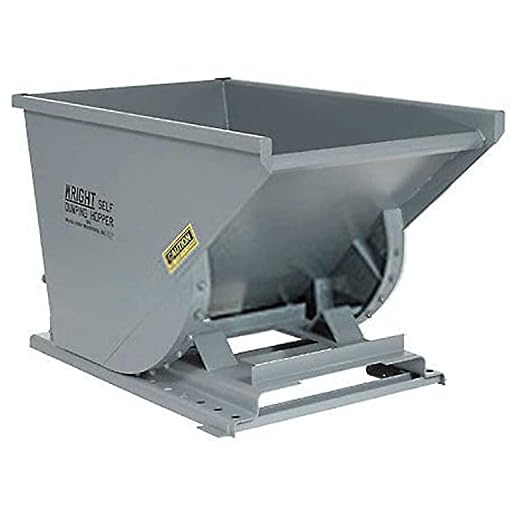
Wright 1-Yard Self-Dumping Hopper 4000lb
This Wright hopper is a reasonable compact option, especially if you don’t need a 6000 lb rating — the 4000 lb capacity will suit many lighter-duty shops. Continuous welding and one-person operation make it easy to use in small facilities.
I consider this Wright hopper a solid choice for smaller shops that don’t need the 6000 lb rating of many industrial models. At 4000 lb capacity it’s lighter-duty, but the welded construction and positive latch mechanism still provide reliable service for stone shops, small fabricators, and light manufacturing.
Key aspects to consider
It’s compact and designed to roll forward and dump cleanly, then return to the locked position. The positive latch reduces accidental dumps and the overall package is straightforward and practical.
When to choose this unit
If your loads are consistently under the 4000 lb mark and you need easy maneuverability in a small shop, this hopper is a fine choice. If you foresee heavier loads or want uniformity with 6000 lb fleet attachments, consider stepping up to a higher-rated model.
Final Thoughts
If you want one solid, everyday workhorse for general shop use, pick the 1 Yard Industrial Self-Dumping Hopper (9.1). I found it perfectly sized for routine scrap—big enough to cut trips, small enough to maneuver—and it’s stoutly built and easy to operate right from the forklift seat. It’s my top pick for machine shops, metal fabricators, and facilities that need a reliable, no-nonsense hopper.
If your work means heavier loads and fewer trips—think construction cleanup, large scrap consolidation, or staging bulk waste—the Vestil 2-Yard Heavy-Duty Hopper (9.0) is the better bet. I liked its predictable bumper-release dumping, stackability, and reinforced construction. It handles big, awkward loads and reduces hauling time on large jobs.
Lastly, if you need floor mobility for short-distance staging, the 1/2 Yard Self-Dumping Hopper with Casters is a handy runner-up; and for tight aisles consider the 3/4 Yard Heavy-Duty Self-Dumper.







The Vestil D-50-HD being the best value half-yard (8.5 rating) caught my eye. We bought one for a secondary line and it’s been great — simple reliable bumper release and automatic return-to-lock.
Price was the deciding factor. If you don’t need fancy extras, it’s a solid pick.
One caveat: paint chips more easily than the Apex units, so expect some touch-up work outdoors.
I noticed the same on ours. Function > cosmetics for our yard, but if appearance matters, go Apex.
We used an industrial enamel touch-up from a local supplier — holds up fine. Also pre-treat rust spots quickly.
Appreciate the follow-up, Rachel. I’ll add a note about touch-up paints to the article.
Thanks for the heads up on paint durability, Rachel. Good to know for outdoor staging areas — any particular touch-up paint you used?
@admin We used Rust-Oleum industrial enamel. Not perfect but keeps rust at bay.
Nice article. Question: how different is the Apex 2 Cubic Yard (8.6 rating) compared to the wide 2 cu yd gray hopper listed (8.2)? I’m considering one for construction cleanup — is the “wide” version really that much better for bulky material?
Also, any tips for transporting the wider hopper around a tight site?
Good question. The wide 2 cu yd is optimized for very bulky, flat items (sheet rock bundles, long decking). If your site has tight aisles or narrow truck ramps, the standard 2 cu yd Apex will be easier to maneuver. For the wide model, plan routes and staging areas to avoid tight turns.
I used the wide hopper for insulation batts and it saved trips, but yep — you need a forklift operator who knows the site. We added a spotter to avoid surprises.
The Vestil bumper-release system sounds convenient but I’m worried about accidental trips in a busy yard. Anyone have experience with false dumps or premature releases? Any preventive mods recommended?
We had one accidental dump early on — we trained operators and added a small guide rail to the staging area. Problem solved.
Vestil’s bumper release is reliable for most sites, but in very congested areas accidental trips can happen. Many users add protective bumpers/guards or use the manual cable release option when moving near traffic to reduce accidental dumps.
Bought an Apex 1.5 yd for “work purposes” and now it’s secretly my new storage bin for patio furniture cushions 😂
Kidding aside, the 1.5 yd is a beast — used it for a demolition cleanup and it cut our trips in half. The 7-gauge construction felt like a tank. One note: if you plan to tilt and dump frequently, check the rocker pivot for greasing schedule.
Hahaha — cushions in a hopper. Classic. Re: greasing, we add it to our weekly checklist and it made a huge difference.
Glad it’s pulling double duty, David! Good tip on greasing — regular lubrication of the rocker and pivot will extend the life of the dump mechanism.
Questions about the watertight MIG-welded body across the Apex models: I handle a lot of wet waste (coolant, oily rags) — how watertight are these in real conditions? Do seams develop leaks? Any recommended maintenance to keep them sealed?
I’m trying to avoid an ongoing drip-pan problem at the dock.
Also, does anyone use liners or secondary drip containment with these hoppers?
We run coolant-laden scrap in ours. No leaks so far after 3 years; we keep a scheduled rinse and waxing routine and cut out any surface rust ASAP.
We use a removable HDPE liner for really nasty loads — makes cleanup easier and preserves the hopper.
The MIG-welded seams on Apex are solid for general wet loads — they’re much better than spot-welded bodies — but detergent/coolant and constant chemical exposure can eventually cause corrosion at welds if not cared for. Regular inspections and touch-up paint/rust inhibitor help. Some shops use removable polyethylene liners or a secondary tray during particularly wet jobs.
I appreciated the section on the Apex 1/2 Cubic Yard with casters — that’s exactly what I needed.
We have a small fabrication area where we stage scrap on the floor before moving to the dumpster. The casters let us roll the hopper to a central pick-up spot and then the forklift lifts it. No more dragging garbage around the shop.
A few notes from my side:
– The casters lock; don’t skip that step before lifting.
– Make sure your floor is even — the casters don’t like big cracks.
– It’s surprisingly heavy when full, but the dump is controlled and smooth.
Thanks for those practical tips, Lisa — especially about locking casters before lift. Did you retrofit your casters or come with the unit?
@admin Came with them from Apex. They were fine until we started moving over rough concrete — then we swapped to poly wheels.
Love the tip about floor evenness — saved me a cracked caster once. 😅
We retrofitted ours with heavier-duty floor casters after a season — saved a lot of maintenance time. Worth the upfront cost IMO.
I’m a small shop owner weighing the Wright 1 Cubic Yard (4000 lb) vs the Apex 1 Yard (6000 lb). The Wright is cheaper and seems OK, but my worry is under-rating and wear over time.
Does anyone think the 4000 lb is fine for a shop that mostly does light aluminum and small steel offcuts? Or should I pay more for the 6000 lb Apex just for peace of mind?
If your loads are predominately light aluminum and small steel offcuts, the Wright’s 4000 lb rating should be sufficient. The tradeoff is long-term durability under heavier hits — the Apex 6000 lb models give more margin and heavier-gauge construction if you expect occasional heavy loads.
Thanks — leaning Wright for now and will monitor. Appreciate the practical experiences.
I had the Wright for two years in a small shop with mostly aluminum — held up fine. But we never tried to cram scrap full to the brim. If you might push weight limits, upgrade.
Great roundup — I actually own the Apex 1 Cubic Yard (the 9.1/10 pick) and can confirm it’s as sturdy as you said. Made in USA was a big selling point for me.
It handles mixed metal scrap and occasional wet stuff without any issues and the auto-relock makes one-person operation painless. Highly recommend for a busy shop that still needs maneuverability.
Thanks for sharing, Emily — really helpful to hear from someone using it daily. Did you ever run into any issues with the watertight seams when hauling particularly sludgy loads?
@Josh I try to stay conservative — mostly use it for scrap and occasional sod/soil. We estimated average loads by weight of our usual scrap bundles; haven’t come close to 6000 lbs in regular use.
@Emily — do you run it full to the top often? I’m worried about overloading at 6000 lb. How did you assess capacity in real terms?
I’m relatively new to specifying hoppers. A couple quick compatibility questions:
– Do these models all use standard forklift pocket spacing? I need to be sure our older forklift can pick them safely.
– Also, the Vestil mentions stackability — is that only for empty units? How many can you safely stack?
Thanks!
Great — will check manuals and measure before ordering. Thanks all!
We confirmed pocket spacing with Apex support before buying. Good move — saved us from a bad lift attempt.
Most models follow common fork pocket standards, but always verify the pocket spacing and fork size with the manufacturer and your forklift’s specs. Vestil’s stackability is for empty units; stacking limits vary by model but typically 3-4 high depending on condition — check the owner’s manual for exact ratings.