


Dry Air, No Drama — Which Ingersoll Rand Dryer Will Save Your parts (and your schedule) in 2026?
Moisture ruins jobs. One puff of humid air and suddenly your paint runs, valves corrode, or electronics misbehave. I’ve seen it happen — and I’m not letting it happen to you.
I spent time comparing flow, inlet-temp tolerance, and operating cost. I focused on real workshop needs. Short list. Clear winners. No fluff.
Top Picks



Modular Heatless Desiccant Dryer −40°F Dew Point
I rely on its -40°F dew point performance for paint booths, control air, and electronics applications where moisture is unacceptable. Its modular, point-of-use design makes it efficient and cost-effective for targeted drying.
Why I pick a modular desiccant dryer
When absolute low dew point is needed at the point of use, this modular heatless desiccant dryer is my go-to. It’s designed for critical environments like paint spraying, laboratory instrument supply, and control air where moisture could ruin finishes or instruments.
Standout features
The unit focuses on creating very dry air at the point of use rather than trying to dry an entire plant air stream. Key characteristics I value include:
By concentrating drying capacity where it’s needed, you avoid paying to dry the whole system to the same extreme level — which is a sensible trade-off in many operations.
Real-world advantages and trade-offs
In my experience, teams that need flawless paint finishes or consistent instrument air will gladly accept the higher cost and smaller flow capacity. For example, a paint shop that places one of these units at each booth sees far fewer runs and finish defects. The trade-off is that these units don’t replace plant-scale refrigerated dryers — they complement them. Keep in mind the modest flow rating and plan multiple units if you have several point-of-use stations.
Bottom line
If you require guaranteed low dew point at a specific location, this unit is worth the investment. I recommend it for critical, point-of-use installations where moisture control directly affects quality.
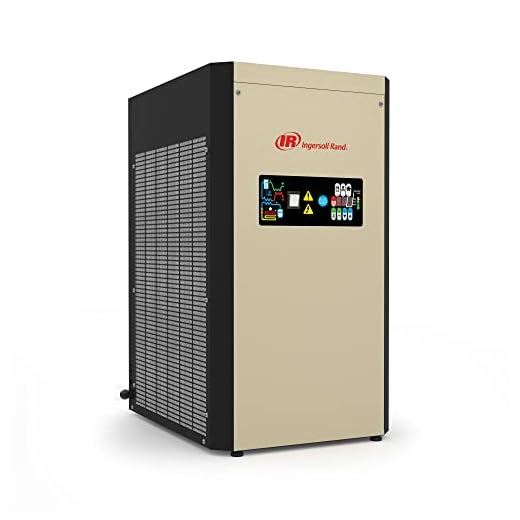
High Capacity Refrigerated Dryer 60 SCFM
I recommend it for operations that need higher flow while still handling elevated inlet temperatures. The 60 SCFM capacity and rugged construction make it a go-to for light industrial and production environments.
Capacity and intended use
I pick this model when I need a dryer with meaningful capacity for a larger shop or light industrial application. It’s designed to sit downstream of compressors that may not have aftercoolers and still provide consistent dry air.
What stands out
The primary strengths are capacity and the ability to handle hotter inlet air. Key features I value include:
These attributes mean fewer constraints on where you mount the unit and how you use compressed air in production lines.
Real-world considerations
In my experience, this dryer works well as the main dryer for small factories or as a central dryer for multiple workstations. Expect a larger footprint and the need for periodic maintenance on the refrigeration and demisting components. Also ensure you have proper venting and service access during installation.
Who should consider it
If you run multiple tools, a small assembly line, or light manufacturing where moisture can degrade quality, this dryer is a reliable choice that balances capacity, durability, and high-temperature capability.
Energy-Efficient Refrigerated Dryer 32 SCFM
I like the energy-savings features and the programmable drain that reduces air loss. It's a good mid-range refrigerated dryer for shops that want lower operating costs without sacrificing reliability.
Purpose and fit
I turn to this model when a shop wants a balance between capacity and energy efficiency. It’s suitable for small-to-medium compressed air systems where reducing operating costs is a priority.
Notable features
The unit focuses on minimizing wasted air and improving long-term reliability. Important points I pay attention to include:
These items add up to lower energy consumption when compared with less efficient refrigerated dryers, which can be noticeable on monthly utility bills.
Benefits and real-world usage
In practice, I’ve seen shops cut unnecessary air loss and stabilize downstream processes by using a dryer with these controls. It’s not the cheapest option up-front, but the operational savings and durability justify the cost for many buyers. On the flip side, owners should plan routine inspections of the drain and heat exchanger to keep efficiency high.
Who should buy it
Choose this dryer if you’re looking to improve energy efficiency on a 32 SCFM line and want programmable features to control condensate without sacrificing reliability.
High-Temp Refrigerated Dryer 35 SCFM
I like that it balances a useful capacity with the ability to accept very hot inlet air, making it versatile for many light industrial settings. It’s a solid middle ground if you need more than the smallest units but don’t want a plant-scale system.
Who this model is for
I recommend this dryer when you need higher flow than the smallest point-of-use units but still want a system that tolerates high inlet temperatures. It fits well in small manufacturing cells, automotive shops, and light processing lines.
Features I pay attention to
This model’s strength is the combination of capacity and high inlet tolerance. Noteworthy elements include:
That combination means fewer upstream constraints (like needing a heavy-duty aftercooler) and more flexibility in how you route compressed air.
Practical insights and limitations
In everyday use, the unit is easy to integrate into a compressed air system and gives predictable drying performance. The trade-offs are size and weight — it’s not as compact as the smallest point-of-use dryers, and it doesn’t replace a whole-plant dryer if you have large demands. If your shop runs multiple tools, plan the compressor and piping so you don’t starve the dryer at peak demand.
Final thoughts
For many small-to-medium operations that encounter hot inlet air, this dryer is a very practical and dependable choice. I’d pick it when I need capacity and temperature flexibility without stepping up to industrial-scale equipment.
High Inlet Temp Refrigerated Dryer 15 SCFM
I appreciate its ability to handle very hot inlet air without sacrificing continuous dry-air performance. It’s a practical, budget-friendly choice when you need dependable drying at elevated inlet temperatures.
What this unit is for
I use this model when I need a compact refrigerated dryer that won’t choke on high inlet temperatures. It’s designed to keep dew point consistent across different load levels, which matters when downstream equipment and processes are sensitive to moisture.
Key features and why they matter
The design focuses on handling elevated inlet temperatures and keeping long-term operating costs reasonable. Practical highlights include:
These features translate to reliable, continuous dry air for light processing, auto shops, dry cleaning, and similar applications. In my experience, the stable dew point is especially useful when you don’t have an aftercooler on the compressor.
Practical benefits and limitations
You get a strong value proposition: durable components, straightforward installation, and predictable performance in its flow range. I like that it’s compact and relatively easy to service. That said, the 15 SCFM capacity is restrictive — it’s best at point-of-use or for small compressors rather than large plant systems.
Final take and use cases
If you need a no-nonsense dryer that tolerates hot inlet air and keeps operating costs down, this is a solid pick. I’d recommend it for small workshops, specialty processing lines, or as a dedicated dryer for a critical downstream piece of equipment.
High Inlet Temp Dryer 25 SCFM Reliable
I find it to be a practical option when you need a bit more capacity than the smallest units but still want high inlet temperature tolerance. It offers reliable performance at a reasonable cost for many shops.
Use case and positioning
I recommend this dryer for small-to-medium operations that want more throughput than a point-of-use unit but don’t need plant-scale equipment. It hits a sweet spot for many automotive, light manufacturing, and maintenance shops.
Core features I value
The unit emphasizes usability and temperature tolerance. Highlights include:
Those features give consistent dew point control in many everyday shop situations and reduce the need for costly upstream cooling.
Practical advice and limitations
In practice, this dryer installs easily in typical compressed air layouts and performs reliably when sized correctly. However, it won’t replace larger central dryers if your operation grows significantly. I recommend planning piping and compressor sizing so the dryer isn’t undersized during peak demand.
Summary
If you want a mid-capacity dryer that tolerates hot inlet air and delivers dependable drying for a range of uses, this model represents a very reasonable value. I’d choose it when I need dependable, straightforward performance without overspending on excess capacity.
Refrigerated Non-Cycling Dryer 42 SCFM
I find it dependable for steady-duty mid-range flows and appreciate the low-maintenance design. On hot, humid days it can struggle to meet its full rated capacity, so I recommend checking performance in your climate.
Purpose and performance
I choose this model when a shop needs a steady, no-fuss dryer that runs continuously without complex cycling. It’s aimed at mid-range flows where you want reliable dew point control and minimal operator intervention.
Key design points
The dryer combines a refrigeration system with an efficient heat exchanger to cool and remove moisture. Important attributes include:
These features make it a dependable choice for production environments where uptime matters.
Practical notes and observed limitations
In day-to-day use, the dryer is robust and generally lives up to expectations. However, I’ve seen it struggle to hold its rated capacity during extreme ambient conditions; on very hot humid days it may perform below the nominal 42 SCFM. For owners in warm, humid climates I suggest validating performance under worst-case conditions or oversizing slightly.
Who it suits
This dryer is a solid option for workshops and small plants that value low maintenance and steady performance. If you need guaranteed full capacity under all ambient extremes, consider a higher-capacity or specialty solution.
Final Thoughts
I recommend two clear winners depending on what you need most:
If you care most about operating cost and energy use but don’t need desiccant-level dryness, consider the Energy‑Efficient Refrigerated Dryer 32 SCFM as a strong alternative — it saves energy while providing reliable mid-range drying.







Long post incoming because this is exactly the headache I have been living with.
I run a mixed shop with some delicate electronic assembly and some rougher fabrication. The DA5IM looks perfect for the electronics side (that -40°F dew point is amazing), but I’m nervous about juggling two systems (desiccant for the bench, refrigerated for the shop).
Questions:
1) Is it realistic to run a point-of-use desiccant for the assembly bench and a refrigerated dryer on the main compressor?
2) How big of a PITA is the desiccant maintenance (I’ve read both ‘easy swap’ and ‘expensive consumables’)?
3) Any tips on plumbing/layout so the two systems don’t fight each other?
One more quick note: balance upfront cost vs downtime risk. If the electronics line failing costs more than bead replacement, desiccant is worth it. Otherwise, try a thorough pre-filtering + refrigerated dryer and monitor dew point — might be sufficient and lower OPEX.
I did exactly this. Point-of-use desiccant for the spray booths and a refrigerated dryer on the main. Put a small pre-filter before the desiccant — it extended bead life a ton. Also label the lines so folks don’t accidentally tap into the wrong air.
If budget allows, get a flow meter on the PU line. You’d be surprised how often little leaks or tool changes spike consumption and kill your dry-air budget.
FWIW: some admins forget to lock access to the desiccant manifold and someone turns on an air gun at the bench — been there, hahaha. Isolation valves + signage = lifesaver.
Totally realistic — many shops use a hybrid approach. Desiccant at point-of-use for electronics and refrigerated for general shop compressed air is common. For maintenance: desiccant cartridges can be a consumable, but modular units like the DA5IM are designed for easier swaps, and you won’t need to replace beads as often if the main system pre-dries the air somewhat.
Plumbing tip: install isolation valves and pressure/flow monitoring. Use the desiccant only on lines feeding the critical equipment and keep pressure regulators downstream. That way the main system isn’t forced to match delicate process requirements.
I’ve got the D102IT in our larger shop and agree with the review — it’s rugged and handles our higher inlet temps decently. Only gripe is that it’s a bit noisy compared to smaller units.
If anyone’s on the fence between the D42IT and D60IT, consider future growth: the D60IT’s 35 SCFM bought us breathing room when we added another line. Spend a little more now and you might avoid swapping later.
Noise is real. We put vibration isolation pads and a small sound enclosure — cut noise by a lot without hurting cooling. Worth the DIY effort.
Agree on oversizing. We almost outgrew our D42IT sooner than expected when adding a second paint booth. Lesson learned the hard way.
Does the D102IT need a dedicated circuit? Thinking about electrical work and layout before buying one.
Excellent point about growth. Many readers underestimate future demand. The D60IT hitting 35 SCFM is a nice middle ground between small shop units and larger plant systems.
Nice roundup — feels like an Ingersoll Rand fanclub here lol. 😅
One thing I wanted to mention for anyone buying on Amazon: check the seller and warranty registration stuff carefully. I bought a similar unit once and had to chase paperwork for weeks. Buyer beware!
Also save photos of the unit and packing when it arrives. I had to prove the unit was damaged in shipping once and photos were the only thing that got Amazon to cooperate.
If possible, buy local or through a distributor who handles install. That way you often get a buffer for warranty/service and easier returns.
Thanks for the heads-up, Tom. Good advice: buy from authorized sellers, keep serial numbers and invoices, and register the product with the manufacturer ASAP. That usually smooths any warranty claims.
I appreciated the energy-savings callout for the D54IN. We swapped an older refrigerated dryer for the D54IN (32 SCFM) and noticed a small dip in power draw thanks to the programmable drain.
Anyone have hard numbers on how much the drain saves on a monthly electric bill?
Numbers vary a lot with your duty cycle, but users commonly report 5–15% lower compressed air loss when using programmable drains vs fixed drains, which translates to similar percentages in energy saved on compressor run-time. If you want an estimate, tell me your compressor size and average run hours and I can rough-calc it for you.
We saw around 8% reduction in compressor run-time after switching to a model with a programmable drain — our electric bill dropped accordingly. Not huge but worth it over time.
Quick Q: For a one-person woodworking shop, would the D25IT (15 SCFM, high inlet temp) be overkill? I’m not great at sizing stuff 😂
Also, is inlet temp tolerance only important if your compressor room gets hot?
If you mostly run a single tool at a time, measure the tool’s scfm and add a safety margin. I used a cheap flow meter app and it helped a lot. Also, the D25IT is robust for hotter environments, so if your garage heats up in summer it’s a safe choice.
For a one-person woodworking shop, the D25IT could be fine if your compressor is small and your max flow needs are under 15 SCFM. High inlet temp tolerance matters if your compressor runs hot or is poorly ventilated — it prevents performance loss. If your compressor sits in a cool, ventilated area, you might get away with a standard refrigerated unit of similar SCFM.
That note about the D72IN struggling on hot, humid days caught my eye. I live in Florida and we get brutal humidity — has anyone tested the D72IN (42 SCFM) in a climate like that? Does it fall off a cliff or just lose a little capacity?
Also check where the dryer is installed — basement/air-conditioned room vs outside shed makes a big difference. Shading and ventilation for the dryer can improve performance a surprising amount.
If your processes are critical, desiccant is the safer bet in FL. But yes, more maintenance/consumables. Trade-offs everywhere. 🙂
Good question, Sara. In very hot/humid climates refrigerated dryers like the D72IN can lose efficiency because the condenser has to work harder. Expect some reduced capacity on peak days — sometimes 10–30% depending on how extreme the conditions are. For Florida, consider oversizing slightly or looking at a non-cycling or higher-rated refrigerated unit, or a desiccant option if you need consistent low dew point.
I run a similar capacity unit in Tampa. It doesn’t die completely but it definitely nags you during July. We ended up adding a pre-cooler and it helped a lot.
Great roundup — I actually use the Ingersoll Rand 47675073001 (DA5IM) in my small paint booth and can confirm the -40°F dew point is no joke. It saved me from several rework jobs.
I do wonder about the long-term maintenance costs for the desiccant beads though. Anyone here replaced them, or is service mainly cartridge swaps?
Curious — are you running it continuously or cycled? Continuous duty might shorten bead life. I run mine on demand and it’s been fine for 3 years so far.
I’ve swapped beads once after about 4 years on a similar unit. Not cheap, but way cheaper than messed-up paint jobs. Also, check local service shops — some offer recharging cheaper than factory parts.
Thanks for sharing your experience, Michael — really helpful. For that model the desiccant cartridges are modular, so you usually replace or recondition the cartridges rather than the whole unit. Service intervals depend on run hours and inlet moisture but many shops report multi-year life with periodic checks.