
I Picked 4 Powermatic Wood Lathes for Sale on Amazon


Which Powermatic Will Steal Your Shop’s Heart — and Survive Your Worst Bowl Gouge?
Big projects demand big machines. I’ve stood in front of a blank chunk of wood and wanted a lathe that feels like a partner, not a problem. Short story: some of these Powermatics will make you grin. Others will just sit pretty in the corner.
I tested capacity, vibration, and real-world features so you don’t have to. I’ll cut to what matters: size, stability, and useful extras (risers, digital indexing). No fluff. Just what works in the shop.
Top Picks
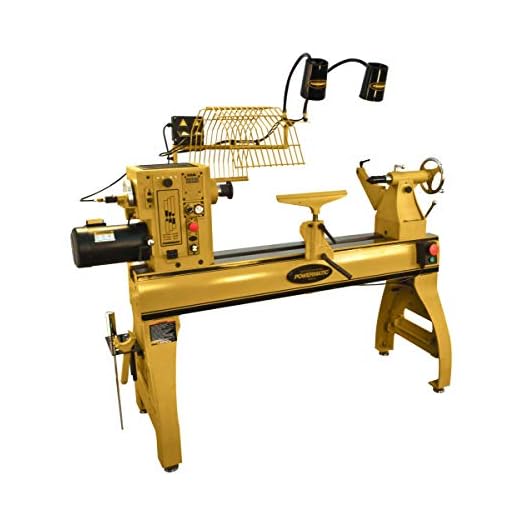
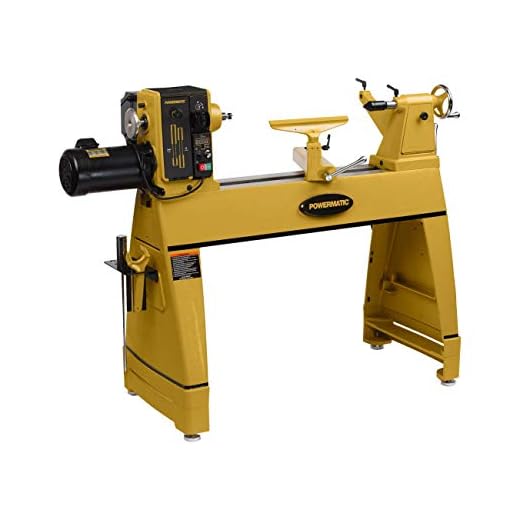

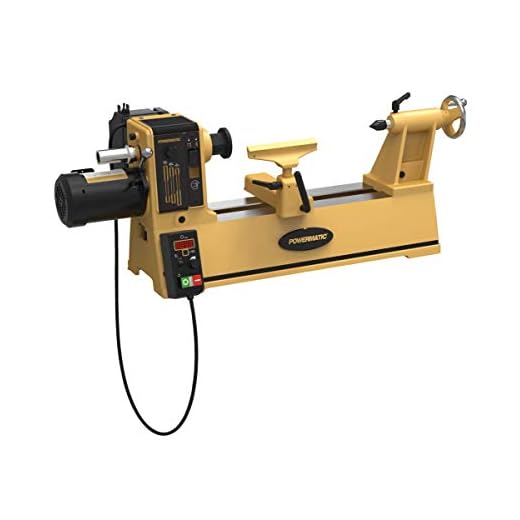

Powermatic 4224B 24x42 Heavy-Duty Lathe
I appreciate the build quality and capacity — this machine is built to take on very large turning projects with minimal vibration. Its feature set and heavy cast-iron construction make it a shop centerpiece for professionals or serious hobbyists.
Heavy-capacity professional lathe built to last
I look at this as a shop-grade machine designed to expand what you can turn. The 24" swing over bed and 42" between centers, paired with a 3 HP motor and nearly 1,000 pounds of cast iron, make it ideal when you need to tackle very large bowls, platters, or architectural spindles.
Features and what they mean in practice
The sliding headstock and EVS (electronic variable speed) let me set speeds precisely without belt changes, which is invaluable when switching between spindle work and outboard bowl turning. The included accessories — vacuum chuck, air blow gun, knockout rod — shave time off setup and cleanup. The oversized tailstock and solid banjo reduce chatter on big pieces.
Benefits, limitations, and my takeaways
Because of the machine's weight and footprint, I recommend planning for delivery, installation, and a dedicated area in your shop. If you turn big blanks regularly, the investment pays off through smoother cuts and fewer limitations. For someone who only does occasional small projects, this lathe is overkill but unmatched for heavy work.
Practical tips and user notes
I found the integrated sockets and overhead lighting thoughtful for accessory use and visibility. A few users reported minor cosmetic shipping scuffs and wished for more detailed manuals on vacuum chuck requirements — expect to research compressor sizing if you plan to use the vacuum often. Overall, this is a workhorse I’d choose when capacity and durability are top priorities.
Powermatic 3520C 20x35 Professional Lathe
I find this model hits the sweet spot between capability and workshop practicality — big enough for serious bowls and spindles while still manageable in a dedicated shop. The combination of sliding headstock, digital indexing, and strong motor makes it a top pick for professional and advanced hobbyist use.
Professional-grade lathe for serious turners
I consider this lathe one of the most versatile mid-to-large shop lathes. With a 20" swing and 35" between centers, it comfortably handles a wide range of bowl and spindle projects while offering refinements that improve workflow, like the sliding headstock and digital RPM/indexing readouts.
Why these features matter
The digital indexing and spindle lock simplify repetitive operations and complex detail work, while the movable control box means I can position controls where they're easiest to reach. The adjustable risers let me work standing or sitting comfortably when tackling taller pieces.
Real-world benefits and trade-offs
In use, the lathe feels solid and minimizes vibration even on larger blanks; the heavier cast-iron construction helps a lot. That said, you’ll need assistance during setup and a proper electrical supply (220V) for the 2 HP motor. If you want a single dependable lathe to grow into, this is one I recommend.
Practical notes and user feedback
I’ve seen reports of excellent long-term durability and praise for the ergonomics. A few users noted the price is steep but generally felt the performance justified it for professional use. If you frequently switch between spindle and bowl work, the feature set will save time and reduce frustration.
Powermatic 3520C with Risers and Support
I value the added bowl-turning support and risers included in this configuration — they make outboard and large-bowl work more approachable. It retains the core strengths of the 3520C while adding convenience for bowl-focused turners.
A 3520C focused on bowl turners
I recommend this variant if your turning leans heavily toward bowls and outboard work. The risers increase clearance for larger blanks and the included Powermatic tool support is sized and built for extended bowl turning sessions, which reduces user fatigue and improves safety.
Why the bundle matters in practice
The risers let me position my tools and body more ergonomically when working on deep or large-diameter bowls; that small change alone can extend comfortable turning sessions. The included tool support is more rigid and purpose-built than generic aftermarket options, which pays off on larger, heavy cuts.
Considerations before buying
You still need the same shop space, 220V supply, and handling plan as the standard 3520C. The bundled configuration increases upfront cost, but I think it’s good value if you’ll use the bowl turning features regularly. If bowl turning is occasional, the standard 3520C may suffice.
Powermatic PM2014 14x20 Benchtop Lathe
I see this as a solid step up for hobbyists who want a compact, feature-rich benchtop lathe. It offers excellent speed range and digital controls, though there are some reports of intermittent reliability issues that warrant consideration.
Compact, feature-packed benchtop lathe
I like this lathe when space is limited but precision and modern controls matter. The PM2014 delivers a 14" swing and 20" between centers with a 1 HP inverter that mimics three-phase performance on standard 120V power, giving lots of usable RPM for small projects.
What this model does well and where it stumbles
For small bowls, pens, and spindle work this lathe feels beefy and precise. The digital and magnetic controls are a pleasure to use and simplify repetitive tasks. However, I’ve seen several users experience headstock “ticks” or reliability concerns — if you rely on long-term steady operation, you should watch reviews and consider warranty/service options.
Practical tips and observations
I’d recommend verifying the serial/version you receive and testing rotation under load early to detect any issues. For makers stepping up from mini-lathes, the PM2014 is a great transitional machine, but if absolute reliability is critical for your backlog of commissions, you might also evaluate competing benchtop offerings or extended service plans.
WEN 34035 14x20 Variable-Speed Lathe
I recommend this model for hobbyists and beginners who want a capable lathe without a large investment. It offers a wide speed range and useful accessories, though it's less robust than premium brands and may require some user adjustments.
A practical, affordable entry-level benchtop lathe
I see this WEN as a compelling choice when budget matters but you still want a flexible machine. The 14" swing and 20" between centers cover most small-to-medium projects — pens, small bowls, candle holders, and modest vases — and the variable-speed motor is unusually versatile for this price point.
What I like and where it shows its class
For hobby turning the unit is user-friendly and surprisingly capable; the motor is quiet and the bed keeps things reasonably stable. That said, you’re trading off the premium build, heavier cast iron, and long-term durability of high-end brands. Expect to do a little setup and small tweaks — users report occasional minor shipping or QC issues that the company typically covers.
Buying advice and workshop tips
If you’re learning or need a workshop lathe for intermittent projects, this is a smart, low-risk purchase. I suggest mounting it to a sturdy bench or stand, check all electrical connections on arrival, and keep the warranty/contact info handy. For regular professional work, you’ll likely outgrow it, but it’s a great stepping-stone into woodturning.
Final Thoughts
If you want a single-machine shop centerpiece that handles truly large work without complaining, buy the Powermatic 4224B 24x42 Heavy-Duty Lathe. Its cast-iron mass, long bed, and vibration control make it the go-to for large bowls, spindles, and production work. Mount it to the floor, give it space, and use it for anything from big hollow forms to table legs.
For most professionals and serious hobbyists who want the best balance of capability and shop practicality, get the Powermatic 3520C 20x35 Professional Lathe. It’s big enough for impressive bowls and long spindles, yet compact enough to fit a dedicated shop. If you turn a lot of bowls, consider the 3520C configuration with risers and outboard support — it adds outboard capacity that actually changes what you can create.
If you need a compact, affordable option for learning or light projects, the PM2014 and the WEN 34035 are decent, but they’re not long-term substitutes for the top two picks.
Guide: How I Choose and Use a Powermatic Lathe
Choosing a lathe comes down to three practical numbers: swing over bed, distance between centers, and mass/stiffness. Swing tells you the largest diameter you can turn without a riser. Distance between centers tells you how long a spindle you can mount. Mass and stiffness (cast-iron bed, column, and headstock) determine how heavy a cut the machine will tolerate without chatter. I balance these factors against available shop space.
Quick comparison
| Model | Swing x Distance | Best for | Expert rating |
|---|---|---|---|
| Powermatic 4224B | 24 x 42 | Large-scale turning, production work | 9.5/10 |
| Powermatic 3520C | 20 x 35 | All-around professional use | 9/10 |
| 3520C (with risers/support) | 20 x 35 + riser | Bowl turning, outboard work | 8.8/10 |
| Powermatic PM2014 | 14 x 20 | Compact benchtop, hobbyists | 7.2/10 |
| WEN 34035 | 14 x 20 | Budget benchtop, beginners | 7/10 |
Use the table to match your project scale to the machine. If you want to regularly do 18"–24" bowls, aim for the 4224B or a 3520C with risers. For pens, small bowls, and practice, benchtops are fine.
Features I prioritize
Setup, installation, and first runs
Maintenance and safety basics
If you want help choosing between the 4224B and the 3520C for a specific project type (e.g., bowls vs. spindle sets vs. production pieces), tell me what you make most and I’ll point you to the perfect setup and must-have accessories.
FAQ
Not usually. The 4224B is a shop centerpiece — heavy, large, and best if you regularly do big bowls or long spindles. For most small shops the 3520C hits the sweet spot: plenty of capacity without requiring a dedicated machine room.
Risers and outboard support let you turn large bowls off the bed (outboard). That means bigger diameters without cutting the bed or improvising. If bowl turning is your primary focus, the riser kit is worth the extra spend.
Yes — for small bowls, pens, and hobby projects. They’re fine for learning and occasional work. But they lack the mass and damping of a floor lathe, so expect more vibration and limits on heavy cuts and large diameters.
Start with a quality set of bowl and spindle gouges, a few faceplates, a good drive center, and a steady rest if you plan long or skinny turns. For bowl work add a large-diameter chuck and, if doing outboard turning, a riser or outboard support.
Check if the listing ships freight and whether the seller offers lift-gate service or white-glove delivery. Read the warranty details and confirm return/assembly options. For heavy machines, plan help for uncrating and assembly.
Powermatic lathes are generally well-damped; the 4224B is best for minimal vibration thanks to heavy cast-iron construction. Smaller benchtops (PM2014, WEN) will show more vibration under heavy cuts — use lower speeds and sharp tools to help.





Quick Q: For folks on 110/120V only, is the PM2014 really the only Powermatic option on Amazon? I don’t want to rewire my garage but would like something more ‘pro’ than the tiny Chinese mini-lathes.
If you want more muscle on 120V, your options are limited. Consider upgrading wiring if you plan heavier work in the future.
On Amazon, PM2014 is the main 120V Powermatic option listed in this roundup. If rewiring isn’t an option, the WEN or PM2014 are the two practical choices here.
So the PM2014 is basically a pocket-sized boss for small projects? 😂 I’m thinking of moving from a cheap mini-lathe — is the PM2014 a sensible ‘grown-up’ step, or do I bite the bullet on a 3520C?
PM2014 = less space, less headache. But if you want to grow into bigger projects soon, plan for the 3520C.
PM2014 is a great step up if you mostly do pens, small bowls, and spindle work and you need 120V. If you foresee large bowls or heavier work, go with the 3520C when you can accommodate the size and voltage.
I’ve been turning for a decade and upgrading to a 4224B was the best shop decision I’ve made. It’s heavy, yes, but the stability and finish cuts are night-and-day.
If you worry about vibration, this solves most of it. More mass = less chatter. Just plan space and electrical.
Thanks for sharing your experience — that’s the impression many pros report. Good note on planning for space and power.
Totally — mass is everything. Also consider the extra weight for mounting and moving, even within a shop.
Also, get a decent chuck and sharp tools to take full advantage of the machine’s capabilities.
Heavy machines = heavy problems. Who installs these things? My neighbor thought he could DIY the 4224B delivery and we ended up calling pros lol. Any tips on avoiding that fiasco?
Rent a motorcycle dolly? jk. Seriously, get pro help for anything over 200 lbs.
Use a dealer with delivery/installation service or hire a local rigging company. They know mounting, leveling, and can handle the electrical clearances — worth the extra cost.
The 4224B sounds like a beast — anyone here actually used one for really large bowls? I’m mostly worried about footprint and whether it really dampens vibration like the review says.
I’ve demoed the 4224B in a pro shop — the cast-iron bed and mass make a noticeable difference. You’ll still want a solid concrete or heavy-wood floor and proper anchoring for best results.
Make sure you measure twice. I almost didn’t fit mine through the door. 😅
Yep — used one for vessel-size work. It does damp vibrations way better than midsize lathes. But plan for the space: it’s not a small machine.
Does anyone find the digital indexing on the 3520C actually useful? I’m mostly spindle work (furniture parts) and wonder if it’s one of those ‘nice-to-have’ features that ends up in the closet.
It’s one of those features that sounds fancy but once you use it, you miss it when it’s not there.
I use it a lot for fluting and repeated beads. Saves time and gives consistency.
For repeatable patterns and precise multi-axis work, digital indexing is extremely handy. For rough spindle turning, it’s less essential but still convenient.
If you do any decorative spindles or need exact repeats, it’s worth it. Otherwise, meh.
Do any of these models offer reversible spindle direction or torque feedback? I’m into segmented turning and sometimes need reverse to back out from a mistake.
Most modern Powermatic electronics include reversible direction and variable-speed control; check the specific model spec sheet on Amazon. WEN usually has forward/reverse on some models but less robust controls.
I use reverse occasionally on the PM2014 — works fine for backing out, but avoid heavy reversing under load.
Good to know — thanks. I’ll verify the exact model spec before buying.
Long post — hope it’s helpful:
I’ve been deciding between the standard 3520C and the 3520C with risers & tool support (the 1353001 package). My shop does a mix of spindle work and occasional large bowls. The article says the risers make outboard work more approachable, but I’m curious about real-world setup hassles and whether the tool support is actually worth the extra cash. Anyone who’ve done both configurations — is the tool support solid for bowl work? Any alignment/fitment headaches?
Thanks!
One minor note: the risers change the centerline height; check your existing chucks and accessories for clearance. Otherwise no drama.
The risers add useful height and the included tool support is well-integrated; it’s not exotic but it’s very functional for bowl turning. Alignment is straightforward if you follow the manual — just double-check lock points after first few sessions.
If you do outboard bowls regularly, the risers pay for themselves. For mostly spindle work, I’d skip it.
I upgraded to the risers last year. Setup took maybe 30–45 mins and once bolted it’s been rock solid. Tool support saved my wrists on long bowl-rim cuts.
I’ve been torn between the PM2014 and the WEN for my apartment garage. The review notes reliability issues for the PM2014 — anyone had downtimes with the Powermatic benchtop vs the WEN? Curious about long-term motor life and service.
Thanks — good to hear about warranty experiences. I think I’ll invest in PM2014 and keep packing tape for my bank account 😂
If you want low hassle and can accept a slightly lower finish, go WEN. If you want higher build and dealer support, PM2014.
I had a PM2014 with a controller glitch once; dealer replaced a module under warranty. WEN required me to replace a speed controller after a couple years.
PM2014 generally has better component quality, but there have been occasional reports of intermittent control issues. WEN is fine for hobbyists but expect more DIY fixes long-term. Warranty/service accessibility matters.
Which would y’all pick if bowls are the main focus? 3520C or the configured 3520C with risers (1353001)?
Agreed — risers + tool support = more comfortable and safer bowl turning, especially outboard.
For bowl-focused work, the 1353001 with risers and tool support is the better out-of-the-box choice. It saves you from buying risers later.
I’m transitioning from a tiny mini lathe to something more serious and the 3520C seems like the right ‘stretch’ for me. A few concerns:
1) I don’t have 220V yet — how hard/expensive is it to add?
2) What’s the safety learning curve — any beginners horror stories?
3) Accessories: chuck recommendations, essential chisels, and a faceplate?
Would love practical, non-judgmental advice. I’m slightly nervous but excited.
Electrician here: running a 220V line to a workshop is straightforward in most homes — main cost is labor and parts. Get quotes from 2-3 electricians.
Also consider investing in a good face shield and dust collection — woodturning dust can be nasty. And join a local guild if possible, they’re great for hands-on guidance.
1) Cost for a 220V circuit varies — often a few hundred dollars, depends on distance and local electrician rates.
2) Safety: take it slow, use proper PPE, secure blanks well, and start with lower speeds for big pieces.
3) For chucks, get a quality brand (Nova or Oneway), a 3-jaw and 4-jaw, and invest in a couple of good gouges. A faceplate is handy for bowls. Consider a local turning class or watching safety-focused videos before jumping in.
Beginner horror story: I didn’t check chuck tightness once and lost a small blank. Learned to always double-check the mounting before turning at speed.
Appreciate the inclusion of the WEN 34035 as a budget pick. For a complete beginner, does Amazon usually bundle any accessories (faceplate, chisels)? Or should I buy a starter kit separately?
I bought the WEN kit and later upgraded chisels. Starter kits are fine but consider upgrading the roughing gouge early on.
WEN frequently lists a basic accessory pack with the lathe (faceplate, live center, tool rest), but it varies by seller. If there’s no bundle, consider a beginner kit for quality chisels — saves headaches later.
If we’re honest, Powermatic is premium for a reason, but paying new prices for shop staple gear is brutal. I keep an eye on Craigslist and local woodworking forums — patience = big savings. Also, don’t forget forks and helpers when moving these in 😂
Patience is definitely a strategy, and local seller networks can yield excellent deals. And yes — moving heavy gear without help is a bad idea.
Also check if the seller included the risers or tool rest — those extras add value.
Pro tip: ask for a demo spin-up before handing over money. Bearings noise reveals a lot.
Agree — got a nearly-new 3520C from a retiring pro. Saved 30% and got extra tooling. Watch for rust and spindle play.
When buying used, request photos of the spindle and headstock internals if possible — helps assess wear.
I love Powermatic but the price on that 4224B is wild. Anyone ever bought a used one? Does the resale market for these hold value? Also curious about shipping/installation costs if buying new.
FYI prices for shipping these into urban garages can be as much as a few hundred to a thousand depending on installer. Factor that in.
Used 4224Bs do appear but hold value well — they’re sought after. Shipping/installation varies; dealers often offer white-glove setup for an extra fee, sometimes worth it for heavy machines.
I bought a lightly used 4224B from a shop upgrade — saved ~20% and it came with some extras. Definitely inspect bearings and electrical wiring during pickup.
Also check whether your electrician charges extra for a dedicated 230V circuit — it’s another common hidden cost.
Resale is strong. If you can handle pickup and a crane, used is a great way to save.
I’ve had the configured 3520C (riser + tool support) for about 6 months and here’s what I’ve learned:
– The risers really open up outboard possibilities — you can safely do larger bowls without crazy contortions.
– The tool support included is simple but robust; I replaced only the tool rest later with a heavier model for scraping.
– Digital indexing is surprisingly useful for repeat work.
Ask me anything — happy to share tips or mistakes I made!
Thanks for the breakdown, Hannah — super useful for someone looking to invest in bowl gear.
I went with a longer heavy-duty rest (Rockler style) — gives better leverage for scraping large bowls and reduces chatter on deep cuts.
Thanks — very helpful. Could you share what replacement tool rest you used and why?