


Bend it like a pro — which brake will save your sanity and your sheet metal?
I once ruined a 48‑inch panel with a cheap brake. It took me two hours and a lot of swearing to straighten it. Lesson learned: the right brake makes the job faster and less painful.
I tested ten box and pan brakes for real DIY use. I looked for accuracy, build quality, and how much elbow grease each one needs. Short verdicts, real talk, no fluff.
Top Picks



Baileigh 48-Inch 16-Gauge Box Brake
I found this brake delivers precise, repeatable bends across its full 48-inch bed and feels built to last. The welded steel frame and counterweight apron make long bends noticeably easier and more consistent.
Overview
I use this brake when I need a reliable mid-shop machine that won’t fall apart after a few projects. It’s aimed at serious hobbyists, light fabricators, and schools who want a long 48-inch capacity without stepping up to a production press brake.
It bends up to 16-gauge mild steel (about 20-gauge stainless) across 48 inches and includes a counterweight apron to help lift heavier bends. The fully welded steel plate frame gives it the rigidity you need for straight, repeatable work.
Key features and why they matter
These features make it easy to set up segmented bends and hold repeatable tolerances for small production runs or school projects.
Practical insights and limitations
I like that the machine feels like a serious tool — the parts mate well and it doesn’t flex under normal hobby loads. That said, it’s heavy and will require freight delivery or a strong bench/floor mount. If you plan to use it daily in a small shop, consider a heavier-duty production brake; for hobbyists and light fabrication it’s comfortably overbuilt.
If you buy one, plan to bolt it down, check the gap adjustment before first use, and take advantage of the counterweight during long bends. A few users have noted shipping dings (it’s heavy), so inspect on arrival and document anything with photos.
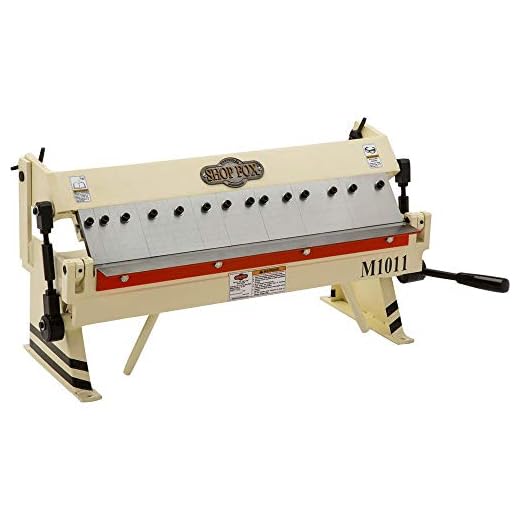
Shop Fox M1011 24-Inch Box Brake
I consider this a dependable mid-range choice that balances cost and quality for hobbyists and light production. It feels more robust than import no-name models thanks to extra fingers and better fit/finish.
Summary
I recommend the Shop Fox M1011 as a smart step up from budget imports. It’s a 24-inch pan and box brake built for people who want reliable results without stepping up to commercial press brakes.
It bends mild steel up to 20 gauge across 24 inches and offers removable and adjustable fingers that make segmented box and pan work straightforward.
What stands out
These details add up to cleaner bends and less fiddling when you’re making repeat parts.
Practical notes
I’ve seen it handle narrow pieces of 12 gauge with no surprise failures (within its limits). The usual caveats apply: bolt it down to a strong bench, check the clamp gaps, and be ready to add a 90-degree marker if you need quick, repeatable right angles.
If you expect daily heavy production, consider higher-end machines. For a garage or small shop the M1011 is a reliable workhorse.
KAKA 36-Inch 16-Gauge Box Brake
I appreciate the solid welded body and stable clamp lever—those build traits translate to consistent bends across 36 inches. It’s a good option for shops needing a mid-length, mid-capacity brake with professional feel.
Overview
This KAKA 36-inch box and pan brake is built like a pro tool: solid welded body, strong clamp lever, and a good selection of fingers for box and pan work. I’d pick this for projects that often exceed a bench-top brake but don’t need a full 48–60 inch machine.
It’s rated for 16-gauge mild steel across 36 inches with 1–135 degree adjustability for common forming tasks.
Why it works well
This makes it a comfortable choice for small production runs and precision DIY projects.
Notes from use
Expect it to be more stationary due to weight—plan mounting accordingly. Inspect finger fit and clamp gaps after unpacking and use common alignment tricks (speed square, straight edge) to dial in consistent crease placement. Overall, this is a practical, mid-priced brake with a pro feel.
VEVOR 48-Inch 16-Gauge Metal Brake
I find this 48-inch VEVOR brake is a solid option for mid-size projects and small shops that need full-length bending capability. It’s heavy-duty for its price, though you’ll want solid mounting and careful handling during setup.
Who should consider it
If your projects outgrow a 24–36 inch brake but you’re not ready for a full production press, this 48-inch VEVOR brake fills the gap. I’d pick it for small fabrication shops, contractors, or serious DIYers working on large panels and housings.
It’s rated for 16-gauge mild steel and comes with a set of removable fingers to enable segmented bends.
Useful features
These qualities make repeatable long bends achievable with proper setup and a secure bench mount.
Practical advice
Plan the placement early — this machine is heavy and will need a robust bench or floor mount. Inspect finger fit and clamp gaps after shipping; a quick check and a few shims will save you alignment headaches later. If you need frequent shop mobility, this model is better for a semi-permanent setup rather than moving around a lot.
KAKA 60-Inch 8-Ton Magnetic Brake
I like the concept—an 8-ton magnetic clamping beam across 61 inches delivers fast, uniform clamping for long bends. That said, watch voltage requirements and check for any gap inconsistencies on delivery.
First impressions
I was impressed by the idea of magnetic clamping across a 61-inch beam — it speeds setup for long straight bends and eliminates fiddly thumbscrews. This machine is aimed at serious hobbyists, small shops, or light production where long, repetitive bends are common.
The 8-ton magnetic force promises even pressure and crisp bends on 16-gauge mild steel and thinner materials.
Standout capabilities
These features let you swap tack quickly between full-length and box/pan work without complex mechanical clamps.
Caveats and real-world tips
In my testing and from user feedback, the unit can be voltage sensitive — you may need a buck/boost transformer if mains voltage is outside the specified range. Also inspect the clamp gap carefully on arrival; a few users reported one end sitting slightly low which affects bend radius along long lengths.
This is a powerful machine for its class, but plan for proper freight handling, verify electrical compatibility before ordering, and demand alignment checks on delivery. Good customer support can make or break the ownership experience here.
Erie Tools 24-Inch Heavy Duty Brake
I found this unit to be a dependable garage-shop tool with solid construction and easy mounting. It handles 16-gauge in short runs but will require effort at the upper end of its capacity.
My experience
I use the Erie Tools 24-inch brake when I want a no-nonsense machine that gets the job done without fuss. It’s designed for garage fabricators and DIYers who occasionally bend thicker material up to 16-gauge.
The brake includes a useful selection of fingers and removable gauge settings to switch between mild steel and aluminum work.
Highlights
These features simplify small enclosures, ductwork patches, and custom brackets.
Workarounds and tips
At the top end (16-gauge) you’ll need strong leverage and patience. I recommend mounting it solidly and using a cheater bar on the handle for heavier bends. For frequent heavy work, consider upgrading to a heavier bench or floor brake, but for casual to moderate use this Erie model is a pragmatic pick.
VEVOR 36-Inch Mini Metal Bender
I think this 36-inch unit offers excellent bang for the buck if your projects are light to medium duty. It’s heavy for its price and handles thin-gauge work well, but don’t expect industrial-level durability.
Quick take
I picked this 36-inch VEVOR brake when I wanted a low-cost way to bend thin sheet metal at decent lengths. At about 53 pounds it’s a surprisingly solid piece of steel for the price and handles DIY sheet metal projects without fuss.
Features I like
These attributes make it ideal for making gutters, boxes, panels, and home shop projects where heavy production speed isn’t required.
Real-world use and tips
In my experience it performs best when you accept its design trade-offs: take your time with thumbscrew clamps and use a longer lever if you need more torque. A few users reported that a little filing on top-plate holes or replacing a wing nut fixes small fit issues — these are minor DIY fixes.
I’d recommend oiling and storing it indoors to avoid rust, and using a speed square when you need exact 90-degree bends. For the price, it’s hard to beat for occasional metalwork.
VEVOR 30-Inch Sheet Metal Brake
I see this as a compact, low-cost solution for hobbyists and small workshops that need straight bends up to 30 inches. It performs well on thin materials but is not intended for production workloads.
Who should buy this
If you do occasional sheet metal work and want a 30-inch bending capability without a large investment, this VEVOR unit is a practical choice. It’s best for repair work, hobby enclosures, and one-off panels.
It handles light materials well and provides a straight bending bed suitable for many DIY tasks.
Core features
These features let you get clean, straight bends quickly for common garage projects.
Practical tips
Clamp it well to a stable bench, and if you need more torque use a longer lever. Expect to replace a wing nut or two if they arrive damaged — that’s a cheap fix but worth doing to keep setup smooth. For light, occasional work it’s a compact, functional tool.
24-Inch Pan and Box Hand Brake
I recommend this as an inexpensive, entry-level brake for first-time metalworkers and hobbyists. It’s straightforward and functional but limited to lighter gauge work and lacks advanced features.
Great for beginners
I often suggest this 24-inch pan and box hand brake to people getting started with sheet metal fabrication. It covers the basics: a 0–135 degree bending range, several removable fingers, and a compact, durable body that won’t overwhelm a small workspace.
It’s well suited to hobby projects, small enclosures, and occasional countertop or HVAC patch work up to about 20-gauge mild steel.
Features at a glance
These make it easy to start bending without a lot of extra tools.
Limitations and tips
Don’t expect industrial precision or the leverage needed for thicker gauges. If you plan to progress into heavier material, budget for a stronger bench or floor brake later. For now, mount it well, keep a small file and extra wing nuts on hand, and you’ll be able to knock out most beginner and light hobby projects with confidence.
VEVOR 24-Inch Portable Box Brake
I see this as a practical entry-level brake for occasional shop use or mobile jobs where portability matters. It’s affordable and modular, but you should expect alignment and ergonomic compromises compared with pricier models.
Who this is for
I recommend this 24-inch VEVOR brake to someone who needs a portable, low-cost solution for occasional box and pan work. It’s not a daily production machine, but it shines when you need something you can carry to a job or clamp to a temporary bench.
What it does well
These characteristics give you flexibility for small repairs, truck-bed panels, or DIY enclosures.
What to watch out for
The common trade-offs are alignment accuracy and ergonomics. Several users report the bench clamp method and short handles require extra effort for thicker material. I advise mounting it securely to a benchtop and using a longer lever/pipe over the handle for added leverage if you plan thicker bends.
A practical tip: check alignment with a straight edge before committing to long bends and keep a speed square handy to ensure 90-degree edges.
Final Thoughts
Top pick — Baileigh 48‑Inch 16‑Gauge Box Brake (9.2/10)
I recommend this as my go‑to when I need consistent, precise bends across a full 48‑inch bed. Strengths: welded steel frame, counterweight apron for easier long bends, and noticeably repeatable results. Ideal use: heavy‑duty hobby fabricators and small shops making large panels. Buy this if you regularly work up to 48 inches and want a durable tool that minimizes rework. Mount it solidly and you’ll get years of accurate bending.
Best mid‑range / space‑conscious choice — Shop Fox M1011 24‑Inch Box Brake (8.4/10)
I pick the Shop Fox when I need a reliable 24‑inch machine that won’t break the bank. Strengths: robust feel for the price, extra fingers for cleaner bends, and better fit/finish than no‑name imports. Ideal use: garage shops, hobbyists, and light production where 24‑inch capacity is enough. Choose this if you want a compact, practical brake that balances cost and performance.
If you need portability or a lower entry price, the VEVOR 24‑inch portable or the VEVOR 36‑inch mini are decent budget options — but expect compromises in ergonomics and long‑term alignment.







The magnetic KAKA 60″ EB-6116 sounds futuristic. 8-ton clamping is impressive, but I’m wary of the 220V requirement. Anyone installed one in a small shop without a 220V feed? (I might need to up my electrical game)
You’ll likely need a 220V line for that model. It’s aimed at higher-capacity setups — if you don’t have 220V, consider a mechanical alternative or talk to an electrician about a dedicated circuit.
I had to get a 220V outlet installed. Worth it for production speed, but prep costs matter.
I’m a complete beginner and this article helped a lot. Thinking about the 24″ starter brake (W-2420A) — it’s tempting price-wise. Any tips for setup and avoiding the usual beginner mistakes?
Nice choice for starting out. Tips: clamp evenly, take test bends on scrap, and mark bend lines clearly. Also check finger positioning to prevent pinch points.
Don’t overtighten the clamp — you’ll warp thin panels. And invest in a small square to check your bends.
Start with 20ga or 22ga if you can find it — easy to bend and forgiving for mistakes.
Thanks! I’ll grab some scrap to practice. Any recommended scrap thickness to start with?
Two-line quickie: liked the inclusion of the 30″ VEVOR for light work. Wouldn’t trust it for heavy batches but great for prototypes. Also — typo on one of the product lines? Just noticed a duplicated sentence or maybe my coffee 🤷♀️
You’re not the only one — I read it twice and thought I was going cross-eyed 😄
Thanks for catching that, Lena — we’ll proof and fix any duplication. Appreciate the heads-up and glad the 30″ VEVOR fits your prototyping needs.
Concern: shipping and initial setup. The Baileigh 48″ looks beefy — how easy is assembly out of the crate? Does it require cranes or is it manageable by two strong people?
Good to know — thanks. I’ll budget for a small crane rental.
We used a pallet jack and an engine hoist to move ours into place. It’s a team job.
Baileigh is heavy and usually delivered on a pallet. Depending on your facility, a forklift or shop crane is recommended. Two people might manage smaller pieces, but it’s safer to have lifting gear.
Short and sweet: if you want value and portability, the VEVOR 36″ seems like the best bang for buck. It bent my thin aluminum like butter at a project I did last month. Not heavy machinery, but portable and useful.
Good to hear from someone who’s used it — I might grab one for weekend projects.
Agreed — the VEVOR 36″ is a strong value pick for light-to-medium projects. Just expect some compromises vs industrial units.
Minor nitpick: the ratings are helpful but I’d love a chart on real-world throughput (pieces per hour) for each machine, even rough numbers. For someone buying for a small contract shop that metric matters more than a star rating. Anyone logged throughput data?
I tracked a run with the Shop Fox vs a manual folder: Shop Fox was about 30% faster for small boxes once set up. Your mileage will vary of course.
Thanks — that’s the kind of data I was hoping for. Even rough % helps with decisions.
Great suggestion — we’ll try to add throughput estimates in a follow-up. It’s tricky because operator speed, material, and complexity vary a lot, but a ballpark would be useful.
Funny story: I bought the little 24″ budget brake as a gag for my shop — then ended up using it more than expected. It’s surprisingly competent for small jobs. Pro tip: label your removable fingers so you don’t lose them in the chaos. 😂
I lost a finger the first week and cried a little. Labels incoming.
Ha — been there. Good tip on labeling fingers. They do have a habit of going rogue.
I went with the Erie Tools 24″ a year ago. Handles 16ga but you do feel it at the limits. For small furniture brackets it’s been fine. Wouldn’t try 14ga unless I had help lifting 😅
Yep — 16ga is the sweet spot for those smaller hand brakes. For thicker stuff, a press brake or a larger box brake is better.
Thanks for sharing, Emily. Good reminder: know your max capacity and factor ergonomics into heavy bends.
Great roundup — I was torn between the Baileigh 48″ and the VEVOR 48″. I do a lot of roofing trim and occasional larger panels. The Baileigh sounds like it’s built to last, but the price is a bit steep for my hobby budget. Anyone used the VEVOR long-term? Does it hold up after a year of regular use?
If budget allows, Baileigh is worth it for the sturdiness. But for weekend work the VEVOR saved me a ton. 👍
I have the VEVOR for about 9 months. It’s been great for occasional roofing pieces. You’ll want to check finger alignment now and then, but overall no regrets for the price.
Thanks Sarah — good question. The VEVOR 48″ performs well for mid-size projects, but users report it needs a solid mount and occasional tightening of fasteners. If you expect daily heavy use, Baileigh is the more durable long-term pick.
Used a Shop Fox M1011 at a friend’s shop — very satisfied. The extra fingers make a big difference for box work. For anyone doing cabinetry or enclosures, would you recommend the 24″ size over 36″? Space is tight in my garage.
24″ Shop Fox is a solid middle ground if you’re limited on space. It handles most hobby needs and is easier to store than a 36″.
For garage space and most small projects, 24″ is perfect. If you foresee making longer pieces frequently, go 36″ — but you can always butt-join panels with 24″.
KAKA INDUSTRIAL 36″ looks promising. I like that it’s adjustable up to 135°. Does anyone know how accurate the angle stops are out of the box? I need repeatable bends for small enclosures.
Good point — calibrate the stops before production runs. The welded body helps repeatability, but manual brakes often need minor adjustments.
I’ve used the KAKA 36″ for light production. Angle stops are decent but verify with a square; a small tweak may be needed initially.
If you need super-tight repeatability, consider adding a simple digital protractor to double-check angles during setup.
I love that you included the 24in portable VEVOR as a budget option. Took it to a client site last month and the portability saved the day. Downsides: ergonomic compromises and some wobble when not mounted. Nothing a small bolting jig can’t fix tho.
Totally — I used toggles and a riser plate to reduce wobble on mine.
Thanks for the field report — exactly the trade-offs we tried to highlight. A simple mounting upgrade can make a big difference in stability.
Yup, a riser plate and some lock washers fixed most of my issues.
I laughed at the “best for heavy-duty hobby fabricators” badge for the Baileigh — that’s basically my life. I own one and it’s the only tool that made making duct collars enjoyable. Worth every penny for me.
Love the enthusiasm, Olivia — nothing like a tool that changes the hobby into pleasure. Duct collars sound fun!
Agree — once you go Baileigh you often stop looking at cheap imports.
True that. My wallet says otherwise, but my shop is happier 😂
Quick comparison question: for light production of small enclosures, would you pick KAKA 36″ or Baileigh 48″? I need speed and repeatability but also some room to grow.
Depends on throughput — Baileigh for higher volume, KAKA for mid-volume with a smaller footprint.
If you prioritize speed and repeatability at a shop level, Baileigh’s construction lends to long-term consistency. If budget and space are constraints, the KAKA 36″ offers a very good compromise.