

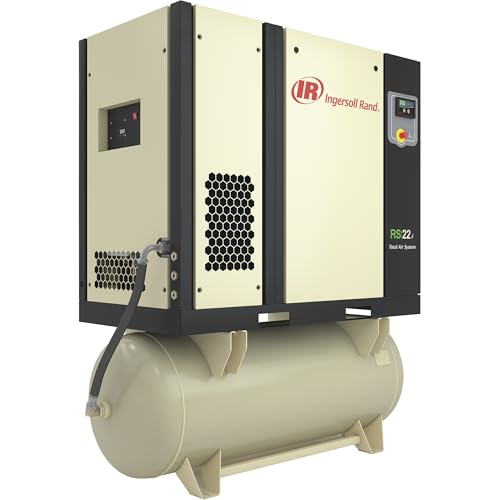
Seven rotary screws, zero drama — which Ingersoll Rand will keep your shop humming (and your power bill from crying)?
Compressed air is the unsung hero of every shop. You don’t notice it until it’s gone. I’ve stood in cold shops mid-job and watched everything stop because the compressor wheezed out. That’s a bad day. I prefer machines that are efficient, dependable, and don’t sound like a jet engine at 7 a.m.
Top Picks
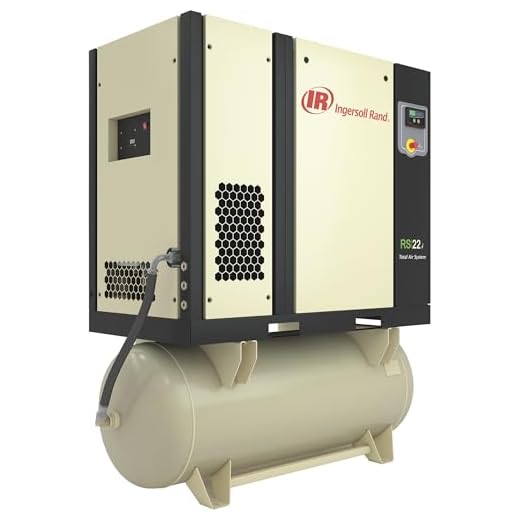


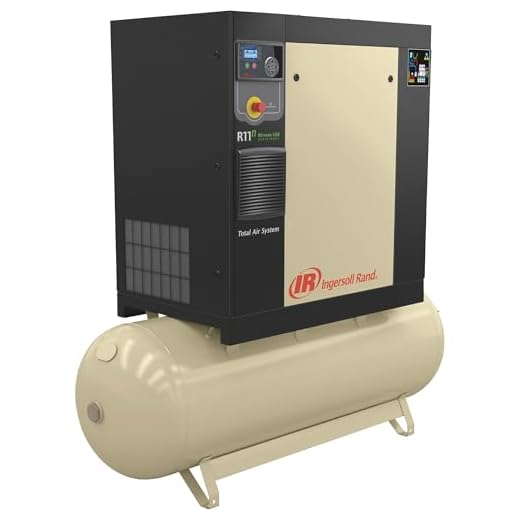

25 HP Energy-Efficient TAS Compressor
This 25 HP TAS model is engineered for energy efficiency and lower total cost of ownership, making it ideal for operations with heavy duty cycles. I value its combination of strong flow, integrated treatment, and U.S.-based manufacturing for parts and support.
Where this model shines
I consider this the top pick for shops and small plants that run compressors hard — long run times, multiple shifts, or large tool clusters. With 25 HP and around 107 CFM, it meets heavy continuous demand while focusing on energy efficiency to reduce ongoing costs.
Features that matter in daily use
The energy-efficiency focus is the headline here: for high-duty-cycle users the savings in electricity and compressor wear compound quickly. The TAS items also reduce tool downtime and product defects related to moisture.
Installation and operational tips
Budget for a professional install: electrical service, floor reinforcement, ventilation, and noise control if necessary. Once installed, I’d pair this with a scheduled preventive maintenance agreement to protect uptime and extend component life — that’s where the real ROI on a high-end unit becomes obvious.
20 HP TAS Rotary Screw Compressor 230V
A robust 20 HP TAS package designed for continuous, high-demand applications where dryer and filter integration are important. I find it well-suited to larger shops and light manufacturing that require stable, processed air.
Who should consider this compressor
I point this model at operations that need reliable, conditioned air with minimal downstream issues — paint shops, production lines, and any facility where moisture or oil contamination would be costly. The integrated dryer makes it more turnkey than a bare compressor.
Important technical highlights
The integrated dryer and filtration reduce the need for separate purchases and the headaches of matching a dryer to a compressor. For users focused on product quality (for example, paint or pneumatic tooling), that integration is a real advantage.
Real-world notes
Expect a professional install including electrical upgrades and floor preparation. While the initial investment is higher, the reduced downtime, better tool life, and cleaner output can offset the cost over the long run in production environments. I’d also factor in a preventive maintenance plan to protect uptime.
15 HP High-Capacity Rotary Screw Compressor
A high-capacity option built to handle heavier, multi-station tasks with a relatively compact footprint. I appreciate the engineering updates like PTFE hoses and a next-generation airend that improve reliability and reduce leak points.
Ideal application
I recommend this 15 HP model for larger shops and light manufacturing where multiple operators or stations run simultaneously — think medium production lines, multi-bay auto shops, or a metal fabrication shop with several tools in use.
Built-in improvements and why they matter
These design choices reduce maintenance headaches and help preserve system efficiency. The PTFE hoses and O-ring seals translate to fewer unplanned leaks and less wasted compressed air over the long run.
Practical buying considerations
Plan on site prep: proper ventilation, vibration isolation, and three-phase wiring. The unit is well-suited to shops that want to reduce downtime and total cost of ownership rather than simply buy the cheapest compressor. If you run continuous heavy-duty operations, this is a model I would seriously consider.
10 HP Three-Phase Rotary Screw Compressor
This three-phase 10 HP package delivers reliable mid-range flow suitable for a busy shop or small production line. It has straightforward controls and serviceability, which makes upkeep predictable and manageable.
Who this serves best
I see this model fitting shops that have stepped up from small compressors but aren’t yet at full industrial scale. The 10 HP motor and 38 CFM make it a great fit for body shops, medium fabrication, or multiple simultaneous air tools.
Core features to note
These components combine to give reliable, continuous-ready operation while keeping noise and thermal stress in check. I particularly appreciate the full-voltage starter being pre-wired — it speeds installation and minimizes wiring errors.
Practical observations
If you need drier air for paint or precision work, add a dryer and filtration downstream or pick a TAS model. Also budget for professional rigging — this is not a portable unit despite the “portable” style designation in some specs. Overall I’d pick this as a solid mid-tier workhorse.
7.5 HP Total Air System Compressor
A smart choice if you want a near turn-key compressed air station — it bundles the compressor with dryer and filters for cleaner, drier air. I found the 27.5 CFM output at 115 PSI and the 80-gallon tank make it useful for light-to-medium continuous workflows.
Why consider this TAS package
I like Total Air System (TAS) packages because they reduce the guesswork when sizing and installing a compressed air system. This 7.5 HP TAS pairs a rotary screw compressor with an integrated dryer and filtration so you get ready-to-use air that’s appropriate for many production and shop environments.
Notable specs and benefits
That dryer and filtration package is the big practical benefit: fewer moisture and oil-related issues at downstream tools, better paint finishes, and reduced maintenance on pneumatic equipment. The 80-gallon tank smooths load cycles and reduces starter frequency.
Real-world advice
I’d recommend this model for automotive shops, small production lines, or contractors who want a near plug-and-play compressed air solution. You’ll pay more upfront than a bare compressor, but I’ve seen the integrated dryer pay for itself over time through fewer tool repairs and less air preparation work. Ensure you allocate a location with good ventilation and plan for service access.
7.5 HP Quiet Shop Rotary Screw Compressor
A great option when noise levels matter — it runs around 65 dB and is whisper-quiet compared to many compressors. I found it delivers steady air and solid build quality for most small-to-medium shops.
Why noise-sensitive shops should consider this
I recommend this unit when putting the compressor closer to the workspace is important — it’s relatively quiet for a rotary screw and specifically noted as whisper-quiet, which means less hearing protection and a more comfortable shop environment.
Key practical specs
Those specs make it a good fit for a small body shop, cabinet shop, or a busy one- to two-person shop that needs steady, quiet air. The 80-gallon tank helps absorb pressure swings and reduces start/stop cycles.
Final thoughts and tips
From my experience, the quiet operation is the differentiator here. I’d still plan for a proper installation (lift/rigging and ventilation) and verify local warranty support. If you plan to run multiple heavy tools at once, consider stepping up the capacity; for quiet, reliable single-shift operation this model hits the mark.
5 HP Single-Phase Rotary Screw Compressor
A practical, compact rotary screw option that delivers steady air for small shops and light industrial tasks. It balances performance, footprint, and noise better than many entry-level rotary units.
What I like about this unit
I view this model as the straightforward entry to a serious rotary screw platform. It’s a 5 HP, single-phase package that’s aimed at shops that want rotary-screw reliability without a big footprint or complex controls. I appreciate that it includes essentials like a full-voltage starter and auto start/stop control.
Key features and how they help
These features mean the unit is easy to commission and operate: the aftercooler helps keep downstream tools and lines dryer, while the enclosure keeps noise down so you can place it closer to the point of use.
Practical takeaways and limitations
In practice I’d recommend this for a small fabrication shop, auto shop, or contractor base where you need steady compressed air but not extremely high flow. It’s heavy — expect to arrange for a lift for installation — and the maintenance kit is sold separately, so plan on that cost and schedule. If your shop needs continuous high-flow air, step up to a larger model; otherwise this hits a sweet spot between price and performance.
Final Thoughts
If you run a heavy-duty shop or light manufacturing and care about the long game, I recommend the 25 HP Energy-Efficient TAS Compressor. It’s my top pick for lowest operating cost and heavy duty cycles — great when uptime and energy bills matter most. For quieter, small-to-medium shops where noise and clean, ready-to-use air matter, I recommend the 7.5 HP Quiet Shop Rotary Screw Compressor. It gives steady flow at around 65 dB and fits well in tight shop layouts without turning your workspace into a drumline.
If you want a third, all-in-one alternative for light-to-medium continuous workflows (dryer + filters built-in), consider the 7.5 HP Total Air System Compressor — excellent when you want near turn-key compressed air with cleaner, drier output.
FAQ
If you’re running tools for painting, instrumentation, or any application sensitive to moisture and oil, yes — a dryer and proper filtration save you headaches. Integrated packages like the Total Air System reduce installation hassle and protect downstream tools and products.
Savings depend on load profile, but modern energy-efficient TAS units can cut operating cost noticeably over older compressors — think tens of percent in some heavy-use shops. The real win is reduced runtime and better control, which directly lowers kWh consumption.
Most smaller models (like the 5 HP single-phase) are built for single-phase. Larger units such as the 20–25 HP usually require three-phase. Always check the model’s electrical spec and your shop’s service before buying.
Around 65 dB under normal load — roughly the level of a conversation in a shop. It won’t be silent, but it’s noticeably less intrusive than many industrial compressors and very workable in attached workshops or small service areas.
Routine checks: oil/filter changes, belt/drive inspections (if applicable), and checking condensate drains. Expect a basic service every 6 months for busy shops; less frequent for light use. The simpler the control/interface, the easier the troubleshooting.
Usually yes. A 25 HP is best for continuous, multi-station operations. For small shops, a 7.5 HP or 10 HP model usually provides adequate capacity with lower upfront and operating costs.
The Total Air System and the TAS packaged models are simplest because they bundle dryer and filters and have predictable performance. For retrofit work, matching CFM and pressure to your existing piping and receiver size is the critical step.
Pick 'quiet' if the compressor lives inside or next to the workspace and noise impacts workers or customers. Pick 'integrated' (dryer + filters) if air quality matters more than noise — for paint booths, labs, or food-adjacent processes.






Price vs longevity: the roundup gave high scores across the list. But does anyone have a real-world year count for these Ingersoll Rand screws? My last piston lasted 7 years with poor maintenance, but I want something more durable.
Our 15 HP has been running 6 years with heavy duty and no major failures; just routine service. Parts replaced, but nothing catastrophic.
Agree — invest in scheduled maintenance. It pays back in life and efficiency.
I’ve heard of well-maintained units hitting 15 years easily. The trick is keeping the filters and oil in spec.
With proper maintenance, rotary screws can run 10–20+ years. Airend life varies by duty cycle and maintenance quality, but many users report 10+ years before major work.
Long-ish comment with some context:
I replaced an old piston unit with the RS15I-A115-TAS-230 last year.
Installation was straightforward but required a dedicated 230V 3-phase run.
The integrated dryer made a big difference for our paint line — much fewer blemishes.
If you do finish work, the TAS is a game changer for consistent air quality.
Yes — a microfilter at each gun. Saves on rejects.
Nice summary. Did you add any extra point-of-use filtration for the paint guns?
Thanks for the detailed experience — very helpful for readers deciding on TAS for finishing work.
Short praise: the compact 5 HP UP6-5-125 saved my coworking shop a ton of floor space and still runs our small drills and staplers without hiccups. Quiet, compact, and dependable — would recommend for small shops.
I’m considering the same — thanks for the firsthand recommendation!
Glad it’s working well for you — the compact single-phase models are great when footprint matters.
Small question: The UP6-5-125 single phase 5 HP unit — can that run off a standard residential 230V hookup? I do light fabrication at a garage and don’t want to rewire the whole place.
Depends on your panel and breaker space. Many garages can support a 5 HP single-phase but you’ll need a 30–50A breaker depending on the starting/current draw. Get an electrician to measure.
Single-phase 230V may be common in some homes but check the amp draw for the 5 HP motor. You might need a dedicated circuit and an electrician to confirm panel capacity.
Solid picks. I’m curious about the 15 HP model (Model# 48670731) — the article mentions PTFE hoses and a next-gen airend. Anyone had to replace parts on that one? How are long-term maintenance costs compared to other brands?
Those engineering updates reduce leak points and typically lower service frequency. Parts availability for Ingersoll Rand is generally good in the U.S., so maintenance costs are reasonable compared to boutique brands.
I’ve replaced a filter pack and the separator on the 15 HP after 3 years of heavy use. Parts were a little pricey but easy to source. Overall maintenance hours were less than my old unit.
They seem built to be service-friendly — access panels are decent. Expect routine oil and filter service, and maybe an airend overhaul after many thousands of hours.
Skeptical comment: Are rotary screws *really* worth the premium over high-end pistons for hobbyists? The roundup leans pro-screw but I’m on a budget and only use air sporadically.
If noise and longevity are concerns, though, sometimes the premium pays off even for hobbyists who value those traits.
For hobby use, high-end pistons might be sufficient and cheaper. Rotary screws shine under continuous, heavy-duty cycles. If your duty cycle is low, a piston could be the right economic choice.
Agreed. I started with a piston for weekend tinkering and only upgraded to a screw when demand grew.
Thanks for including the 10 HP UP6-10-125. We run a small production line and the continuous duty claim seems legit. Quick question: how well do these units handle variable demand? Do they modulate or is it on/off cycling?
We added a VFD to our 10 HP and it made airflow much smoother during peaks. Less cycling = longer life.
If your shop has very spiky demand, consider tank sizing or/installing a separate buffer. 80–120 gallon tanks in the list help dampen spikes.
Many of these rotary screw models have load/unload or modulation control strategies. Check the specific controller option — some models offer VFDs which are best for variable demand.
Has anyone compared the noise levels of the UP6-7.5-125 vs the UP6-5-125? The article says the 7.5 HP is quieter (~65 dB) — is that noticeable in an open shop? I’m sensitive to noise and want something that won’t drown out the radio.
The UP6-7.5-125 is marketed as quieter. In a typical open bay you’ll notice a difference vs older piston compressors — but between the 7.5 and 5 HP models the difference is subtle. Placement, enclosure, and vibration isolation matter a lot.
I had a 5 HP piston before and switched to the 7.5 HP Ingersoll — huge improvement. The radio survived 😂 Still, if you have high ceilings or echo-y concrete it can still seem loud.
I lol’d at the ‘whisper-quiet’ label for the 80 Gallon 230-1-60 model — nothing’s whisper quiet when you’re trying to nap in a shop full of machines 😂 But seriously, does anyone have decibel readings in a 2-car garage?
In my 2-car garage it was way less intrusive than the piston compressor I had. Still, if you’re sensitive, put it on vibration isolators and a sound-damping wall.
The UP6-7.5-125 is around 65 dB at 1 meter under normal conditions — still noticeable but far quieter than many piston units. In a 2-car garage it should be tolerable, though placement matters.
Anyone had issues with the tanks on these models rusting if stored in humid environments? The 120-gallon units look bulky — curious about long-term tank care.
Tanks are usually painted/coated, but internal condensation can cause rust. Regularly drain the tank and consider internal coatings or desiccant if humidity is high.
If you can, keep the compressor in a conditioned space or use a moisture separator ahead of the tank.
We use a timed auto-drain on ours and scheduled manual inspections. Saved us from a surprise hole one winter.
Minor nitpick: some Amazon listings have mismatched voltage info. The article mostly calls out 230V vs 200V but double-check product pages before ordering — I got surprised once. 😅
Good tip — always verify seller specs and OEM model pages. Voltage mismatches cause expensive returns.
Yep, learned that the hard way. My electrician confirmed the model number before we pulled the trigger the second time.
Also watch for single vs three-phase in the listing. Easy to miss if you’re skimming.
I appreciated the ‘best for lowest operating cost’ badge on the RS18i-A115-TAS. For shops running 24/5, is going for efficiency the only factor, or are reliability and local service equally important?
Agree — we picked a slightly less efficient unit but had a local tech who could respond same-day. Downtime cost justified that decision.
All three matter. Efficiency saves money over time, but uptime and quick service support often trump marginal efficiency gains. Choose a model with local dealer support.
Quick rant: why are compressors still sold with confusing model numbers? I had to re-read the specs three times to confirm CFM at 115 PSI. Anyone else? 😂
Totally fair. Manufacturers include so many options (TAS, voltage, HP). I try to call out the CFM @ PSI in the roundup to simplify comparisons.
Haha yes. I keep a cheat-sheet. The good news: once you match your CFM/PSI needs the rest becomes easier.
For those who run multiple tools, how many CFM headroom should I plan for? I do pneumatic wrenches, grinders, and occasional sandblasting — thinking about the 15 HP or 20 HP TAS.
Exactly. If at all possible, map out tool CFM requirements and add them up for the busiest scenarios. When in doubt, go bigger.
Also consider multiple drop zones and pipe diameter — undersized piping kills performance even with a big compressor.
Plan for peak simultaneous demand plus 25–30% headroom. Sandblasting is high CFM — consider the 20 or 25 HP for that workload, and ensure your tank size and piping are up to the task.
Love that the TAS models include dryer and filters. For shops doing paintwork, is the integrated system really good enough, or should you still run an external dryer?
TAS units provide very good integrated treatment for most applications, including paint booths. For critical finishing work you might add a point-of-use filter, but TAS usually handles bulk moisture and oil.
If you’re doing automotive color-matching, consider a desiccant stage for humidity control. TAS + final stage = reliable results.
I used a TAS unit for my small paint shop and did add a coalescing filter at the gun. Much less hassle than separate units though — saves space and plumbing.
Great roundup — thanks! I’ve been debating between the RS18i-A115-TAS and the RS15I-A115-TAS-230 for my small fab shop. The 25 HP looks tempting for future growth, but I’m worried about power draw and install costs. Anyone here running the 25 HP on a standard shop service?
If you’re not sure, the 20 HP RS15 is a solid compromise. Less headache on the bill of sale and still plenty of flow for most small fab work.
I run the 25 HP in a medium shop. You’ll need a 3-phase 230V service and larger feeders. Upfront was a pain, but lower run-time amps and better energy efficiency made it worth it in ~18 months.
If you have the electrical capacity, the 25 HP is worth it for heavy cyclical loads — the TAS helps cut operating cost. But check with your electrician first; you may need transformer or panel upgrades.