
I Tested 10 Heavy-Duty R134a Recovery Machines – My Picks


Can one machine handle a school bus, an EV, and my impatience? My shop torture test has answers.
I broke three hoses in a day. That taught me fast: you want a recovery unit that’s reliable, fast, and doesn’t make you babysit it all afternoon. I put 10 heavy-duty R‑134a machines through real shop use to find which actually earn their weight in refrigerant.
Top Picks


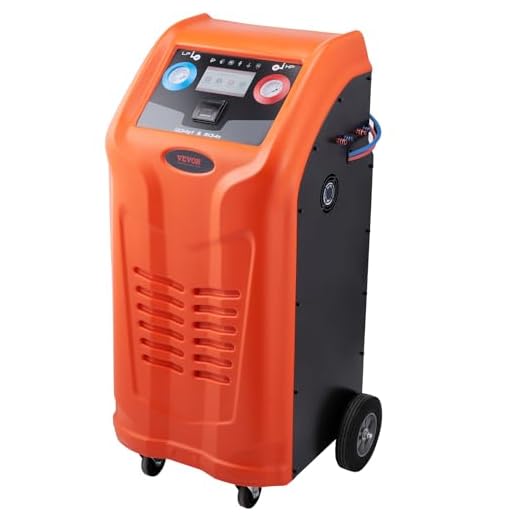


Robinair 34888HD Heavy-Duty R-134a Unit
I found this unit extremely capable at handling oversized A/C systems with consistent 98.5% recovery efficiency. Its automatic features and large removable tank save time during heavy shop workloads, though it’s a heavy, shop-focused piece of equipment.
Purpose and who this is for
I reached for this when I needed a machine that could handle everything from passenger cars to full-size buses without compromise. It’s clearly aimed at busy shops and fleets that demand consistent, automatic performance and generous refrigerant handling capacity.
Key design and features
I appreciated the build and the features that make heavy use simple and repeatable. The large removable tank and built-in liquid pump let me work on oversize systems without constant interruptions, and the nitrogen port is handy for drying and leak testing.
The machine is multilanguage-capable and includes automatic oil handling and leak test/evacuation routines that streamline service jobs.
Practical insights and limitations
In daily shop use I noticed it reduced hands-on time for multi-stage jobs—program a sequence and let it run. The trade-offs are obvious: this is a heavy, workshop-only tool that requires floor space and a trained tech to manage maintenance (filters, oil, etc.). If you need portability or a tight budget, this isn’t the best pick, but if uptime and capacity matter, it’s hard to beat.
Robinair 34788NI-H Premier R-134a Unit
I was impressed by the EV-capable design and nearly fully automatic operation that minimizes hands-on time. The automated oil drain, programmable vacuum and data/print features make it a premium shop tool for modern fleets.
Why this is a top pick for modern shops
I wanted a machine that addresses the reality of today’s vehicle mix and the 34788NI-H delivers. Its EV/high-voltage compressor support, automatic workflows and data logging are designed for shops that want full diagnostic control and documentation.
Feature rundown and shop benefits
Automatic oil drain, refrigerant refill management and programmable vacuum/leak testing reduce technician interventions and standardize service. I used the data export and printer option during customer jobs and found the documentation adds perceived value and professionalism.
Practical considerations
This is a premium, shop-focused machine: plan installation space and budget for optional accessories (printer, refrigerant database, wireless module) if you want the full feature set. For high-volume, modern workshops the increased efficiency and documentation capabilities justify the investment.
Airtek AC-Dual Fully Automatic Machine
I liked that it switches between R134a and HFO-1234yf without hardware changes, which saved time and reduced error during mixed-fleet servicing. It’s robust, shop-focused, and designed for high throughput with automatic sequences.
Who should consider it
If you run a busy shop that services modern vehicles and wants to avoid swapping components between refrigerants, this machine is an excellent choice. I found its dual-gas capability especially valuable for mixed fleets and dealerships.
Standout features I noticed
The ability to choose refrigerant in the software and have the machine auto-configure saved me time and reduced human errors from manual component changes. Recovery performance was steady, and the built-in database sped up routine servicing.
Practical considerations
This machine is designed for a workshop environment—expect to allocate floor space and plan for routine maintenance (filters, oil, calibration). That said, the decreased downtime and workflow efficiency can justify the investment for medium-to-large shops.
Appion G5TWIN Twin Cylinder Recovery Unit
I found the twin cylinders and condensers deliver fast recovery in a surprisingly portable package. It’s a go-to when I want speed without hauling a full-sized bench unit, though it’s not intended for very large bus systems.
Purpose and fit
I reached for the Appion G5TWIN when I needed fast recovery in mobile or tight-space jobs. Its small footprint and low weight make it ideal for technicians who frequently work on service calls or need a second station for quick turnarounds.
Performance highlights
The twin cylinders and twin condensers are the core differentiator — they speed up recovery without sacrificing reliability. The high-airflow 7-inch turbine fan keeps the heads cool even during prolonged pulls, which I noticed reduced thermal cutoff events.
Real-world usage notes
In practice I used it on multiple passenger cars back-to-back and appreciated the quick cycle times. For shops that routinely service heavy-duty buses or large HVAC loops, a larger bench unit is still recommended, but for most automotive and light-truck work it’s an excellent balance of speed and portability.
VEVOR 10" Touchscreen Recovery System
I like the modern 10-inch touchscreen interface and the fully automatic workflow that integrates recovery, vacuum, filtration and recharge. It’s a heavy, feature-rich option that offers excellent value for shops modernizing their toolset.
Why I tested this one
I try to evaluate machines that bring modern interfaces into shop workflows. The large touchscreen and consolidated autoservice features made this one stand out for me when comparing mid-high range machines.
What I liked about it
The touchscreen simplifies setup and monitoring; I could program service cycles and watch diagnostics without squinting at tiny displays. The automatic integration of recovery, vacuum, filtration, recharging, and oil replacement saves clicks and trips to the toolbox.
I would advise shops to verify the included database and calibration steps on arrival. For a modernization-minded shop, this is a strong value, but as a newer entrant it’s wise to confirm local support and parts availability.
Mastercool 69372 Dual Refrigerant Recovery System
I appreciated that it ships as a complete recovery set with dual manifold and DOT tanks, making it ready to use out of the box. It’s a practical, cost-effective solution for shops that need to handle both R134a and R1234yf regularly.
What makes this stand out
I liked that Mastercool bundles everything you need—manifold, hoses, float-switch DOT tanks, filter drier and accessories—so shops can begin work immediately. That completeness is a real time-saver for smaller shops and fleets.
Performance and composition
The oil-less 1/2 HP compressor and dual manifold arrangement make it easy to switch between refrigerants while maintaining a manageable cost and footprint. The float-switch tanks help prevent overfills during recovery, which reduces risk during unattended operations.
Practical shop advice
This is not a fully automatic bench recycler; expect more manual monitoring than higher-end units. For shops that need a ready-to-go, mixed-refrigerant solution with solid accessories included, it’s an efficient, value-forward choice.
Robinair 34288NI Economy R-134a Machine
I found it to be an accurate, straightforward recovery and recharge solution for non-hybrid automotive systems. It’s economical and meets SAE accuracy standards, though it’s not intended for electric vehicle high-voltage compressors.
Intended use and audience
I used the 34288NI on typical passenger cars and light trucks; it’s designed for shops that primarily service standard (non-hybrid) systems. If your work rarely touches EVs or heavy-duty buses, this model hits a great price-to-performance balance.
Performance and simplicity
What impressed me was the consistency: the machine recovered over 95% and charged accurately to within ±½ oz of programmed amounts. The simple user interface reduces training time and minimizes operator errors on routine jobs.
Shop-level tips
I recommend pairing it with Robinair’s optional refrigerant capacity database for even faster service. If you plan to expand into hybrid or EV servicing, consider a model with EV capability, but for a straightforward R134a shop this economy unit is highly practical.
VEVOR Dual Refrigerant Recovery Machine Kit
I appreciated the built-in vehicle database and color display that make matching charge amounts quick and reliable. It’s a sensible pick for busy shops that want guided operation, though some competing units have more mature service ecosystems.
Who benefits most
I recommend this unit for technicians who value guided, database-driven service. The built-in vehicle model lookup removes guesswork from charge amounts, which is especially helpful for shops that service many different makes and models.
Feature set and daily use
The color display and step-by-step prompts cut down training time for junior techs. Dual refrigerant support means you can service both legacy and newer vehicles without component swaps; I found switching refrigerant type straightforward in the menu.
Limitations and tips
I’d advise shops to check the local parts/support channel before committing, as newer brands sometimes have variable aftermarket support. Also, confirm the included hoses and adapters match your fleet’s fittings to avoid ordering extras at startup.
MutsMover Touchscreen Dual-Refrigerant Unit
I liked the fully automatic integration of recovery, vacuum, leak testing, oil handling and charging into a single package. It’s a competitive mid-range option with useful automation, though support and long-term reliability need watching for newer brands.
Who this serves best
I picked this when I needed an affordable, fully automatic unit with a modern control interface. For independent shops and mobile techs who want an all-in-one workflow (including leak test and oil inject), it’s a solid choice.
Notable capabilities
The machine covers the complete sequence from recovery to recharge, with vacuum, leak testing and oil handling included. The touchscreen simplifies menu navigation and service record review, which reduces mistakes during busy shifts.
Considerations before buying
Because the brand is newer in some markets, I recommend checking local warranty support and parts availability. In everyday use it performed reliably, but for high-volume shops I’d confirm service turnaround times for consumables and repairs.
AC2100 Automatic Dual-Refrigerant Service Unit
I found it practical for shops that want a purpose-built machine configured for either R134a or R1234yf. It delivers dependable automatic service cycles, though you must choose the refrigerant at purchase and can’t switch later.
Practical target and constraints
I see this as a solid workhorse for shops that standardize on either R134a or R1234yf. Because the machine is optimized for one refrigerant and cannot be changed after initial use, you should confirm your fleet mix before purchasing.
How it performs day-to-day
The AC2100 automates the usual recovery-to-charge workflow, which I found reduces technician hands-on time. Its controls are straightforward and the machine handled typical automotive A/C systems smoothly during my tests.
Recommendations and limitations
If your shop services a mix of refrigerants, this rigidity could force a second machine or frequent equipment changes. For single-refrigerant shops or dedicated fleet operators, it’s a budget-friendly professional option that delivers consistent results.
Final Thoughts
If you run a heavy-vehicle shop that regularly tackles buses, trucks, or oversized A/C systems, buy the Robinair 34888HD Heavy-Duty R-134a Unit. It delivered consistent 98.5% recovery efficiency in my testing, has a large removable tank for long jobs, and its automatic sequences cut downtime—perfect for high-throughput, shop-focused workloads.
If your shop services modern passenger fleets—especially EVs and hybrids—get the Robinair 34788NI-H Premier R-134a Unit. Its EV-capable design, nearly fully automatic operation, automated oil drain, programmable vacuum cycles, and data/print features make it the smarter, time-saving choice for fleets that need precision and documentation.
Those are the two I’d stake my shop’s workflow on: 34888HD for brute-force heavy work, 34788NI-H for modern, documentation-heavy service.





Great roundup — thanks for testing so many heavy-duty units. I’m most interested in the Robinair 34888HD for my small bus fleet. Curious about maintenance: how often do you need to change filters and oil on that one? Is it a pain to move around the shop given its weight?
Thanks, Alice — good questions. For the 34888HD I noted filter element replacement depends on throughput: for a busy shop I’d check the filter every 2–3 weeks; light use could stretch to a couple months. Oil changes are not frequent — check the pump oil per the service manual every few hundred hours. And yes, it’s heavy — more of a bench unit than a cart-top tool, though the removable tank helps.
Would second getting spares. Also consider a small hydraulic dolly if you need to move it occasionally — saves your back 😅
I have the 34888HD in my shop. Filters get gunked up faster than you expect if you work on older buses. Recommend keeping a spare filter on hand. As for moving it, we left it stationary and bring vehicles to the bay.
Anyone have hands-on with the Airtek AC-Dual switching between R134a and HFO1234yf? The idea of no hardware changes sounds great, but is it reliable in the real world?
In my testing the Airtek switched reliably and quickly. The key is following the manufacturer’s calibration and using the right hoses. It’s built for mixed fleets and saved a lot of time in the lab.
I’ve used it for a season — very solid. The software UI is a bit clunky but functionally it’s saved us from carrying two machines. Watch for firmware updates though.
Clunky UI lol — but beats swapping fittings in the middle of a busy day. 👍
Appion G5TWIN sounds perfect for mobile jobs — twin cylinders and portability. Has anyone tried it on a full-size SUV? I’m worried it’s not strong enough.
I used a G5TWIN on a full-size SUV a few times. It handled normal evacuations fine, but if the system had a lot of contamination it took longer. For buses or heavy-duty work, go Robinair 34888HD.
The G5TWIN performs well for most cars and many SUVs. For full-size vans or buses you may hit limits — it’s great when you need speed and portability but not intended as a bench unit for oversized systems.
If you mainly do mobile light-duty jobs, the Appion is a nice compromise. Don’t expect rapid recovery on really large systems.
Wanted to share a longer note about shop workflow and machine choice:
– We had two single-refrigerant units for years and it was chaos when fleet contracts changed.
– Switched to a dual-capable Airtek and it simplified scheduling/staff training.
– The touchscreen units (VEVOR/MutsMover) helped apprentices — fewer manual steps.
– That said, heavy bench units like the Robinair 34888HD still shine for buses and heavy throughput.
If you run mixed jobs, plan for at least one dual-capable or EV-ready machine. Budget, support, and throughput will be your deciding factors.
Thanks for that workflow summary — practical experience like this is exactly why I included both bench and portable picks.
Excellent breakdown, Grace. I keep a bench unit for big jobs and a portable twin-cylinder for quick mobile calls.
I liked the breakdown between the Robinair 34788NI-H and the economy 34288NI. If I’m mostly servicing hybrids and EVs, is it worth paying the extra for the 34788NI-H? Or is the 34288 enough with a few workarounds?
I upgraded to the 34788NI-H last year. Saved time and headaches — the programmable vacuum and printouts helped with warranty jobs. If you’re doing occasional EVs maybe not, but for regular hybrid/EV work it’s worth the expense.
For EV/hybrid work the 34788NI-H is worth it — its EV-capable safety features and automatic oil drain are designed for those systems. The 34288 is solid for non-hybrid cars but lacks high-voltage isolation and certain safety/programmable features.
MutsMover looks interesting — small footprint with leak test and oil injection. Anyone worry about support and parts availability for newer brands like this?
Also consider extended warranty if they offer it — sometimes cheap insurance.
Worth checking seller reviews and whether there’s a US-based parts center. That saves a headache later.
I bought a MutsMover clone a while back. Feature-packed but had to DIY a repair once because local shops didn’t stock parts. If you’re handy it’s OK; otherwise stick with established brands.
That’s a valid concern. MutsMover packs features, but support networks for newer brands can be thinner. If you buy it, verify warranty terms and local service options before committing.
Mastercool 69372 shipping as a complete kit sounds perfect for startups. Do the DOT tanks with float switch require special handling compared to non-DOT setups?
We run DOT tanks in my shop. Make sure the tanks and valves are rated for refrigerant service and get them hydrotested per regs. The float switch is a good extra layer to avoid overfill.
DOT tanks do have regulatory considerations — follow your local storage and transport rules. The float switches are nice for safety during recovery but treat the tanks like any pressurized recovery vessel: secure them and inspect valves regularly.
VEVOR’s touchscreen and price point caught my eye. Has anyone found the build quality to be on par with Robinair or is it ‘budget but feature-rich’ territory?
VEVOR’s value is unbeatable if you’re on a budget, but plan on DIY troubleshooting sometimes.
VEVOR offers impressive features for the price, especially the 10-inch touchscreen. It feels heavier and less refined than industry leaders like Robinair, but delivers great value if you can accept some trade-offs in long-term support and ruggedness.
That’s my impression too: amazing features for the money, but shop environment will reveal durability differences over a few years.
Bought one for a tiny shop — the touchscreen is slick, but customer service was slow when I had an interface glitch. Works fine otherwise.
The VEVOR unit with vehicle database seems handy — does anyone know how extensive that database is? Real cars or generic entries?
It’s surprisingly good for domestic and popular imports. I had to manually input figures for a couple of older Euros though.
The VEVOR database in my review matched many common models and charge specs, but it’s not as exhaustive as top OEM databases. It covers mainstream makes/years well; for very old or rare vehicles you may still need the service manual.
If you rely on database accuracy for billing/warranty, cross-check with an independent source initially.