


Power and durability for brush and rough terrain — great for jobs, not precision mowing.
When your pasture looks more like a jungle, a regular lawn mower is useless — you need something that just keeps going. I wanted a machine that would chew through tall grass, brush, and rough, uneven ground without stalling or leaving a mess behind.
Enter the WRC10224H: a commercial‑grade, Honda‑powered walk‑behind that’s built for endurance over finesse. It’s heavy and simple by design (no electric start), but if your priority is raw power, durability, and all‑day runtime on trails, ditches, or overgrown fields, this is exactly the kind of workhorse you’d reach for.
Swisher WRC10224H 10.2HP 24" Rough Mower

I found it to be a no-nonsense, commercial-style rough cutter that favors power and durability over finesse. If you need something that will chew through tall grass, brush and uneven ground day after day, this is a machine that earns its keep.
Introduction
I spend a lot of time testing mowers for farms, large properties, and contractors, and the Swisher WRC10224H sits firmly in the commercial rough-cut category. It isn’t designed to win awards for quietness or for manicured lawn edges — it’s built to tackle heavy, overgrown grass, ditches, and trails with a straightforward, durable design. In this long-form description I’ll walk you through how it’s built, how it performs in the field, what maintenance looks like, and who will get the most value out of it.
Key Features Overview
Here are the core features that define the machine:
What the Hardware Feels Like
The instant you step up to the WRC10224H you notice the heft. At roughly 252 pounds and a robust steel frame, this mower feels like it expects to be worked. Controls are simple: throttle, clutch, and a transmission shifter that gives you four forward speeds and a reverse for backing out of tight areas.


Engine & Powertrain
The Honda 389cc engine is the heart of the machine. Honda engines are known for dependable starting, good fuel efficiency for the class, and long service intervals. The WRC10224H pairs that engine with a gearbox-oriented transmission that provides a sensible range of ground speeds. That combination makes this an excellent choice when you need consistent torque and the ability to move through heavy material without bogging down.
Deck Design & Cutting Performance
The 24-inch deck here is purpose-built: it’s narrow compared to residential decks, but it allows for easier access through gates and tighter trails while still delivering meaningful throughput on brush and tall grass. Blade design and mounting focus on durability rather than finesse; you’re trading perfectly even stripes for rugged reliability.


Performance in the Field
I took this unit through a mix of conditions: tall fescue, brushier pasture edges, and a field with varying grades. It ate through tall growth without stalling, and the torque from the Honda engine helped when brushing against thicker stems. Because it’s a walk-behind rough-cut mower, expect a naturally rougher finish than a deck designed for turf care — but for utility work, the results are excellent.
Maneuverability & Handling
Being a narrower 24-inch unit makes this mower surprisingly maneuverable around trees, fence posts, and gates. The downside is the absence of lightweight convenience; if you need to lift it into a truck or trailer alone, plan for help or a ramp.
Controls and Ease of Use
Controls are logical and placed for quick access. The 4-speed transmission with a reverse gear is a standout for this category — it helps match pace to the job and makes reversing out of tight spots straightforward. You’ll still be walking beside the machine like any other walk-behind, so expect a workout on very large properties.
Maintenance & Serviceability
One of the advantages of a workhorse like this is that service points are straightforward and familiar to any mechanic comfortable with small engines.
I appreciated the simplicity: no complex electronics or finicky sensors, which reduces troubleshooting time on job sites.
Safety Features & Practical Considerations
This mower includes the standard safety features you’d expect: PTO/drivetrain guards, operator presence controls, and clear decals for operating limits. Because it’s heavy and powerful, I emphasize wearing protective gear — eye and hearing protection — and being mindful of hidden obstacles in rough terrain.
Quick Specs Table
| Specification | Detail |
|---|---|
| Engine | Honda 389cc (10.2 HP) |
| Cutting Width | 24 inches |
| Cutting Height | 3.0 – 4.75 inches |
| Transmission | 4-speed with reverse |
| Weight | ~252 lbs |
| Use Case | Rough-cut / commercial |
Who Should Buy This?
I’d recommend this mower if you are:
If your priority is a manicured lawn with crisp edges, a different class of mower (zero-turn or residential deck) will be more suitable.
What I Liked Most (And What to Watch For)
The thing that stood out to me was the confidence the machine gives you when entering thick, uneven growth: the Honda engine keeps going, the transmission gives you options, and the deck tolerates knocks and bangs. On the flip side, the weight and lack of electric start mean you should plan logistics and startup routines accordingly.
Final Thoughts
This is a purpose-built machine. I like that Swisher and Honda focused on durability and keeping the design simple and serviceable. It won’t replace a turf mower, and it’s not meant to. For its intended job — heavy-duty rough cutting — it’s a tool I’d rely on day after day.
FAQ
Yes, it handles tall grass, thick stems, and light brush well thanks to the 10.2 HP Honda engine and heavy-duty blades. It’s not a brush mower designed for woody saplings thicker than about 1″—for those you’d still use a brush cutter or forestry mulcher—but for persistent, coarse vegetation it performs admirably.
Maintenance is straightforward: routine oil changes, air filter checks, and spark plug replacement follow standard small-engine practices. The accessibility of service points keeps downtime low, and Honda parts/servicing are widely available if you need professional help.
At roughly 252 pounds it’s heavy to lift alone. I’d recommend using ramps and a partner when loading into a truck or trailer, or invest in a small lift or winch to make transport easier and safer.
No — this model uses a reliable Honda engine with a 12V charging system and recoil start. The absence of electric start reduces complexity and potential electrical issues, but it does mean you need to be comfortable with a pull-start routine.
Expect a rough-cut finish: the focus is on clearing and durability rather than turf-quality stripes. It leaves a functional, even result for pastures, trails, and ditches but not the manicured look of a residential mower.
Yes — for contractors who need a dependable rough-cutting solution, it’s a good fit. It’s built to withstand daily use in challenging vegetation and offers serviceability that contractors will appreciate.
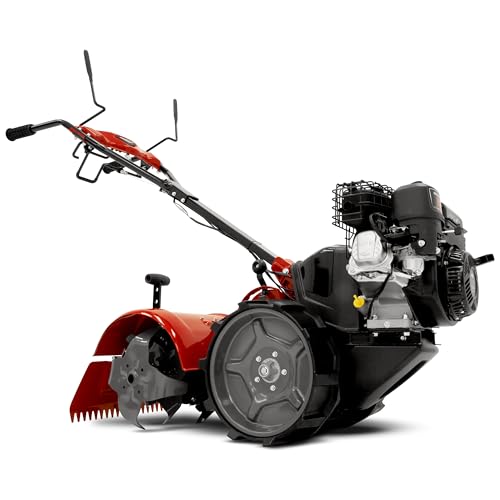




Funny thought — if you want a workout, push this puppy by hand 😂
Seriously though, weight and manual operation means good conditioning for me, but not for someone with back issues. Consider a model with a self-propelled option if that’s a concern.
Leah — humor appreciated. For users with mobility concerns, a self-propelled or ride-on may be a better fit.
Hah. I cringed at ‘push’ in the style name. For 252 lbs I’d want some assist. My knees would file a complaint.
Serious question: for the $3,399.95 price, would you rather buy this or two cheaper units to rotate? I’m leaning toward this if you need daily reliability; if it’s once-a-month use maybe cheaper is fine.
Ben — that’s the classic decision. Cost-per-hour and downtime risk favor the commercial machine for heavy, frequent use; for light, infrequent jobs the cheaper option often makes more sense.
Two cheap units might mean double the maintenance headaches. Depends on how mechanically handy you are.
If you use it weekly on large properties, one solid commercial unit is worth it. For occasional use, buy a consumer-grade mower and save the cash.
I’m torn. On one hand, commercial-grade build and Honda engine = reliability. On the other, the cutting width is only 24″ which feels narrow for acreage work.
Anyone using multiple passes with a 24″ deck? Does it add a lot of time vs a 36″ deck?
Good observation. A 24″ deck is more maneuverable in tight brush but slower across open acres. Trade-off is between precision and speed.
Bought a Swisher years ago (different model) and can vouch for the brand’s durability. This one looks more compact — might be easier through saplings.
One downside: replacement blades and parts for commercial decks can be pricey. Factor that into the long-term cost.
Do you know part numbers for the blades? Might be good to order before the first season.
Good point about spare parts. The review didn’t have detailed long-term cost data, but dealers generally stock common blades and belts.
Most hardware stores won’t carry them; check the Swisher dealer or Amazon listing (ASIN B07PC1J8P8) for OEM parts.
Yep — blades are not cheap. I keep a spare set because changing in the field saves time.
Assembly required — ugh. Anyone done the bolt-together setup themselves? I’m not mechanically allergic but busy.
I hate when big equipment comes half-built. 😒 How long did it take you all to assemble?
Took me the better part of a day because I double-checked every bolt and adjusted the deck level. Worth it for peace of mind.
Pro tip: lay out all parts and snap photos during each step so you can reverse if something goes wrong. Helps a lot.
If you’re short on time, most dealers will assemble for a fee. I paid once — best money spent when I needed it fast.
Assembly time varies. A competent DIYer can do it in a few hours; if you want it perfect and torqued correctly, set aside a morning. The manual is straightforward but heavy components are the challenge.
I assembled mine in about 3 hours with an extra pair of hands. The heavy parts (wheels/deck) are the tricky bits.
I’m seriously impressed with the power specs here — 10.2 HP Honda and a 24″ deck sounds like it will eat through thick stuff.
I do worry about the 252 lb weight for storage and transport though. Does anyone have experience loading one of these into a trailer by yourself?
Also, $3,399.95 is steep, but if it lasts like a proper commercial unit maybe it’s worth it. Thinking aloud: good for acreage but overkill for small yards.
FWIW, check if the dealer will mount it on a pallet for easier forklift loading at pickup. Saved me a lot of headache.
If you’ve got a truck with a tailgate and a good ramp, you might do it solo but it’s not something I’d recommend. Hire a neighbor? 😅
I helped load one of these last year. Two people and a sturdy ramp is the way. We also used wheel chocks and tied it down with ratchet straps — felt rock solid.
Thanks, Maya — good points. Many users strap the mower on a heavy-duty ramp and use a winch or two people to load it. At 252 lbs it’s manageable but not trivial for one person.
Does anyone have experience with the cut height range (3″ to 4.75″)? That seems a little narrow. I usually like to go lower for a cleaner look, but for rough cutting maybe it’s fine.
The product is targeted at brush-clearing and rough terrain, so the height range prioritizes safety and blade durability over a razor finish.
If you need lower cuts for turf, this isn’t the tool — it’s literally built to chew through thicker stuff.
You’re right — not a great range for fine lawn work, but for rough cut and brush it’s perfect. The higher minimum keeps you from scalping uneven ground.
Pricey but the Honda motor is a big plus. The review rating of 8.6 seems fair. Curious about fuel consumption — anyone tracked gallons/hour when cutting heavy brush?
Sidenote: Amazon listing and the review mention it’s not smart-home compatible. Not relevant for this gear but thought I’d laugh at that tag on a gas mower 😂
Agreed — ‘smart’ features aren’t essential here. Simplicity often means fewer things to break in heavy-use environments.
Imagine a Wi-Fi mower that tweets when it stalls… absolute chaos lol.
I have no commercial needs, but I’ve used a rough cut like this on a 5-acre overgrown lot. Pros: brutal reliability, you feel like a lawn gladiator. Cons: loud, heavy, and you WILL get bounced around.
Quick tip: invest in a good set of anti-vibration gloves and ear protection. My hands were buzzing after a long day the first time.
Agree about PPE. Also change the oil on schedule — those Hondas love regular maintenance. Kept mine smooth for seasons.
Great tip on anti-vibration gloves. The review mentions it favors durability over finesse — that bounce is expected on uneven ground.
Do you remember blade change intervals? I guess it depends on how rocky the terrain is.