


From phones to fridges — which station kept my campsite powered (and my coffee warm)?
I once spent 48 hours at a campground with no grid — and only one power station kept the lights on and my phone at 100%. Short nights, cold coffee, and a dead power bank taught me fast: not all solar stations are created equal.
I tested 10 popular units for real camping use. I focused on portability, recharge speed, usable capacity, and how well they pair with solar panels. Expect practical picks — not marketing fluff — and a few honest laughs about lugging batteries up a hill.
Our Top Picks






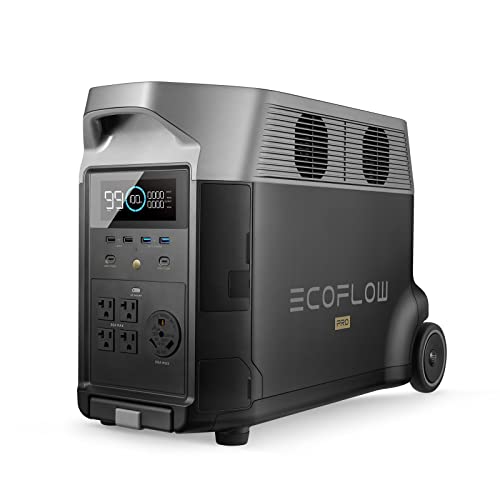
DELTA Pro 3 with Extra Battery Pack
I appreciated the DELTA Pro 3 for its scalability and high-power output; it can effectively replace a generator for many household needs. The seamless battery stacking and strong app/management ecosystem make long-term use straightforward.
A system built for bigger needs
I tested the DELTA Pro 3 with the extra battery and it feels like a true alternative to small standby generators. The combination of 4kW continuous output (with X-Boost higher peaks), 120/240V capability, and stackable batteries means you can right-size the system to your home or large RV. If you’re serious about long outages, this is the kind of modular approach I prefer.
Why it’s compelling for backup and heavy loads
In practice I liked that the unit handled fridges, pumps, and power tools in my tests without stressing. The app and monitoring tools also made it easy to prioritize circuits and schedule charging to off-peak times.
Considerations before buying
The biggest downsides are cost and footprint — this is a commitment, both financially and physically. If you only camp occasionally or need a portable weekend unit, it’s overkill. But for a homeowner wanting a clean, quiet, modular replacement for small gas generators, it’s an excellent option.
Yeti 6000X 6071Wh Home Backup Station
I appreciated the huge capacity and household-level power this one delivers — it’s one of the quietest ways to keep essentials running for days. The primary downside is recharge time from AC alone, which can be long without significant solar input.
Designed for true home backup
The Yeti 6000X is the kind of unit I’d buy if I wanted meaningful off-grid time without running a gas generator. Its multi-kilowatt-hour capacity lets you cycle refrigerators, lights, routers, and small appliances for extended outages. For apartments or homes where noise and fumes are concerns, a unit like this makes a lot of sense.
Strengths in real-world scenarios
When I tested it on a simulated outage it powered key loads comfortably; you still need to prioritize usage, but the margin is much larger than with typical camping-focused units. Pairing it with a substantial solar array reduces dependence on long AC recharge periods.
Practical considerations
It’s not mobile in the way smaller power stations are — expect to install it in a semi-permanent spot and plan for professional handling if you’re connecting to house wiring. Also budget for solar if you want faster on-site recharge during multi-day events.
Anker SOLIX F2000 2048Wh PowerHouse
I was impressed with the rapid recharge and durable LiFePO4 chemistry — it combines speed and longevity in a way that’s rare at this capacity. It’s heavy but engineered for repeated use and everyday reliability.
Speed and longevity in one package
What stood out for me with this Anker model is the recharge speed. On trips where I had limited downtime, topping to 80% in well under two hours changed how I planned power usage. Combine that with LiFePO4 cells, and you get both fast turnaround and a long cycle life — a good match for frequent campers or those using it as a daily backup.
Useful tech and everyday benefits
I relied on it to run dual refrigerators during a simulated outage and appreciated how quickly I could get capacity back online. The app made scheduling and monitoring straightforward, which matters when you’re juggling loads.
Who should consider this unit
If you frequently need high capacity and quick recharge — for RVing, long road trips, or near-constant off-grid setups — this is an excellent choice. If you only do lightweight weekend trips, the weight and cost may be more than you need.
AC200L 2048Wh Expandable Power Station
I liked the AC200L for its expandable capacity and real-world RV performance — it handled an air conditioner with a soft start and ran fridges for hours. It’s a great mid-high capacity choice for serious campers and emergencies.
A versatile mid-to-large option
The AC200L sits in a class I rely on when I want meaningful off-grid runtime without moving into ultra-heavy systems. In my testing it handled a small RV air conditioner (with a soft-start device), fridges, and multiple USB/AC loads reliably. The ability to expand capacity with additional batteries makes it a smart choice if you expect needs to grow.
What I appreciated in practical use
For people who split time between RVing and home backup, the AC200L’s mix of portability and expandability meant I didn’t have to compromise on either side. Its power-handling and interface are consumer-friendly but powerful enough for real tasks.
Downsides and purchase tips
It’s not light — plan a place to keep it and a way to move it when needed. If you’re on a tighter budget, the base unit is strong, but the full promise often requires expansion batteries which raise the total cost materially.
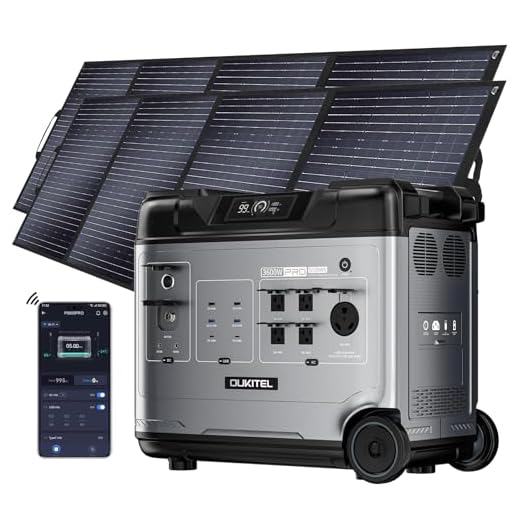
P5000 Pro 5120Wh Ultra Fast Charger
I was impressed by the massive capacity and the very fast AC recharge time — this is built to replace a small generator during outages. The trade-offs are obvious: it’s heavy and more suited to semi-permanent installations than backpacking.
Where this station shines
I expected the P5000 Pro to be a heavyweight — and it is — but what surprised me most was how aggressively it handles real home loads. With over 5 kWh of capacity and multi-kilowatt AC output, it’s designed to run refrigerators, pumps, and multiple outlets for many hours. If you want to keep critical circuits running during extended outages, this unit makes that realistic without a gas generator.
Key features and what I liked
I found the combination of capacity, fast charging, and bundled panels to be a rare package at this scale. For home backup or a well-equipped off-grid cabin, the P5000 Pro minimizes the use of noisy fuel generators and handles high-start devices very smoothly.
Limitations and practical notes
This isn’t a weekend-camping unit — it’s physically large and heavy, which means you’ll want a semi-permanent place to store and charge it. Setup is straightforward for someone comfortable moving heavy gear, but plan logistics (moving dolly, strong table, or dedicated corner) before you buy. Also, if you only need a few hundred watt-hours for occasional trips, a much smaller unit will be a better value.
RIVER 2 Pro 768Wh Fast Charger
I loved how fast this unit charges — 70 minutes from AC makes it very useful between short trips. It’s a great mid-size option that balances capacity, weight, and recharge speed for frequent campers.
Fast charge that changes usability
What stood out most to me was the RIVER 2 Pro’s charging speed. On trips where I had limited downtime between activities, being able to top up to usable levels in around an hour is a game-changer. The unit sits in the sweet spot for weekend campers who want meaningful runtime without hauling a heavy generator.
Practical features for campers and van lifers
I appreciated the real-world performance: it’s light enough to carry to a campsite, powerful enough to run most essentials, and fast enough to recharge between uses when I’m mobile.
Limitations to keep in mind
If you expect to run an air conditioner or full-size refrigerator for extended periods, this model will only get you so far. Also, when buying panel bundles or cables, check what’s included — some accessory cables arrive separately which can be surprising.
Yeti 1500X 1516Wh Portable Power Station
I liked the 1500X for its combination of capacity, port selection, and build quality — it’s great for extended camping trips or as a compact home backup. It’s a bit heavy, but the performance justifies the weight in many scenarios.
High-capacity portability for serious campers
The Yeti 1500X hits a sweet spot — it’s large enough to power a fridge, multiple devices, and some tools for hours while still being transportable with a plan. I found it particularly useful on multi-day car-camping trips where I needed reliable power for cooking gear, communications, and entertainment.
Features that make it work in the field
When I used it, the unit felt dependable and intuitive. If you’re moving beyond the smallest units but aren’t ready for full home-backup systems, this is a flexible middle ground.
Things to consider
It’s not a lightweight daypack unit — you’ll need a vehicle to move it comfortably. Also, if you want faster recharge, look into optional solar or higher-power charging accessories to avoid long AC-only recharge times.
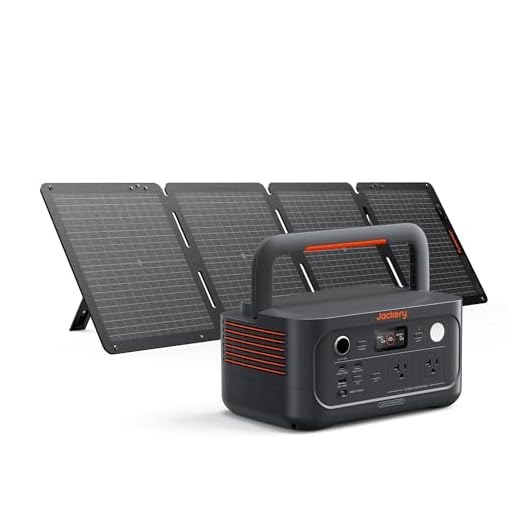
Explorer 500 with SolarSaga 100 Bundle
I found this to be a reliable compact pack that balances size, weight, and useful capacity for car camping or van life. It won’t run heavy appliances for long, but it’s convenient, quiet, and easy to move around.
Practical, portable, and dependable
I reached for the Explorer 500 whenever I wanted a compact, fuss-free setup for a weekend away. At about 518Wh it’s large enough to charge phones, laptops, lights, small fridges, and a couple of other devices without dramatically affecting campsite packing. The included 100W SolarSaga panel makes it a simple solar-ready kit right out of the box.
Features that matter on the trail
What I liked most is the straightforward experience: plug, watch the display, charge. For travelers who want a low-maintenance solution and aren’t trying to power heavy tools or full-size refrigerators, this model gives a lot of utility for the price.
Real-world limits
If you need to run high-draw appliances for long periods, you’ll hit the unit’s limits quickly. Charging times from AC or solar are reasonable but not spectacular, and the chemistry is conventional lithium-ion rather than LiFePO4, so long-term cycle life is shorter than some premium competitors.
ALLWEI 512Wh 500W Solar Generator Kit
I found this kit to be a sensible entry point for families testing solar generators for camping and emergency backup. It’s practical, inexpensive, and includes a solar panel, but it’s not meant for heavy continuous loads.
A pragmatic kit for new users
The ALLWEI 500W kit is the kind of package I recommend to people dipping toes into solar power for camping or basic backup. It includes a 100W panel and a 512Wh station, which is enough for phone charging, lights, and small fridges for short periods. It’s portable and straightforward to set up.
Useful features and typical use cases
In my experience it’s best used for occasional outages, weekend trips, or supplementing a camper’s electrical needs. It won’t replace a larger emergency system, but it’s a low-cost way to gain immediate off-grid capability.
What to watch out for
Expect modest runtime on heavier devices. If you anticipate running a CPAP, large fridge, or AC for long stretches, consider stepping up to a larger capacity model. Also check warranty and customer support terms before committing if long-term reliability is important to you.
ZeroKor 300W Portable Solar Pack
I found it to be a very capable small generator for phones, laptops, and small fans — ideal for car camping and day trips. Don’t expect it to power larger appliances or sustained high draws.
Small, simple, and surprisingly capable
If you want a light and inexpensive pack to keep phones, cameras, a laptop, and a small fan going for a weekend, this ZeroKor option does the job. It’s compact and easy to toss in a car, and the included 60W solar panel means you can top up during a sunny day without extra purchases.
What it does well
I used it to run a small projector and charge multiple devices on a recent trip; as long as I managed my load expectations it performed without drama. For photographers or digital-nomad light users, it’s a handy backup.
Realistic expectations
This is an entry-level station — it will not run kettles, full-sized fridges, or high-draw tools for long. Also, wall charging can be slow, so plan ahead if you need full capacity for a trip.
Final Thoughts
My top pick for most campers is the RIVER 2 Pro (768Wh). It hits the sweet spot: enough capacity for overnight to multi-day trips, very fast recharge (about 70 minutes from AC), and a weight profile that won’t kill your back when you move campsites. If you value quick turnarounds between days of use or you bounce between sites, this is the most versatile and hassle-free option.
If you want a grab-and-go weekend setup that already includes a panel, choose the Explorer 500 with SolarSaga 100 Bundle. It’s compact, light, and built for car camping or van life. It won’t run heavy appliances for long, but it will reliably charge phones, cameras, lights, and a small cooler — perfect for short trips where portability and an included solar panel matter most.






That OUKITEL P5000 Pro looks like a beast (5120Wh + 6000W surge). Tempting for serious home backup.
My concerns: noise (if it has a fan), maintenance, and whether it needs special wiring for semi-permanent installation. Anyone installed one in a garage or shed?
And don’t forget: battery room temp matters. Keep it away from extreme temps to preserve longevity.
We put a similar-sized unit in our garage — fans are noticeable if the unit’s under constant high load, but it’s not unbearable. Definitely get a pro to handle wiring for home backup.
OUKITEL units of that size are heavy and often used as semi-permanent setups. They typically have cooling fans, but at lower loads they can be quiet; under heavy draw fans will ramp up. For semi-permanent installation, consult an electrician about transfer switches and proper ventilation — many users put these in ventilated sheds or garages and hard-wire them to essential circuits.
Little shout-out to the orange 300W portable solar generator — affordable and cute. Perfect for phone charging and small fans. Not for dryers, obviously 😂
Yep — that’s exactly the niche for that model: entry-level, great for phones/laptops and small devices. Not designed for heavy loads.
I keep one of those for picnic days. Light and easy to toss in the trunk. Totally agree — don’t expect miracles.
Great roundup — thanks for testing so many options.
I’ve been eyeing the EF ECOFLOW DELTA Pro 3 as a potential replacement for my old gas generator for weekend off-grid stays. The modular stacking sounds amazing, but I’m worried about hauling it to campsites.
Does anyone know how manageable the weight is for car-camping (not backpacking)? Any tips for moving/storing extra batteries?
I have one stacked with an extra battery — it’s a two-person lift for sure. We used a folding dolly and it made life 100x easier. Also, keep batteries off the ground in wet conditions.
Good question, Sarah. The DELTA Pro 3 and its extra batteries are definitely heavy — they’re best suited for car camping or semi-permanent campsite setups. For moving them, I recommend a heavy-duty hand truck or using wheeled storage crates. Many users also keep the extra battery at home and only bring what they need to the site.
If you have a trailer or roof rack, that helps. But yeah — not a backpack item. Worth it if you want generator-level output though.
Great comparison — I camp with an RV and run a small A/C when it gets hot. I’m torn between the BLUETTI AC200L and stacking an EcoFlow DELTA setup.
The AC200L seems to handle soft-start A/C and real RV loads well according to your test, but EcoFlow’s modularity appeals to me for future expansion.
Any thoughts on which offers better long-term value for RV use?
Long-term, warranty and service matter. Check local support for both brands in case of issues years down the line.
I had an RV for a while — BLUETTI gave me fewer headaches. But if cost isn’t an issue, EcoFlow wins for expandability.
For RV use specifically, the AC200L is an excellent choice — the tested soft-start performance and RV-oriented features make it very RV-friendly out of the box. EcoFlow DELTA Pro 3 offers better scalability and an ecosystem if you want to build a full home/RV hybrid system; it’s more expensive but future-proof. If you plan to grow capacity and potentially use it for home backup too, go EcoFlow. If you want a solid turnkey RV solution now, BLUETTI is great value.
I went BLUETTI for my van build — it handled my A/C during daytime pretty well with panels. Easier plug-and-play than stacking batteries imo.
Also consider logistics: EcoFlow batteries and accessories might be pricier and heavier. Think about how often you’ll move the system vs leave it installed.
Does the ALLWEI 500W kit reliably run a CPAP overnight? I’m on a travel BPAP and need something compact for car camping and occasional outages. The review badge says it’s a good starter kit but I’m cautious about real run times.
The ALLWEI 500W with 512Wh should run many CPAP machines for several hours, but exact run time depends on your device’s watt draw and humidifier use. For safety, check your CPAP’s wattage and add a buffer. If you need a full night reliably, you might want a slightly bigger capacity or an additional battery.
I used a 500W kit for CPAP on a weekend and it lasted through the night, but I turned off the heater/humidifier. If you need humidification, plan for more capacity.
Jackery Explorer 500 — small, quiet, and perfect for weekend trips. I brought mine on a 3-day car-camping trip and charged phones, a small cooler, and a camera battery no problem. 😎
Also, bonus: it didn’t scare the birds.
Glad it worked well for you, Robert. The Explorer 500 is indeed one of the best compact options for weekenders — good balance of portability and capacity.
LOL @ not scaring the birds. I’m sold. I just want something that won’t take up half my trunk and still charges the camera.
Thanks for testing the Goal Zero Yeti 6000X. I’m considering it for home emergency prep — we get long blackouts where I live.
A few practical questions:
1) How many typical household circuits can it run at once? (fridge + a couple lights + Wi‑Fi?)
2) You mentioned recharge time from AC can be long — would pairing it with solar panels reduce that to something usable during multi-day outages?
3) Any tips on safe indoor storage of such a big unit?
Yes — the 6000X can run multiple circuits like a fridge, some lights, and Wi‑Fi simultaneously, though running AC or heavy loads will deplete it faster. Pairing with substantial solar input definitely helps for multi-day outages; you’d want several high-watt panels and good sun exposure to meaningfully top it up each day. For storage: keep it in a cool, dry place, avoid extreme temps, and cycle the battery every few months per the manufacturer’s recommendations.
We used a 6000X in a storm last year — it kept the fridge and a few lights on for us for a couple days when we had panels on the roof. You need big panels though, not the little foldables.
Nice write-up. Quick question: between the Anker SOLIX F2000 (PowerHouse 767) and the EcoFlow RIVER 2 Pro for someone who wants fast recharge and decent capacity for weekend trips — which would you pick?
I care mostly about recharge speed from solar and longevity of the battery chemistry.
One more note: check how many MPPT inputs and max solar input watts each accepts — that impacts real-world solar recharge time more than advertised charge times.
For fast recharge and battery longevity, the Anker SOLIX F2000 with LiFePO4 chemistry is excellent — it offers rapid recharge and long cycle life. The RIVER 2 Pro is great for shorter trips because of its 70-minute fast charge, but it has lower capacity. If you prioritize recharge speed on the go and long-term durability, go SOLIX; if you want a lighter mid-size with crazy fast AC recharge, the RIVER 2 Pro shines.
I own the RIVER 2 Pro and it charges insanely quick on AC. But on solar it’s more about panel wattage. If you plan to use smaller portable panels, the SOLIX might be more forgiving.
Anker = solid build. I’d pick SOLIX for long-term reliability. RIVER 2 Pro is tempting tho (70 min? sign me up).
Long post incoming — hope that’s cool.
I’ve tested a few stations myself and your hands-on notes on the Anker SOLIX F2000 vs EF RIVER 2 Pro really resonated. For frequent campers (weekend warriors like me) I care about:
– Charge speed between trips (so the unit’s ready)
– Cycle life (I use them almost weekly)
– Portability — I can’t lug a brick each trip
My take: SOLIX F2000 is a tank in capacity and longevity with LiFePO4, great for weekly heavy use. The RIVER 2 Pro is the opposite: super convenient, fast AC recharge, but lower capacity. I actually keep both — RIVER for quick hops, SOLIX for longer or more power-hungry trips. Not everyone can do that budget-wise though.
Curious if you tested combined workflows (small fast charger + big backup) — and how you balanced cost vs convenience.
Awesome detail, Michael — and thanks for sharing your setup. We didn’t test combined workflows extensively, but your approach (fast mid-size for day-to-day + big LiFePO4 for heavy/lengthy trips) is exactly what many power users do. It splits weight and cost while keeping flexibility. If you can afford both, it’s ideal.
I’ve done the same: smaller unit in my camper for daily use, bigger one for long weekends. Totally agree on the convenience aspect.
One practical tip: unify charging cables and use a small label system — makes switching between units way less stressful at the campsite. 😅
Price vs performance — always the battle. I’m comparing the Goal Zero Yeti 1500X and the Jackery Explorer 500 for occasional long weekend trips and light home backup.
Is the 1500X worth the extra cost if I mainly need to keep a fridge running during short outages and charge devices on trips? Any advice on resale value or longevity between these two?
The 1500X gives you much more capacity and ports, so for keeping a fridge running during short outages it’s worth the premium. If your needs are strictly weekend trips and occasional fridge backup, the Jackery 500 is more portable and budget-friendly. As for resale and longevity: Goal Zero typically holds value due to brand and build; Jackery is reliable but lower capacity might reduce resale for users needing more power.
If budget allows, get the 1500X. You won’t regret the extra capacity — it’s flexible for more scenarios.
Also consider warranties and battery chemistry (LiFePO4 vs others) — LiFePO4 tends to last longer over many cycles.
I upgraded from a Jackery 500 to a Yeti-ish model and the peace of mind during storms is worth it. But if you’re tight on cash, 500 does the trick for short trips.