


Nine 20HP heavy-hitters — will I crown the classic workhorse or the energy-saving upstart?
Uptime beats everything. I’ve learned the hard way that a shiny spec sheet doesn’t replace days lost to unexpected compressor downtime.
Top 9 Picks
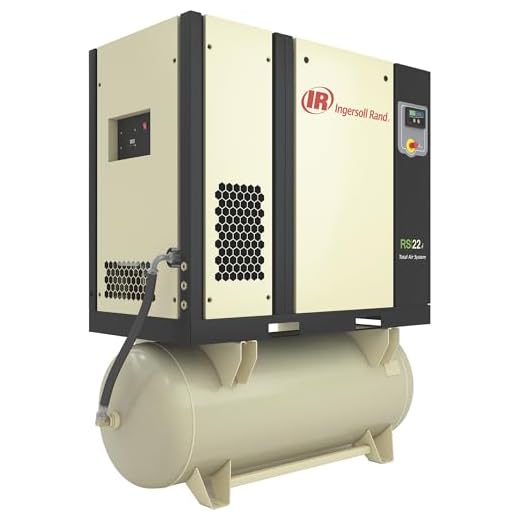




Ingersoll Rand RS15I 20HP 460VAC Compressor
I consider the 460V variant ideal when you need the same industrial-grade reliability but operate on facility 460V power. The performance and support ecosystem match the 230V unit, making it a dependable choice for heavy production.
Overview
This 460VAC Ingersoll Rand RS15I package brings the same reliable engineering to facilities wired for 460V three-phase. I appreciate that large manufacturers provide consistent options across common industrial voltages, simplifying procurement and standards compliance.
Core attributes
Operational advantages and trade-offs
For facilities with continuous demand, I value the stable pressure and dryer integration that keep processes running and products consistent. The main trade-off is a higher acquisition cost, but that’s often offset by lower downtime and a stronger parts ecosystem.
Buying considerations
If uptime and service network matter to you, this machine is a top recommendation. I advise arranging a service contract or ensuring local technicians are trained on Ingersoll Rand systems to maintain peak reliability.
Ingersoll Rand RS15I 20HP 230VAC Compressor
I value the build quality, service network, and proven performance that this legacy brand offers. For production environments that can’t afford unexpected downtime, the investment in a well-supported 20HP Ingersoll Rand pays dividends in reliability and predictable service.
Overview
This Ingersoll Rand RS15I series is a tried-and-true industrial package: 20 HP, integrated dryer, and a 120-gallon tank. I’ve come to rely on Ingersoll Rand machines where uptime and manufacturer support are priorities — they’re a common choice for heavy production facilities.
Key strengths
Why I recommend it and what to expect
I find this model excels in continuous-duty environments where tool and process reliability matters most. The aftermarket and OEM service footprint reduces downtime risk. Expect a higher initial investment but lower unexpected repair risk compared with low-cost alternatives.
Practical advice
If you run a production line or require high-quality compressed air with strong vendor backing, this unit is a top-tier choice. I suggest budgeting for preventive maintenance and using OEM filters and parts to maximize lifecycle performance.
KAPA 20HP VSD Rotary Screw Compressor 232psi
I like how VSD control reduces energy use and smooths pressure control, which pays off in facilities with variable demand. The higher maximum pressure capability is useful for certain tooling and high-pressure applications.
Overview
This KAPA VSD 20HP rotary screw compressor targets energy-conscious operators and applications requiring higher pressure. I like that the VSD allows the motor to match output to demand, trimming power consumption especially in facilities with variable load profiles.
Noteworthy features
Benefits and considerations
For shops with fluctuating demand, I find VSD machines frequently pay back through energy savings and reduced wear from fewer start/stop cycles. However, the lower CFM figure means you must match the compressor to your actual tool and process needs — it’s excellent for high-pressure, moderate-flow scenarios but not ideal where continuous high flow is required.
Practical guidance
If you need variable pressure control and prioritize efficiency, this is a strong option. I recommend getting a professional air audit so you confirm the 54 CFM and pressure envelope meet your real-world simultaneous tool usage.
20HP 480V Variable Frequency Compressor with Dryer
I appreciate the combination of a variable frequency drive and refrigerated dryer in one package — it balances energy efficiency and air quality. The 81 CFM rating at 480V makes it suitable for many manufacturing and auto repair environments.
Overview
This 20HP 480V variable frequency (VFD) compressor pairs a 15 kW screw package with an integrated refrigerated dryer. I like that the system automatically adjusts motor speed to match demand, reducing energy waste and softening mechanical stresses at start-up.
Key capabilities
Why it works and potential downsides
In practice I find VFD-driven compressors deliver smoother pressure control and significant energy savings in variable-demand environments. The integrated dryer helps protect downstream tools and processes. The trade-offs are higher acquisition cost and the need for appropriate 480V electrical infrastructure.
Buying tips
If your shop has 480V service and you want the combined benefits of VFD efficiency and dryer-protected air, this unit is a compelling all-in-one solution. I recommend coordinating with your electrical contractor to size feeders and to program the control logic for your plant’s duty cycle.
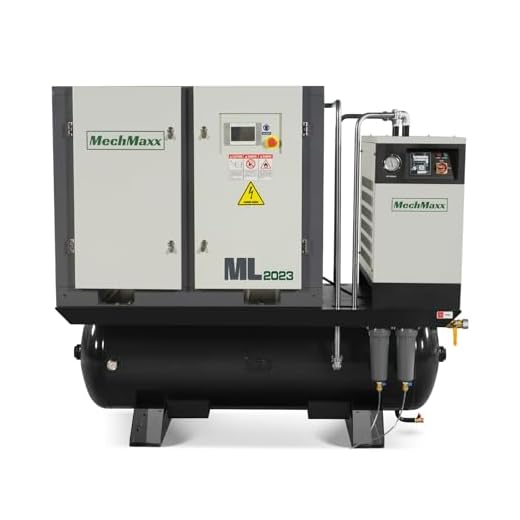
20HP Combined Compressor with Dryer and Tank
I like the integrated dryer and the larger 105-gallon tank — they make this a better fit for operations that require clean, dry air out of the box. It’s a slightly higher investment, but the reduced downstream equipment needs often justify the price.
Overview
This 20HP combined package (ML20) includes a refrigerated dryer and a large 105-gallon tank, targeting users who need dry, stable compressed air without adding separate dryers or extra piping. I find that integration reduces installation complexity and protects downstream tools and processes from moisture.
Built for industrial duty
Benefits and trade-offs
In my experience, having a dryer built in is a real timesaver for paint shops, pneumatic instrumentation, and processes sensitive to humidity. The larger tank smooths out pressure swings and reduces compressor cycling, which can improve component life. That said, the overall package is heavier and more expensive — you’re paying for convenience and readiness.
Practical tips
If your facility requires consistent low-moisture air and you want minimal additional equipment, this combined unit is compelling. I recommend planning for service access around the dryer and scheduling annual refrigerant/dryer inspections.
MechMaxx 20HP 230V Industrial Compressor
I find this model to be a strong pick when balancing cost and capability — the motor and airend specs punch above the price. It's a practical choice for small-to-medium shops that need reliable duty without enterprise pricing.
Overview
This MechMaxx M20AC230 brings a lot of capability for the money: a 20HP package designed for 230V 3-phase operations with an emphasis on robust components. I appreciate the focus on motor protection and long-life bearings — it signals an intent to build for continuous duty.
Notable specs and construction
Real-world benefits and limitations
In practice I found the unit well-suited to shops using pneumatic tools, sanders, and moderate production lines. The IP54 motor and heavy bearings mean fewer surprises with contamination or heat. On the downside, you should budget for professional wiring and a proper motor starter to avoid inrush problems.
My recommendation
If your operation runs on 230V industrial power and you need a cost-conscious 20HP rotary screw, this model is a pragmatic choice. I’d pair it with decent filtration and scheduled preventive maintenance to maximize uptime.
MechMaxx 20HP 460V Heavy-Duty Compressor
I find this 460V variant suitable for facilities already wired for higher-voltage three-phase power — it avoids step-up issues and runs efficiently. The performance mirrors the 230V model but fits industrial electrical standards where 460V is the norm.
Overview
This MechMaxx M20AC460 is the 460V version of their 20HP platform — a sensible option when your site uses 460V three-phase power. I appreciate that the manufacturer offers both voltage variants so businesses can choose the model that matches their distribution.
What’s included and how it performs
Best fits and cautions
I recommend this when you have 460V service available — it avoids additional transformers and can be more efficient at full load. Keep in mind that local support, spare parts, and proper electrical setup are essential to get the promised reliability.
Final thought
If your plant is wired for 460V and you want a cost-effective 20HP solution, this model balances component quality and price. I’d verify lead times and service options before ordering for continuous production setups.
HPDAVV 20HP All-in-One Industrial Compressor
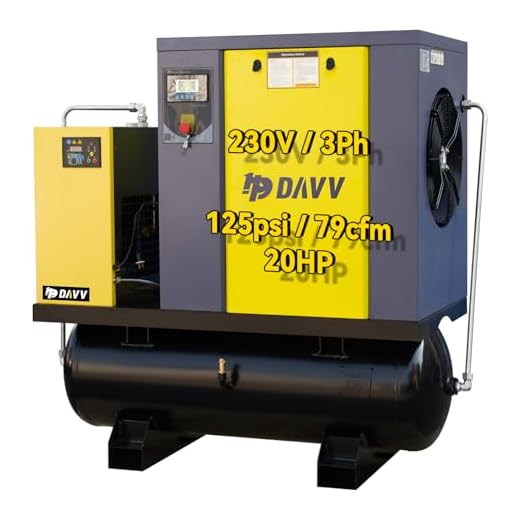
I appreciate the integrated approach — tank, separator and compressor in a single footprint saves shop floor space and reduces installation complexity. Performance is solid for general industrial use, though the unit is heavy and best installed with a lift or pro help.
Overview
I like how this unit packages everything you need into one skid-mounted machine: a 20HP rotary screw package, an 80-gallon ASME tank and a spin-on air oil separator. That approach makes it practical when floor space, piping runs and installation time matter.
Key features
What I like and what to watch for
I find the single-package design saves on plumbing and helps me bring a compressed air system online quickly. The airend and tank combination is suitable for general shop equipment, pneumatic tools, and light production lines.
Practical insight
If you need a straightforward, compact 20HP solution and want fewer vendors to manage, this unit is worth considering. I recommend verifying electrical hookups (3-phase 230V) and confirming clearance for service access before purchase.
HPDAVV 20HP Base Mount Industrial Compressor
I see this base-mount 20HP as a cost-conscious option for commercial stations or workshops where a compact footprint is desirable. It offers core capability but you should budget for in-house service and potential aftermarket filters.
Overview
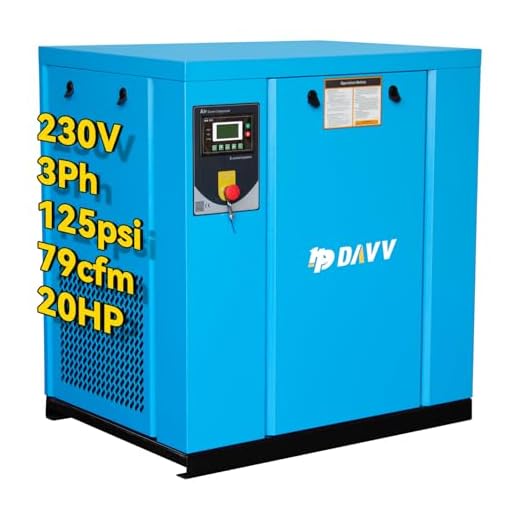
This HPDAVV base-mount 20HP compressor is positioned as an affordable commercial/industrial stationary solution. I like that it’s configured for NPT 3/4" plumbing and includes dryer and filter components, which reduce the number of add-ons you need.
Technical highlights
Where it fits and what to expect
I recommend it for workshops and commercial stations looking to keep costs down while getting a 20HP rotational screw performance. The 80 dB noise rating makes it more suited for industrial or isolated mechanical rooms rather than office-adjacent spaces.
Practical notes
If you buy this unit, I suggest planning sound mitigation and ensuring you have local technician support for routine maintenance. Double-check exact specifications with the seller to match your electrical and piping setup before purchase.
Final Thoughts
My top pick for most shops is the Ingersoll Rand RS15I 20HP — get the 230VAC model if your facility is wired for 230V, or the 460VAC variant if you run 460V power. Why? Because the RS15I delivers field-proven reliability, a huge service/support network, and predictable continuous-duty performance. In short: if you can’t afford surprises and want a compressor that keeps production running, this is the one I’d buy and install.
If your shop has variable demand or you’re hunting real energy savings, my second pick is the KAPA 20HP VSD Rotary Screw Compressor (232 psi). Its variable-speed drive smooths pressure control and cuts electric bills when demand fluctuates, and the higher max pressure is handy for specialty tooling. Choose the KAPA when duty cycles swing and you want lower operating costs without sacrificing capability.







HPDAVV all-in-one looks neat but I swear that blue/yellow unit is HEAVY. Tried moving one — nope. Need a forklift or you’re stuck 😅
We rolled ours in with pallet forks and a 3-ton forklift. Make sure you secure the dryer lines and tank before lifting — someone forgot once and we had a messy day.
Yep — those all-in-one packages are bulky. Plan for a lift or pro install and consider where the maintenance panels will be accessible once it’s in place. It saves floor space but not the effort to get it in there.
I’ve been eyeing the KAPA 16 bar 20HP VSD unit from the list because it advertises energy savings.
Does anyone know how loud that one runs compared to the Ingersoll R series? Also the 232 psi max sounds great, but will that be overkill for standard pneumatic tools? I’m trying to figure out whether the VSD alone justifies the cost.
Thanks!
Good questions. VSD compressors like the KAPA typically run quieter during part-load because the motor isn’t cycling on/off — the frequency control yields smoother operation. Regarding 232 psi: most standard tools only need 90–120 psi, so the extra capability is for specialty tooling. VSD pays off when your shop has variable demand; if you run near full load constantly, the savings are smaller but you still get smoother pressure control.
One more thing — VSDs are great but maintenance is slightly more specialized (drive cooling, filters for the electronics). Factor that into your decision!
If your tools only need 90–120 psi, you can run the KAPA and just set the cut-out lower. But yea, that’s paying for headroom you might not use. Also check if your shop can handle the higher pressure with existing piping/fittings.
I installed a VSD on a shop that had big swings in use (spray booth + intermittent grinders). Energy bills dropped noticeably. Noise was a pleasant surprise too. But be prepared: VSD drives can be sensitive to dirty power and might need surge protection.
Quick question about the HPDAVV 208-230V base-mount model (the one with spin-on air/oil separator):
Is it common to replace the spin-on separators with aftermarket higher-grade units? Any brands recommended? Also, are there any gotchas with NPT sizes or plumbing when retrofitting filters?
I swapped to a Fleetguard element on a similar base-mount unit — better uptime and longer change intervals. Just measure the housing depth and thread type carefully!
Yes, many shops upgrade to higher-quality separators and filters for longer life and better oil carryover control. Check thread sizes (NPT vs BSP) and ensure you get the right micron ratings for your needs. Brands like Fleetguard and Donaldson are common choices for separators and post-filters, but confirm physical dimensions and head thread patterns before buying.
Watch for drain types too. Some retrofit filters interfere with automatic condensate drains. Make sure the plumbing and clearance still allow for proper condensate removal.
I’m torn between the MechMaxx 20HP 460V model and the Ingersoll Rand 460V RS15I from your list.
Nitty-gritty question: aside from brand reputation, is there anything in the airend design or motor spec that would make one more efficient or longer-lived? My plant is already 460V three-phase so either will fit electrically.
Cost is a factor — MechMaxx is cheaper — but I don’t want to buy a headache.
Don’t forget installation costs. If the cheaper unit requires special foundations, vibration mounts, or has higher exhaust heat path needs, that can add up.
Also check manufacturer documentation for service intervals and consumable availability. A cheaper compressor with long lead times for bearings or seals can kill the cost advantage.
I run a MechMaxx at a remote shop — so far so good but we keep an extra airend gasket kit and a few bearings on hand. If you’re risk-averse, get the extended warranty if available.
If possible, ask for references from nearby shops that have the exact model. Real-world feedback beats spec sheets sometimes.
Fair dilemma. Ingersoll Rand has a long-proven service network, standardized parts and a history of uptime in heavy-duty settings. MechMaxx is positioned as a budget-friendly alternative; often the core airend and motor specs are competitive, but you should check warranty terms and local aftermarket support. Efficiency differences are usually modest unless one machine has a VSD or a particularly modern airend design. If uptime and quick parts/service matter, lean Ingersoll; if capex and comparable specs are key, MechMaxx can be a good compromise.
Great roundup — very timely for me.
I run a small fab shop and we bought the INGERSOLL RAND RS15I-A115-TAS-230 (20 HP, 230VAC) about 4 years ago after reading similar recommendations.
Super reliable, rarely down, and the local service techs know those units inside out.
Question for the author: do you think it’s worth paying extra for the 460V model if our facility can be converted, just for the perceived long-term reliability? Also curious about spare parts lead times — we’ve had to wait a week once for a replacement control valve and that hurt production.
If converting to 460V means needing transformers or rewiring, run the numbers. For small shops the labor cost often eats any electrical efficiency gains. But for big plants it can make sense. Also, ask your distributor about reman parts — sometimes faster and cheaper.
Thanks for sharing your experience, Lucas — really useful for other readers. If your facility can be economically converted to 460V and you expect very heavy continuous duty, the 460V RS15I variant can be marginally more efficient and pairs well with industrial electrical setups. That said, the core airend and service ecosystem are essentially the same, so the 230V you have is still a solid choice. For parts lead time: check if your local distributor stocks common spares (filters, valves) — stocking those can cut downtime significantly.
I had a similar wait for parts last year. Pro tip: keep an extra set of cheap wear items (filters, belts, oil) on-site. The big parts (airend, control boards) are pricier but less likely to fail if you keep up with preventative maintenance.
LOL, the package that comes with the 20HP refrigerated dryer — it’s like buying a car that comes with windshield wipers welded on. 😆
But seriously, integrated dryer + tank sounds convenient.
How hard is it to service the dryer on those all-in-one units? Do you need special techs or can a decent shop tech handle routine upkeep?
I maintain a shop with a combo unit. We change desiccant/cartridge and clean the heat exchanger ourselves; called in HVAC once for a refrigerant top-up. Nothing too wild, but budget for the replacement dryer cartridges — they add up.
Ha — good analogy. Routine dryer maintenance (cleaning condensate traps, replacing filter cartridges/separators, checking refrigerant lines for leaks) is usually doable by a competent shop tech, but more involved refrigeration work (compressor or refrigerant issues) should be handled by an HVAC tech. The upside of the integrated package (like the ML20 model) is simpler hookups and fewer separate components to maintain overall.