


Which press will stop your wobble, drill true holes, and make your bench feel like a pro’s—fast?
A good drill press removes guesswork—and my shop stopped arguing with me when I got one. One clean hole beats ten crooked fixes. I’ve tested presses that hum, shake, or behave like a precision tool should.
I focus on build, speed control, and repeatable accuracy. I’ll tell you which machines feel solid, which give the best value, and which are simply a pain to use. No fluff—just what works in a real shop.
Top Picks


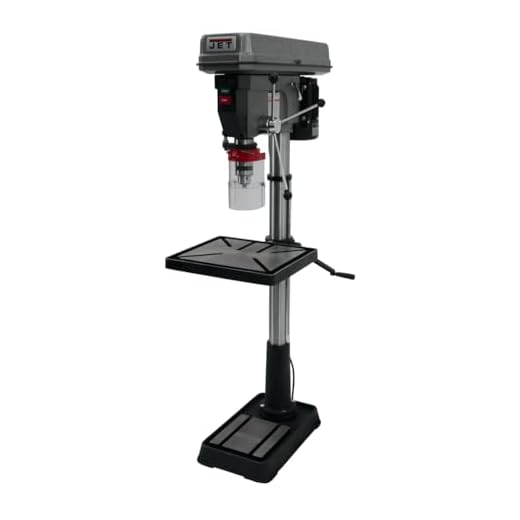
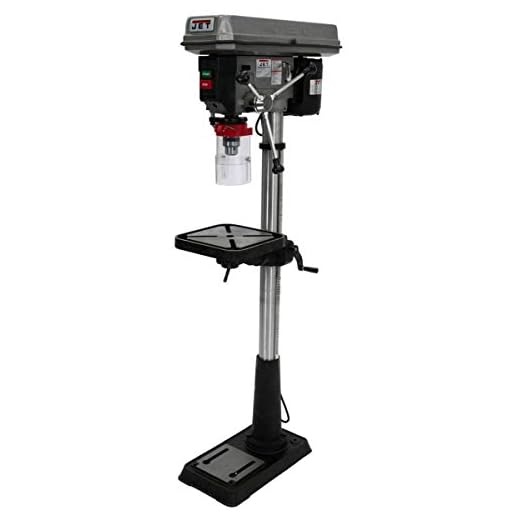

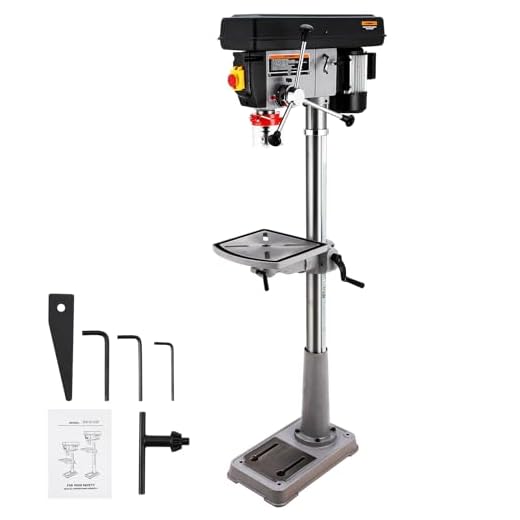


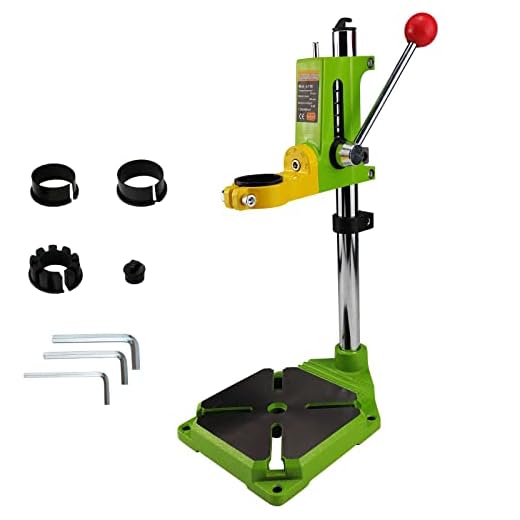
Powermatic 18-Inch Variable Speed Drill Press
A refined, heavy-duty press that makes speed changes effortless and delivers excellent long-term reliability. I especially appreciate the smooth electronic speed control, excellent lighting, and rock-steady construction for precision work.
What sets it apart
The Powermatic PM2800B is built around user experience: smooth variable speed control, quality ergonomics, and features that matter in a production or high-end hobby shop. Not having to change belts to alter speeds saves time and reduces setup friction.
Features I rely on
Once it’s in place, the machine becomes the center of my shop for any job requiring repeatable accuracy. The keyless chuck and large fence/table system make setup faster, and the crank elevation system is comfortable and precise.
Considerations and use cases
This is an investment for shops that value convenience and longevity. If you need a press for daily professional work or precision woodworking/metalworking, the PM2800B is worth the premium. For occasional DIYers, the price may be harder to justify, but the experience and durability are top-tier.
JET 20-Inch Step-Pulley Floor Drill Press
A rock-solid, high-power floor press built for medium-to-large projects and consistent, accurate performance. I appreciate the broad speed range and beefy construction that make repeated production drilling feel effortless.
Overview
I rely on this machine when the job calls for muscle and repeatable accuracy. The step-pulley drive and powerful 1.5 HP motor give you twelve discrete speeds from 150 to 4,200 RPM so you can comfortably work wood, plastics, and thicker metals without overstressing the motor or the bit. The large table and long spindle travel make it practical for oversized stock and production tasks.
Key features and benefits
I like how the machine feels under load — minimal chatter and solid support thanks to the beefy column and quality bearings. The MT-3 taper lets me use heavier chucks and arbors when needed, and the external depth‑stop is quick to set for repeat depths.
Practical insights and limitations
For one-person shops, plan for assembly and placement: it’s nearly 300 lbs and needs a stable floor. Changing speeds requires opening the pulley cover and moving belts which is reliable but not as fast as an infinitely-variable drive. If you need a shop workhorse for heavy, repeat drilling with a long service life, this model is a sensible investment; if you need quick speed changes on the fly, consider a variable-speed model instead.
JET 20-Inch Floor Drill Press 12-Speed
A very capable 20-inch floor press that balances power, accuracy, and build quality. I value its large table, MT-3 spindle, and reliable bearings for repeatable results on heavy shop jobs.
Precision and muscle
This JET 20" floor press is one I turn to when I need a reliable machine that can handle big pieces without compromising accuracy. The spindle support, heavy duty bearings, and MT-3 taper make it suitable for heavier tooling and consistent, low-runout drilling.
Features I use the most
The table’s tilt and crank adjustments are practical for layout and repeat drilling. The external positive depth stop and quick-release clamps speed up repetitive work. It’s a machine built for long life rather than quick bench-side convenience.
Real-world trade-offs
If your shop needs quick variable-speed changes, you’ll notice the belt-change method is slower than electronically variable machines. But for workshops that prioritize repeatability and durability, this JET is an excellent choice.
JET 15-Inch 16-Speed Floor Drill Press
A very dependable 15-inch press that handles metal and woodworking well for most shops. I like its solid cast-iron head, generous spindle stroke, and smooth operation for repetitive drilling tasks.
Why it’s popular
This 15" JET is a go-to press for many small-to-medium shops thanks to its balance of size, power, and cost. It’s small enough to fit in many garages but robust enough to do serious metal drilling and woodworking tasks.
Standout features
I’ve used this model for repeated holes in plate and fabrications — it stays accurate and doesn’t exhibit noticeable runout. The column and table adjustments are straightforward and hold under cutting loads.
Practical tips
Plan for two people during assembly due to the weight of the head. If you rely on shipping, inspect for box damage as others have seen occasional delivery-ding; JET’s support and packaging are generally good but no system is perfect.
WEN 13-Amp 12-Speed Floor Drill Press
A sturdy, well-priced floor press that punches above its weight for the money. I find it especially appealing for home shops that need metal‑capable torque and a large throat depth without spending thousands.
Why I like it
This WEN model gives a lot of useful capability for the price: a powerful 13‑amp motor, a long spindle stroke, and a sizable cast‑iron table that handles larger work comfortably. The multiple speed options let you match the RPM to the material (from slow for metal to faster for wood).
Notable features
I frequently recommend this to DIYers who want a true floor press without the heavy outlay. Assembly can be straightforward, but some buyers hit snags that are usually solved by following a few simple checks (tightening motor mounting hardware, aligning the table rack during installation).
Practical considerations
If you want industrial polish, this isn’t a boutique machine — but it will do the job reliably for most hobby and semi-pro metalworking and woodworking tasks. Expect occasional customer service calls or minor adjustments during setup, but the two-year backing and widely available parts make it easy to maintain.
Festisoul 15-Inch Variable Speed Floor Drill Press
A surprisingly capable 15" floor press with a copper motor and smooth variable-speed control for its price. I’ve found it to be a solid performer in both wood and metal projects, with a sturdy feel and easy table adjustments.
First impressions
This Festisoul 15" press surprised me with its solid feel and dependable motor. The copper-wound motor provides steady power under load and the variable-speed control makes swapping materials quick without belt changes.
Noteworthy details
Users have praised its smooth operation on steel and hardwood, and I echo that — the machine remains vibration-free under typical shop loads. It’s a great fit if you want a floor press with modern speed control at a mid-range price.
Things to consider
Because Festisoul is a newer brand, I recommend checking return policies and having a basic plan for spare parts. For many home shops this press delivers excellent bang-for-the-buck: the copper motor and variable control stand out at this price point, but if you need long-proven aftermarket support, consider established brands.
Shop Fox W1670 Radial Floor Drill Press
A great value radial drill press that extends capability beyond a standard floor press. I find its swing and head tilt make it especially useful when drilling large or awkward stock and when horizontal boring is required.
What makes a radial press different
The radial arm design gives you lateral reach that a standard drill press can’t match — I use a radial when I need to bore into the center of very wide plates or perform horizontal drilling without complicated fixturing. The W1670’s large swing and tilting head make those tasks straightforward.
Highlights
For woodworking and light-to-moderate metalwork the motor is adequate and the machine is versatile. I’ve found it especially helpful for jigs and fixtures that require table rotation and extended reach.
Practical notes
Because it’s a more specialized geometry, expect the setup to require a stable base or mounting surface. The limited number of speeds can be a downside if you need very low RPMs for large-diameter metal drilling, but for most workshop jobs the range is fine.
Klutch 16-Speed 13in Floor Drill Press
A practical, inexpensive floor press that gives hobbyists plenty of capabilities for light-to-moderate work. I like it as a workshop starter machine when you need decent speed range without spending a fortune.
Who this is for
I recommend the Klutch 16-speed press for hobbyists and light shop users who need a true floor press at an entry-level price. It isn’t a precision industrial model, but it covers a lot of bases — multiple speeds, table tilt, and enough swing for common projects.
What stands out
Assembly may take some mechanical troubleshooting if you’re not used to less-detailed manuals — several users report having to figure out small fitups. In practice, once properly assembled and adjusted, the machine runs true and delivers reasonable torque for woodworking and light metalwork.
Practical tips
If you buy it, I suggest inspecting alignment carefully during setup (check chuck runout) and tighten the head mount bolts per the manual. For intermittent home shop use this is a great budget pick; if you’re doing heavy industrial work, step up to a higher-grade press.
AeKeatDa Universal Rotating Drill Press Stand
A low-cost drill-press adapter that converts a hand drill into a makeshift press — handy for light drilling and bench repairs. I find it useful for occasional jobs but limited for heavier or battery-powered drills.
What it does
This stand converts a hand drill into a benchtop drill press with a rotating clamp and adjustable height. It’s designed for light repair and DIY tasks where you don’t need heavy-duty rigidity but want better repeatability than freehand drilling.
Features and fit
In use I found it best for wood, light plastics, and small metal jobs where the drill’s own chuck and clutch handle torque. It’s not a substitute for a true floor press or benchtop press if you need rigidity and accuracy for heavier stock.
Practical tips
If you plan to use this often, measure your drill shank and ensure clamp compatibility before purchase. Expect to tighten and re-check settings each time you change drills or bits; small accessories like this are handy but require careful setup for best results.
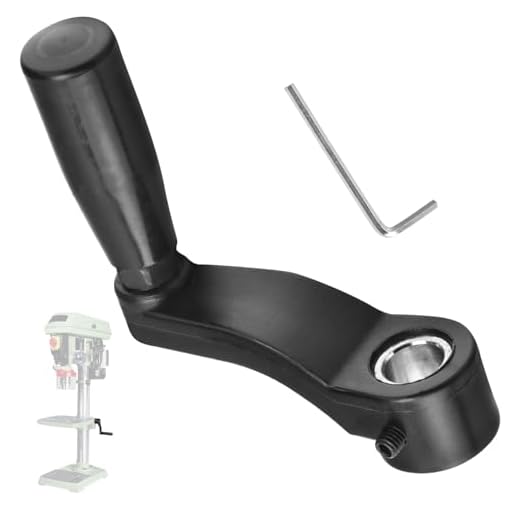
Delta Drill Press Elevation Crank Handle
A straightforward replacement crank handle for compatible Delta models that restores proper table elevation control. I find these replacement parts are inexpensive and often fit well if you double-check shaft dimensions before ordering.
Quick summary
This crank handle is a basic replacement part aimed at Delta drill presses with a 14.5 mm (9/16") elevating shaft. If your original handle is worn or missing, swapping it back is a fast way to get table height control working again.
What you get and how to fit it
Before you buy, I always measure the shaft diameter and confirm the collar geometry — several users have noted tolerance differences between brands or older machines. Installation is generally straightforward: slide the handle over the shaft and secure per your machine’s fastener specs.
Practical advice
If the package is missing a nut or washer replace it with a matching grade fastener rather than forcing the original. For cross-brand swaps (using it on non-Delta presses), check fit and function before final tightening.
Final Thoughts
If you want the best overall experience for precise, repeatable work, I recommend the Powermatic 18-Inch Variable Speed Drill Press. Its smooth electronic speed control, strong lighting, and rock-steady construction make changing speeds effortless and keep accuracy high—ideal for woodworkers and metalworkers who value a refined, reliable machine for bench and cabinet work.
If your shop tackles larger, heavier projects or you need a workhorse for production drilling, go with the JET 20-Inch Step-Pulley Floor Drill Press. Its beefy construction, broad speed range, and high power make repeated, heavy-duty drilling comfortable and consistent—perfect for fabricators and busy garages that need raw torque and durability.





Has anyone tried the AeKeatDa adapter with a modern cordless drill? The idea of converting a cheap hand drill into a press is tempting for tiny projects, but I’m worried about battery-powered drills not clamping well or the adapter not handling torque.
Also — is the Shop Fox radial (W1670) worth the extra $$ if you sometimes have long/awkward stock that won’t fit under a conventional floor press?
The AeKeatDa adapter works best with compact corded drills because it relies on the drill staying seated in the clamp. Many cordless drills have different body shapes and may not secure as well; higher torque cordless models can also push the adapter to its limits. For occasional light-duty benchwork it’s handy, but don’t expect heavy-duty performance.
Shop Fox W1670 is a different animal: the radial head makes it much easier to reach awkward stock and do horizontal boring, so if you frequently work with large or odd-shaped pieces, the W1670 is worth the premium.
Tried the adapter with a Dewalt 20V and it was OK for small holes in softwood, but it tended to wobble after a couple of uses. If you want cordless convenience, consider a dedicated portable drill press or a better-quality press adapter.
I’ve been eyeing the Powermatic 18-Inch (PM2800B) ever since this roundup dropped.
The variable-speed control sounds amazing for switching between wood and metal without fiddling belts.
Two questions: does anyone know if the 1 HP is enough for occasional 1/2″ steel work? Also, I have only a 115V shop circuit — is the 115/230V switch straightforward?
Price is a bit steep but if it’s as reliable as the review says, maybe worth it.
Any space/installation tips would be great — my garage ceiling is low so I worry about clearance.
If you’re worried about footprint, the JET bench stands (the 578173) mentioned with the JET package helped me consolidate grinders and drills on one pedestal. Not exactly the same as the Powermatic but saved floor space.
Good questions, Sarah — 1 HP on the Powermatic will handle a fair bit of steel if you use the right speeds and feed rates, but for sustained heavy cutting a 1.5 HP model (like the JET 20) is nicer. The 115/230 switch is typically a wiring change inside the motor junction box and requires reconnecting the motor windings — doable if you’re comfortable with basic motor wiring, otherwise have an electrician flip it so it matches your shop voltage.
For clearance: measure the overall height with the table lowered and add room for the longest workpiece and your overhead lighting. A dolly or casters can help if you need to move it in/out of a tight spot.
I had the PM2800B for a few months — love the electronic variable speed. For 1/2″ steel holes I just use slower speeds and firm clamps; it chewed through fine. If you’re only doing light steel occasionally, 1 HP is fine.
I bought the Klutch 16-speed because my wallet screamed “buy cheap” 😂
Pros: it gets the job done for plywood and small metal bits. Cons: the quill play and the table adjustment feel a little sloppy.
Anyone else tried modding the Klutch to reduce play? Thinking of swapping bearings or adding shims, but not sure if it’s worth the time.
Mods can help, but be cautious: parts fit and tolerances on budget units vary. If you enjoy tinkering it’s a good learning project. If you need reliable precision out of the box, one of the JET or Powermatic models is a better long-term pick.
I had a Klutch a year back. Replacing bearings helped a lot, and I tightened the table bolts with lock washers. Still not as rock-solid as a Jet, but for hobby projects it’s ok. If you plan heavy metalwork I’d upgrade sooner than later.
I’m torn between the two JET 20-inch options listed: the step-pulley JDP-20MF (1.5 HP) with the bench grinder stand vs the 12-speed JDP-20MF (Model JDP-20MF) that’s praised for precision.
My main use is a mix of heavy shop work (some production drilling) and occasional metal plate work that needs repeatability.
Is the step-pulley version better for production because of power and durability, or does the 12-speed give you better repeatable speeds for precision? Also, is there a big benefit to the MT-3 spindle mentioned in the review?
Sorry for the long post — I like details before I drop $$$.
Would appreciate real-world pros/cons if anyone has them.
Thanks all — that helps. I think I’ll lean step-pulley for torque and production, and maybe upgrade tooling later for precision when needed.
For production and heavy work, go with the step-pulley 1.5 HP. The extra torque really pays off for batch drilling and larger bits. Step-pulley is more old-school but bulletproof.
Short answer: step-pulley + 1.5 HP = more brute force and smoother under load; the 12-speed model with MT-3 spindle shines for repeatable precision and ease of changing accessories that fit MT-3. If you often change tooling and need tight repeatability, get the MT-3 12-speed. If you mostly pound out many holes in thicker stock, the step-pulley 1.5 HP is the better production machine.
MT-3 is nice — larger taper gives better concentricity and rigidity than smaller tapers. If you plan on reaming or using heavy collets, it’s worth it.
I ended up buying the Delta crank replacement listed (Drill Press Table Elevation Crank Handle 1344258) for my old press. Quick story: I ordered one that *almost* fit and had to sand a hair off the shaft — rookie move, measure twice 🤦♀️
Lesson: double-check the 14.5mm (9/16″) shaft spec before ordering. The OEM fit feels way nicer than generic ones.
Also, shoutout to this roundup for including those little parts — they save old machines from the scrap pile!
Glad that worked out, Zoe. The OEM-style cranks are usually solid cast or machined — a lot sturdier than the super-cheap knockoffs. If you ever need help identifying your model, post a pic and we can confirm fitment before you buy.
If you have a little runout after installing, check the set screws and the keyway. Sometimes the old key is worn and causes a slight wobble; replacing the key fixed mine.
Maya: it felt like proper metal, not the thin stamped stuff. Paul: thanks, I’ll check the key — that might explain a tiny bit of wobble I still have.
Thanks for the heads up, Zoe. I have an older Delta and was wondering about spares. Did the new crank feel sturdy or is it light plasticky metal?
WEN 4227T seems like such a bargain in this list — “best value” is right IMO. I mostly do home woodworking and some light metal brackets.
Quick question: can anyone confirm if it has enough torque to reliably drill 3/8″ steel? I don’t want to snap a cheap chuck or motor mid-project 😬
Also, the manual pics were kinda vague — does it come with a keyed chuck or keyless? Sorry for the newbie Qs 🙈
Perfect — thanks! I’ll pick one up and get some cutting oil. Appreciate the tips 😊
I drilled several 3/8″ holes in mild steel on the WEN with cutting oil and slower speed — no issues. Just feed steady and don’t push too hard. Replaced the included chuck with a higher-quality Jacobs after a year, but that was just me wanting better accuracy.
WEN 4227T is a solid value. It usually has decent torque for 3/8″ steel if you use sharp bits, correct slower speeds, and plenty of lubrication for metal. For tougher holes, step up drill bits (pilot, then final) helps reduce load.
Most WEN floor presses in that class come with a keyed chuck; check the Amazon listing pictures and specs when ordering, as accessories can vary by seller.