


Which 48-inch grapple will actually make your brush pile cry for mercy (and your tractor smile)?
Tired of wrestling roots and brush with a useless bucket? I was too — until I tried a proper root grapple. Quick swaps, stronger grips, and less backache are real things.
I’ll walk you through five 48-inch options that fit compact tractors and loaders. Short, practical, and honest — no fluff. Let’s find the one that makes cleanup fast and almost fun.
Top Picks
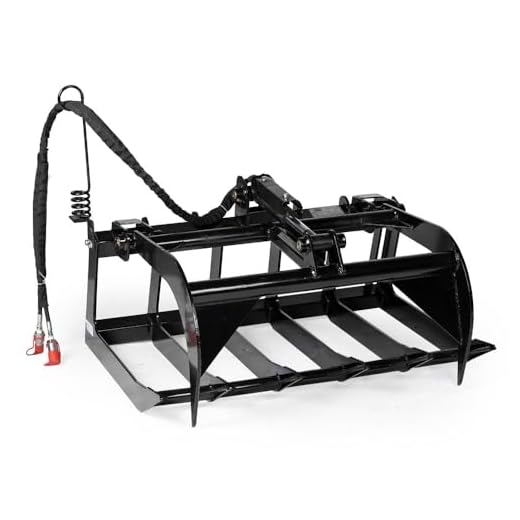



48-Inch Universal SSQA Root Grapple
This model stands out for its universal SSQA quick-attach connection and robust construction, making it well suited to a variety of compact tractors and loaders. I found it to be versatile, reliable, and well regarded by real users.
Why I recommend the SSQA model
I like this grapple because the universal SSQA connection removes a lot of mounting guesswork — you can quickly move it between machines with compatible quick-tach plates. The 3/8" thick steel frame and features like a cylinder guard and back stopper make it one of the more robust economy options.
Features that matter in the field
Those items add up to secure handling of brush, roots, and general debris cleanups. Owners report strong weld quality and reliable performance; one user wrote that the attachment "was well made" and that it performed excellently for cleanup after tree removal.
Use cases and considerations
In my view this is the best all-around economy grapple for users who expect to use a single attachment across different machines or who want the convenience of quick-attach systems. Expect a heavier unit (around 390 lb) and confirm your tractor’s lift rating before purchase. If you want long-term, heavy commercial use, consider upgraded commercial-grade models, but for most landowners this one strikes a strong balance between price and capability.
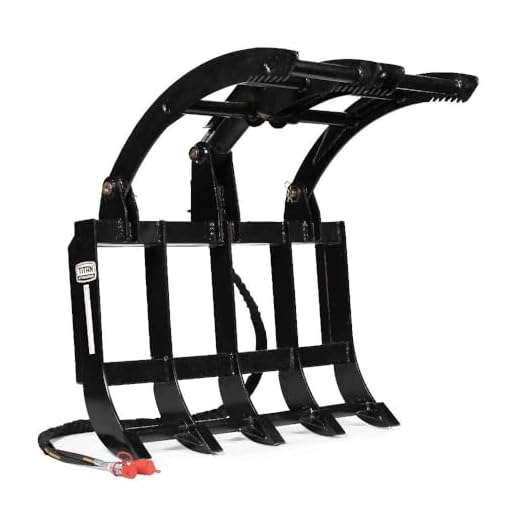
48-Inch Grade 50 Quick-Tach Grapple
I appreciate the Grade 50 steel frame and serrated edge for aggressive grip and durability on light to moderate jobs. Users report solid build quality and reliable function once fittings are adapted to their tractor.
Built for durability and everyday use
I recommend this Grade 50 model when you want a step up in frame strength without jumping to full commercial equipment. The 33" single jaw opening and serrated edge make it effective at gripping brush, small roots, and branches while the Grade 50 steel improves stiffness and wear resistance compared to standard economy steel.
Key specifications and practical impact
These specs mean the grapple will resist bending and keep cutting edges longer between repairs. From a practical standpoint, one owner noted the grapple was "well built and functions flawlessly" after adapting hydraulic fittings — a good reminder to check quick-connect types prior to installation.
Final impressions and tips
In my experience this is a smart choice for small contractors and serious property owners who need reliable, repeatable performance. Plan for an adapter if your tractor uses different hydraulic quick-connects and verify lift capacity because the unit is on the heavier side (~365 lb). When matched with the appropriate machine, it delivers robust, long-lasting performance for brush and root clearing.
48-Inch Light-Duty John Deere Grapple
I found this model to be a dependable, cost-effective solution for owners of John Deere hook-and-pin loaders. It balances lifting power and straightforward attachment compatibility without overcomplicating hydraulics.
Purpose and overview
I see this 48-inch Economy Root Grapple Rake as a practical, budget-friendly attachment for John Deere owners who need a simple, reliable tool for ripping roots and picking up debris. The clamshell design and long tines make it effective for landscaping, small land clearing, and routine farm cleanup.
Key features and what they mean
Those features translate into easy installation and low maintenance for users with matching loaders. If you already own a supported John Deere model, I think you'll appreciate the plug-and-play nature compared with adapters or custom mounts.
Benefits, limitations, and practical tips
I like how the powder-coated green finish resists corrosion and the 3-inch steel tubing gives a sturdy frame for light-to-moderate duty. That said, because it uses a hook-and-pin connection, it’s not a universal solution — you’ll need a compatible loader or an adapter. For compact tractor owners, the 325 lb weight is manageable but worth factoring into lift capacity calculations.
Real-world use and final thoughts
In my view this grapple is great for homeowners and small-farm operators who already run John Deere loaders and want a straightforward root-grabbing tool without premium pricing. If you plan on heavy commercial use or need skid-steer universal mounting, consider a different model with SSQA or quick-tach compatibility.
48-Inch Skid Steer Universal Grapple
This skid steer-style grapple is a flexible choice that fits a wide range of loaders and compact tractors. It performs well for common brush cleanup tasks and has a straightforward design that users appreciate.
Why choose a universal skid steer grapple
I recommend this 48" skid steer-root grapple when you need an attachment that will move between machines — from compact tractors to skid steers and loaders. Its universal mounting makes it more adaptable than hook-and-pin-only units and ideal for hobby farms and landscape contractors who use multiple platforms.
Notable attributes
That combination gives a good middle ground of durability and affordability. Several users have reported smooth performance on tractors like the Kubota L3901 and Branson models, though one mentioned needing to buy a separate connector for the third function quick-connect.
Practical use cases and limitations
In my experience this grapple is great for clearing brush, moving branches, and light root work. It's not built for heavy tree stumps or rock extraction, so if your project involves those tasks, look for a heavier-duty, thicker-frame option. For general brush cleanup and property maintenance, though, it's a reliable and economical choice.
48-Inch Quick-Tach Serrated Grapple Bucket
I view this quick-tach grapple as a convenient option if you prioritize fast attachment swaps and serrated edges for small roots and brush. It's designed for light-duty use rather than heavy commercial tasks.
Who this grapple suits
I recommend this model if you want quick-tach convenience and a serrated edge for cutting through small roots and brush. It’s aimed at property owners who need a fast, easy-to-swap tool for routine tidy-ups rather than intense land-clearing.
Key characteristics
Those design choices make it a good light-duty tool: the serrated edge helps with grip and penetration, while the quick-tach makes it efficient when you swap attachments frequently during a job. However, the product's own notes caution against attempting heavy digs or pulling trees and rocks.
Practical recommendations and caveats
In my experience this grapple excels when used within its intended scope: brush removal, light root ripping, and moving loose debris. If you expect to pry out large stumps or move heavy rocks, upgrade to a thicker-framed, commercial-rated grapple. For homeowners who switch between bucket, forks, and grapple often, the quick-tach convenience is a real time-saver.
Final Thoughts
My top pick is the 48-Inch Universal SSQA Root Grapple. It earned that spot because of its universal SSQA quick-attach compatibility and solid construction. If you want one grapple that fits a wide range of compact tractors and lets you switch tools fast, this is the most versatile and dependable choice. It’s ideal for property owners who use multiple machines or who value easy attachment changes.
If you need more raw durability for aggressive digging and heavier roots, pick the 48-Inch Grade 50 Quick-Tach Grapple as your runner-up. Its Grade 50 steel frame and serrated edge give a stronger bite and longer life under heavier, more abrasive work. This is the one I’d reach for on tougher acreage, stumps with stubborn roots, or frequent heavy cleanup jobs.
Buying & Use Guide
How I pick the right 48-inch root grapple
I always start by matching attachment style to my machine. If you have an SSQA plate or a skid steer, go with a universal SSQA or skid-steer universal grapple. If your tractor uses John Deere hook-and-pin, pick the John Deere-specific option to avoid adapters. For versatility, I prefer the Universal SSQA model because it minimizes adapter headaches.
What to look for: features that matter
Quick maintenance routine (do this every month)
Common mistakes I see (and avoid)
Budget vs. premium: what to expect
Quick comparison (at-a-glance)
| Model | Best for | Standout trait |
|---|---|---|
| 48-Inch Universal SSQA Root Grapple | Versatility across machines | Universal SSQA quick-attach compatibility |
| 48-Inch Grade 50 Quick-Tach Grapple | Heavy-duty jobs | Grade 50 frame and serrated edge for grip |
| 48-Inch Light-Duty John Deere Grapple | John Deere owners | Plug-and-play hook-and-pin fit |
| 48-Inch Skid Steer Universal Grapple | General brush cleanup | Broad skid-steer compatibility and simplicity |
| 48-Inch Quick-Tach Serrated Grapple Bucket | Fast swaps & light brush | Quick-tach convenience, light-duty use |
If you follow the compatibility checklist, keep a monthly maintenance habit, and choose the grade of steel that matches your workload, a 48-inch root grapple will turn a weekend of misery into a few efficient hours of cleanup. I’ve learned that pairing the right grapple to the right tractor is the single biggest factor in long-term satisfaction.
FAQ
Most 48-inch root grapples use a single auxiliary hydraulic circuit for the top jaw. I recommend checking your loader/tractor hydraulic flow in the manual, but for these models the standard flow on most compact tractors is usually sufficient. If you have low flow, the grapple will still work but may operate more slowly.
SSQA stands for Skid Steer Quick Attach — a standardized plate and locking system. If you want fast swaps between buckets and grapples or have multiple machines with SSQA mounts, a universal SSQA grapple like the top pick saves time and hassle.
Yes, serrated edges (like on the Grade 50) grip roots and small stumps better. But repeated scraping on large rocks will dull teeth faster. If rocky terrain is common, expect more maintenance or choose a more heavy-duty, abrasion-resistant model.
Very. Heavier builds (Grade 50 steel frames) resist bending and last longer under stress. Lighter, quick-tach models trade longevity for easier handling and faster attachment changes. Match weight to your tractor’s lift capacity—don’t overload the front end.
Always lower the grapple to the ground and relieve hydraulic pressure before disconnecting. Secure pins and locks before operating. Don’t exceed rated lift capacity and avoid side-loading the grapple—those actions cause most failures.





FYI for John Deere owners: measure twice. The ‘fits John Deere’ Titan item in the list was spot-on for my older model, but my neighbor’s newer JD needed a small adapter bracket. Seller said it was compatible but reality required an adapter.
Curious about the cylinder guard on the top pick — is it just cosmetic or does it actually protect from impacts when you’re prying under roots?
The cylinder guard is functional — it shields the cylinder from direct impacts and from forks/rocks during prying. It won’t make it invincible, but it reduces the chance of punctures and dents which would otherwise lead to leaks.
Had one dent a guard once but the cylinder was fine. I’d still avoid hammering directly over it but it’s a good layer of defense.
Last question: do any of these come with a warranty through Amazon sellers? I prefer some coverage in case of defects but don’t want to overpay.
Warranty terms vary by seller. Some offer a limited manufacturer warranty, others provide Amazon returns only. Always check the product listing and seller Q&A for warranty details before buying.
Great roundup — thanks! I’m leaning toward the Titan 48″ Economy Series with SSQA since I switch attachments a lot. Has anyone adapted the hoses themselves or used the hose spring they include? Worried about hose wear when using it on uneven terrain.
I didn’t use the spring initially and had a small abrasion after a month. Swapped to a reinforced hose with the spring and it’s fine now. 👍
I installed a short section of hydraulic hose with spiral wrap and clamped it tidy along the arm. Has held up for two seasons of brush clearing. Saves you from replacing hoses every year.
Good question, Emily. The hose spring helps protect the hose at the pivot, but many users still add a length of protective spiral wrap. If your loader sees a lot of side-to-side motion, consider routing the hose to minimize rubbing points.
Random comment but: anyone had problems with teeth spacing letting small stuff fall through? I want something that grabs both sticks and small roots without losing the little bits.
Yes — tine geometry matters. The Grade 50 Titan’s serrated edge and closer tines are better for small debris retention. GAOMON and light-duty skid-steer models may let finer brush through.
The serrated edge Titans do better at holding small stuff vs wider tine spacing on some quick-tach grapples. If capturing fine debris matters, pick one with closer tines or the serrated lip.
Adding a tarp trick to the checklist — nice practical hack.
Good tip, Grace. I do the same when I want to keep mulch for composting.
I sometimes use a tarp behind the pile to catch the little stuff when cleaning — low-tech but effective.
Long post because I actually tested three of these on my small hobby farm over the last year:
1) Titan SSQA Top pick — best quick-attach fit, solid welds, took a lot of abuse.
2) Titan Grade 50 — beefy frame, serrated edge really grips stumps but needs a bit more power.
3) GAOMON quick-tach — light, super quick to swap but shows wear faster on the teeth.
If you want quick swaps and lighter jobs go GAOMON. For serious brush and occasional roots go Titan Grade 50. YMMV. Also: measure your lift capacity before buying — I underestimated it at first. 🙂
Do you remember roughly how much heavier the Grade 50 felt versus the SSQA? Trying to decide between them for a compact Mahindra.
Noah — I’d say the Grade 50 felt 10-15% heavier in use, mostly noticeable when full of debris. Mahindra should handle it but check your loader lift chart.
Thanks Sophie, super helpful — especially the teeth wear note about GAOMON. I hate swapping things so quick-tach appeals to me.
Thanks for the detailed comparison, Sophie — that’s exactly the kind of hands-on info readers appreciate. Good call on checking lift capacity; it’s easy to overlook the overall weight and leverage effect.
I bought the Titan John Deere fit one since I have a JD 3-point style hook-and-pin loader. It worked right out of the box. No fancy hydraulics and it picks up brush well. Only gripe: paint chips fast.
Anyone have experience with the Grade 50 frame Titan (the second one)? Sounds tough but weight/balance matters for my compact tractor.
I run the Grade 50 on a compact Kubota. It’s heavier than the economy one but within spec. You lose a bit of lift height, but the durability is worth it if you pull roots often.
Are any of these tethered to specific skid steer mounts on Amazon or sold as universal? The roundup mentions SSQA and Quick Tach but I’m not sure what’s easiest for my setup.
The Titan top pick is SSQA universal — that one should fit a lot of quick-attach systems. The GAOMON is quick-tach style. The John Deere model is specifically for JD hook-and-pin. Check the product page for exact mount compatibility.
I’m handy with welding — would you all recommend reinforcing the tines on the GAOMON or just use it as-is? Planning to pull lots of gnarly roots.
If you’re planning heavy root pulling, reinforce or skip to the Grade 50 Titan. GAOMON is economical but will bend under hard commercial use.
Reinforcing GAOMON is an option if you know what you’re doing, but if heavy-duty use is expected, starting with a heavier frame (like the Grade 50 Titan) is generally more cost-effective long-term.
I’m on a budget — the GAOMON looks tempting for fast swaps, but I worry about longevity. Anyone used GAOMON for more than one season?
GAOMON is a good value if your work is light-duty. Expect to replace or re-cut teeth sooner than with Grade 50 frames if you frequently pull heavy roots or do demolition.
I used GAOMON for two seasons on light brush work. It held up okay but the paint and serrations wore quicker than my Titans. If you only do occasional cleanup, it’ll save money though.
So many options! If you want my blunt take: buy the Titan SSQA if you plan to keep the grapple on for long or do heavy scraping. Buy GAOMON if you’re swapping tools daily and mostly picking up small brush. Simple as that.
Blunt and useful. I appreciate no-nonsense buys. 😂
I’m sold on the SSQA now. Thanks Oliver!
Concise and to the point — thanks for summing that up, Oliver. That’s a helpful rule of thumb for readers.
Heads up for others: when checking Amazon listings, verify if hoses and couplers are included. Some sellers list ‘hydraulic ready’ but leave out hoses. Cost can add up quickly if you assume everything’s included.
If anyone wants, I can add a quick checklist for what to verify on Amazon listings to the article — hoses, couplers, pins, cylinder guard, and mount type. Would that be helpful?
Excellent tip. We noted in the article that fittings and hoses sometimes need to be adapted to your tractor. Always double-check the included accessories and confirm seller returns policy.
This. I ordered once and had to pay extra for couplers and fittings — surprised me.
Don’t forget to check if they ship with the right pins/brackets for hook-and-pin setups. Mine came without the right pins and I had to improvise.
Anyone who’s used the skid steer Titan version on uneven ground? I’m thinking of using it on some slopey fence-line cleanup and want to know if the grapple holds brush without dropping it when angled.
Also, pack the load against the bucket back stop — that helps prevent the pile from sliding forward when driving upslope.
On slopes, it’s best to approach loads from below when possible and keep the grapple close to the machine to reduce leverage. Slow, steady movements help prevent loss of grip.
I used a skid steer-style Titan on a hill. The serrated tines and single cylinder kept a good grip if you don’t overextend. You do need to be careful with pivoting — it can shift if the load is lopsided.
Quick and silly question: do these grapples make clearing my blackberry brambles any less therapeutic? 😅
Less therapeutic but more efficient. Trade-off: fewer bandages, more cider time after.
They definitely speed up the work — more time for coffee, fewer thorns in your gloves. But there’s still something satisfying about a well-cleared row.
Also way less curse words when you’re covered in brambles on a rainy day. Just saying.
Haha, depends if you enjoy the smell of diesel more than scratches! Grapples make it faster, but you miss the burn of hand-pruning. 😜