


Which attachment will make your trees regret growing? Mulch, pull, or shear — I tried the toughest ones so you don’t have to.
Trees are stubborn. I’ve pulled, sheared, and mulched more stumps than I care to count — and I still get a little thrill when a job goes clean and fast.
I tested eight skid steer attachments so you can skip the guesswork. Short on time? I’ll tell you which tool wins for heavy clearing and which one bites into roots like a champ.
Top Picks





60" Hydraulic Forestry Mulcher Attachment
I consider this a top choice when you need to convert saplings, brush, and small trees into mulch fast. Its 60" cutting width and heavy-duty drum make it ideal for large-acreage work and roadside clearing.
What it does
I think of this drum mulcher as a production-scale clearing tool — it chews through growth and turns woody material into manageable mulch in a single pass. It’s aimed at professionals who need to create fire lanes, clear overgrowth, or prepare sites quickly.
Key features and benefits
The real advantage is throughput: one wide pass replaces multiple passes with a smaller tool. When I need to reduce cleanup time on acreage or create defensible space, a mulcher like this pays back through efficiency.
Limitations and practical insights
This unit demands a capable carrier — think powerful skid steers or tracked loaders. Transport, storage, and blade maintenance are more involved than with hand tools. Also, it won’t remove big stumps; for that, pair it with mechanical stump grinders or excavators when necessary.
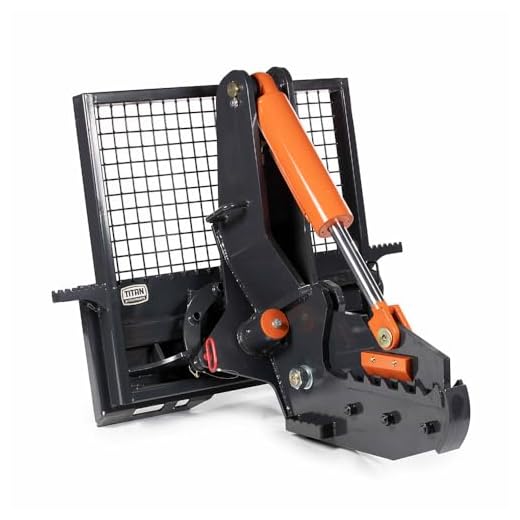
Hydraulic Post and Tree Puller Attachment
I find this puller to be robust and well suited to repeated landscape and fence-line work. It delivers strong clamping force and durable teeth that make short work of saplings and small-to-medium posts.
What it does
I see this tool as a workhorse for farms, tree farms, and properties with lots of saplings or old fence posts. It clamps, grips, and pulls — removing roots and posts without extensive digging or burning.
Key features and benefits
I appreciate how quickly it clears low-diameter growth: users report pulling hundreds of small trees in a day when conditions are right. The jaw design grips cleanly and the hydraulic cylinder delivers steady force.
Limitations and practical advice
Because the jaw sits off-center, I found positioning requires a little practice; installing a small camera or marking the loader helps with accuracy. Also be mindful of hose routing — adding 90-degree fittings can reduce snagging in tight jobs.
12" Rotating Tree Shear for Skid Steers
I appreciated its rotating head and heavy AR400 blades for making clean cuts at different angles. It excels where you need controlled cutting rather than brute-force ripping.
What it does
I view this rotating shear as a precision cutting tool for felling, sectioning, and preparing logs. The head rotates to three positions so you can approach stems and limbs at efficient angles rather than contorting the carrier.
Key features and benefits
I like this for situations where clean cuts matter — landscaping projects, urban clearing, or when you're preparing wood for milling. The hardened blades and robust hydraulic cylinder give you predictable results with less bark tearing.
Limitations and tips from users
It’s a serious piece of equipment: shipping, mounting, and safety considerations all increase with blade size. Some users have reported inconsistent weld quality on certain batches, so I recommend inspecting welds and asking about warranty/support before purchase. Also, for very large or frozen trunks, a shear like this may struggle — a mulcher or chainsaw approach could be better.
42" Root Grapple Bucket for Mini Skids
I found it highly effective for picking up irregular loads and separating fines through the skeleton bottom. It speeds cleanup and is versatile for landscaping, rock removal, and brush hauling.
What it does
I consider this root grapple bucket a versatile workhorse for cleanup — it grabs brush, roots, rocks, and logs that a plain bucket struggles with. The skeleton-style bottom is helpful for transporting bulky material while leaving dirt and small debris behind.
Key features and benefits
What I like most is the combination of strength and sorting capability: you can scoop up brush and let dirt fall through, saving you weight and multiple trips. It’s great for cleanups after storms, trail work, and general land clearing.
Limitations and owner notes
A few users have reported issues sourcing a very specific pin for the bucket assembly; I advise checking parts availability before buying and carrying a spare pin if you rely on the tool daily. Regular greasing and inspecting hydraulic hose routing will extend the life of the grapple.
12" Skid Steer Tree Puller Attachment
I found it to be a straightforward, no-nonsense puller that handles small trees and posts quickly. It saves time compared with digging or cutting and is easy to position on most medium skid steers.
What it does
I see this puller as a focused tool for landscaping and farm upkeep. It’s made to yank small trees and fence posts out of the ground with the root ball intact, eliminating a lot of follow-up stump work.
Key features and benefits
I like the mechanical simplicity — the serrated jaws bite the trunk and the cylinder delivers the force, which makes operation predictable. For properties with lots of saplings or broken posts, it speeds cleanup dramatically.
Limitations and practical insights
This is not a solution for large trees or heavy root systems. In rocky or clay soils you may need to loosen around the root first or use a complementary attachment like a ripper or grapple. I recommend practicing jaw placement before attempting to pull tightly rooted specimens.
Mini Skid Steer Stump Grinder Attachment
I found it to be a practical grinder for mid-size stumps and roots that would otherwise take hours to chip manually. It’s a compact way to convert stumps into grindings without heavy excavation.
What it does
I treat this stump grinder as the go-to for owners with mini skid steers who need to tidy up stumps, surface roots, or leftover collars after tree removal. It reduces the stump into mulch-like material so you can finish the site cleanly.
Key features and benefits
I like that this attachment brings the stump grinder function to compact carriers — it’s much less work than manual digging and allows you to restore lawn or landscape fast. The carbide teeth cut aggressively and are replaceable when worn.
Limitations and practical advice
It isn’t a replacement for large industrial grinders on very old or massive stumps. Make sure hydraulic flow and pressure on your skid steer match the grinder’s requirements and always inspect tooth condition before big jobs. Wearing eye and face protection is essential — even small grinders throw chips.
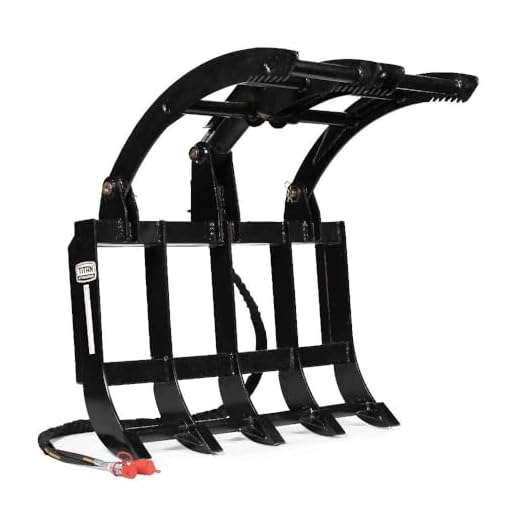
48" Light-Duty Root Grapple Rake
I view this as a practical, lower-cost grapple rake for light-to-moderate clearing tasks. It’s versatile across machines and offers a quick way to handle roots, brush, and debris without the premium price tag.
What it does
I see the economy root grapple rake as an accessible entry point for contractors and property owners who don’t need industrial capacity. It’s tailored to lighter clearing, moving brush, and tidying up small job sites.
Key features and benefits
I like that it opens the door to grapple functionality for operators on a budget. It’s easy to mount and operate, and the lighter weight reduces strain on smaller machines.
Limitations and practical tips
If your work regularly involves large logs, heavy roots, or continuous industrial clearing, consider upgrading to a heavier grapple. For light work, keep up routine inspections of welds and pivot pins to avoid downtime — economical tools benefit from attentive maintenance.
25" Skid Steer Ripper for Roots
I see this ripper as a simple, utilitarian tool for breaking up compacted ground and cutting through small root mats. It’s inexpensive and effective when used for site prep or to free stubborn roots before pulling.
What it does
I treat this ripper as a prep tool: it tears through compacted layers, severs shallow roots, and helps you create conditions for pulling or tilling. It’s not a stump or tree-removal implement, but it pairs well with pullers and grapples.
Key features and benefits
I like the simplicity — less to repair, easy to mount, and it does a predictable job of loosening. For landscapers and utility crews, the ripper is a cheap way to prepare ground for grading or removal.
Limitations and real-world tips
It won’t extract roots or stumps by itself: use it to expose or weaken material, then switch to a puller or grinder. Keep an eye on carrier travel and control depth carefully to avoid damage to the loader or undercarriage.
Final Thoughts
I recommend the 60" Hydraulic Forestry Mulcher Attachment as my top pick for anyone doing large-scale clearing or roadside work. Its 60" cutting width and heavy-duty drum make converting saplings, brush, and small trees into mulch FAST — ideal when you’re working acres or need to clear long fence lines quickly.
If your main task is removing posts, root balls, and stubborn saplings, go with the Hydraulic Post and Tree Puller Attachment. It delivers serious clamping force and rugged teeth that rip out roots and posts without constant digging. Perfect for repetitive landscape or fence-line jobs where speed and durability matter.
If you need clean, controlled cuts rather than brute force, consider the 12" Rotating Tree Shear as a secondary option — best for angled felling and precision work. For stump cleanup after pulling or cutting, pair either pick with the Mini Skid Steer Stump Grinder Attachment to finish the job below grade.






The MMS 25″ ripper seems underappreciated. For compacted soil and cutting small root mats before pulling, it’s cheap and effective.
Heads-up: it’s simple but you need to angle your passes right or you’ll just bounce over the ground.
Would love to hear recommended tooth patterns or whether anyone modifies the ripper for deeper work.
I welded on longer shanks to get more penetration on one job — worked fine but be cautious about stress and warranty. If you’re doing deep work often, a purpose-built ripper or different tool might be better.
Good observations, Grace. Rippers are low-tech but effective. Angling and multiple overlapping passes are key for depth. Some users add extra teeth or swap to heavier-duty points for deeper work — just check compatibility with the quick tach and machine capacity.
Loved the deep dive on the 60″ hydraulic forestry mulcher — that thing sounds like a backyard apocalypse machine in the best way 😂
I do a lot of roadside clearing and the review badge “Best for large-scale mulching and clearing” caught my eye.
Does anyone know how it handles wet brush or saplings thicker than 3″? I’ve had mulchers bog down before.
Also: how noisy are these on a mini skid? Thinking about neighbors…
Would probably buy from Amazon if shipping isn’t a pain.
Good questions, Emily. The 60″ mulcher’s heavy-duty drum handles saplings up to around 3″–4″ pretty reliably, but wet, fibrous material can reduce throughput and increase wear. For wet brush, slower passes and checking tooth condition often helps. Noise-wise, expect high decibels — hearing protection is a must and consider scheduling big jobs for non-quiet hours.
Shipping for mine from Amazon was surprisingly fast, but the lift gate fee was extra. Check dimensions before it arrives — it’s huge!
I run a 60″ on a larger skid and wet willow definitely slows it down. Tip: clear bigger sticks first and do a couple light passes instead of trying to bite everything in one go. Saves you a broken tooth or two.
I like the idea of the Titan 48″ economy root grapple rake for light clearing — price point is attractive.
But worried about long-term durability. Has anyone used the economy series heavily? Does it bend/warp or hold up OK?
Anyone used the Titan post and tree puller? The 3,000 PSI cylinder sounds beefy. I’m mostly removing fence posts and small saplings on my property and debating between this and a dedicated backhoe.
The Titan is a solid choice for repeated post work. If you’re dealing with big root balls or really packed soil a backhoe still wins, but for speed and repeatability the puller is hard to beat.
I have the Titan puller — it’s great for posts up to about 6″ diameter if the roots aren’t crazy. Faster than digging and cheaper than a backhoe rental in my case.
Question about the MMS stump grinder — the 16 carbide teeth and 160-500 RPM spec sounds decent.
I need something for park stumps (6″–12″) and roots without huge excavation.
Does the grinder cope with occasional small rocks mixed into the stump area? Any tips on tooth replacement frequency? 😊
Also, is the Amazon listing accurate on the RPM range or did they stretch that number?
Tooth life varies a ton — I had one job where teeth lasted a season, another where I changed after a single tough stump. Rocks are the big variable.
Also check local ordinances for grinding in public spaces — some places have disposal or noise rules. Good call on barriers and signage.
The MMS grinder is solid for mid-size stumps. Small rocks will dull teeth faster — they aren’t a showstopper but expect more frequent replacement if rocks are common. RPM specs on Amazon are usually correct, but actual cutting speed depends on engine/hydraulic flow; check your skid steer specs to match the recommended flow range.
I’ve ground a few park stumps with mixed gravel — definitely swap teeth more often. Keep a spare set of carbide teeth on hand; you’ll thank yourself.
If you’re doing public park work, slow and steady is safer. The grinder throws chips and small rocks — barriers and PPE are a must!
Reading the mini skid 42″ root grapple review made me laugh — “best for moving brush, roots, and debris.”
Translation: saves you from spending three weekends hand-raking 😂
I rented a similar grapple once and it paid for the rental in one day of cleanup. Anyone else rent vs buy experiences?
Renting is often the economical move if you only need it for a few days. If cleanup is a recurring job, buying makes sense. Consider depreciation and maintenance costs when deciding.
Curious about the Titan 12″ rotating tree shear — rotation and AR400 steel blades sound ideal for angled cuts.
But does anyone know how easy the 3-position manual rotation is to operate under load? I need precise cuts near structures and don’t want to wrestle the head.
Also, any issues with keeping the blades sharp in rocky soils?
Good point, Maya. Combination workflow (shear + grapple) is frequently the safest and most controlled approach near structures.
I work with the 12″ shear — if you’re careful to side-load less and avoid hitting embedded rocks it’s great. But yeah, one time I clipped a hidden rock and had to swap blades mid-day. Keep spares.
If precision near structures is the goal, consider using the shear to cut then a grapple to wrestle the trunk away. Less chance of accidentally pushing the tree into something.
The 3-position manual rotation is easier to use than it sounds — you often set it and finish the cut. Under heavy load it can be trickier, so plan to rotate when not under full stress. For rocky soils, AR400 holds up well but will eventually nick; having spare blades or a quick-sharpen plan helps.