


Six feet of steel: which 72-inch bucket will make your machine sing — and which will make you reach for the welder?
Buckets can make or break your workday. A well-matched 72-inch bucket can cut passes and save hours — or leave you wrestling with roots and rocks all afternoon. I’ve tested, poked, and picked through the heavy hitters so you don’t have to.
I kept this short and practical. Expect real-world notes on strength, durability, and what each bucket is actually best at — no fluff, just what works on the jobsite (and what doesn’t).
Top Picks




72-inch Hydraulic Root Grapple Bucket Rake
This dual-cylinder hydraulic root grapple is a top pick for clearing brush, roots, and bulky debris where control and gripping ability matter. It’s well-built and versatile, though it needs compatible hydraulics and sufficient machine capacity.
Why this grapple stands out
I choose this Wolfequip 72" root grapple when I have brush, stumps, or bulky debris to clear. The hydraulic grapple lets me clamp irregular loads and carry them securely — a big advantage over plain buckets when handling brush and trees.
Key strengths
The grapple is especially useful when you need to sort and load tangled brush or pick up large root balls. I find it speeds clean-up dramatically compared with hand-loading or trying to pin items against a plain bucket.
Practical details and trade-offs
You’ll need a machine with auxiliary hydraulics and enough lift to carry the grapple and payload. Installation also means routing hoses and fitting couplers, which is an extra step compared with mechanical attachments.
In short, this is my go-to for vegetation and debris cleanup — it’s a serious tool that pays back in time saved and safer handling of awkward loads.
72-inch Heavy-Duty Tooth Bucket USA-Made
This heavy-duty tooth bucket is purpose-built for demanding skid steer and track machine work, with excellent wear parts and a durable build. It’s heavier and more expensive than economy lines, but that extra durability pays off on tough sites.
Why I favor this heavy-duty tooth bucket
When I need a bucket that can handle digging, rock, and abrasive work without frequent repairs, I pick a heavy-duty tooth bucket like this one. The design focuses on durability and replaceable wear components so downtime is minimized.
Standout features
I find the replaceable teeth to be a real time-saver — rather than welding or replacing the whole edge, I can swap out teeth quickly on site. That reduces downtime and keeps productivity high on a busy job site.
Real-world considerations
The bucket’s weight and build quality mean you should match it to an appropriate skid steer or loader with enough breakout force. It’s not made for precision finish work; think of it as a robust digging and loading tool.
Overall, I’d recommend this bucket to anyone who needs rugged performance day in and day out — the build quality and serviceability justify the premium for demanding users.
72-inch Skeleton Rock Bucket with Bolt-On Teeth
I appreciate this bucket’s balance of durability and cost — it’s a capable rock bucket that sifts and grades effectively while offering replaceable teeth. It’s heavy but built to last and represents good value for tough cleanup work.
What I like about this rock bucket
This 72" skeleton rock bucket is the kind of attachment I reach for when cleaning lots, prepping sites, or separating rocks from soil. The bolt-on teeth are a practical touch: I can replace individual teeth in the field without expensive downtime.
Construction and usage highlights
In use, this bucket reduces manual sorting significantly; I’ve saved hours sorting rock and dirt by hand. The bolt-on teeth simplify maintenance costs compared with welded teeth.
Caveats and practical tips
Because the bucket is heavy, inspect your machine’s lift capacity. Also, if you need to capture very small stone, the stock tine spacing may be too wide — adding crossbars or secondary tines is a common modification.
Overall, this is a reliable, cost-effective rock bucket that performs well on rugged tasks and gives you serviceable wear parts for long-term use.
72-inch Skeleton Rock Bucket with Teeth
I found this bucket to be a very robust rock-sifting option for tractors with hook-and-pin carriers. It’s heavy-duty and built to last, but you should match it to a sufficiently powerful tractor to avoid performance issues.
What this bucket is for
I use this 72" skeleton rock bucket when I need to move and sift rocks and heavier debris while grading or cleaning a site. It’s built around the hook-and-pin mounting system used on many John Deere loaders, which makes fitment straightforward if your tractor is listed in the compatibility notes.
Key features and design highlights
I like how the replaceable teeth simplify maintenance — you can swap worn teeth quickly on the job. The skeleton design is great for separating fines from larger stones while grading, which saves extra passes and manual sorting.
Practical notes and limitations
The bucket is heavy (over 600 lb in this size), so I recommend checking your tractor’s lift capacity before buying. On smaller tractors it can reduce stability and digging power; I’ve seen users suggest the 60" size for mid-range machines.
Overall, I find this to be a dependable, well-built rock bucket that’s ideal for serious property cleanup and grading — provided your machine is up to the task.
72-inch Fork-Mounted Telehandler Dirt Bucket
The fork-mounted design makes this bucket a versatile attachment for telehandlers, letting you handle material from higher reach positions. It’s well-made with good capacity, though heavy and occasionally finicky with fork spacing on some machines.
Why I’d choose a fork-mounted bucket
I pick this 72" telehandler bucket when I need to convert a telehandler into a material-moving machine quickly. The fork-pocket mounting allows me to use the machine’s reach and lift height to load hoppers, dump trucks, or perform work in hard-to-reach spots.
Key capabilities
In practice, the bucket excels at moving dirt, topsoil, and loose material where reach is important. I have seen it used to load trucks from a raised platform or to place fill into trench sections where a standard bucket couldn’t reach.
Practical cautions
Because the bucket is heavy, you’ll want to verify your telehandler’s rated capacities at the reach you’ll be operating. There are also reports of fork spacing issues with some telehandlers which can make engagement awkward; measure your forks and compare to the bucket slots before buying.
Overall, I find this a very useful attachment for telehandler owners who need a quick, high-capacity dirt bucket — just plan around its weight and mounting requirements.
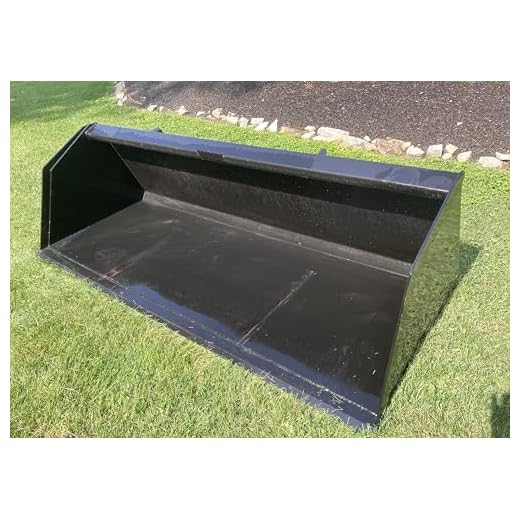
72-inch High-Capacity Snow and Mulch Bucket
This high-capacity bucket is tailored for snow, mulch, and other bulky but lighter materials — it moves more volume per pass than standard buckets. It’s well-suited to seasonal cleanup but not designed for heavy digging or rock work.
When I reach for this bucket
I reach for the high-capacity snow/mulch bucket when I need to clear large amounts of fluffy material quickly — think long winter driveways or piles of mulch across a landscape job. The extra depth and volume reduce the number of passes required.
Notable design points
It performs very well for its intended use: moving bulky, low-density materials. I’ve used similar high-capacity buckets to clear fresh snow quickly without needing constant dumping.
Limitations and practical advice
This bucket is not a replacement for a heavy-duty digging bucket. If you encounter compacted snow, frozen ground, or rocky material, you’ll want a different tool. For routine seasonal tasks and volume hauling, though, it’s efficient and effective.
In summary, I see this as a smart volume-focused choice for seasonal and landscape work — it saves time when moving light, bulky materials, but plan for a different bucket when the work turns heavy.
72-inch Economy Smooth Bucket SSQA
This is a sensible economy bucket for light material handling on small tractors and skid steers. It’s handcrafted in the USA and performs well for mulch, soil, and general cleanup, but it’s not meant for hard digging.
Who this bucket suits
I recommend this 72" economy smooth bucket if you need a cost-effective material handling tool for light work: moving mulch, snow, compost, or loose topsoil. It’s intended for smaller skid steers and tractors that don’t require heavy-duty digging performance.
Notable features
Because it’s lighter-weight than heavy-duty buckets, it’s easier to mount and less taxing on smaller loaders. I’ve found that operators appreciate the improved sightline when scooping and the relatively low price point compared with reinforced buckets.
Limitations and use cases
This bucket is explicitly described as a light-duty economy piece — so it isn’t the right choice if you’re doing continuous excavation, rock digging, or working a heavy skid steer all day. Treat it as a material-handling and cleanup tool rather than a primary digging bucket.
In short, I consider this a smart buy if you want a reliable, American-made, light-duty bucket at a reasonable price — just don’t expect commercial-grade digging durability.
72-inch Universal Skid Steer Utility Bucket
This 72" universal skid steer bucket is a solid budget option for scooping and spreading lighter materials. It’s reinforced in useful ways but the thinner 1/8" material means it won’t stand up to heavy rock or root digging over time.
Who this bucket is aimed at
I recommend this 72" universal skid steer bucket if you need a full-width utility bucket for everyday chores: moving mulch, sand, topsoil, or feed. It’s an economical choice that covers general-purpose needs without breaking the bank.
Design and strengths
For users who keep to light materials and occasional heavier tasks, the reinforcements help the bucket punch above its weight. The tubular steel across the top adds stiffness and prevents excessive flexing in normal use.
Limitations to keep in mind
This bucket uses 1/8" structural steel for the body, so it’s not intended for constant heavy-duty work like breaking ground or moving rocks. There are visible reports of attachment area welding needing reinforcement under heavy abuse — if you plan intense workloads, consider a heavier-gauge bucket.
In short, I see this as a practical, economical everyday bucket — but if your work is tough and relentless, upgrade to a heavier, thicker material bucket.
Final Thoughts
I landed on two clear standouts for different jobs. If your work is mostly brush, roots, and bulky debris, go with the 72-inch Hydraulic Root Grapple Bucket Rake. It’s my top pick for clearing and cleanup because the dual-cylinder grapple gives control you can’t get with a plain bucket — great for storm cleanup, land clearing, and any job where gripping and sorting material matters. Just be sure your carrier has the auxiliary hydraulics and capacity to handle a grapple.
For the hardest digging and the longest service life on tough sites, choose the 72-inch Heavy-Duty Tooth Bucket USA-Made. It’s built to take abuse — excellent wear parts and a stout build — so it pays off on rocky, compacted, or high-wear work. Expect more weight and a higher price, but you’ll get durability and fewer replacements over time.
Those two cover the biggest needs: grappling and cleanup versus heavy digging and durability. If you want a single go-to for brush and debris, pick the grapple. If you need brute-force digging and longevity, pick the heavy-duty tooth bucket.






Nice write-up on the Wolfequip grapple — I’ve been hunting for a dual-hydraulic grapple for months.
Pros I see:
– Great for brush and root piles
– Dual cylinders should give solid clamp pressure
Cons I’m worried about:
– Making sure my loader has the right hydraulic flow
Anyone else running this on a mid-size skid steer? Curious about cycle speed and how heavy it feels when fully loaded.
I ran one on a 74 HP skid a while back. Flow was enough but I added a flow control valve to smooth the grapple action. It’s a beast for tangled roots.
Make sure to check the pin sizes and mount compatibility — saved me a headache when I ordered one once and had to swap a bracket.
Thanks, Olivia — glad the Wolfequip caught your eye. On mid-size skid steers it generally works well but you do want a machine with decent auxiliary flow and a compatible quick tach. Cycle speed is fine for most brush work, but if you’re doing lots of heavy material you’ll feel the weight.
Titan’s skeleton rock buckets (both the universal and the JD hook-and-pin) have been on my radar. I used one for about 2 months on a landscaping job and here’s the lowdown:
1) Sifts rock really well — fine grade tines saved me a ton of hand raking.
2) Replaceable teeth are a must — bought a spare set immediately.
3) They are heavy. Like, don’t-let-your-small-tractor-try-to-flirt-with-a-mountain heavy 😂
Would recommend for contractors, but hobby farmers might want something lighter.
Great, detailed feedback Samantha — thanks. The weight is the tradeoff for durability on those buckets; matching the carrier power is key as you noticed.
Clay was a pain in spring — power washing fixed most of it. If you have a lot of sticky soil, consider a different pattern.
How long did your teeth last with rocky soil? I’m tempted but worried about replacing them constantly.
I got about 6 months of heavy use before swapping the front row on mine. Depends on rock type, obvs.
Do those tines clog with clay? I hate cleaning mud out of everything.
SWICT high-capacity snow bucket sounds perfect for my seasonal work. I clear long driveways and the extra volume would save passes. Anyone using it for wet snow or just light powder?
For wet, heavy snow you’ll hit the limits sooner — it’s great for volume (powder, mulch) but not designed for compacted or icy snow. Consider using a snow blower attachment in really heavy conditions.
I use the SWICT for wet snow too but I take smaller loads and keep the bucket shallower — works, but you can feel the strain on the loader.
I chuckled at the idea of choosing a favorite 6-foot bucket like picking a new phone. Different strokes! 😆
But seriously, for hobby farms the SWICT smooth bucket is probably the most practical — light, cheap, and less drama.
Loved the roundup but one thing — the Wolfequip and Kivel both look heavy and will likely need upgraded hydraulics. You could add a quick spec chart showing required flow & pressure. Just my two cents.
Solid suggestion, Lily. I’ll add a spec chart in the update with approximate flow/pressure and machine size recommendations. Thanks!
The telehandler fork-mounted Titan bucket is an underrated piece of kit. I’ve used it to move topsoil and gravel to second-story decks — saved us hours vs. crane-lifting in a remodel.
The one caveat: fork spacing and locking. If your forks are slightly off-spec it can be finnicky to mount and requires shims sometimes. But once it’s on, it’s a real workhorse.
Yep, 1.4 cu yd. Big enough for most landscaping loads but not for hardcore bulk hauling.
Shims are a lifesaver. Also weld a safety catch if you’re nervous about the bucket sliding off — saved a near-miss on my site.
Good tip about fork spacing — I tried to mention that in the verdict. Glad to hear it worked well for your jobsite.
Do you have the 1.4 cu yd version? I keep debating telehandler capacity vs. truck logistics.
Really liked the clear badges (best for snow, best for rock etc.). Quick question — the SWICT smooth bucket says handcrafted in the USA. Anyone can vouch for build quality vs the cheaper imports?
I noticed less paint flaking and straighter edges on the SWICT I bought — small things but they add up.
Handcrafted often means better QC and fit-up, so the SWICT smooth tends to have cleaner welds and consistent dimensions. It’s still a light-duty bucket, but the build quality can be noticeably better than the lowest-cost imports.
Kivel vs Wolfequip — for my money, if you’re doing a lot of ripping and hard digging you pay the Kivel price and sleep better. If your job is more brush/cleanup and grabbing odd debris, Wolfequip’s grapple setup wins.
Also, personal tip: whichever you pick, budget for a good set of teeth and a solid quick-attach check. Saves headaches later.
Agree. Kivel for penetration, Wolfequip for sorting and picking. Don’t try to make one do the other’s job.
And if you’re indecisive, rent one for a day and see which workflow you prefer. Saved me $$$ on a purchase I almost regretted.
I’d add: think about resale value. Heavy-duty buckets like Kivel tend to hold value better than economy units.
Nicely summarized, Liam — that’s basically the breakdown I aimed for in the roundup. Matching the tool to primary tasks is the most important step.
Quick q: does the Titan 72in fork-mounted bucket fit all telehandlers or is it picky? I don’t wanna order then return. Also, are the bolt-on teeth on the rock bucket universal or model-specific? ty!
If you’re ordering off Amazon, read Q&A and reviews — people often note fit issues.
Telehandler fork-mounted buckets vary by tine spacing and hook style. Check your fork specs (width, spacing and thickness) against the bucket listing—some folks need adapters. Bolt-on teeth on Titan rock buckets are often a common pattern but double-check part numbers; you can usually get replacements easily on Amazon.
FYI some sellers include a teeth kit option in the listing — saved me a search.
I had to add a small adapter plate to fit my forks. Not hard if you have basic fab skills.
Teeth are somewhat standardized but always match the pin diameter and side profile. If in doubt, take a pic and compare seller specs.
Anyone compared the Titan 276 lb universal 1/8″ bucket to the SWICT smooth 72″? Looking for something budget-friendly for spread-and-level tasks.
Would appreciate pros/cons from people who used both.
Titan is cheaper and lighter; SWICT felt more robust for snow. I switched to SWICT for driveway work and Titan stayed on the back burner.
If you’re just spreading topsoil and doing occasional hauling, Titan is fine. For seasonal snow and bulk mulch go SWICT.
Titan universal is a good budget pick — lighter gauge, fine for spreading and light-duty tasks. SWICT smooth has slightly higher capacity and is better for snow/mulch. For heavy abrasive use neither is ideal long-term; consider the Kivel if you need durability.
Kivel tooth bucket looks like exactly what I need for demolition and heavy digging. Heavy and pricey but I’d rather pay more than replace a cheap bucket every season. Anyone worried about transport weight limits with the Kivel?