
My Top 5 CAT 1 Flail Mowers for 3-Point Tractors 2026-2027

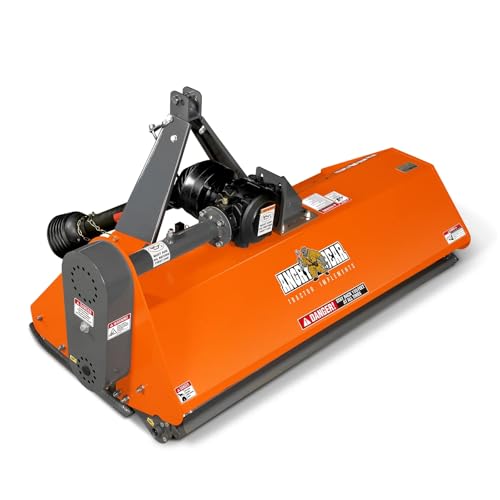
Which flail will turn your tractor into a brush-eating superhero? (Spoiler: size and build matter.)
Cutting power doesn’t have to be complicated. I look at real flails and real tractors so you can skip the guesswork.
If you own a CAT 1 3-point and want clean fence lines, pasture edges, or mulched regrowth, this list narrows the fog. Short, useful, and straight to the point.
Our Top Picks
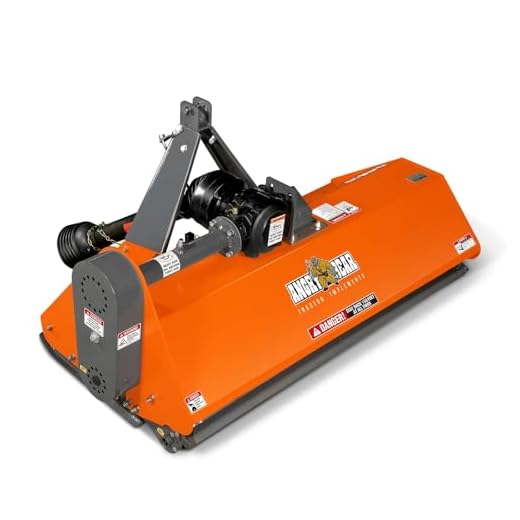


MechMaxx 60" Heavy-Duty NAM Series
I find this model to be a standout for users with mid-range tractors who need serious cutting performance. It ships well packaged, shows robust build quality, and customer service responsiveness in the field reports gives me confidence.
Overview
I recommend the MechMaxx NAM60 when you need a dependable, heavier-capability flail for mid-sized tractors (30–60 HP). Owners report that the package arrives well protected and that the mower excels at reducing saplings and dense brush to fine mulch.
Features that impressed me
Practical considerations and tips
A few reviewers mentioned small issues like a leaking axle seal or a damaged PTO cover on arrival, but noted that customer service quickly remedied the parts — I’d recommend inspecting the crate on receipt and addressing small fixes early. Expect to spend a bit of time on assembly steps like measuring and cutting the PTO shaft and greasing fittings before first use.
If you want a robust, well-supported flail that will eat through heavier brush on a 30–60 HP tractor, this model is one of the better value options I’ve seen in this class.
MechMaxx 68" Heavy-Duty Flail
I value the wider 68" cutting swath and robust construction for time-saving coverage on bigger properties. It handles heavier vegetation more confidently than the small‑frame units, making it a practical choice for mixed brush and pasture edge work.
Overview
I recommend the MechMaxx 68" NAM68 to users who need to cover larger areas without stepping up to commercial-class equipment. The wider working width reduces passes, which is especially useful on pastures, large hedgerows, or property perimeter work.
Key strengths
Limitations and real-world notes
This is a heavier attachment that requires a suitably rated tractor and comfortable handling during hookup and transport. You should be ready to measure and cut the PTO shaft and do standard assembly tasks; if you’re not comfortable, plan for a local shop or experienced neighbor to assist.
In short, I’d pick this when you want a sensible step-up in coverage and durability without moving into pro-grade pricing — it’s a good compromise for landowners with several acres to maintain.
Farmer Helper 48" Multi-Duty Flail
I appreciate how well it balances grass mulching and light brush clearing — a genuine do-it-all for smaller properties. The adjustable cutting height and choice of hammer or mulching blades make it highly adaptable to changing jobs.
Overview
I find this 48" Farmer Helper medium-duty flail mower to be a practical, no-nonsense choice for homeowners and small-acreage operators who want one attachment that can do several jobs. It’s intended for Category I 3-point tractors and is built to handle grass, weeds, and light woody growth when fitted with the appropriate blades.
Key features and benefits
Practical use and limitations
I like that it mulches rather than throws debris, which makes roadside and park-type work safer. The mower is best for properties up to roughly 15 acres using the recommended PTO power; at heavier brush or thicker saplings beyond 2", you’ll want a heavier-duty model. Assembly and hitching are straightforward if you’re comfortable with basic tractor attachments.
Who should consider it
If you need a compact, capable unit that won’t shred your lawn or send debris flying, this is an excellent value pick that covers a wide range of everyday tasks.
MechMaxx 60" Standard-Duty Flail
I like this as a middle-ground flail — wider than a 48" but not as heavy as the 68" models, making it versatile for many jobs. It offers decent punch for typical fence-line, pasture, and roadside mowing when used with the right tractor.
Overview
I view the MechMaxx EFS60 as a pragmatic, general‑purpose flail for many property owners. Its 60" deck width offers a noticeable productivity boost over 48" units while keeping the weight and complexity lower than the largest models.
What it does well
Caveats and advice
If you regularly face thick saplings or heavy woody growth, this model will struggle — it’s optimized for up to roughly 0.75" diameter material. Also keep in mind the non-quick-hitch design: if you rely heavily on fast implement changes, you’ll need to plan for the conventional hookup time.
Overall, I recommend this if you want a reliable, moderately wide flail that increases efficiency on mid-sized jobs without the complexity of larger, commercial machines.
MechMaxx 48" Light-Duty Flail
I see this as a solid, no-frills option for light mowing and maintenance on smaller plots. It’s straightforward to hook up and performs well on grass, weeds, and small brush given its limitations.
Overview
I consider the MechMaxx 48" EFS48 a sensible light-duty flail for homeowners and small-farm users who run 15–35 HP tractors. It’s built to be simple, dependable, and easy to connect via a Category 1 3-point hitch and a 540 RPM PTO.
What I like about it
Practical tips and caveats
I’d recommend this if your main tasks are lawn maintenance, roadside mowing, and light brush. Don’t expect it to chew through thick saplings — the spec lists mulch capacity up to about 0.75" diameter. Also note that it’s not quick-hitch compatible, so you’ll need conventional 3-point hookup.
If you want an affordable, easy-to-run flail to tame overgrown areas without heavy-duty forestry capability, this one does the job reliably.
Final Thoughts
My top pick for most owners is the MechMaxx 60" Heavy-Duty NAM Series. I rate it highest for a reason: it strikes the best balance of rugged build, reliable shipping and support, and performance on 30–60 HP tractors. If you need the widest coverage and have heavier vegetation or more acreage, the MechMaxx 68" Heavy-Duty Flail is the smarter choice — bigger swath, more momentum for tougher brush. For small properties or multi-tasking chores where maneuverability matters, keep the Farmer Helper 48" in mind — it mulches well and is easy to handle.
Practical Buying & Use Guide
I want to help you match flail size and build to your tractor and chores. Choosing the wrong unit wastes time and increases wear. Here’s how I break it down.
Match the flail to your tractor and property
PTO, driveline, and hitch considerations
Blades, cutting results, and swapping heads
Maintenance and durability tips
Quick comparison (practical view)
| Model | Best for | Why I’d pick it |
|---|---|---|
| MechMaxx 60" Heavy-Duty NAM | Most mid-range tractors (30–60 HP) | Strong build, reliable support, best all-around performance |
| MechMaxx 68" Heavy-Duty Flail | Larger acreage / heavier work | Wider swath, more momentum for thicker growth |
| Farmer Helper 48" Multi-Duty Flail | Small acreage / mixed tasks | Maneuverable, adaptable blade choices |
| MechMaxx 60" Standard-Duty Flail | General-purpose users | Balanced width without heavy-frame weight |
| MechMaxx 48" Light-Duty Flail | Entry-level / light maintenance | Simple, affordable, easy hookup |
Final tips from me: buy the heaviest unit your tractor handles comfortably, keep spare blades on hand, and don’t skimp on proper PTO driveline alignment. A well-matched flail will save you hours and frustration — and leave a tidy finish that makes your work stand out.
FAQs
Probably not ideally. The 68" MechMaxx is built for larger acreage and heavier work and performs best with tractors toward the higher end of the CAT 1 power range. I recommend the 60" Heavy-Duty NAM for consistent 30–60 HP use; the 68" needs more torque and a confident operator to avoid lugging the tractor.
Use hammer or Y-style blades for thicker brush and woody growth; they sheer and fling bigger material. Mulching blades are perfect for grassy fields and fine mulching. I keep a set of mulching blades for regular pasture cleanup and switch to hammers when saplings or heavy regrowth show up.
I grease the gearbox and pivot points every 10–20 hours of use under heavy conditions, and at least monthly during active seasons. Inspect belts, blades, and the drive chain before each day if you’re working dense brush. Replace worn blades promptly — dull or damaged blades cause vibration and stress the PTO.
Only small saplings and shoots. The MechMaxx 48" Light-Duty is best for grass, weeds, and small brush. For anything thicker than finger-diameter trunks, choose a heavier-duty model or clear first with a saw or brush cutter.
Not really. I find most CAT 1 three-point hookups are straightforward: align the lower links, attach top link, secure PTO, and check driveline angle. Use a helper for heavy decks, lock pins, and always follow the manufacturer torque and safety steps. If in doubt, get a quick shop check.
Blades and the gearbox. Blades wear out faster than you think, especially if you hit rocks. The gearbox is durable but expensive if neglected. Budget for blade replacements each season on heavy use and annual gearbox oil checks.






Quick question: the EFS60 and EFS48 notes say “Not Suitable for Quick Hitch” — does that mean I can’t use them with my John Deere quick attach? Can I modify the top link? Anyone tried this?
Good catch, Tom. Those models aren’t designed for quick-hitch couplers because of their top-link and stabilizer geometry. Some users fabricate adapters, but altering the hitch points can affect safety and warranty. I’d recommend using a standard 3-point or getting a quick-hitch-specific unit.
Ugh, thanks. Looks like I’ll skip those then. Don’t want to risk a warranty claim.
I tried a shim/adapter once — worked for a season but had a lot of wobble. Ended up switching to a ballasted implement and it’s smoother now.
If you’re set on quick hitch, reach out to the seller on Amazon — sometimes they offer a compatible plate or can advise on safe adapters.
Not thrilled — ordered a MechMaxx and the manual was missing, the assembly bolts were a bit mismatched and I had to run to the hardware store. Customer service took ages to respond. The unit itself is decent but that first-week hassle was annoying. 😕
Yep, manuals missing was my gripe too. YouTube and forums fill the gaps, but it’s annoying.
Thanks — I’ll DM the order details. Would appreciate the buyer tip in the article, really helpful.
Sorry to hear that, Isabella. That’s unfortunately a risk with some Amazon third-party sellers. If you still have unresolved issues, send me a note with your order summary and I’ll add a buyer tip to the article about checking seller reviews and asking for a parts/assembly list before purchase.
Which model is actually OK for a 20hp tractor without risking the transmission? The Farmer Helper says 20+hp, but I’m worried about the 60″ models needing more power.
Good to know, thanks. Guess I’ll stay conservative and maybe upgrade the tractor later.
For a 20hp tractor the Farmer Helper 48″ (20+HP rating) is the safest bet. The 60″ units are typically recommended for 30+hp to avoid stressing the drivetrain and to keep PTO load reasonable.
Agree — run the 48″ on a 20hp and you’ll be happier. Bigger cutters can overload smaller tractors, especially in thick growth.
Great roundup — I actually bought the MechMaxx NAM60 last season for my 40hp tractor and it’s been a workhorse. Cuts dense roadside brush without bogging down and the build feels solid. Shipping was fast from Amazon too. If you have land with thick stuff, this is worth the extra $$.
Glad it worked out for you, Laura. MechMaxx units usually tolerate occasional strikes better than sickle mowers because of the hammer-style flails, but it’s still smart to clear big rocks where possible and check the rotor after rough jobs.
I had a similar experience — occasional bent hammer but cheap to replace. Good investment overall.
Thanks for this, Laura — how does it handle rocks and hidden debris? I worry about flails getting damaged.
Bought the NAM68 from Amazon last spring. Delivery was delayed but it showed up well packaged. Assembly took an afternoon with a friend; heavier than it looks. Handles long pasture runs like a champ. If you’re patient with shipping, worth it.
Thanks for sharing the shipping note, George. Good to know packaging held up — assembly day with a friend is a classic plan.
Same here — heavier than pictures. Two people made assembly painless.
I’m weighing the NAM68 vs NAM60 for about 30 acres of mixed pasture and hedgerows. I like the 68″ for coverage, but worried about turning and transport width. Any owners have thoughts on maneuverability vs the time saved mowing?
I have the NAM68 — width is a pain in tight spots but I just back it in and take extra care. Time saved on long stretches is worth it for me.
For 30 acres the 68″ is a solid choice if you want fewer passes. It is wider to transport and takes a bit more planning in tight fields. If you have lots of gates or narrow lanes, the 60″ might be easier — but the 68″ will save you time on open runs.
That’s helpful, thanks. Seems like my layout will decide it — I have a few narrow gates so maybe the 60″ is smarter.
Anyone have experience switching between hammer blades and mulching blades on these flails? I’m torn — I have a mix of tall weeds and some saplings. Also curious about maintenance intervals for bearings and belts.
I alternate blades seasonally — hammers early for brush, mulching once grass takes over. My bearings get greased monthly during busy months.
Awesome, thanks everyone. The rotor tip is golden — never thought of that.
Also check the gearbox oil every 50 hrs — cheap insurance against big failures.
Good questions. Hammers are better for heavier stuff and occasional brush; mulching blades give a finer finish for grass. For mixed jobs, keep a set of both and swap as needed. Bearings should be greased per the manual (often every 8–10 hours of heavy use) and belts checked before each season. Replace worn flails promptly to avoid imbalance.
Pro tip: mark the rotor orientation when you remove a flail so rebalancing is easier when you reinstall. Saved me a lot of vibration headaches.
I use the Farmer Helper 48″ on a 25hp tractor for my hobby farm. It’s perfect for switching between grass mulching and light brush. The adjustable height is super handy and I swapped to hammer blades for thicker stalks.
How easy was the blade swap? I’m not very mechanical and worry I’ll mess it up.
Thanks for sharing, Michelle. Good to hear the adjustable feature is useful — that versatility is exactly why we recommended the Farmer Helper for smaller acreage.
Why do some models say ‘Not Suitable for Quick Hitch’? Is that a hard no or just ‘not recommended’? Could someone with fabrication experience explain risks? Thinking of modding mine 😂 but maybe I shouldn’t.
If you’re tempted to mod, at least consult a welding/fab shop and ask about stress analysis. It gets expensive fast though.
I tried fabricating once and had too much play — it felt sketchy. Went back to standard 3-point. Not worth the gamble.
Karen — it’s more than ‘not recommended.’ The geometry and link points on those models don’t line up safely with quick-hitch couplers; modifying can change load paths and lead to unexpected stresses, void warranties, or worse, failure. If you need quick-hitch compatibility look for implements explicitly rated for it or use a certified adapter plate.
Good advice — I’ll pass on DIY for this one. Thanks!
My mower dusts deer and scares the neighbors 😂 Flails for president.
Lol, same. My kids think it’s a monster truck.
Haha — flails are loud but effective. Don’t forget hearing protection and check local noise regs if you’re near neighbors.
Nice ratings on the MechMaxx models. Does anyone know if the PTO shaft is included with NAM68 or the 60? I’m seeing mixed info on Amazon listings.
Thanks — I’ll message the seller. Would hate to wait and then need to order a shaft.
Listings do vary. Often a basic PTO shaft is included, but sometimes it’s sold separately depending on the seller. I always recommend confirming the item’s what’s-in-the-box on Amazon before ordering or asking the seller directly in the Q&A.
When I bought the NAM60 it included a standard shaft. Double-check on the product page and photos — sellers usually list it if included.
Long post because I’m stuck choosing between NAM60 and the EFS60 for a 30hp compact tractor:
– I care about build quality and longevity.
– Mostly mow long fence lines and occasional brush.
– Budget’s a concern but I don’t want to buy twice.
NAM60 looks beefier and has a higher rating, but the price difference is notable. Anyone with a 30hp that can weigh in? Appreciate real-world pros/cons. Thanks!
Sophie, for a 30hp tractor the NAM60 is likely a better long-term match if you plan regular heavy mowing — it has the construction to take punishment. The EFS60 is fine for lighter or occasional work and is friendlier to budgets. If you can stretch to the NAM60 you’ll probably be happier 3–5 years down the road.
I had a similar decision. Went NAM60 and no regrets. The EFS60 would have been fine but felt like I’d outgrow it fast.
If you want, check Amazon’s return and warranty terms before buying — sometimes extended coverage is available that makes the investment easier to justify.
Thanks — that helps. Leaning NAM60 now. Budget’ll stretch if it means durability 🙂
Farmer Helper 48 has been great for my small orchard. Light enough for my smaller tractor and mulches leaf litter nicely. A friend had a thicker brush problem tho, so choose based on what you cut most.
Good tip — I use mine similarly in my vineyard rows, works well for maintaining cover crops.
Appreciate the user perspective, Liam. Orchards and small plots are exactly where the Farmer Helper shines.
Bought the MechMaxx 48 orange EFS48 for light jobs. Noticed it’s definitely light-duty — performace is fine but don’t expect to shave trees with it. Instructions were kinda meh tho, had to watch YouTube to get it right. Still, decent for the price. 😅
Same here, the manual was sparse. A torque spec or two would have saved me time.
Thanks for the honest take, Ethan. The EFS48 is aimed at lighter work, so glad it fits that role for you. We try to call out the instruction variability in reviews — Amazon listings sometimes lack full manuals.