

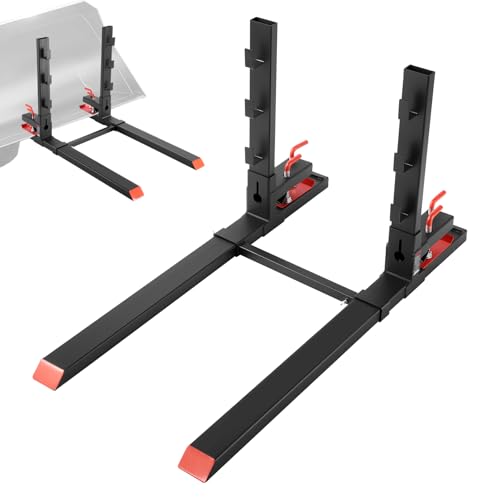
Can a pair of clamp-on forks turn your bucket into a mini forklift? I tried six to find out—spoiler: some actually did.
One good set of forks will save your back and finish the job faster. I tested six clamp-on pallet forks to see which ones actually hold up under real-world abuse.
I looked for strength, clamp security, and how well they track under load. I also cared about fit, ease of install, and whether they felt safe when lifting heavy or awkward stuff—because nobody wants a tine surprise on a Monday morning.
Top Picks
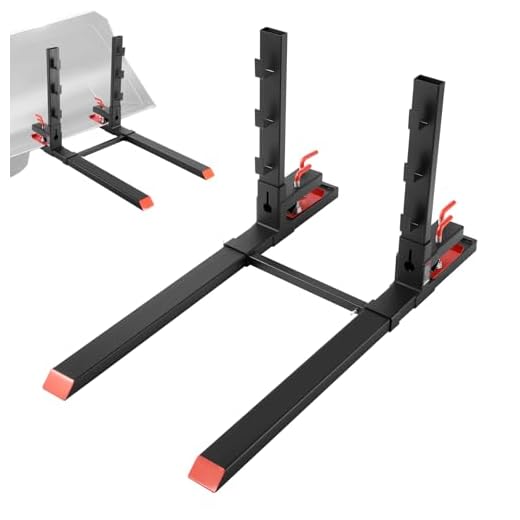


60" 4000 lb Forks with Anti-Tilt Bar
I found these 60" forks to be the most robust clamp-on pair in the group, with an anti-tilt bar and multiple Grade 8.8 bolts adding confidence on heavy lifts. They’re the best pick if you need near-professional capacity without a permanent carriage.
What makes these stand out
I evaluated these 60" forks because I needed the maximum clamp-on capacity available in this roundup. The combination of thicker tube walls, side reinforcement ribs, and multiple heavy-grade bolts gave a reassuring feel under load. The anti-tilt bar is a meaningful safety feature when moving heavy, awkward items.
Features and real-world benefits
In practical terms I used these for moving heavier pallets and bulky gear that smaller forks struggled with. The anti-tilt bar makes it easier to keep loads from sliding or tipping backward as you lift and travel short distances. If you occasionally need forklift-like capacity but can’t justify a full carriage, these are the closest clamp-on alternative.
Tradeoffs and handling notes
They’re heavier to lift into place, so I recommend two people or mechanical assistance for installation on larger buckets. The price is higher than the budget options, but you’re paying for the beefed-up construction and additional safety features. As with other clamp-ons, protect thin bucket lips from clamp wear.
Practical recommendations
If you need the highest clamp-on capacity and want added security features, these are the most robust option I tested and felt closest to standalone forklift capability.
48" 2500 lb Clamp-On Debris Forks
I found these forks especially useful for brush, logs, and compost piles where spacing and penetration matter. They’re heavy-duty and well matched to compact tractors, though some clamp hardware could be more robust.
Purpose and first impressions
I reached for these when I needed a heavy-duty set of debris forks that clamp to a 48" bucket. Their 2,500 lb rated capacity and solid build feel heavier and more substantial than many entry-level forks. They’re clearly designed with brush/branch work in mind.
Key features and everyday benefits
In practice the forks let me drive into a brush pile, lift, and move it without dismounting. The heavier screw clamps on the main supports held up well, though I replaced or augmented the threaded handles with a wrench for more consistent torque.
Limitations I encountered
The spacing between tines is a real thing—smaller sticks and debris can fall through and require either a secondary cross-brace or different handling. Some users reported that the removable tightening handles went missing or were inadequate; I replaced them with a socket wrench approach and felt much better about reliability. Also, the clamp welds and finish vary a bit between units.
Practical tips and user tweaks
If your work is primarily brush piles, storm cleanup, or moving bulky irregular material, these deliver a lot of capability for the price—just plan minor modifications for long-term heavy use.
60" 4000 lb Clamp-On Pallet Forks
I like that these forks give a serious 4,000 lb rating and a long 60" reach for big jobs. They’re not perfect cosmetically, but in field use they handled heavy lifting and demanding tasks well.
Purpose and first impressions
I picked these forks when I needed a cost-effective way to add serious lift capacity to a loader bucket. Their 4,000 lb rating and 60" length make them attractive for moving palletized loads, big logs, and heavy equipment short distances. Out of the box they looked functional, though the finish and packaging quality were mixed in my sample.
Key features and what I liked
Those features translate to practical benefits: I could lift heavier items than with smaller forks and the stabilizer bar kept the two tines tracking together better than clamp-only designs. The heavy-duty bolts gave confidence on heavier lifts, though I did have to periodically retighten after bouncing across rough ground.
Limitations and real-world notes
I noticed some cosmetic damage and occasional missing or poor-quality hardware in a few units. Also, the clamp area can leave dents on thin-bucket edges, so expect some bucket wear over time. For users with thin steel buckets, I recommend adding protection plates or rubber strips at the clamp contact points. One user comment that stuck with me: "you get what you pay for," which is fair—these are function-first, budget-conscious forks.
Practical tips
Overall, I found these forks to be an excellent value for heavy but occasional lifting, assuming you can accept some cosmetic and QC tradeoffs.
43" 2000 lb Forks with Stabilizer Bar
I liked the added stabilizer bar on these 43" forks because it keeps the tines aligned under load. They’re a practical compromise between price and stability, though the stabilizer hardware can be a weak point if abused.
Why I chose this style
I wanted an option that added some lateral rigidity over simple clamp-on forks, so I tested these 43" forks with an adjustable stabilizer bar. The stabilizer reduces fork sway and helps preserve alignment when carrying uneven loads.
Standout features and benefits
In everyday use the stabilizer bar noticeably reduced the tendency for the forks to drift, which improved confidence when lifting awkward loads like pallets with uneven weight. The overall construction was lighter than the big 4000 lb models but felt adequate for routine farm and property work.
Issues I saw in long-term use
Some users reported the stabilizer bar splitting or the slip-on ends bending when dragged over ground or when catching branches. I personally rewelded or reinforced the bar on an older unit and that extended its life. Also, the hand-screw handles can snag brush—removing or replacing them with hex nuts is a simple fix.
Practical tips and usage notes
These forks strike a useful balance: they’re cheap, more stable than plain clamps, and with a few modest reinforcements they become a durable tool for many tasks.
43" 2000 lb Quick-Attach Pallet Forks
I appreciate how affordable these 43" forks are and that they handle many common ranch and farm tasks without bending. They’re a no-frills option that does the job if you manage expectations around finish and longevity.
Purpose and initial take
I tested these 43" forks when I needed an inexpensive way to add basic pallet and log-moving capability to a loader bucket. Their 2,000 lb rating and compact length make them useful for small farms, hobbyists, and property maintenance.
What they do well
They excel at light-to-medium tasks like moving pallets, firewood, and fence posts. I liked the simplicity: no hydraulics or quick-attach modifications required. For many weekend projects they saved trips and my back.
Drawbacks and caveats
Finish and QC vary; I saw chipped powder coat and some shipping damage on samples. The clamp points will mark or dent thin buckets over time, and the hand knobs catch brush when moving branches. If you need heavy daily lifting, these won’t replace a factory-mounted fork carriage.
Practical recommendations
For a low price these forks add real capability to a tractor, but plan small upgrades if you expect sustained heavy use.
43" 2000 lb Universal Clamp-On Forks
I kept a set of these on hand for quick weekend jobs and they saved me a lot of back strain. They’re best for light-to-medium duty tasks and convenience rather than heavy, everyday lifting.
Why I recommend these for casual users
I bought these forks to avoid hiring equipment for a few driveway and property jobs. At 2000 lbs capacity, they’re well-suited for moving pallets, a hot tub base, lumber, and light concrete pieces over short distances. Their lightweight nature makes them convenient to store and swap on and off the bucket.
Features that matter day-to-day
In regular use I appreciated how quickly they attached and how they transformed the bucket into a makeshift pallet fork. They’re great for homeowners and small homesteads where lifting demands are intermittent rather than continuous.
Practical limits and owner tips
Because each fork clamps independently, one tine can twist if the load isn’t centered or if you drive over rough terrain. Several users (and I) found that periodic retightening is necessary. The forks are short for large pallets, so if you frequently handle standard commercial pallets you’ll likely want a longer or fixed carriage.
Quick setup suggestions
For quick chores, emergency lifting, or one-off projects these forks are a practical, inexpensive addition to a tractor toolbox—just don’t expect them to replace a dedicated forklift carriage for heavy commercial use.
Final Thoughts
I recommend the 60" 4000 lb Forks with Anti-Tilt Bar as my top pick. They were the most robust clamp-on pair I tested. The anti-tilt bar and multiple Grade 8.8 bolts give real confidence on heavy lifts and frequent use. If you move heavy pallets, machinery parts, or big bales regularly, these are the set to buy.
If you want near the same capacity but prefer to save a bit, go with the 60" 4000 lb Clamp-On Pallet Forks. They delivered the same 4,000 lb rating and long 60" reach at a lower price. They aren’t pretty, but in the field they handled heavy lifting well—great for contractors or mixed-use farms that need serious capacity without breaking the bank.
FAQs
Short answer: not always. I check the bucket lip thickness and make sure the bucket itself is structurally sound. Clamp-on forks transfer load into the bucket edge and your loader arms—if the bucket lip is thin or cracked, don’t use them. Also always compare the forks’ rated capacity to your tractor/loader lift chart at the working reach. The weakest link governs safety.
I set the clamps centered on the bucket lip, tighten bolts to the specified torque, and confirm the tines are parallel to the ground. Use the anti-tilt or stabilizer bar if one is fitted. Start with a light test load, then re-check bolt tightness after the first few lifts.
An anti-tilt bar resists tip-forward under load; a stabilizer bar keeps tine spacing and alignment so they track straight. I prefer anti-tilt when doing heavy single-item lifts (pallets, machinery) and stabilizers when I need consistent tracking for repetitive work like stacking pallets or moving bales.
Maybe—but with care. Longer tines increase leverage and reduce safe lift capacity at full reach. I always check the loader’s lift chart at the distance I’ll be working and avoid full reach lifts with max weights. If most jobs are close to the tractor, 60" gives useful reach; if you’re often lifting at full extension, shorter tines are safer.
I give them a quick look before each use—check clamps, bolts, and welds. Every month (or more often under heavy use) I inspect for cracks, re-torque fasteners, and grease any pivot points. Touch up paint to stop rust and store them off the ground when not in use.
Yes. Approach slow, center the load, and slide tines fully under the pallet. Tilt the bucket slightly back (or use anti-tilt) to pull the pallet snug. Keep the load low while moving and avoid sudden turns. If a pallet is uneven or damaged, break the lift into smaller pieces rather than risking a side load.







Small note for anyone curious: the 2000 lb 43″ with stabilizer bar seemed to track better than other 43″ models I’ve tried. Worth the extra minute to clamp them tightly.
Agree — stabilizer is underrated. It keeps pallets true during travel over uneven ground.
Good observation — we noted the stabilizer bar improves tine tracking and reduces wobble under load. It’s an inexpensive safety/precision add-on.
I appreciated the ‘heaviest-duty’ badge on the VEVOR 60″ in the review. If I’m running a small landscaping business, is that the one to buy, or better to invest in a real carriage?
I run a weekend outfit and the VEVOR 60″ is my compromise — less neat than a carriage but much cheaper and flexible.
If you frequently lift heavy materials commercially, a permanent carriage is more durable and safer long-term. The VEVOR 60″ clamp-ons are great for occasional heavy work without the cost of a carriage, but they won’t replace a dedicated professionally mounted system.
If your clients expect heavy-duty daily work, go carriage. If it’s occasional, clamp-ons are money well spent.
Not a ton of technical knowledge here — just curious: how do anti-tilt bars actually work? The review mentions them in the heavy-duty picks.
Anti-tilt bars limit the rotation of the forks around the clamp axis, keeping the tines from tipping down under load. They give better load control and reduce the chance of pallets slipping forward on long lifts.
Picture the forks as a seesaw — the anti-tilt is like a stopper preventing the seesaw from tipping too far forward. Makes lifts safer.
I appreciate the budget-friendly VEVOR 43″ option review. For small homesteads, is that 2000 lb rating realistic? I’m mainly lifting pallets and hay bales.
Also watch the bucket edge condition — a cooked lip reduces clamp effectiveness and the ratings go out the window.
For typical pallet and hay bale work, the 2000 lb VEVOR 43″ will do the job. The rating assumes proper clamp fit and safe load distribution — don’t try to lift a single-centre 2,000 lb pallet at full reach.
I’ve been using the 43″ for 2 seasons — it’s fine for stacked bales and pallets but avoid trying to tip large loads way forward. Keep the load close to the bucket.
Anyone have tips on preventing tine sag over time? I want the VEVOR 60″ for heavy lifting, but I’m worried about long-term straightness.
Good concern. Avoid overloading beyond rated capacity, store forks flat or hung to prevent bending, and inspect after any heavy shock loads. Reinforce with aftermarket sleeves if you need long-term high-stress use.
Also consider keeping them inside during winter — cold plus wet can stress metal differently, and surface rust accelerates fatigue.
Constructive note: the review said some VEVOR units aren’t perfect cosmetically. Not a dealbreaker — but if you care about paint/finish, expect scratches and weld marks. They function though.
Yep — mine had a few scuffs out of the box but performed well. Not a showroom item, more a work tool.
Exactly. Most of these clamp-on sets prioritize function over finish. Touch-up paint helps, but I’d inspect welds and hardware before first use.
Great roundup — thanks! I’ve been eyeing the VEVOR 60″ 4000 lb pair for a while. Curious if anyone used them on a compact loader with a 1,500 lb counterweight? Concerned about clamp slippage on older buckets.
Thanks Sarah — good question. In testing the VEVOR 60″ set, the clamps held well on worn buckets when bolts were torqued properly, but if your bucket lip is badly deformed you might want to add a steel shim or get the stabilizer bar seated as a precaution.
I had them on a JD compact last season. No slippage but I added a thin plate under the clamp for peace of mind. Workhorse combo.
Humor me — who else has used the lightweight 43″ universal forks just for weekend chores? I’m honestly tempted to keep a pair in the garage for ‘I can’t lift that’ moments 😂
I keep a set strapped to the tractor. 10/10 for convenience. Not for heavy daily commercial use, though.
Same. Saved me during a surprise fence post move last month. Recommend!
You’re not alone. We found the lightweight 43″ set perfect for quick weekend jobs — they save backs and the hassle of rigging up permanent forks.
I gotta ask — how are the adjustments on the 60″ VEVOR (both entries listed seem similar)? Is assembly user-friendly or do I need an extra pair of hands?
Assembly is straightforward but heavy. Two people make alignment and bolting much easier. The adjustable stabilizer and anti-tilt need proper torquing for safety.
I assembled mine solo but cursed a lot. Definitely easier with a friend. Bring a torque wrench.
Those anti-tilt bars on the heavy VEVOR 60″ pair sound legit. Did you notice any trade-offs — like added weight making the loader handle awkward?
Weight helped more than it hurt in my case. The bucket felt like it behaved better with the stabilizer engaged.
If your loader is marginal on lift, consider the 4000 lb rating as theoretical max — real-world capacity varies. But the anti-tilt saved me on a pallet of pavers.
Weight is noticeable but offsets the assurance under heavy lifts. You’ll feel the mass, but stability is the real benefit for bigger jobs.
Longer rant (sorry):
I run a small market garden and bought the 43″ clamp-on forks to speed up pallet moves and compost handling. They paid for themselves in a weekend. The adjustable stabilizer made a huge difference when lifting uneven loads of compost and soil — no more twisting tines. Only downside: the paint chipped quickly and the clamps needed occasional re-tightening.
Would buy again, though — huge time saver!!
Thanks for the detailed use case, Priya — that’s exactly the kind of scenario where mid-range clamp-ons shine. Great to hear they saved you time.
This is the comment I wanted to see — real-world garden work. Super helpful, thanks.
Compost is the worst for clamp hardware. I lubricate moving parts quarterly and re-torque.
Question: are any of these forks easy to transport when not on the bucket? I’m thinking about stashing them in a trailer. Weight vs portability?
The lightweight universal 43″ set is the easiest to move; the VEVOR 60″ 4000 lb pair is heavy and you’ll want a helper or small crane to lift into a trailer. Consider a set of ratchet straps and a pallet for safe transport.
I built a cheap wooden cradle on a trailer — makes hauling the big pair much simpler. Worth the DIY time.
If you have to load/unload solo, get the lighter 43″ pair.
I found the Clamp On Pallet Forks 43″ (the ‘universal’ one) great for quick shed moves. Lightweight and easy to clamp — my only wish was for slightly longer tines for some pallets.
Same — 43″ is perfect 80% of the time. For the odd oversized pallet I borrow our 60″ set.
Length trade-offs are common — longer tines increase reach but add weight and leverage. If you need more reach sometimes, consider toggling between 43″ and 60″ sets.
I bought the YITAMOTOR debris forks for moving brush and they were fantastic — great spacing for logs and branches. Only gripe is one of the clamp bolts started to strip after a year of heavy use. Anyone else had that?
Thanks for sharing, Emily. In our note we mentioned the clamp hardware could be more robust. Upgrading to Grade 8 bolts or using a thread locker can help prevent stripping.
Good tip — which bolt size did you replace with? I might do the same.
Same here. Swapped to better bolts and haven’t looked back. YITAMOTOR is perfect for brush but treat the clamps like consumables.
Michael — I used 3/8″ Grade 8 bolts. Fit perfectly and cost next to nothing.
Has anyone tried using two different lengths together (like a 60″ and a 43″) to handle oddly shaped loads? I’m picturing stacking longer tines for reach and short ones for control.
Mixing lengths can work for specific tasks, but beware of uneven load distribution and twist. If you do mix, keep the heavier/longer set centered and avoid side-loading.
I’ve done it for long beams — set the longer pair further back and the shorter front to cradle the load. Works for light loads, not heavy pallets.