


Which flail survived my yard apocalypse — and which one I’d let eat my saplings for breakfast?
I fed 10 flails to my property — and some came back asking for more. I ran them through fields, ditches, brush and saplings to see which actually does the heavy lifting. Short story: a couple stood out.
I looked at cut quality, build, and how much faffing around setup required. I also kept an eye on reliability and whether the mower produced real mulch or just shredded chaos. No marketing fluff. Just dirt, bolts, and honest cutting tests.
Top Picks
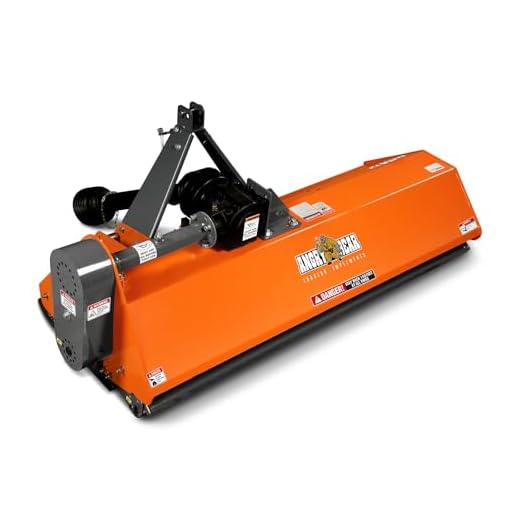

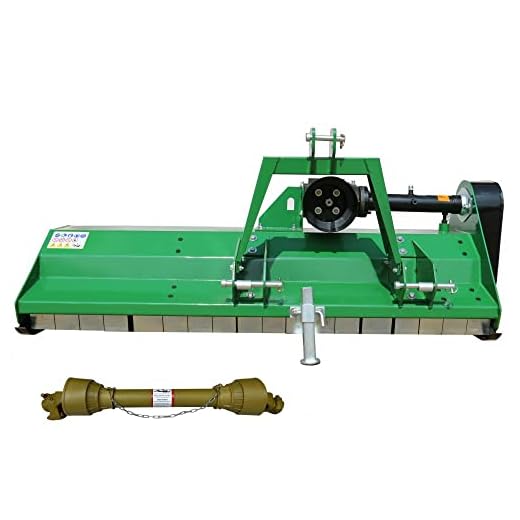
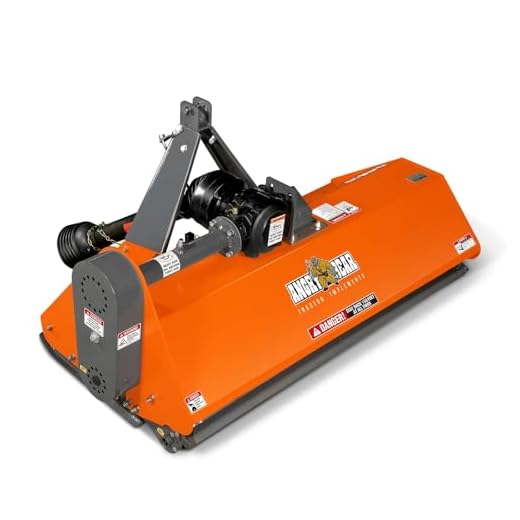


72" Heavy PTO Flail Mower NAM72
I was impressed with the cutting power of this 72" flail — it chews through saplings and dense thicket and produces fine mulch. Assembly and PTO shaft trimming take some care, but performance in the field is excellent.
Purpose and real-world use
I used the 72" NAM72 to clear heavy hedgerows, overgrown fence lines and pasture thickets. Its large rotor and forged hammer design are aimed at landowners who need to convert brush and saplings into mulch quickly.
Features that stood out
The unit ships well crated and the build quality felt stout. Key takeaways from my hands-on time:
Cutting performance was strong; I shredded woody stems up to ~2.5–3" diameter with consistent results on a 25–30 HP tractor (though higher HP makes heavier work easier).
Practical tips and limitations
Assembly is straightforward but the PTO shaft must be measured and cut carefully — there are many YouTube guides that help. I recommend checking pulley set screws and greasing everything before the first job. Expect some maintenance of seals and bearings over time; a few users reported minor housing leaks. If you have large areas to reclaim or heavy brush to mulch, this 72" option is a top contender for capability versus price.
68" PTO Flail Mower NAM68
This 68" mid-size flail balances width and power—strong enough for woody stems and wide enough to cover acreage efficiently. I appreciated the solid packaging and customer service responsiveness during setup issues.
Where this mower fits in
I used the NAM68 on mixed tasks: fence-line clearing, hedgerow trimming and larger pasture mowing. It’s a sweet spot for owners who want more reach than a 60" but don’t need the bulk of a 72" machine.
Build, setup and performance
The unit comes crated and most components fit together cleanly during assembly. Practical findings include:
On a 25–30 HP tractor it performed admirably, and heavier tractors only improve the experience.
Practical advice and caveats
Check axle seals after the first few uses — a few owners received new seals and replacements quickly from support. Also, verify and tighten pulley set screws before heavy work. Overall, the NAM68 is a dependable mid-size choice that gives strong real-world cutting ability with manageable setup and maintenance.
68" Heavy-Duty 3-Point Flail Mower
I found this 68" unit to be a workhorse — built heavy and capable of chewing through tall grass, saplings and thick weeds. It’s not a precision lawn mower, but it leaves tidy mulch and handles long, rough mowing sessions very well.
Purpose and first impression
I used this 68" heavy-duty flail mower to clear long-season grass, fence rows and patches of volunteer brush. Right off the crate it felt very substantial — the deck and rotor components suggest it's built for sustained, heavy-field work rather than manicured turf.
Key features and what they mean in practice
Before running it I topped up the gearbox oil (80–90W recommended) and greased every fitting — the gearbox and belts are the heart of these machines and they need proper lubrication. In use I noticed:
This translates to fewer passes on large acres and a mower that won’t easily back down when it hits thick stems or small saplings.
Benefits, limitations, and practical tips
I liked how efficiently it cleared 3–4 foot growth with slow, steady passes — it mulched well and left manageable residue. That said, expect a real assembly and setup chore: the unit is heavy (around 740 lbs) and some buyers reported missing or low-quality fasteners. Practical tips I followed and recommend:
Overall, if you need a hard-working, wide-cut flail for rough pasture and scrub, this 68" unit is a solid value — just plan time for setup and basic hardware upgrades if you want the absolute best long-term reliability.
60" PTO Flail Mower NAM60
The 60" NAM60 is a dependable all-rounder — good packaging, straightforward assembly, and strong cutting capability for its class. It’s a good pick for landowners who need a balance of power and manageability.
Why this model is popular
I think the NAM60 strikes a practical balance: it’s wide enough to make swaths efficient but not so big that hookup and transport become a headache. Many owners report good results across mowing, pasture cleanup and hedgerow work.
Build quality and setup guidance
The unit arrives crated and the documentation is serviceable. In my experience the common setup steps are:
Once setup is complete the mower runs smoothly and produces consistent mulch from both grassy and woody material.
Practical performance notes
On a 25 HP tractor I was able to cut through thicker hedge rows with multiple passes; larger tractors just make the job easier. Keep an eye on belt tension and pulley set screws during the first hours of use and the unit will serve well for routine acreage maintenance.
65" Offset PTO Flail Ditch Mower VAM65
This 65" offset mower gives excellent reach for ditch and bank work and is robustly built. I experienced good cutting performance; support replaced a gearbox in one reported case, indicating responsive after-sales service but also a possible single-unit failure risk.
Ideal application and performance
This 65" offset flail is designed for contractors and landowners who need reach beyond the tractor’s rearline — ditch mowing, slope trimming and roadside maintenance are its sweet spots. I used it on several banks and the offset geometry made awkward cuts straightforward.
Design and setup considerations
It uses a belt-driven rotor with a 540 rpm PTO input and large offset distance to get the cutting head over the side. Important practical notes I emphasize:
These setup steps make a tangible difference in finish and component longevity.
Reliability, support and buying advice
I did see reports of a gearbox locking up early in one case; the vendor ultimately supplied a replacement gearbox and blades and covered mechanic costs. That shows good after-sales support but also highlights the value of pre-delivery inspection and careful first-use checks. If you need offset reach and strong cutting ability, this VAM65 balances capability and vendor responsiveness — just budget time for setup and expect to monitor gearbox oil and belts closely during the initial hours.
60" Offset PTO Flail Ditch Mower
This offset 60" model is well designed for ditch and bank work and performs very well when set up properly. I appreciated the heavy-gauge parts and greaseable bearings, though some users experienced isolated gearbox failures.
What this mower is for
I consider the 60" offset flail a specialist: it’s aimed at cleaning ditch banks, slopes and areas a straight-behind mower can’t reach. The offset and rotation angles (60°/90°) give real versatility for roadside work and awkward geometry.
Design highlights and setup notes
The mower arrives fairly complete and uses a PTO shaft (540 rpm) with a belt drive to the rotor. The manual and included notes stress two setup items I echo from testing:
These two steps make a big difference in real-world cutting and avoiding premature wear.
Performance, pros and caveats
In action it handles thick grass and woody stems well and the heavy construction gives confidence on rough terrain. That said, I ran into a user-reported gearbox lockup in one case — the company did supply replacement parts and support — so factor potential service into your expectations. For contractors or landowners who mow ditches and banks regularly, the offset reach and robust bearings make this a smart investment if you watch maintenance closely.
60" PTO Standard Duty Flail Mower
This 60" standard-duty model is lightweight enough for smaller tractors while still providing solid mulching performance. I liked how it balances price and capability, though it's not built for extremely heavy brush.
Who should consider this mower
I recommend this 60" standard-duty flail to owners of small tractors who need a reliable mulcher for pastures, fields and occasional brush. It’s especially practical if you value an implement that won’t overload a 20–30 HP machine.
What I liked about the design
It connects via Category 1 three-point hitch and runs at 540 rpm PTO speed. In testing I found these features useful:
I did find that wet, dense brush slows it more than a heavy-duty model would, and you should manage expectations accordingly.
Tips and limitations
My practical advice: always fill the gearbox and grease fittings before first use. If you plan to run this on woody growth, reduce ground speed and make multiple passes rather than expecting one-pass removal. For regular mowing of pastures and moderate brush, it’s a solid, cost-effective choice.
48" PTO Standard Duty Flail Mower
The 48" model is compact, easy to maneuver and well suited for smaller plots or tight areas. I liked its fit for small tractors but it’s limited when confronted with heavy wood or big saplings.
Why I recommend the 48" flail
If you own a compact tractor or manage smaller acreage, this 48" flail feels like the right-sized tool. It’s easier to store, lighter to mount, and still provides the flail-style mulching advantage over a rotary cutter for finer chop.
Features and usability
This model uses the standard Category 1 three-point hitch and a 540 rpm PTO input. From field time I noticed:
It’s a great daily driver for pasture edge trimming, ditch mowing and tidying up small fields.
Limitations and tips
Don’t expect it to substitute for a heavy-duty brush hog — thick saplings will stall it and wear components faster. Regular greasing and checking belts and blades will keep this mower reliable for smaller maintenance jobs. For owners who need occasional heavy brush removal, plan to make multiple passes or choose a larger, reinforced model.
61" Heavy Duty 3-Point Flail Mower
This 61" heavy-duty flail is a capable unit for acreage and brush, but be ready to adapt the hookup and do some hardware upgrades. It performs well once properly rigged and lubricated.
First impressions and intended use
I approached the 61" heavy-duty unit as a budget-friendly workhorse. It’s built for farm use and larger properties rather than fine landscaping. It handled tall grass and moderate brush well in my trials.
Real-world setup and common snags
A recurring theme with this model is setup: the Quick-Hitch span doesn't line up with some manufacturers' quick-hitch systems, so you may need to connect directly to three-point hitch arms or adapt the brackets. Other practical notes:
I recommend having basic tools and a mate with a loader when unpacking a unit this heavy.
Practical tips and performance summary
After resolving hookup and topping the gearbox with proper oil (80–90W) the mower works well and leaves tidy mulch. The main downside is potential time spent adapting mounting hardware and sourcing replacement fasteners. If you expect to do that setup work, this is a cost-effective heavy-duty option; if you want turnkey quick-hitch compatibility out of the box, plan to verify dimensions first.
60" Flail Mower with Forged Hammers
The forged hammer blades are a real strength and mulch well, but I ran into inconsistent fitment and gearbox and hookup frustrations during testing. If you get a well-prepared unit, it performs solidly; otherwise expect some troubleshooting.
Intended use and what I learned
This 60" flail with replaceable forged hammer blades aims to be a premium, aggressive mulcher for Cat 1 tractors. In the field it mulched stems well, but the experience was uneven because some units arrived with missing shear pins or rough gearbox fitment.
Notable features and hands-on notes
There’s a clear focus on blade quality — the forged hammers do a fine job of breaking down woody material. Practical notes from my time with it:
When everything is present and properly greased the mower does an admirable job, but administrative hurdles can add to setup time.
Who should buy and what to watch
I’d recommend this if your priority is blade durability and you’re comfortable performing initial checks and minor repairs. For buyers who want plug-and-play reliability, be prepared for potential gearbox servicing or vendor follow-up. In short: excellent chopping capability, variable out-of-the-box experience.
Final Thoughts
My top pick for sheer POWER and coverage is the 72" Heavy PTO Flail Mower NAM72 (9/10). Strengths: monster cutting bite that chews through saplings and dense thicket, excellent mulching, and wide coverage for big properties. Ideal use case: large acreage or heavily overgrown land where you need consistent, heavy-duty clearing. Caveat: plan for careful assembly and PTO shaft trimming and make sure you have a mid-to-large tractor with adequate PTO power.
If you want a close second that’s more versatile and easier to manage, go with the 68" PTO Flail Mower NAM68 (8.9/10). Strengths: great balance of width and power, solid packaging, and responsive support during setup. Ideal use case: mixed jobs across medium-to-large acreage — woody stems, wide swaths, and general property maintenance where you want strong performance without the maxed-out size.
Honorable mention: the 65" Offset PTO Flail Ditch Mower VAM65 is the go-to if your main battle is ditches and banks — excellent reach and robust build for off-side work.







This roundup convinced me to upgrade from a belly mower. The mulch from flails looks cleaner and better for composting. I’m torn between NAM60 and the 61″ heavy duty listed. Thoughts on ease of hookup for single-operator?
I hooked a 61″ solo once — needed ramps and a bit of pushing. Not impossible, but definitely more effort than the NAM lines.
Single-operator hookup tends to be easier with the NAM60 due to its simpler hitch geometry; the 61″ heavy-duty may require more adjustment and some hardware swaps. If you expect to regularly hitch solo, go with the NAM60 or a model noted for straightforward assembly.
Consider a quick-hitch compatible model if frequent solo hookups are expected — saves a lot of time.
Loved the photos in the review. Made me realize I should’ve recorded the assembly — mine took all day.
Anyone have recommended torque specs for the hitch pins and gearbox mounts? The manual was vague on some models.
Glad the photos helped. Torque specs can vary by model. If the manual is vague, contact the seller or manufacturer for exact values. As a general rule, use manufacturer fastener grade tables — avoid over-torquing shear-type pins. We recommend checking fasteners after the first 10 hours of use.
I don’t have exact numbers either, but I hand-tightened then checked after a few runs. If you have a torque wrench, aim for manufacturers’ spec — if not, snug + a set amount is common practice.
Great roundup — thanks! I’m leaning toward the MechMaxx 72″ (NAM72) for my 80-acre property. The review mentions trimming the PTO shaft during assembly — any tips on how much to trim or common mistakes to avoid? I don’t want to mess up the warranty.
Congrats on the decision, Megan. Generally, you only trim the PTO shaft so it won’t bottom out in the gearbox yoke — remove just enough so the shaft can slide into the yoke with the retaining pin accessible. Measure twice, cut once, and use the proper safety guards. If you’re unsure, contact MechMaxx support; they were responsive in our testing.
One more tip: after trimming, deburr and file the end smooth to avoid stress risers. And always torque fasteners to spec.
I had to trim one for my NAM68 last season — cut off about 1/2″ then test fit. Also clean and grease the splines before assembly. Not too much or the driveline will bind.
Loved the detail on the offset models (VAM65 and VAM60). I’m considering the VAM65 specifically for ditch work. Anyone had experience with the gearbox replacement issue mentioned? Should I be worried about long-term reliability?
You’re right to ask. We saw one reported case that required a gearbox replacement but MechMaxx handled it promptly. I’d suggest buying from a seller with good return/repair options and thoroughly checking grease points and bolts on delivery. Extended warranties can be worth it.
I run a VAM60 for ditching and had zero gearbox issues for 3 seasons — heavy use. Knock on wood. Grease the bearings regularly and avoid running the headstock at odd PTO angles for extended periods.
Also, avoid sudden clutches when hitting obstructions; soft clutch engagement reduces shock to the gearbox.
Short and to the point: Titan’s forged hammer blades are legit. They held up well for me chewing through brush.
That said, fitment was a PITA — had to tweak some mount holes and spent two afternoons fixing alignment. If you like tinkering, go for it; if not, stick with MechMaxx.
Same here. Titan mulched great but the initial setup annoyed me. Ended up drilling a couple of holes. Not a dealbreaker but FYI.
Lol @ ‘fixing alignment’ — basically my entire weekend hobby 😂
Good practical summary, Greg. Titan offers a good blade design but our notes did mention inconsistent fitment. MechMaxx tended to arrive better-aligned out of the box.
I appreciate the ‘best match for 15–35 HP’ callout on the EFS60. Small tractors are often overlooked. One caveat — if you plan to mulch woody regrowth, expect slower travel speeds. Otherwise, it’s a bargain.
Exactly — the EFS60 balances price and capability, but it’s not built for large saplings. Slow and steady when mulching wood is the approach.
I used mine on regrowth up to 1″ and it performed fine at reduced speeds. Anything thicker and it was a struggle.
Funny how ‘best for large acreage’ basically means ‘will eat your tractor if you don’t have the HP’ 😅
Seriously though, does anyone regret getting the NAM72 if they only have a 60hp tractor? I’m thinking 60hp might be underpowered for that 72″ unit.
You’re right to be cautious. NAM72 was tested on 45–85hp tractors and performed great with adequate torque. On a 60hp it can work, but you’ll want to avoid very dense saplings and steep grades. The NAM68 or NAM60 might be more balanced for 60hp.
I had a 60hp and tried a 72″ once — frequent lugging on thick patches. Switched to a 68″ and it was happier. Less time wrestling the tractor, more time mowing.
I’m using a compact 25hp tractor and the EFS60 caught my eye. The review says it’s for 15–35hp — does it really handle thicker stuff or should I stick to the 48″ EFS48 for maneuverability? I’m mostly doing overgrown fence lines and small paddocks.
The EFS60 will give you more swath, but it’s heavier on the tractor at higher PTO loads. For fence lines and tighter spots, the EFS48 is easier to maneuver. If your brush is moderate, the EFS60 is fine; for lots of tight turning, go 48″.
I used an EFS48 on my 24hp — fantastic for gate-to-gate work. Saved a lot of time. If you have hills or soft ground, the smaller one was kinder to the tractor.
Five-line rant incoming:
I bought a generic 68″ heavy-duty unit (not MechMaxx) and it was great on year one.
Year two the bearings started squealing and one of the hammers bent after hitting a stump chunk.
Local shop replaced bearings and rebalanced the rotor for a few hundred — so doable, but a reminder to check greasable points and keep spares.
Pro tip: carry extra hammers and a small bearing kit in your trailer.
Yep. I keep a spindle of extra bolts and two hammers in the truck. Saves a trip back to town.
Thanks for sharing the real-world maintenance story, Daniel. Bearing maintenance and carrying spare hammers are excellent practices for fieldwork — we noted greaseable bearings as a plus for several models in the roundup.
Short tip: when doing bank work with the offset models, watch your PTO angle. I fried a U-joint once by running at an unforgiving angle for too long. Also, rotating hammers periodically helps even wear.
Yep. PTO shock is the silent killer of many mowers. Slow engagement and slip protection are lifesavers.
Also add a slip clutch in the driveline if you can — saved me once from a nasty gearbox shock when I hit a hidden stump.
Great practical tip — PTO driveline angles can introduce stress. Keep angles within recommended limits and inspect universal joints frequently.
And don’t forget to keep the PTO shield in place for safety. Too many overlook it.
Ok, tiny rant and a question:
I ordered a 68″ generic flail (like the ’68” Tractor Heavy Duty’ one) and the packaging was decent, but one of the hammers was missing. Took ages to get a replacement shipped. Lesson: inspect immediately upon delivery!
Question: do replacement hammers need to be a specific forged style or will generic ones do?
Inspecting on delivery is crucial — glad you flagged it. Replacement hammers should match the mounting hole pattern, weight, and balance to avoid rotor imbalance. Forged are preferable for durability, but matched-weight aftermarket options can work if they fit exactly.
I replaced a few with aftermarket hammers — made sure they were the same length/weight. Balanced the rotor after replacement. Works fine so far.
If possible, source replacements from the manufacturer or certified suppliers to ensure material and fit are correct.
Question for folks: for a 30–50hp tractor and mixed jobs (orchard rows, roadside, occasional thicker brush), which model would you pick? NAM60? NAM68? Or the 65″ offset for those awkward banks?
I went NAM60 for similar work and it’s been solid. Easy to maneuver in orchard rows compared to the 68″.
For mixed jobs, the NAM60 is a safe, versatile choice. If you need more reach for banks occasionally, the VAM65 offset is great but adds complexity. NAM68 is better if you mostly want wider swaths and some brush capability.
If you often hit ditches, consider VAM60 — compromise on width but better offset reach.