


Big tank, small drama — which 80‑gallon beast earns your shop’s silence and respect?
An 80‑gallon compressor changes how your shop runs. No more waiting for the tank to catch up. Tools get steady air and work feels smoother.
I once watched a weekend project get ruined by a sputtering compressor — never again. I pick compressors for reliability, noise, and real CFM under load, not just shiny specs.
Top 9 Picks
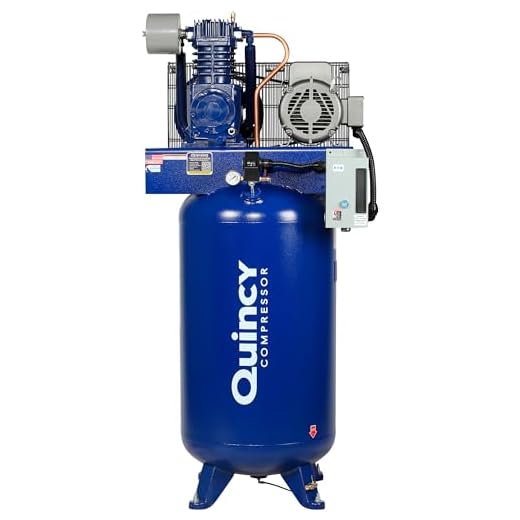


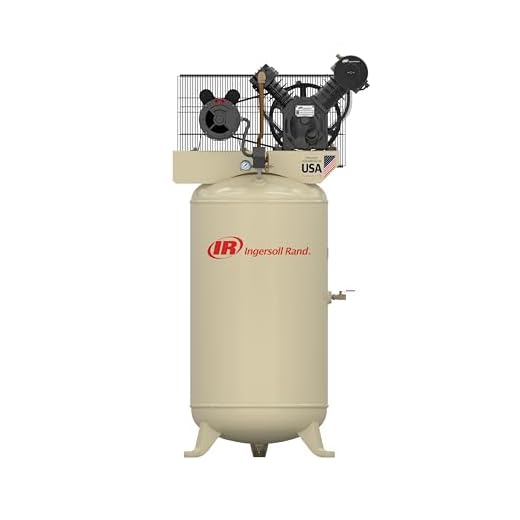

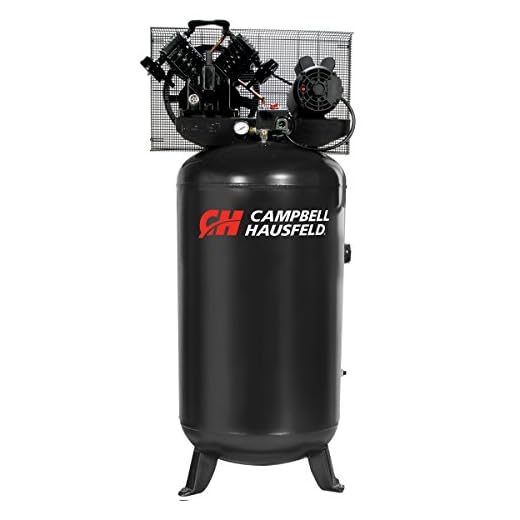
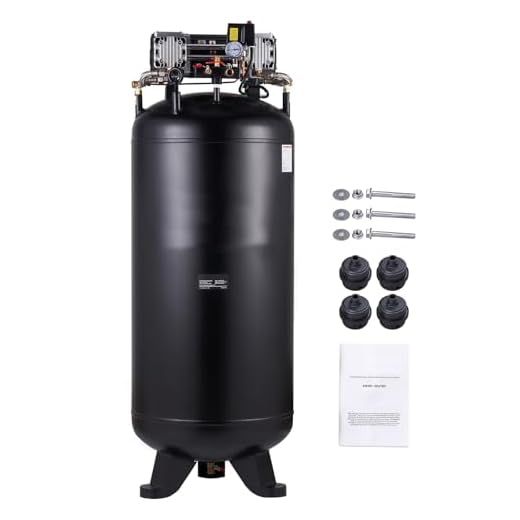


Quincy QT‑7.5 80‑Gallon Vertical Compressor
I value the Quincy for its heavy cast‑iron pump, long pump life, and quieter slower RPM motor — traits you notice after weeks of shop use. It’s more expensive up front, but I’d expect many years of trouble‑free service if maintained properly.
Overview
I consider the Quincy QT‑7.5 a workhorse built for shops that need reliable, long‑lasting air. With a 7.5 HP motor, an 80‑gallon vertical receiver, and a splash‑lubricated cast‑iron pump, this compressor is engineered for years of continuous service rather than bargain pricing.
What I like in practice
Practical tradeoffs
The model costs more initially and requires oil lubrication upkeep (it’s a splash‑lube unit), but I see that as a worthwhile trade for the durability and quieter operation. If you run 8–12 hour shop days or rely on the compressor for critical processes, the Quincy frequently pays for itself in reduced downtime.
Good use cases
I recommend this compressor to professional shops, body shops, and small manufacturers who value longevity and quieter operation over the cheapest price. If you’re building a reliable shop core, this is one of the first compressors I’d consider.
NorthStar 80‑Gallon Quiet Armor Compressor
I appreciate the combination of high CFM (26 CFM @ 90 PSI) and Quiet Armor noise reduction — it delivers workhorse performance with a much lower acoustic footprint than typical industrial compressors. It’s a heavy, professional unit that’s best for serious shops and small manufacturers.
Overview
NorthStar’s 80‑gallon Quiet Armor model stood out to me for delivering near‑commercial CFM (26 CFM @ 90 PSI) in a relatively quiet package. It’s built with a slow‑running industrial motor, multi‑stage intake noise reduction, and a heavy cast‑iron pump designed for long life with proper maintenance.
Key strengths I noticed
Installation and use considerations
This is a professional piece of equipment — expect a heavyweight crate, the need for a certified electrician for hard wiring, and a dedicated space with proper ventilation. It isn’t a garage weekend toy; it’s meant for shops and light industrial environments.
Who benefits most
If your shop needs continuous high CFM with reduced noise (for on‑site painting or multi‑tool production), this NorthStar is one of the most capable 80‑gallon vertical units I’d recommend.
DEWALT 80‑Gallon Quiet Vertical Compressor
I’m impressed by how quiet this unit runs (around 62 dB) while still offering strong airflow (14.1 CFM @ 90 PSI). It’s a great pick when noise matters but you still need consistent, professional‑grade air delivery.
Overview
DEWALT’s 80‑gallon vertical compressor impressed me because it combines quiet operation with solid output: 16.1 CFM at 40 PSI and 14.1 CFM at 90 PSI while running at a reported 62 dB. That makes it unusually quiet for a large vertical unit and a nice fit for shops where noise is a concern.
What I value most
Practical notes and limitations
This model requires a 240V hard‑wired supply and a 30‑amp double pole breaker, and it doesn’t include a cord. Expect a professional electrician for installation. It’s also oil‑lubricated, so routine oil changes and basic maintenance are necessary to protect the pump.
Who should buy it
If you want a quieter professional compressor for an indoor shop, a larger garage, or a workspace where noise impacts comfort, this DEWALT is one of the best‑balanced options in the 80‑gallon class.
Ingersoll‑Rand 2340N5‑V Two‑Stage 80‑Gal
I value the Ingersoll‑Rand for its long history of reliable two‑stage performance and continuous‑duty design. It’s a trusted shop staple that balances airflow, pressure, and serviceability for demanding applications.
Overview
The Ingersoll‑Rand 2340N5‑V is a two‑stage, 80‑gallon vertical compressor built for continuous duty in shops and light industrial environments. With a proven pedigree and cast‑iron pump, it’s a reliable option for operations that need steady air and easy serviceability.
Why I’d pick it for a shop
Real‑world caveats
Some buyers report minor leaks or loose fittings after delivery — that’s common for large freight items and usually resolved with a quick shop‑tune and leak check. Also plan for proper electrical hookup and vibration isolation for long trouble‑free life.
Best use cases
I recommend this Ingersoll‑Rand when you want a tried‑and‑true industrial‑grade compressor that’s serviceable and designed to run reliably day after day.
Campbell Hausfeld 80‑Gal Two‑Stage Vertical
I like the two‑stage pump and 17.2 CFM output — it’s a robust performer for commercial shops that need steady, higher‑flow air at 175 PSI. It’s an investment in a dependable shop compressor with the expected industrial footprint.
Overview
This Campbell Hausfeld 80‑gallon two‑stage vertical compressor is aimed squarely at commercial and industrial users. With a 3‑phase motor option, a two‑stage cast‑iron pump, and 17.2 CFM at 90 PSI, it’s designed to supply multiple high‑demand tools or continuous shop processes reliably.
What I noticed in use
Installation and practical tips
Expect a heavy delivery and plan placement accordingly — the unit is around 540 lb and benefits from a stable base and vibration isolation. It will require a certified electrician for 3‑phase wiring. Also perform a leak check on installation and schedule routine oil and valve maintenance to hit the expected service life.
Who should buy it
If you run a commercial garage, body shop, or small production line and need a high‑flow two‑stage compressor with industrial reliability, this Campbell Hausfeld model is a practical, serviceable choice. For lighter weekend or one‑person garage use, it’s likely more compressor than you need.
Campbell Hausfeld 80‑Gallon Vertical Compressor
I like the vertical footprint that saves floor space while delivering 16 CFM at 90 PSI — a solid match for many shop applications. It’s a dependable mid‑range option that balances performance, serviceability, and value.
Overview
I see the Campbell Hausfeld 80‑gallon vertical compressor as a pragmatic, widely used shop unit: it gives solid airflow (16 CFM at 90 PSI), a vertical profile to save space, and a dependable two‑cylinder cast‑iron pump.
Features I pay attention to
Considerations for placement and use
Because it’s heavy (listed ~460 lb) and tall, you’ll want to plan installation/access and possibly a dedicated electrical feed. Noise is typical for this class (mid‑80s dB), so location and sound mitigation matter if the compressor sits near workspaces.
Who I recommend it to
If you need dependable CFM for a busy garage or small shop and prefer a vertical tank to save floor space, this is a very balanced choice. For continuous heavy production, you might step up to a higher‑HP or two‑stage 7.5 HP machine.
Happybuy 80-Gallon Oil-Free Dual-Stage
I appreciate the oil-free design and large 80‑gallon capacity — it’s built to deliver steady air for longer jobs without the maintenance of an oil pump. It isn’t the quietest or the most premium build out there, but for price-to-capacity it’s a solid choice for light industrial or busy hobby shops.
Overview
I found this Happybuy 80‑gallon unit to be a pragmatic choice when you want big tank capacity and oil‑free convenience without paying premium brand prices. It’s a dual‑stage unit rated around 6.5 HP (4.84 kW) and designed for 3‑phase 220V/60Hz installations — that makes it more of a shop or commercial install than a homeowner plug‑in.
Key features and benefits
Practical notes and limitations
I liked that it’s straightforward and lower‑maintenance, but you should plan for professional installation: it requires 3‑phase power. It’s also not as quiet or as refined as some premium brands — expect noise around the mid‑80s dB if you measure nearby. For shops that already have three‑phase service and need a practical, low‑upkeep compressor, this is a reasonable buy.
Who should consider it
If you want big capacity, minimal oil maintenance, and a lower sticker than legacy US brands — and you have (or can install) 3‑phase power — this model delivers a lot of usable air. If you care deeply about long service life or quiet operation, I’d compare to higher‑end options first.
VEVOR 80-Gallon Oil-Free Two-Stage
I like how quickly this unit fills an 80‑gallon tank and that it’s oil‑free — those are big pluses for a lower price point. Build quality and long‑term reliability appear mixed based on user reports, so I treat it as a cost‑effective but risk‑tolerant option.
Overview
I see the VEVOR 80‑gallon oil‑free compressor as a classic value play: solid published specs (6.5 HP, 15.5 SCFM @ 90 PSI) and a low price compared with legacy brands. It’s aimed at shops and contractors who want a lot of air for the money and can tolerate some trade‑offs in longevity and topside refinement.
What stands out
Real‑world considerations
Users on the product page report mixed experiences: one buyer loved the immediate performance and quiet compared to an oil pump, while others experienced noise increases or failures after weeks of heavy use. If you need absolute uptime for a production environment, I’d be cautious; for a budget garage or infrequent shop use, it’s attractive.
Who it suits
I’d recommend this model if you want a high‑capacity oil‑free compressor with fast fill times at a bargain price and you accept some level of risk on long‑term durability. For mission‑critical or continuous industrial duty, consider a premium brand with a proven service record.
CooFel 80‑Gallon Oil‑Free Stationary Compressor
I see the appeal: large 80‑gallon tank, oil‑free design, and decent spec sheet on paper. However, it’s an emerging/less established brand and I’d be careful — verify power-phase compatibility and warranty/support before committing.
Overview
The CooFel 80‑gallon oil‑free compressor promises high capacity and respectable performance on paper, including 6.5 HP and 15.5 SCFM @ 90 PSI. It’s targeted at industrial and construction environments, but the brand is newer and the product listing emphasizes three‑phase installations.
What’s attractive
Things I’d verify before buying
Who this fits
If you’re on a tight budget, have three‑phase service, and accept some risk on long‑term support, this is a cost‑effective way to get high capacity and oil‑free convenience. For mission‑critical or continuous industrial duty, I’d prefer an established brand with local service.
Final Thoughts
I recommend the Quincy QT‑7.5 as my top pick. I like it for its heavy cast‑iron pump, slower‑RPM motor, and Made‑in‑USA durability. That combo translates to longer pump life, quieter operation over time, and fewer service headaches. Choose the Quincy if you want a long‑term shop workhorse for auto restoration, continuous‑duty production, or any place where uptime and longevity matter most.
If you need raw airflow with a lower acoustic footprint, the NorthStar 80‑Gallon Quiet Armor is my second pick. Its 26 CFM @ 90 PSI and Quiet Armor noise reduction make it ideal for busy body shops, small manufacturers, or larger garages where continuous high CFM and lower noise are priorities.
Practical note: both are heavy, commercial units—plan for a dedicated 220V circuit and a solid mounting surface. I’d pick Quincy for longevity and low long‑term noise; pick NorthStar when top continuous CFM and quieter operation are the primary goals.







Nice roundup — thanks for putting this together.
I’m leaning toward the Quincy QT-7.5 for my small woodworking shop because of the cast-iron pump and the slower RPM motor you mentioned.
Couple questions: how picky is the Quincy about electrical hookup (230V, single phase) and do I need a dedicated breaker/soft starter for that size? Also curious about maintenance intervals for the splash-lube pump — I’m OK doing oil changes but don’t want something that eats service time.
Anyone else using the Quincy daily in a shop environment? Any surprises after the first year?
If your panel is older, Marcus, get an electrician to confirm service capacity before you buy. I learned that the hard way — bought a big unit and had to upgrade my panel 🤦♂️
I’ve had a Quincy similar to that for ~2 years in a cabinet shop. It’s been quieter and more reliable than cheaper compressors I tried. You WILL need space for the vertical tank and the weight is no joke when moving it. No surprises so far, just basic oil checks and I changed the belt once.
Good questions, Marcus. The Quincy 271CS80VCB does need a proper 230V single‑phase supply and a dedicated breaker sized to the motor’s full-load amps — check the nameplate for exact amps and recommended breaker. A soft starter isn’t required but can reduce inrush if your shop has sensitive electricals. For maintenance, splash-lube pumps are pretty forgiving: regular oil checks/changes per the manual (often 500-1000 hrs depending on use) and keeping the intake clean are the main tasks.
Quick question from someone who doesn’t do electrical work daily: the Happybuy is 3‑phase according to the listing. If my shop only has single-phase 220V, is that a dealbreaker? Can these units be converted or will I need a phase converter? Anyone done that?
Most 3‑phase compressors can’t be simply rewired to single‑phase without motor changes. A phase converter (static or rotary) or a VFD designed for three‑phase output can work, but adds cost and complexity. If you only have single‑phase, it’s usually easier to pick a single‑phase model or budget for a converter.
We installed a rotary phase converter for a 3-phase compressor at our shop — it works fine but isn’t cheap. If the compressor itself is significantly cheaper, it might still be worth it, otherwise buy a single‑phase model to avoid headaches.
I’ve used an Ingersoll‑Rand two‑stage for a decade in a small auto shop and it really is bulletproof. Parts availability and technicians who know these units is what sold me.
My question for readers: are there modern equivalents that match IR’s serviceability but are quieter? The IR is reliable but noisy compared to newer quiet‑armor style units.
I swapped an old IR for a NorthStar last year — noticeably quieter and still robust. Service parts were a bit pricier but widely available.
You can reduce noise on older two-stage units with better mounting, an enclosure (with ventilation), and rubber isolation pads. Doesn’t make it silent, but helps a lot.
Ingersoll‑Rand and Quincy are about longevity and serviceability. For quieter operation with decent service networks, NorthStar or DEWALT (for lower CFM needs) are good middle grounds — NorthStar specifically aimed at industrial noise reduction. Quiet units sometimes trade off peak CFM or cost more, though.
Big fan of the NorthStar option in this roundup. 26 CFM @ 90 PSI with Quiet Armor sounds like the best of both worlds for a heavy shop that also needs to keep conversations possible.
A few practical thoughts from installing large compressors:
– Put it on a concrete slab or vibration pads and bolt it down; the weight and startup torque matter.
– Consider a condensate trap/drain location — those 80-gallons accumulate water fast.
– If you have a hot shop, plan ventilation: compressor motors get warm and cooling matters for longevity.
Anyone got tips on plumbing from tank to multiple workstations? Best layout to minimize pressure drop?
Don’t forget pressure regulators at each workbench if you use different tools. Helps avoid over-pressurizing delicate tools and keeps the main line stable.
Also add pressure gauges at the end of long runs to monitor pressure drop; that helps troubleshoot leaks or undersized piping.
Pro tip: install quick-disconnects with ball valves at each station so you can isolate sections for maintenance without shutting down the whole shop.
If budget allows, go for copper or heavy-duty aluminum piping — they keep pressure losses down and are easier to service than flexible hoses over long runs.
Great practical points, James. For piping, run a loop or branch with adequately sized pipe (schedule 40 black iron or a good quality AL/PEX system sized for CFM and distance). Minimize sharp bends; use 1.5″ or 1″ main trunk depending on distance and downstream CFM demands, then step down to 3/4″ for drops to individual tools. Install a main condensate separator and individual drip legs with auto drains at low points.
VEVOR and that other unlabeled 86dB unit look like “get-it-done-today” options. 😅
I’ve bought budget compressors before — they inflate balloons fast but feel like they might quit come winter. Anybody have long-term experience with the VEVOR? Warranty/support stories? Also 86dB???? That’s lawnmower territory. I’ll need hearing protection if I even glance at that thing.
Totally — budget buys are great for temporary roles. For mission-critical shop work, not worth the gamble imo.
86dB is loud — put it in a garage/isolated room behind a sound barrier if you go that route. Also make sure it’s single vs three-phase; that’s a common trip-up.
You’re right to be cautious. Budget oil-free models like the VEVOR often deliver good short-term performance (fast fill, decent specs) but can be hit-or-miss on build quality and long-term reliability. Check the seller’s warranty, availability of replacement parts, and whether the unit matches your power phase. If you value uptime and support, I’d favor a more established brand; if you need cheap capacity and can tolerate some risk, the VEVOR is defensible.
I had a VEVOR for about 9 months on a construction site — it worked hard but then developed leaks and support was slow. Saved money initially but ended up replacing it with an Ingersoll-Rand. YMMV.
Great list. I’m torn between the DEWALT 80 gal and the Campbell Hausfeld 2‑stage for a small metal fabrication shop. Noise is a big factor since part of the shop is open to the office.
DEWALT claims ~62 dB — that’s pretty good — but is the two-stage Campbell worth the extra noise/size for steady 17 CFM?
I run the DEWALT in a small shop and it blends into background noise rather than shouting. For single-operator setups it’s perfect. If you ever plan to expand tooling, get the Campbell.
DEWALT is a solid choice when noise matters; 62 dB is generally comfortable for adjacent office spaces. The Campbell two-stage will give you higher flow and better recovery for heavy tool use, but it may be louder and larger. If your CFM needs are steady and high (multiple grinders/impact tools simultaneously), go two‑stage. If you use a couple tools intermittently and need a quieter environment, DEWALT is likely the better fit.