


Can a generator save your pizza, your CPAP — and your sanity? Spoiler: yes.
Power when it matters most. I once sat in the dark with a bag of melting ice cream and a dead phone while a storm raged outside. A generator would have turned that tiny disaster into a minor annoyance.
I like dual-fuel units because they give OPTIONS: gasoline for max run time, propane for cleaner storage and longer shelf life. They’re quieter now, smarter now, and easier to use than ever. Short setup. Cleaner power. Less stress.
Top Picks




Westinghouse 11000W Inverter Dual Fuel Generator
This inverter‑style dual‑fuel generator gives high continuous power with low THD and long run times, making it excellent for dependable home backup. It’s feature rich and backed by strong service and a solid warranty.
High‑capacity inverter for serious backup
I really like how this Westinghouse blends inverter technology and heavy‑duty capacity. With up to 9000 running watts and very low total harmonic distortion, it’s a great choice when you want both the clean power of an inverter and the muscle to run large household loads. The big fuel tank and efficient engine deliver long unattended run times during extended outages.
Practical user experience and considerations
The overall package is well thought out: remote start, sturdy never‑flat wheels, foldable handles, and a broad set of outlets. It’s heavy and costly, but you’re paying for capability and peace of mind. If you want reliable, extended backup and cleaner power for sensitive electronics, this is a top contender.
Who should buy it
I recommend this to homeowners who want large, reliable backup without sacrificing clean power. It’s also a strong option for large RVs or job sites where inverter quality and long runtime matter.
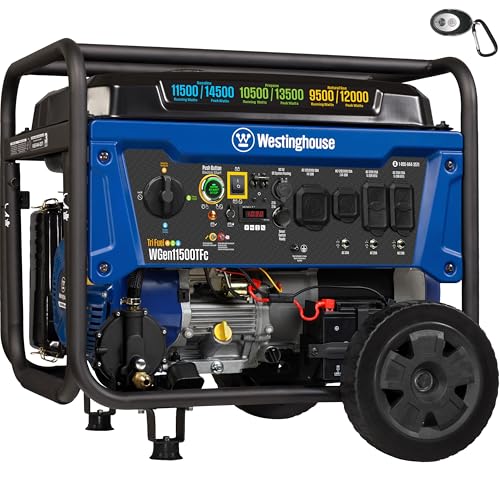
Westinghouse 12500W Dual Fuel Home Backup Generator
This is a very capable and well‑rounded generator for serious home backup. It offers long run times, remote electric start, and a strong support network—good for homeowners who want a rugged backup solution.
Heavy‑duty home backup with practical features
I respect how this Westinghouse balances raw power with user‑friendly features. The unit delivers 9500 running watts (gasoline) and up to 12500 peak, which is enough to run multiple major appliances and several HVAC units in many homes. The 6.6‑gallon tank gives long continuous runtime, and the control panel is transfer‑switch ready for easier integration into a home system.
Benefits and real‑world considerations
I like that Westinghouse ships it with the essentials (propane hose, battery charger, tools) and backs it with good documentation and support. The mechanical design prioritizes durability—cast iron sleeve engine and a heavy frame. The downside is the machine’s weight and volume; plan for help getting it in place and allow for noise management since it’s not an inverter.
Who this is for
Choose this if you want a dependable, high‑capacity backup generator for a house or large RV and you prefer proven support and a long warranty. If you need super‑quiet operation, consider a large inverter alternative, but for raw dependable power this is hard to beat.
Generac 5200W Dual Fuel Portable Inverter Generator
This Generac inverter offers clean, quiet power with convenient electric start and useful onboard monitoring. It’s a reliable mid‑range choice for home backup, camping, and RV use with good fuel efficiency.
Dependable inverter with strong brand backing
I like this Generac iQ5200 for its tidy balance of quiet operation, inverter cleanliness, and reputable service. The push‑button electric start and included battery make it easy to get running, and the COsense technology is a welcome safety layer for near‑camp or RV deployment.
Performance and practicalities
In practice, the unit is quiet and efficient—great for running fridges, fans, and sensitive electronics during outages or recreational outings. A few users did report startup or carburetor problems, so I recommend checking the unit thoroughly on delivery and performing a test run. Generac’s warranty and dealer network are pluses for peace of mind.
Who it’s best for
This is a solid pick for buyers wanting reliable, mid‑size inverter performance from a widely recognized brand. It’s a particularly good fit if you value ease of use, quiet operation, and clean power for electronics.
WEN 3600W Quiet Lightweight Dual Fuel Generator
This inverter generator is notably quiet and delivers clean power suitable for sensitive electronics. It’s light enough to carry and has thoughtful safeguards like the CO watchdog and fuel shutoff.
Compact and quiet inverter power
I like how this WEN unit delivers clean, inverter‑style electricity while staying remarkably quiet for the wattage. It produces low total harmonic distortion, which means I’m comfortable running laptops, phones, and other sensitive electronics without worry. The lightweight design and modest footprint make it a natural choice for RVers and campers who want good power without a heavy machine.
Practical strengths and things to note
I appreciate the fuel‑shutoff feature for reducing carburetor gumming during storage and the relatively long run time when paired with a 20‑lb propane tank. The only friction point I noticed is that the propane quick‑connect on some units can be slightly different than the aftermarket fittings I had on hand; the supplied hose works fine, but adapters may be needed for RV grill lines.
Who should buy it
This is ideal if you want quiet, portable power for boondocking, tailgating, or sensible home backup for essential circuits. If you need extended run time without swapping fuel, consider larger tanks or a heavier unit.
WEN 4800W Dual Fuel RV‑Ready Inverter Generator
This WEN model pairs a keyless electric start with clean inverter power and a good selection of outlets, including an RV receptacle. It’s a practical, quiet option for RVers and homeowners who need dependable mid‑range backup.
Convenient mid‑range inverter with RV features
I appreciate that this WEN generator is designed with RV life in mind: the built‑in TT‑30 RV receptacle, multiple 120V outlets, and USB ports make it easy to connect without adapters. The electric keyless start is a practical touch for frequent use, and the fuel shutoff helps preserve the engine during storage.
Everyday impressions and caveats
In use, it’s quieter than a conventional open‑frame generator and produces stable power for sensitive devices. One quirk I encountered is the CO sensor can shut things down if the exhaust is trapped (for example, in a truck bed), so ensure proper ventilation and placement. Also, the electric start needs a brief hold pattern which is easy once you learn it.
Who will like this
If you want a user‑friendly, RV‑ready inverter that’s powerful enough for ACs and essentials but still portable, this is a smart choice. It’s especially useful for regular RVers and small‑home backup where clean power and convenience matter.
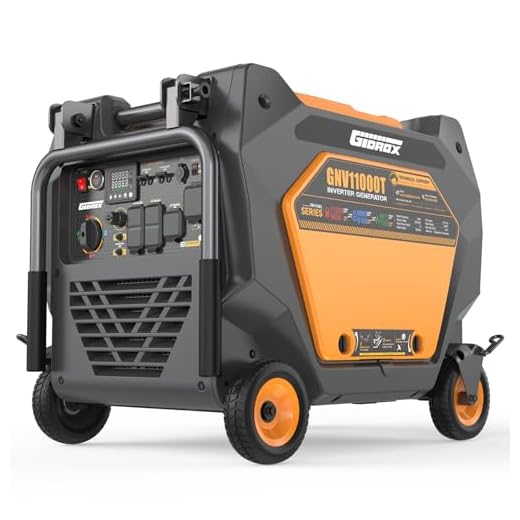
Gidrox 7000W Dual Fuel Inverter Generator
This step up in the Gidrox lineup gives more starting and running watts, making it a better fit for bigger RV air conditioners and heavier home loads. It keeps inverter advantages while offering strong output.
Bigger inverter for bigger needs
I like that this 7000W model bridges the gap between compact inverter units and full‑size open‑frame generators. It’s a strong choice when you need extra headroom for AC units, pumps, or multiple appliances while still wanting clean inverter output for modern electronics.
Realistic strengths and caveats
The extra wattage is helpful when your power needs spike—I'm less worried about briefly starting motors or running several devices at once. However, the unit’s weight means you’ll want good wheels or assistance moving it. Also, while initial quality seems solid, check local service options and parts availability if you plan heavy long‑term use.
Who I recommend it for
Go for this if your RV or home circuit demands more than a small inverter but you still prefer an inverter’s cleaner output. It’s a practical compromise between portability and capacity.
Gidrox 6000W Dual Fuel Inverter Generator
This model gives a smart mix of inverter technology and solid wattage for RVers and homeowners looking for a quiet backup. It includes useful accessories and an electric start that make setup easy.
Inverter performance with practical accessories
I appreciate that this Gidrox model bundles a lot of practical kit—battery, hoses, dust cover, and a tool kit—so you’re ready to run out of the box. The inverter design produces clean power suitable for electronics while delivering a healthy peak wattage that’s useful for RV air conditioners and critical home circuits.
Benefits and limitations I noticed
Users report it runs quietly and starts up reliably with the electric start. I value the tri‑fuel claims from some sellers, but confirm actual compatibility if you need natural gas specifically. As with many emerging brands, long‑term service availability can vary, so factor that into prolonged ownership plans.
Ideal use cases
This unit is a solid pick for RV owners who want inverter‑quality power plus the convenience of electric start and extra accessories. It’s also a reasonable choice as a home backup when you want quieter, cleaner power than an open‑frame generator.
5000W Portable Dual Fuel Inverter Generator
This unit strikes a solid compromise between wattage, features, and price—great for camping, boats, or light home backup. It’s reasonably quiet, has multiple start options, and a useful digital display for monitoring.
A versatile mid‑range inverter generator
I found this 5000W inverter to be a practical all‑rounder. It delivers useful peak and rated power while staying compact enough for boats, RVs, and weekend jobsites. Features like ECO mode, CO protection, and a clear digital readout make it user friendly, and the multiple start methods are a real convenience when you need power quickly.
Real‑world use and feel
I really like the quiet operation and the onboard meter that shows volts, amps, frequency, and runtime—it helps me manage loads on trips. The lighter weight and integrated features make it easy to haul and operate, though some components are plastic which could age faster in rough use. For the price, you get a lot of useful capability.
Who this fits
Pick this if you want a capable generator that’s still portable—ideal for RVs, weekend camping, or as a supplemental home backup that won’t take up a whole driveway.
Champion 2500W Dual Fuel Portable Inverter Generator
This compact, lightweight inverter is excellent for camping and light RV use where portability matters. It’s quiet and economical on propane but may be limited for heavier loads or elevated altitude performance.
Ultralight inverter for short trips and campsites
I find this Champion unit appealing when portability is the primary concern. It’s light enough to throw in a truck or pack for a campsite and quiet enough to avoid disturbing neighbors. The CO Shield automatic shutoff brings peace of mind during close‑quarters use like in camp setups.
Real usage notes
For my outings, it handled small ACs, coffee makers, and phone charging easily, but anything larger makes it struggle. Several buyers reported early propane startup issues that were solvable with Champion customer support or regulator swaps—so be prepared to troubleshoot or request support if needed.
Best fit
Choose this if you need a light, quiet generator for camping, tailgating, or light RV duty. If you plan to run air conditioners or heavier tools, step up to a larger inverter or dual‑fuel model.
AIVOLT 11250W Dual Fuel Inverter Generator
If you need very high starting and running watts for whole-house backup or large RVs, this unit delivers. It’s impressively quiet for its size, but some users reported reliability and support hiccups—worth testing thoroughly after purchase.
Powerful whole‑house generator
I appreciate how this model is built to be a real workhorse for whole‑house backup or heavy RV/appliance use. With very high starting (11250W gas) and running wattages (9000W gas), it can handle large loads like multiple air conditioners, microwaves, and tools without breaking a sweat. The unit is dual‑fuel, ATS ready, and includes electric/remote start so you don’t have to wrestle with a recoil cord when you need power quickly.
Practical benefits and limitations
I like that it’s quiet for a machine this size and that it supports propane for cleaner, longer runs. That said, the weight and footprint make it a semi‑permanent solution unless you have mechanical help or a trailer. Several owners mentioned setup quirks (battery connections, hidden oil filler) and occasional post‑sale support delays, so plan for a careful unboxing and first‑run test.
Who should consider this
If you need near‑industrial power in a portable package and you have help to move it, this is a compelling option. For light camping or purely portable use I'd look at smaller inverter units, but for reliable heavy backup the power on offer here is hard to beat.
Final Thoughts
I recommend the Westinghouse 11000W Inverter Dual Fuel Generator as my top pick. I chose it because it blends high continuous power with inverter-level CLEAN output, low THD, long run times, and strong service/warranty backing. If you want dependable home backup that’s gentle on electronics and can handle multiple circuits and appliances, get the Westinghouse 11000W.
If you need true whole-house coverage and higher starting watts for larger HVAC or heavy loads, go with the Westinghouse 12500W Dual Fuel Home Backup Generator. It adds extra capacity, remote electric start, and rugged components for extended home backup. In short: pick the 11000W for balanced, quiet, electronics-safe backup; pick the 12500W when you need maximum whole-house power and longer continuous output. Before you buy, I suggest quickly listing your largest appliances and their starting watts to confirm the model you pick will run what you need, and arrange a compatible transfer switch for safe home hookup.





Great roundup — thanks! I’m leaning toward the Westinghouse 11000 for home backup because of the low THD and CO sensor. Has anyone actually run a fridge + a few circuits on propane and gotten decent runtimes? I’m curious about switching over in winter when gas is harder to store.
Thanks Emily — the Westinghouse 11000 is a solid pick for that use. On propane you can usually expect 6–10 hours at 50% load depending on tank size; fridge + a few circuits should be fine for that range. Make sure to size the propane tank for your needed runtime and account for starting watts of the fridge.
I run a similar setup (fridge, a couple lights, router) on propane with a Westinghouse 11000. I get ~8 hours on a 20 lb tank at moderate temps. Cold weather lowers pressure, though — I use a winterized regulator.
Also check your fridge start-up watts. Some newer models are more efficient and easier to start on inverter generators. Good luck!
Thanks for the clarity on eco modes and fuel shutoff features. One issue I ran into with an older dual-fuel unit: when switching to propane I had sputtering until I tightened the connections. Anyone got tips for a smooth fuel switch-over process?
And replace old hoses/regs yearly if used often. I’ve had bad regulators cause intermittent runs.
Good practical tip — ensure all fittings and hoses are undamaged, use a fresh regulator suited for your tank, purge lines per the manual if recommended, and run the engine a minute after switching to stabilize. Always check for leaks with soapy water before starting.
Also make sure the regulator isn’t frozen in cold weather — that can cause sputtering. A small heat wrap helps.
Nice breakdown! I like that you included lightweight options like the Champion 2500W. I’m a solo camper and weight matters — anyone tried paralleling two Champions to get more power? Sounds tempting but maybe kludgy lol.
I paralleled two small inverters once for a tailgate — it worked but felt awkward. If you’ll travel a lot, maybe just get a single 5000W-class inverter instead.
Paralleling is neat but doubles the chances something goes wrong. For solo camping I prefer one reliable light unit.
You can parallel some inverter generators, but check the manufacturer’s specs and parallel kit compatibility. With small units like the Champion 2500W, paralleling can work for extra wattage but adds complexity and another unit to maintain.
Random thought: for tailgating and parties the 5000W inverter in the list looks perfect — digital display, parallel capable, remote start. Anybody used the remote start outdoors successfully over longer distances?
Used mine at a park with good range — started from the tailgate with zero probs. YMMV with interference.
FYI if you lose the remote, many units still have a key or electric start alternative.
Remote start ranges vary but for most consumer models it’s usually good for tens of feet (sometimes up to ~100 ft unobstructed). Check the manufacturer’s spec for exact range and keep line-of-sight and fewer obstacles for best results.
I like that you included both brand-name and lesser-known units. Curious if anyone here has had long-term maintenance issues with Gidrox? They seem to offer solid specs for the price but I’m wary of longevity.
Gidrox offers attractive specs and value, but long-term reliability reports are mixed — some owners are happy, others have had early issues. If longevity is critical, consider sticking with Westinghouse or Generac, which have longer track records in the US.
I had a Gidrox for two seasons with zero problems; regular oil changes and proper storage helped. Could be variability between batches.
I replaced mine after a component failed in year two. Support was slow. YMMV.
Sarcastic interjection: finally, someone made a list that doesn’t only recommend gas-only dinosaurs. Dual fuel really is the future — propane backup saved me last hurricane season. Also, props for noting CO sensors. They should be mandatory, honestly.
100% — propane changed the game for me too. Much easier long-term storage than gasoline.
Totally agree — propane flexibility and CO safety should be baseline features. Glad it helped during the hurricane!
Minor nitpick: the AIVOLT looks powerful but you mentioned “support hiccups.” Anyone had warranty/service issues with AIVOLT specifically? I need a generator for a small food truck and the wattage is tempting but reliability is key.
Good point to flag — some user reports online mention slower customer support and mixed reliability experiences for certain AIVOLT batches. If uptime matters (like for a food truck), consider the Westinghouse 12500 or a brand with a larger US support footprint. Also, check vendor warranty terms before buying.
I haven’t used AIVOLT personally, but a friend had to wait a bit for parts. With food service you’d want quick local support — maybe a more established brand.
Long post because I want to be thorough:
I have the Westinghouse 12500 and used it through a week-long outage. Pros: remote electric start was lifesaving, ran my furnace on propane overnight, handled my well pump and fridge no problem. Cons: it’s heavy, needed assistance to move, and I had to buy extra wheel kit bits to make transport easier. Also make sure your transfer switch is set up by an electrician — don’t DIY unless you know what you’re doing.
Overall 9/10 for whole-house backup.
Sophie — I did two 24-hour cycles and gave it oil checks between uses. Temps were fine with good ventilation; just watch fuel and keep the area clear.
Fantastic, detailed experience — exactly the kind of firsthand insight other readers appreciate. Thanks for sharing the note about the transfer switch and transport.
Super helpful review — weight is a real issue. We had our unit on a dolly and it made moves easier.
Did you ever have to run it continuously for >24 hours? How did maintenance/engine temps hold up?
I’m torn between the Gidrox 6000 and the generic 5000W inverter in the list. Is the extra 1000W worth the price jump if I only occasionally need heavier loads? I mainly want to power tools during weekend projects.
For tools, the starting surge matters more than continuous watts. If you use heavy saws or compressors, the Gidrox 6000 gives more headroom and better handling of starts. If your tools are lighter, the 5000W may be sufficient and cheaper.
I upgraded to 6000 after a few stalls on the 5000 — saved my sanity. If you can afford the bump, go for the extra margin.
Fun list! Quick question — what’s the difference in real-world noise between the Generac 5200 and the WEN 4800? Headed to a state park that enforces quiet hours and don’t want to annoy neighbors.
The Generac 5,200 is generally a bit quieter under light loads due to its inverter design and engineering, but the WEN 4800 is also impressively quiet for its class. In practice both are acceptable for parks with common quiet-hour rules, but place and load matter — keep them away from campsites and run them at eco/low mode when possible.
I used the Generac at a campsite last summer and barely heard it 20 ft away on low. The WEN I had was fine too but a touch more noticeable when the AC kicked on.
Quick tech Q: do the inverter models here (Generac, WEN, Champion) really provide safe power for computer networking gear during outages? I run a home office and worried about power spikes.
I’ve run my whole office (router, NAS, workstation) on a Generac inverter for months during remodels with no issues. Still keep a UPS for graceful shutdowns.
Yes — inverter generators typically produce low THD and stable sine waves that are safe for sensitive electronics like computers and networking gear. The Westinghouse 11000 and Generac 5200 are especially noted for low THD; still use a good surge protector/UPS for extra safety.
I’m an RVer and the WEN DF360iX caught my eye for campgrounds. The quiet and CO watchdog sound perfect. But is 3600W too light if I want to run an A/C occasionally (small rooftop unit)?
Yep, 3600W will probably struggle with an RV A/C. I had the same thought — ended up with a 6000W unit and it’s handled my 13K BTU no problem most of the time.
For small rooftop A/Cs you may need a unit with higher starting watts — usually A/Cs can spike a lot on startup. The DF360iX is great for basics and smaller electronics; for A/C I’d look at the Gidrox 7000 or the Westinghouse 11000/12500 options in the list.
Thanks for including EPA/50-state notes on the AIVOLT and Gidrox models — that’s a big deal for where I live. Quick anecdote: bought a dual-fuel years ago that wasn’t approved here and it was a headache returning it. 😅
Lesson learned the hard way here too. If you need a unit for a business or long-term use, verify state compliance and local codes before purchase.
Glad that detail helped! Emissions and compliance are easy to overlook but can create big problems at delivery or registration time.
Yep — my county wouldn’t allow the install without proper labels. Save yourself the hassle and double-check.