


Which JET mill will make your parts go from “close enough” to “dead-on”? (Spoiler: the DRO does the heavy lifting.)
Precision matters. I’ve ruined too many parts to argue otherwise. A reliable 3‑axis DRO turns guesswork into repeatable results.
I looked at eight JET mills on Amazon for 2026 and focused on what actually helps in the shop: rigidity, DRO type, table size, and useful add-ons like powerfeeds and one‑shot lube. Short list, no fluff—just the mills that get the job done.
Top Picks


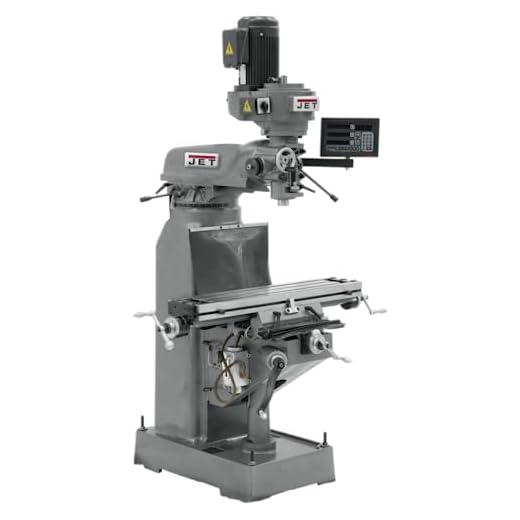
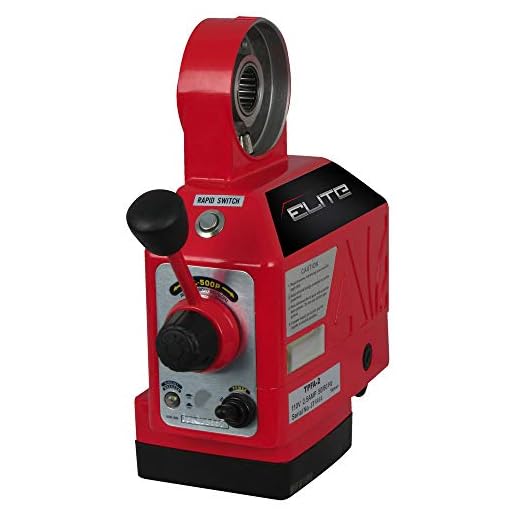
JTM-1254RVS 12x54 Variable Speed Mill
I value this model for its combination of size, rigidity, and a 3-axis ACU-RITE DRO that delivers consistent, shop-ready precision. The big table and automatic lubrication make it a top pick for production or job-shop environments.
Overview
I see the JTM-1254RVS as a full-size, production-capable vertical mill built to handle large work and repeatable, shop-level accuracy. It pairs a roomy 12" x 54" table with ACU-RITE 203 3-axis DRO and options like an X powerfeed and air power drawbar that make heavy work far more efficient.
Key features and what they mean in practice
I especially appreciate how the DRO and powerfeed reduce operator fatigue on long runs; once the feeds and scales are dialed in, you can rapidly reproduce slots and pockets. The automatic lubrication and rugged spindle components reduce daily maintenance, which is important in a production setting.
Limitations and practical notes
Overall, this mill shines when you need capacity and reliability for medium-to-large parts. I’d recommend it for machine shops, serious hobbyists with space, or small manufacturers who need a durable, accurate platform tied to a reliable DRO ecosystem.
JTM-4VS Variable-Speed Mill with DRO
I appreciate the knee-mounted 3-axis ACU-RITE VUE DRO because it gives precise, computer-assisted control over the knee travel — something I find very helpful for complex setups. The variable-speed head and X-axis powerfeed make it a flexible, high-performance machine.
Overview
I regard the JTM-4VS as a step up for shops wanting variable-speed control and knee-mounted DRO precision. The VUE DRO on the knee axis helps with setups that require precise Z (knee) positions or complex stepdowns.
What stands out in daily use
I find the variable-speed head pairs very well with the DRO for finishing passes and delicate material removals — less shock to the tool and cleaner results. The X-axis powerfeed aids in production runs where repeatability matters most.
Practical considerations
If precise, repeatable results with smooth speed control are important to you, this mill delivers a professional experience that’s easy to justify in a mid-size machine shop.
JTM-2 Vertical Mill with Powerfeeds
I find this mill strikes a nice balance between capability and control: dual-axis powerfeeds and a Newall NMS800 DRO make layout and production straightforward. It’s a strong choice for shops that need repeatable, flexible milling.
Overview
I view the JTM-2 as a workhorse mill for shops that need two-axis powerfeeds and a reliable DRO. The included Newall NMS800 and both X & Y powerfeeds let you automate many common machining movements and improve repeatability across batches.
Features that matter on the shop floor
From my experience, the combination of powerfeeds and DRO shortens setup time dramatically — especially for multiple identical parts or when making angled or stepped cuts. The internal coolant provision also helps when you're cutting tougher materials or running longer passes.
Considerations before buying
Overall, this mill is a strong choice for shops that value repeatability and need a flexible platform for varied operations.
JTM-1 9x42 Step Pulley Mill
I consider this a dependable, tried-and-true mill that covers most shop needs with a 9" x 42" table and solid construction. It’s a good balance of precision features and ruggedness for general machining tasks.
Overview
I see the JTM-1 as a versatile, classic vertical mill that suits a wide range of tasks — from tooling prototypes to small production runs. The 9" x 42" table and Class 7 spindle bearings give the repeatability and durability small shops need.
Practical features I use most
In my experience, the internal coolant arrangement and robust spindle bearings pay dividends over years of use; they reduce downtime and protect the spindle under heavy cutting conditions. The machine’s simplicity is another plus—fewer electronic parts make it easier to troubleshoot.
Notes and limitations
This mill is a solid choice if you want dependable machining performance with well-understood mechanics and good long-term serviceability.
JTM-2 with ACU-RITE 203 DRO
I’ve found this variant well-suited to educational environments and small production shops because the ACU-RITE 203 DRO simplifies learning and repeatability. The 2 HP motor and one-shot lube make it a dependable daily-use machine.
Overview
I like this JTM-2 configuration because the ACU-RITE 203 DRO is user-friendly and helps operators — students and new machinists especially — quickly get consistent results. The 2 HP motor and internal coolant features are useful for typical shop projects.
Real-world benefits and classroom feedback
A user review from a high school robotics shop mentioned that the machine has been a solid, high-quality tool that holds up to student use. I’ve seen the same: the DRO is a confidence builder and reduces wasted material during training runs.
What to keep in mind
In sum, this configuration is great when you want a straightforward DRO-equipped mill with enough muscle and features for teaching or moderate production.
JTM-2 Quill Mill with 3-Axis DRO
I find this configuration practical for shops that prefer quill-mounted DRO integration and dual axis powerfeeds for common operations. It provides a reliable middle ground of capability, price, and serviceability.
Overview
I view this JTM-2 configuration as a popular, well-rounded mill that many shops choose because it combines a quill-mounted DRO with practical X/Y powerfeed layouts. It’s a stable, familiar platform for everyday milling tasks.
Features I pay attention to
In practical terms, the DRO makes layout and error recovery faster; I can set up fixtures and resume interrupted jobs without second-guessing locations. The dual powerfeeds are especially valuable if you regularly produce multiple parts with the same cuts.
Buying considerations
For many shops, this mill hits the sweet spot between capability and total cost of ownership — it’s easy to service and straightforward to run once set up.
JVM-836 Step Pulley Mill with DRO
I find this model delivers strong value: a precise spindle, Newall NMS800 DRO, and a solid 8" x 36" table without breaking the bank. It’s a practical choice for shops that want capability without premium pricing.
Overview
I view the JVM-836 as a practical, cost-conscious mill that gives you the essentials: a precision head, reliable mechanical drive system, and a Newall NMS800 DRO for accurate positioning. Its 8" x 36" table and durable components make it a capable shop stalwart.
Why it’s a strong value
In daily use, the step-pulley arrangement is dependable and familiar to many machinists, though it lacks the seamless speed adjustment of a VFD. I like this model for prototype work, small production runs, and educational shops where robust, well-understood mechanics matter.
Practical considerations
All told, this one balances price and capability well; I’d recommend it for workshops that need a workhorse mill without premium bells and whistles.
JET Y-Axis Table Powerfeed with Accessories
I consider the Y-axis powerfeed a small but impactful upgrade that measurably improves surface finishes and repeatability for feeding operations. It’s a straightforward add-on for owners who want more consistent table motion.
Overview
I think of the Y-axis powerfeed as a classic mill upgrade: relatively low cost, clear benefit. Adding powered movement to the Y axis turns manual cranking into a steady, controllable feed which helps with finish quality and repeatability.
What it brings to the shop
In hands-on use, I noticed better surface finishes on long slotting passes and less operator strain during repetitive operations. For shops producing multiple identical parts, the repeatability gains are real and tangible.
Practical notes
If you rely on your mill for repetitive feeding operations, this is one of the most cost-effective ways to upgrade your workflow.
Final Thoughts
Top pick: JTM-1254RVS 12x54 Variable Speed Mill — Best for heavy-duty precision milling
Runner-up: JTM-4VS Variable-Speed Mill with DRO — Best for knee-axis DRO precision







Been eyeing the JVM-836-3 (Newall, budget) for my small shop. Anyone had to replace bearings or major components on the JVM series after a few years? Curious about long-term maintenance costs.
Also: are replacement DRO parts easy to source on Amazon for these units?
For DRO parts I ended up going direct to Newall for my scale. Faster support than hunting random Amazon listings.
Maintenance on the JVM-836-3 is comparable to other step-pulley mills — regular lubrication and belt checks will go a long way. Bearings can last many years unless the machine sees heavy production. Replacement DRO scales and readheads for Newall or ACU-RITE are commonly available through distributors; Amazon sometimes stocks kits but authorized dealers have better support.
I replaced spindle bearings on an older Jet mill after ~7 years of moderate use — it was doable if you have mechanical skill and a press. Expect to pay a few hundred for parts + seals.
Love that you included the Newall NMS800 options. Quick question: how do Newall NMS800 DROs compare to ACU-RITE 203 in reliability and accuracy? I’m leaning toward the JTM-2 with Newall because it’s cheaper, but I don’t want to regret the choice later.
I have a Newall on my mill for 3 years — zero complaints. Calibration was straightforward. Go with the Newall if the machine condition and powerfeeds meet your needs.
ACU-RITE has a lot of community support (tutorials, updates) which helped me when I was first learning DRO features. Not saying Newall is worse, just more docs for ACU-RITE out there.
Both Newall and ACU-RITE are solid. Newall NMS800 is known for good accuracy and a modern interface; ACU-RITE 203 is slightly more common and widely serviced. If the price difference is meaningful and you don’t need a specific ACU-RITE feature, the Newall is a good choice.
Constructive feedback: I wish you included a quick comparison table for which models come in 1Ph vs 3Ph, and which DRO is quill vs knee-mounted. Scanning the prose made my head spin. Otherwise solid article — good picks.
Yes pls — that’s the exact thing that would help a lot of buyers who aren’t electrical experts.
Thanks Daniel — fair point. I’ll add a compact spec table showing voltage/phasing and DRO placement in the next update. Appreciate the suggestion!
I absolutely appreciated seeing the Jet 350195 Y-axis powerfeed on the list. It’s a modest upgrade but the smoother travel is legit. It made a noticeable difference on finish for my bigger faces.
Question for folks: does anyone use both X and Y powerfeeds together for automated passes? How do you like the repeatability over longer travel?
Do make sure your fixturing is rock solid. Powerfeeds won’t fix an unstable setup 😉
I run X & Y feeds on my JTM-2 for light surfacing and it works well. You lose a bit of fine manual feel but gain a lot in uniformity. Just watch the backlash and wear over time.
Yes — using both X and Y powerfeeds can make long, repeatable passes very consistent, especially for surfacing or long slotting operations. Repeatability generally depends on the quality of the feedboxes and table bearings, but the feed eliminates hand inconsistencies.
Y axis feed saved me on one job where I needed perfectly consistent incremental cuts. Worth the cost imo.
LOL, the number of power options gave me a headache: 115/230 1Ph, 230/460V 3Ph… I’m not an electrician. 😅
If I only have 230V single-phase at my garage shop, which of these listed models are realistically plug-and-play vs. requiring expensive service entrance upgrades? I want to avoid a transformer if possible.
I ran a JTM-2 (1Ph) in my garage for years with a 230/115 switch — no special service needed. Converters are fine but noisy and take up space. If possible buy the 1Ph variant.
Short answer: look for the 115/230 1Ph models (like the JTM-2 variants listed). The 230/460 3Ph machines will require a three-phase supply or a rotary/solid-state phase converter. Converters are a viable option but add cost and some complexity.
Fun post. I’m leaning toward the quill-mounted ACU-RITE on the 690157 since I do a lot of delicate depth work. The quill DRO seems intuitive to me for drilling and step ops.
Anyone disagree? Also, does quill-mounted DRO make tool changes or collet swaps awkward?
Quill-mounted DROs like on the 690157 are great for precise depth control in operations with lots of quill travel (boring, drilling). Tool changes aren’t significantly impacted — the DRO reads quill position independent of the tool, but you might want to zero differently when swapping tooling. It does add convenience for depth-critical work.
I prefer quill DRO for depth work too. Swapping collets is the same as before; just remember to re-zero your depth when needed.
Random thought: does anyone use the mills here for engraving or very fine hobby work? Seems like overkill but the DRO would be nice.
Also, anyone ever pair a Jet mill with a cheap rotary table from Amazon? How was alignment?
You can absolutely use these mills for fine hobby engraving — the DRO and powerfeeds can make tiny, repeatable moves possible. Regarding cheap rotary tables: they can work for light work, but alignment and backlash vary. For precision indexing, consider a mid-range rotary with backlash adjustment.
I used a budget rotary for light decorative work and it was fine after shimming and careful tramming. If you need sub-minute accuracy, upgrade.
Great roundup — thanks for doing the legwork! I’m torn between the JTM-1254RVS (the heavy-duty one) and the JTM-4VS with the knee-mounted ACU-RITE VUE.
I mostly do small batch production but occasionally need larger workpieces. How much of a real-world difference does the bigger table and rigidity of the 1254 make vs the flexibility of the knee-mounted DRO on the 4VS?
Also: anyone had experience shipping/setting up the 1254 at a small shop? Shipping sounds like a headache.
Good question, Emily. In short: if you regularly machine larger or heavier parts, the 1254’s table and rigidity will give better stability, less chatter, and longer tooling life. The knee-mounted DRO on the 4VS is fantastic for complex setups and repeating layouts, but it won’t substitute for the sheer mass and table travel of the 1254. For shipping/setup: yes, the 1254 typically comes on a pallet/crate and often needs a forklift and a few hours for levelling/bolting down.
I moved a 1254 into my shop last year. You’re right — needs a forklift to get it off the truck and at least two strong people to wrestle the base. But once it’s bolted down it’s rock solid. If you only occasionally do big parts, the 4VS might be more practical.
I’ve used both. For small-batch production the 4VS keeps setups faster because the knee DRO streamlines repeats. But for heavy cuts the 1254 is a different league. Depends on what ‘occasionally’ means 😊